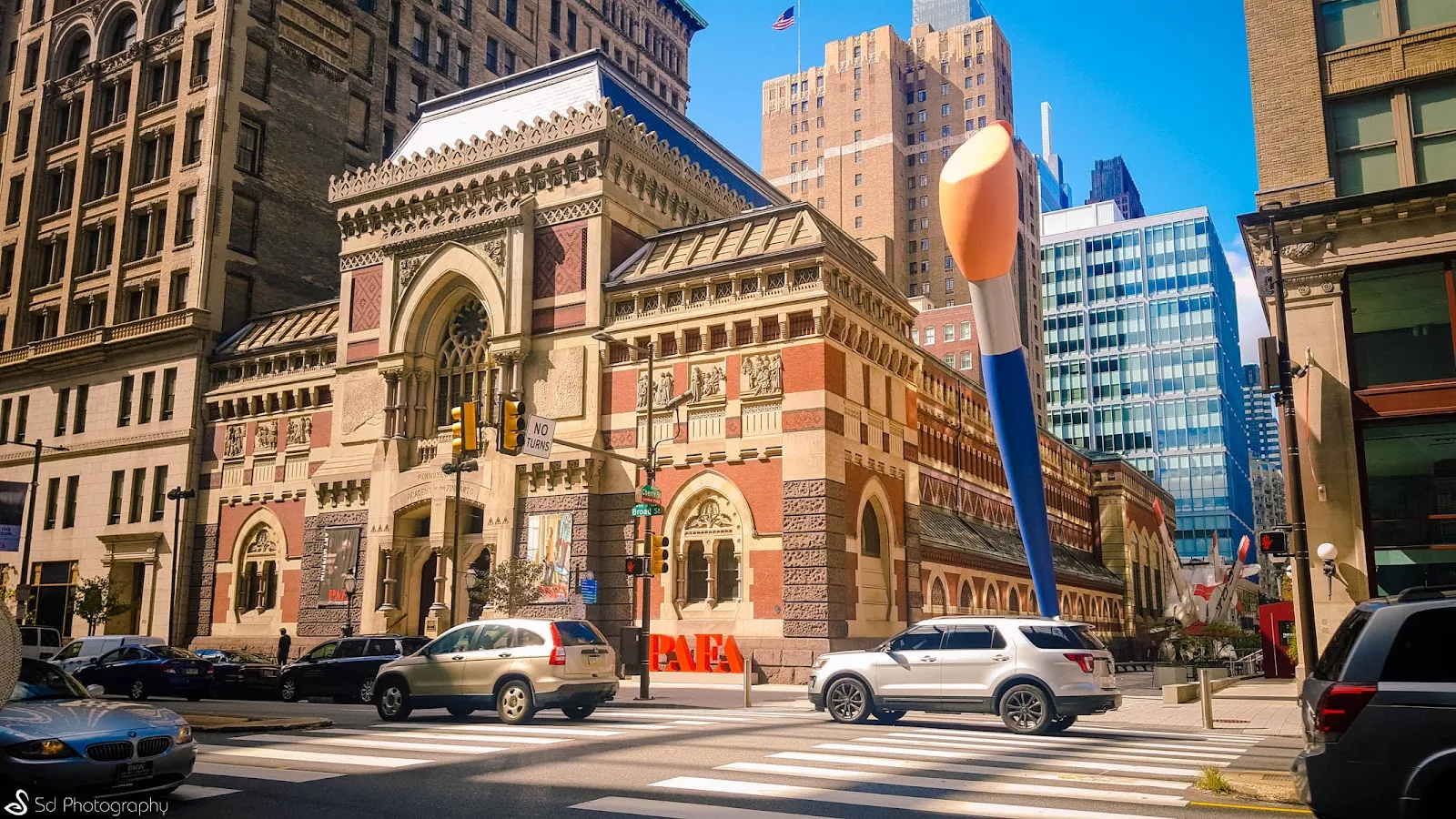
On North Broad Street in Philadelphia, the Pennsylvania Academy of the Fine Arts (PAFA) combines an art museum with a school founded in 1805. Its collection traces American art from the 18th century to the present, with historic paintings, sculpture and works by contemporary artists. The museum occupies two buildings: the ornate Historic Landmark Building and the newer Samuel Hamilton Building. Set aside about two hours to see the galleries and take in the architecture. The museum store sells prints, cards and art-related gifts.
A museum and school founded in 1805
The Pennsylvania Academy of the Fine Arts began in 1805, established by artists and other Philadelphia figures to support art and art education. It became the first institution in the United States to operate as both an art museum and an art school. PAFA still brings those roles together: its museum presents American art, while the academy provides education for artists.
The collection covers American art from the 18th century to the present. Paintings, sculpture, works on paper and photography sit alongside contemporary work. Historic artists represented include Benjamin West, Mary Cassatt and Thomas Eakins; later and contemporary names include Andy Warhol, Kehinde Wiley and Mickalene Thomas. The collection also includes work by regional artists and people connected with the academy.
Two buildings, two architectural experiences
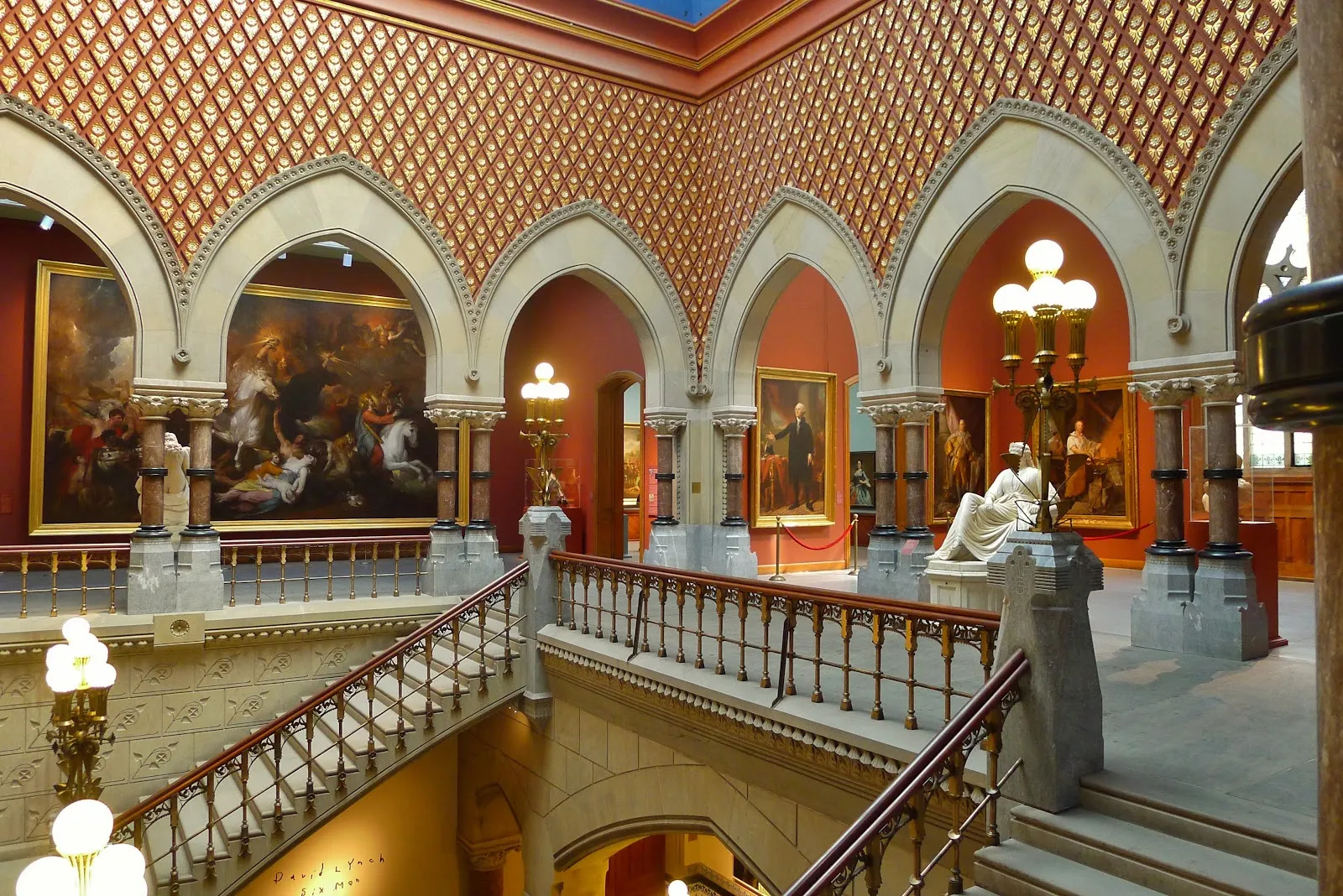
PAFA’s galleries occupy two buildings on North Broad Street. The Historic Landmark Building was designed by Frank Furness and George Hewitt. Designed in 1871 and completed in 1876, it is known for its Victorian Gothic architecture and detailed interior. Look up at the cathedral-like arches and stained glass, and notice the marble floors, gilded surfaces and older light fixtures.
The Samuel Hamilton Building provides a different setting, with a modern design and galleries arranged around an open staircase. Together, the buildings let you move between contrasting architectural styles as you explore the museum. The older building is a major part of a visit, so leave time to look at its rooms rather than focusing only on the artworks.
How the collection is presented
The displays bring together work from different periods and styles, and some galleries use themes to shape the way you encounter the art. That approach can place works in conversation with one another rather than presenting every piece only as part of a chronological sequence. The range includes paintings, sculpture and works on paper, with historical and contemporary American art represented.
PAFA has also held exhibitions around specific ideas and artists. One exhibition, “Rising Sun: Artists in an Uncertain America,” brought together new work by 20 artists exploring questions about American democracy. Its presentation was shared with the African American Museum in Philadelphia. Exhibition schedules change, so check PAFA’s current programme before planning around a particular show.
The museum store is another stop inside the academy, with prints, cards and other art-related items. The adjacent museum has also displayed sculpture, including Dora Savignac’s stoneware work “Ukrainian Plea.” Check what is on view during your visit if a particular artwork or exhibition is your reason for coming.
Häufige Fragen
What is the Pennsylvania Academy of the Fine Arts?
PAFA is an art museum and school in Philadelphia, founded in 1805. It was the first institution in the United States to combine those roles.
How long should I spend at PAFA?
Plan for about 1.5 to 2 hours to explore the galleries across two floors and see the buildings.
What kind of art is at PAFA?
The collection covers American art from the 18th century to the present, including paintings, sculpture, works on paper and photography.
Is admission free?
Free-admission days have been offered, but dates can vary. Check PAFA’s website before your visit.