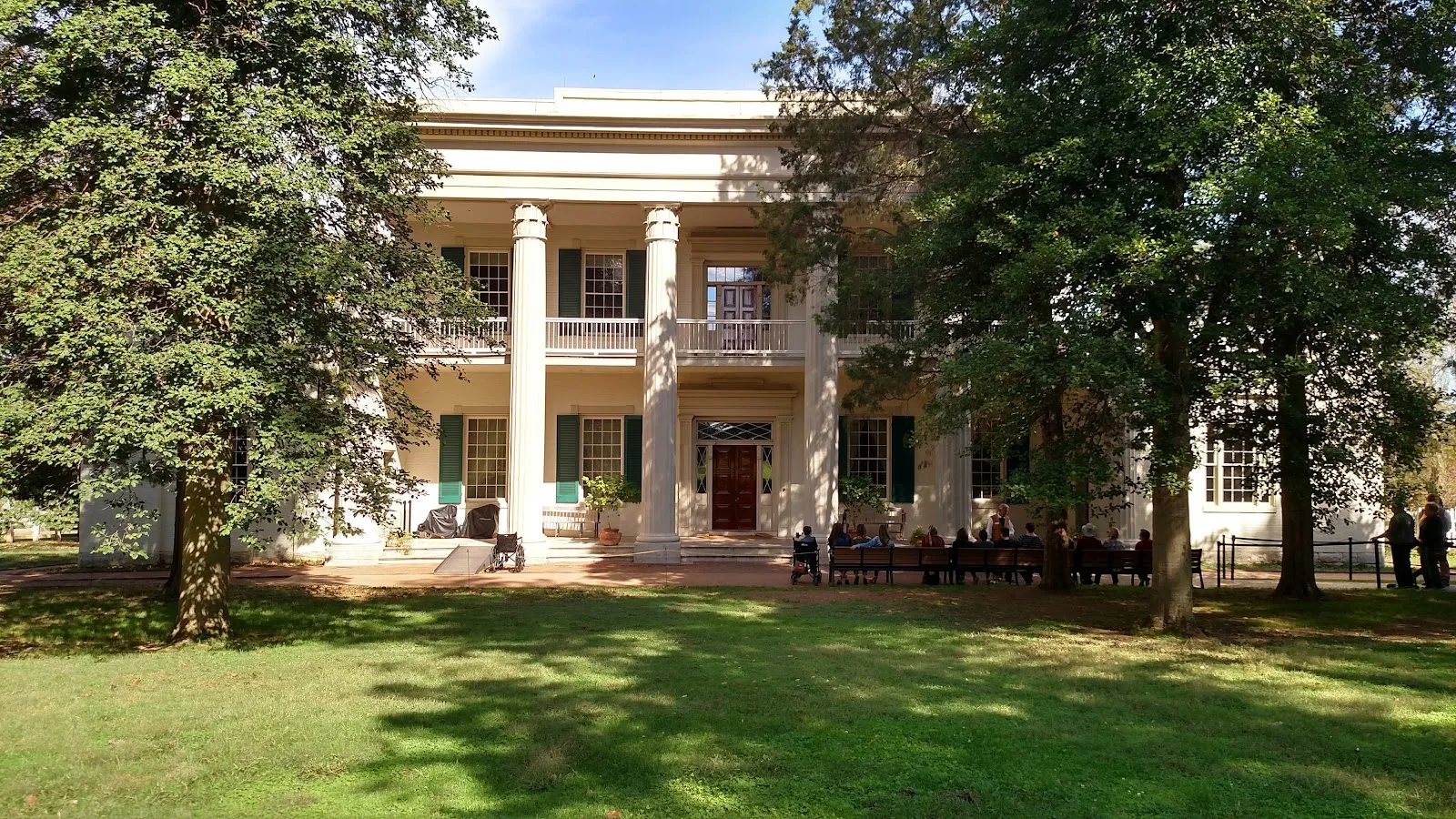
Andrew Jackson’s Hermitage is the former home of the seventh U.S. president, about 10 miles from downtown Nashville at 4580 Rachels Ln. The estate brings together Jackson’s mansion, museum exhibits, gardens, historic outbuildings and the family burial ground. Inside, period furnishings, paintings and original wallpaper give the house a close-up sense of its past. Exhibits and tours also address Jackson’s political life and the people who lived and worked on the plantation, including those held in slavery. Allow time to explore beyond the mansion.
A home that changed over time
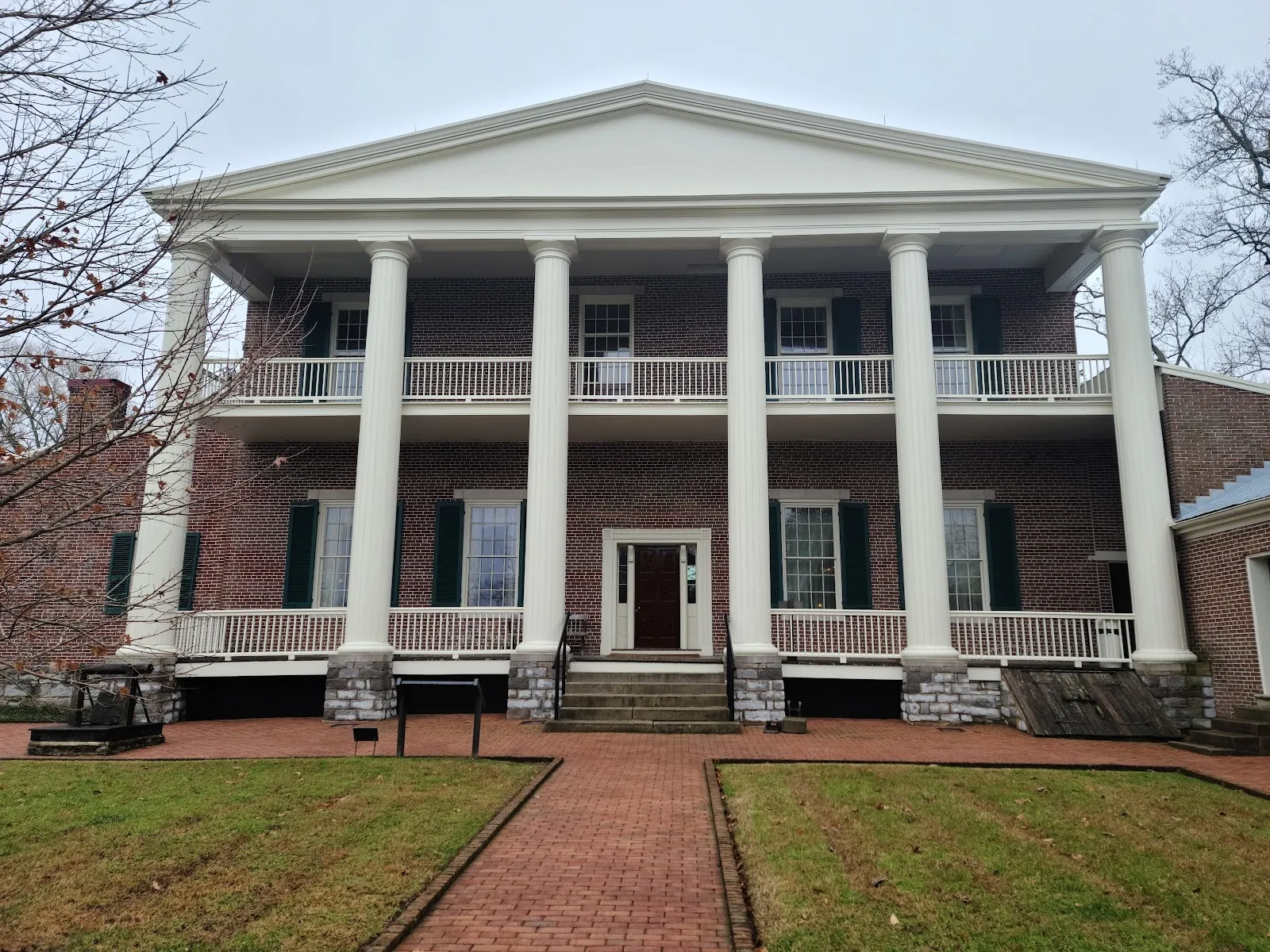
The Hermitage estate began with land purchased by Andrew Jackson in 1804. He and his wife, Rachel, first lived there in a log cabin. A brick house was built on the property between 1819 and 1821, and Jackson later expanded the mansion during his first presidential term. The Greek Revival building visitors see today reflects those changes, rather than a single moment in the estate’s history.
Jackson lived at the Hermitage before and after his presidency. He served as president from 1829 to 1837, then returned to the property and remained there until his death in 1845. The estate became a museum in 1889. Its history therefore reaches beyond the rooms of the house, connecting Jackson’s private life with his military and political career.
Inside the mansion and museum
A guided visit through the mansion brings you into rooms furnished with period pieces and family belongings. Original wallpaper and paintings add details that are easy to miss when the house is treated only as a backdrop. Jackson’s study is among the rooms that can give the presidential story a more personal setting. Docents share information about the house and its occupants, and the exhibits provide further context for Jackson’s life and presidency.
The museum uses exhibits and film to introduce the estate and its history. Together, these displays cover more than the public image of Jackson as a general and president. His legacy is contested: the story includes his role in the Indian Removal Act and the forced removal of Indigenous peoples, as well as the consequences of slavery at the plantation. The site’s interpretation gives visitors a way to consider those histories alongside Jackson’s rise to national office.
Reading the grounds
The estate covers about 1,120 acres and includes more than 30 historic buildings. Walking the grounds gives the visit a broader frame than the mansion alone, with gardens, paths and preserved structures to explore. Interpretive signs help connect the landscape to its former use as a plantation. The family burial ground is also on the property, where Andrew Jackson and Rachel are buried.
The plantation’s wealth depended on the labor of enslaved people. Their lives and the conditions they faced are part of the site’s history, not a footnote to the presidential home. A walking tour called “In Their Footsteps” focuses on where enslaved people were born, lived, worked and died. If you want to understand the estate beyond its architecture and furnishings, make time for this history as you move around the grounds.
The property is large enough that a quick mansion visit will leave much unexplored. Tours and exhibits can help you choose what to prioritize, but the grounds reward a slower pace. Plan your time around the mansion visit and leave room for the museum and outdoor areas.
Häufige Fragen
How long should you spend at Andrew Jackson’s Hermitage?
Plan for about 2.5 to 3 hours for a typical visit. The estate is extensive, so allow extra time if you want to explore the grounds at a slower pace.
Can you go inside the mansion?
Yes. A mansion tour takes visitors through the house, where you can see period furnishings, paintings and original wallpaper.
Can you take photos inside the mansion?
No. Photography is not permitted inside the house.
What is there to see beyond the mansion?
The estate has gardens, the family burial ground, museum exhibits and more than 30 historic buildings. A walking tour also focuses on the lives of enslaved people at the plantation.