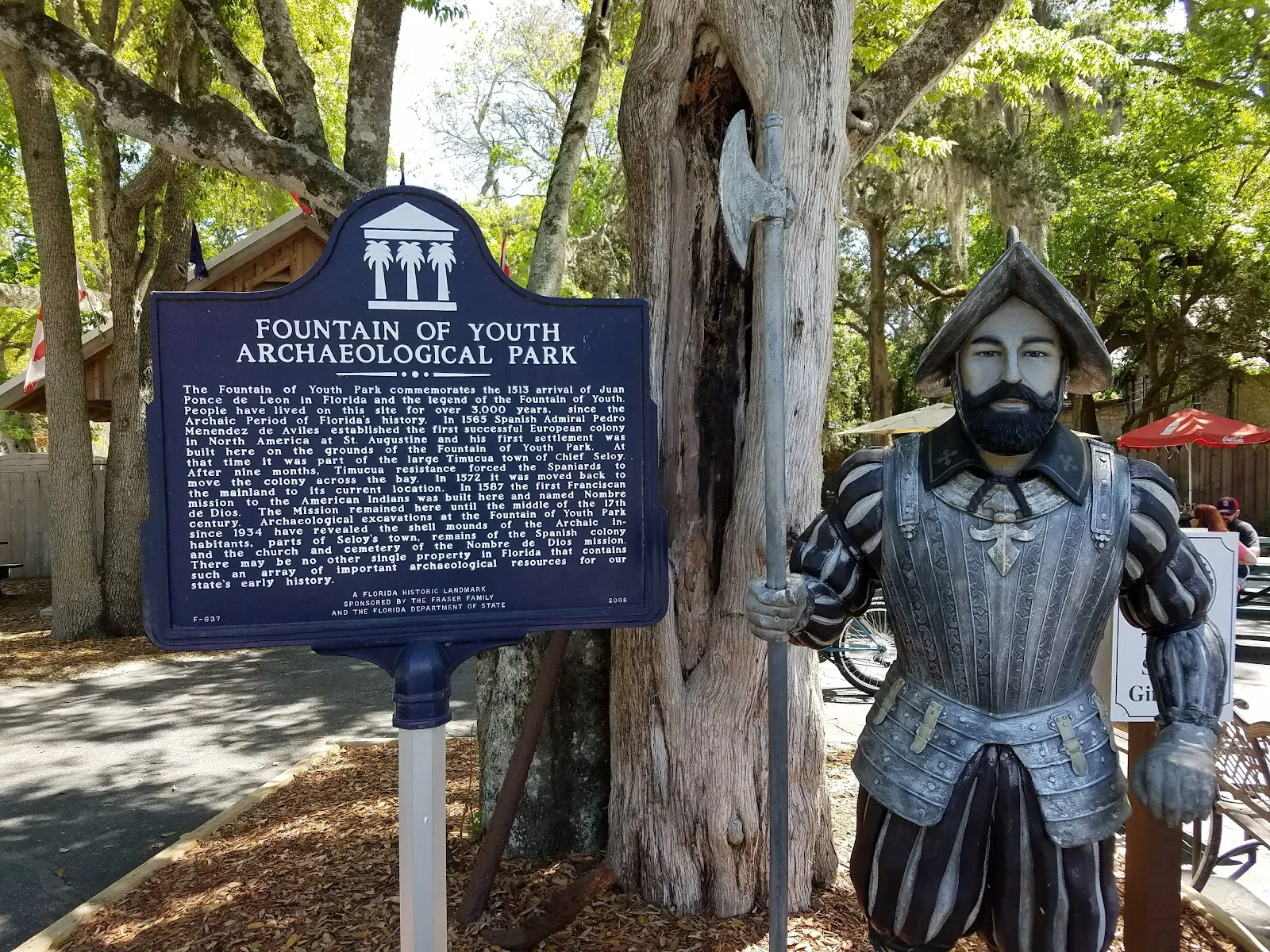
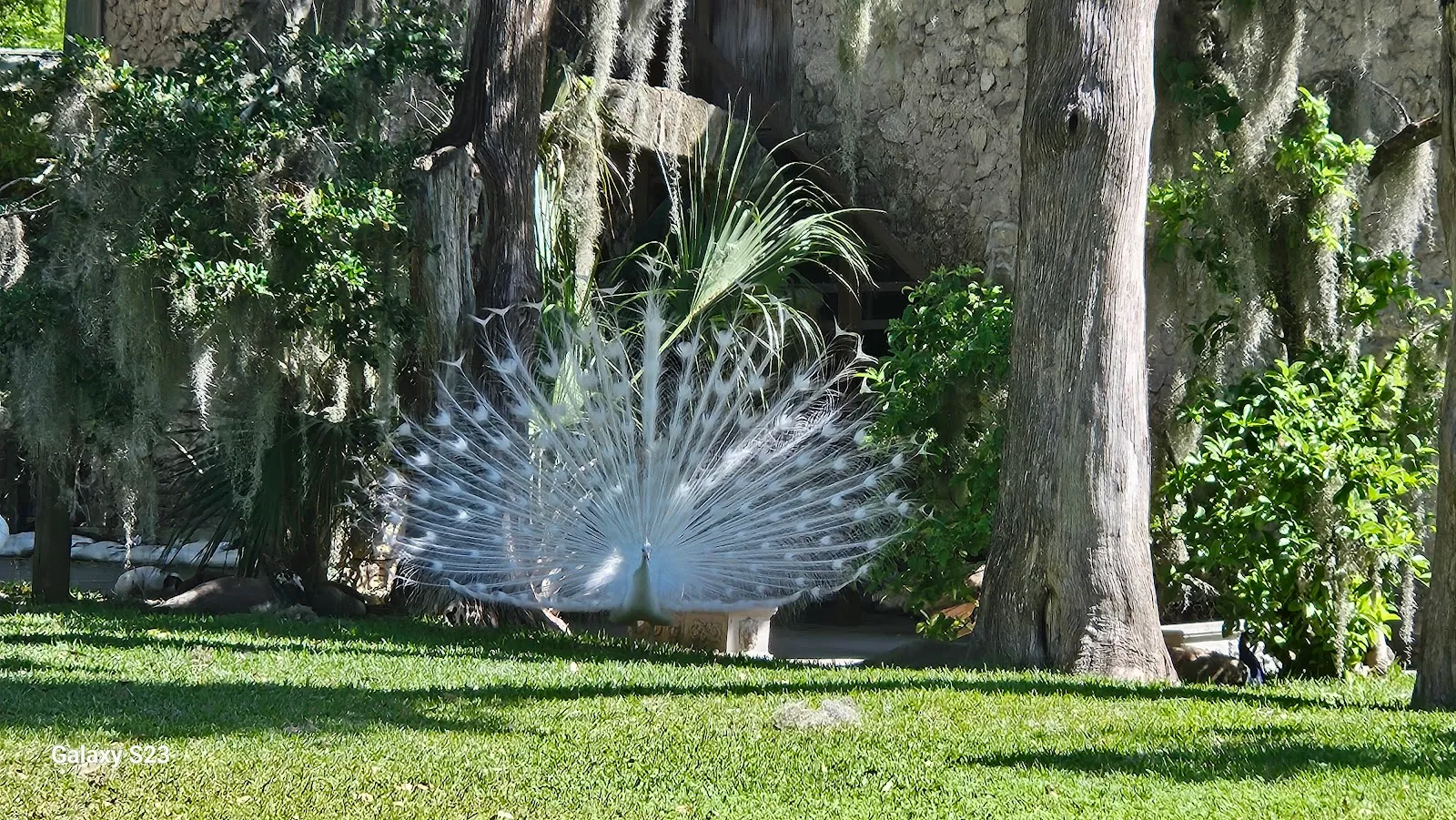
Ponce de Leon’s Fountain of Youth Archaeological Park is a 15-acre historic site at 11 Magnolia Ave in St. Augustine, Florida. The spring is tied to the legend of Juan Ponce de León, but the park’s story also reaches back to the Timucua village of Seloy and the Spanish settlement founded here in 1565. Walk among archaeological exhibits, reconstructed buildings and gardens, watch demonstrations, and visit the planetarium. You can also sample water from the spring and look out for peacocks roaming the grounds.
The spring and the story behind it

The park takes its name from the legend of a spring whose water was said to restore youth. Juan Ponce de León is associated with the search, and the site is presented as a possible place where he came ashore in 1513. That connection is a legend, not a confirmed landing point, and the spring’s promised effects belong to the story rather than established fact.
Visitors can sample water at the Spring House. The spring is natural, and the water may have a sulfur smell and taste. The experience is a small part of a visit to a much larger archaeological park.
Seloy and the early settlement of St. Augustine
Before the Spanish settlement, the site was home to the Timucua village of Seloy. Exhibits and reconstructed buildings introduce the people who lived here and the changes that followed European arrival. The park also interprets the Spanish presence in the area, including the settlement founded by Pedro Menéndez de Avilés in 1565.
Archaeological work has identified the site with that early Spanish settlement. Exhibits, excavations and recreated village structures give the history a physical setting across the grounds. The park’s focus includes both the Indigenous community and the Spanish settlers, rather than only the Fountain of Youth legend.
Exhibits and demonstrations around the grounds
The 15-acre grounds bring together outdoor displays, historic interpretation and activities. Look for the Timucua village, archaeological areas and reconstructed buildings. A blacksmith demonstration and cannon firing are among the live presentations; schedules may determine which you can see during your visit.
The Navigators Planetarium is another stop, with short shows reported to run for about 13 minutes. A riverwalk and a lookout provide views toward the water. Peacocks roam the landscaped grounds, adding a distinctive presence as you move between exhibits.
Plan to explore at an unhurried pace if you want to see several areas and catch a presentation. Families can combine the outdoor walk with the planetarium and demonstrations. The site also has a café and picnic area, but the available information does not specify menu details.
Häufige Fragen
Is the Fountain of Youth the place where Ponce de León landed?
The park is associated with the 1513 landing story, but the location has not been confirmed as the place where Ponce de León came ashore.
Can you drink water from the spring?
Yes. Visitors can sample the spring water at the Spring House. It may have a sulfur smell and taste.
How long should you spend at the park?
Plan for about 1 to 3 hours. The grounds contain several exhibits and demonstrations, and you may want extra time for a planetarium show.
Is there an admission fee?
Yes, admission is charged. The available information does not give the ticket price.