Winchester Cathedral stands in the centre of Winchester, the Hampshire city that was once England's capital. Norman walls rise on the foundations of a much older Anglo-Saxon church, and inside, one of the longest medieval naves in Europe runs the length of the building under Gothic arches. Jane Austen is buried here. Give yourself time for the 12th-century Winchester Bible, the carved choir stalls and the crypt, and book the tower tour if you want views over the city.
From a 7th-century church to the Norman cathedral
The first church on this site dates to the seventh century, when it stood at the heart of Anglo-Saxon Wessex. Several early kings of Wessex were buried here, including King Alfred the Great, and the church grew in size and fame over the following centuries. By the year 1000 it was a cathedral housing the bones of St Swithun, a former bishop known for healing the lame. Pilgrims came to his shrine.
The present building was begun by the Normans in 1079 and consecrated in 1093. They rebuilt the church in their own style, and the crypt, with its 11th-century vaults, is the part that survives most clearly from that work. The original tower fell in the early 12th century. The site is marshy and waterlogged, which affected the building's low, squat outline. Work continued into the 16th century.
By 1905 the cathedral was sinking into the flood plain it stands on. A diver named Walker worked in the flooded crypt to shore up the foundations, using more than 25,800 bags of concrete. Staff and visitors still talk about his work, which is one of the more unusual stories in the building's history.
Architecture: a long nave and many styles
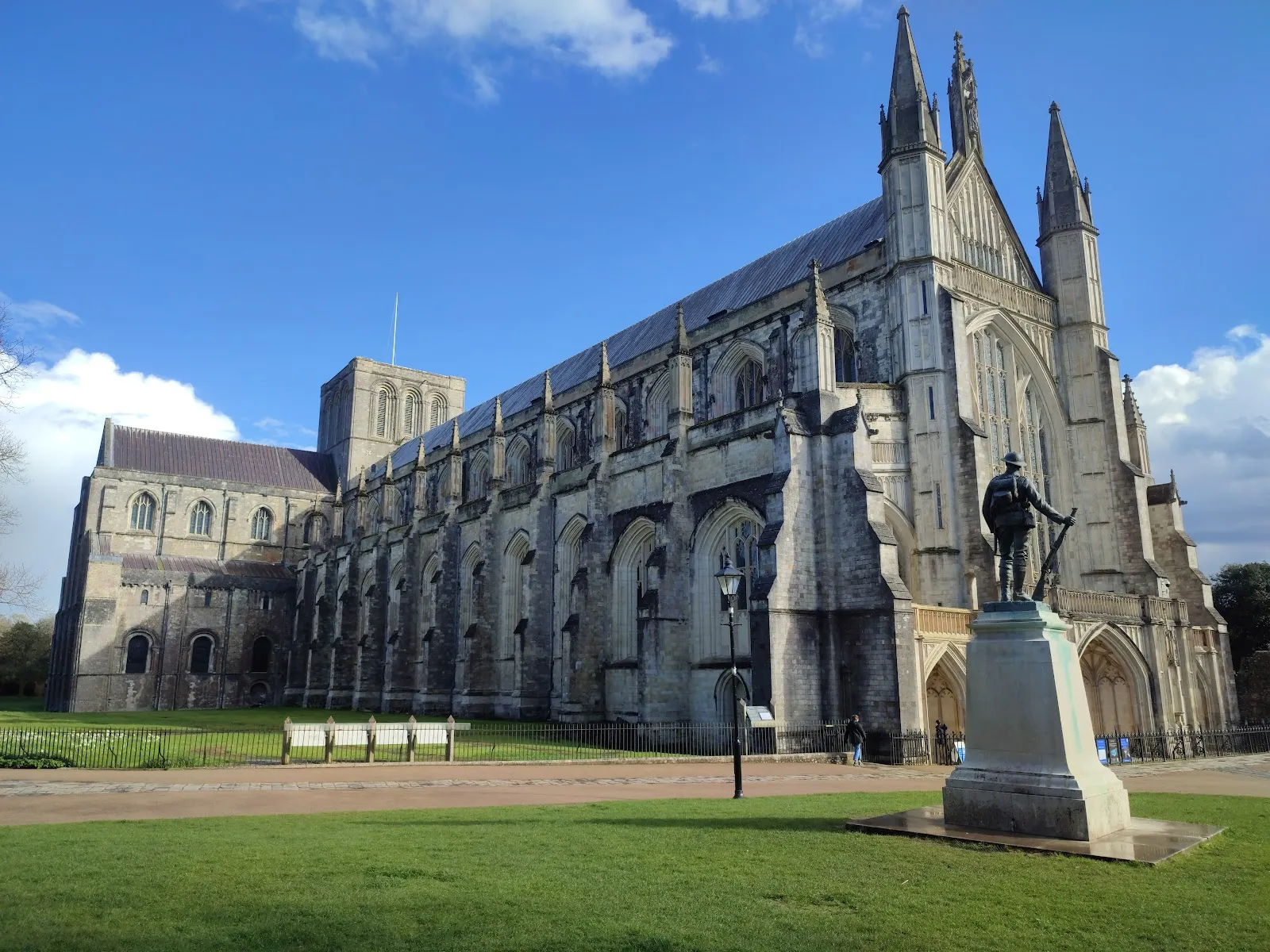
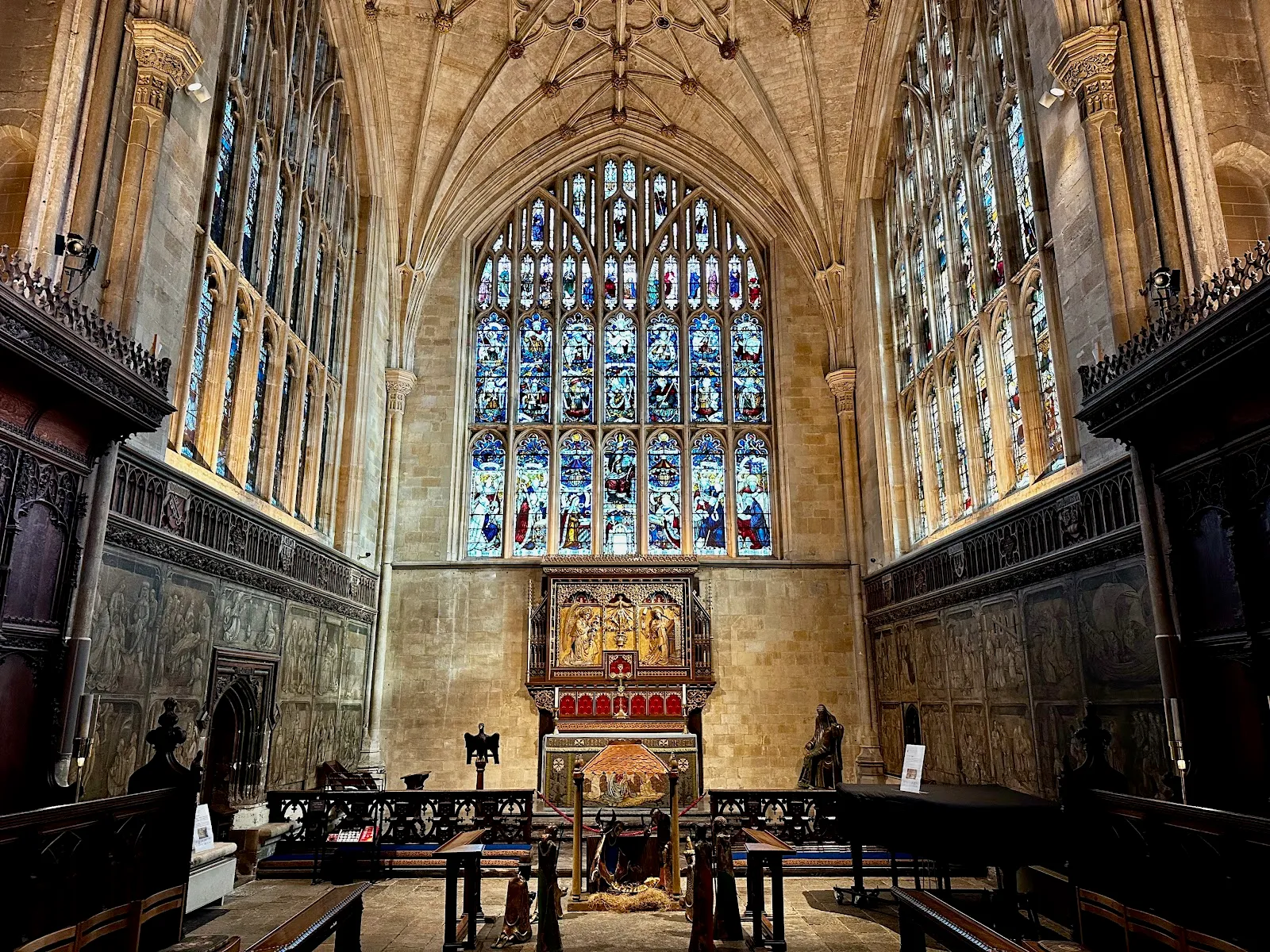
Winchester Cathedral is one of the largest cathedrals in Europe. Its nave, at about 164 metres, is among the longest medieval naves in the world. The building brings together work from roughly the 11th to the 16th century. The transepts and crypt are Romanesque, the great nave is Perpendicular Gothic from the 14th and 15th centuries, and the presbytery behind the choir is Decorated Gothic.
Look up at the vaulted ceilings, which hold more than a thousand carved stone bosses. The vaulting includes late-Gothic fan vaulting from 1394. On the floor you will find the largest surviving group of 13th-century tiles in England.
The 14th-century choir stalls are carved with everything from mythical beasts to a mischievous green man. Behind the high altar, a 15th-century stone screen is richly ornamented. Wall sections from the Norman church, including a Romanesque wall dating to 1093, are still visible.
Inside: Jane Austen, the Winchester Bible and the exhibition
Jane Austen died at 8 College Street in Winchester on 18 July 1817, aged 41, and was buried in the cathedral on 24 July. Her grave is near the entrance. A few of her personal items survive, including two purses and an ivory spool case. These are on display at the City Museum, a short walk from the cathedral.
The Winchester Bible is an illuminated manuscript from the 12th century and is often described as one of the finest surviving English Bibles. It is among the treasures shown in the exhibition on the upper floors, Kings and Scribes: The Birth of a Nation. The exhibition covers around 1,000 years of history and was funded through the National Lottery Heritage Fund. Other displays trace the cathedral's story from Anglo-Saxon times onward.
Tours, the crypt and the tower
Guided tours are themed, with some focusing on Anglo-Saxon and Norman Winchester. Tours of the crypt are not always listed as a set option, so ask at the staff desk if you want to see it.
The tower tour takes you up to the bell-ringing room and out onto the roof. From there the views of the cathedral and the city are the main draw. It is suitable for visitors aged 12 and over. Tower and roof tours get busy, so book them well ahead of your visit.
Services, the grounds and visiting with children
The cathedral is an active place of worship. Services and evensong take place most days, and visitors are welcome to attend. Keep your voice low and follow staff directions during a service.
The green in front of the cathedral is a popular spot for a lunch break on a sunny day. Families can pick up the free children's trail, which introduces a few notable figures from the cathedral's history. Staff have also run calligraphy sessions at a desk inside, so check whether one is on during your visit.
Dogs are allowed in the cathedral.
Häufige Fragen
Is there an entry fee?
Yes. Tickets can be paid at the door or bought online, and they give access for 12 months. A family ticket for two adults and two children aged 12 to 16 has been listed at £38.80, and children under 11 go free. Check current prices before you visit.
How long do you need at Winchester Cathedral?
Most visits take 1 to 2 hours to see the main cathedral. A guided tour or a tower tour needs extra time, and tower tours get busy, so book them ahead.
Is Winchester Cathedral wheelchair accessible?
Yes. The entrance and restroom are wheelchair accessible, and there is a mechanical aid for visitors who cannot manage the stairs.
Can I attend a service at Winchester Cathedral?
Yes. Services and evensong take place most days, and visitors are welcome. Keep your voice low and follow staff directions during the service.