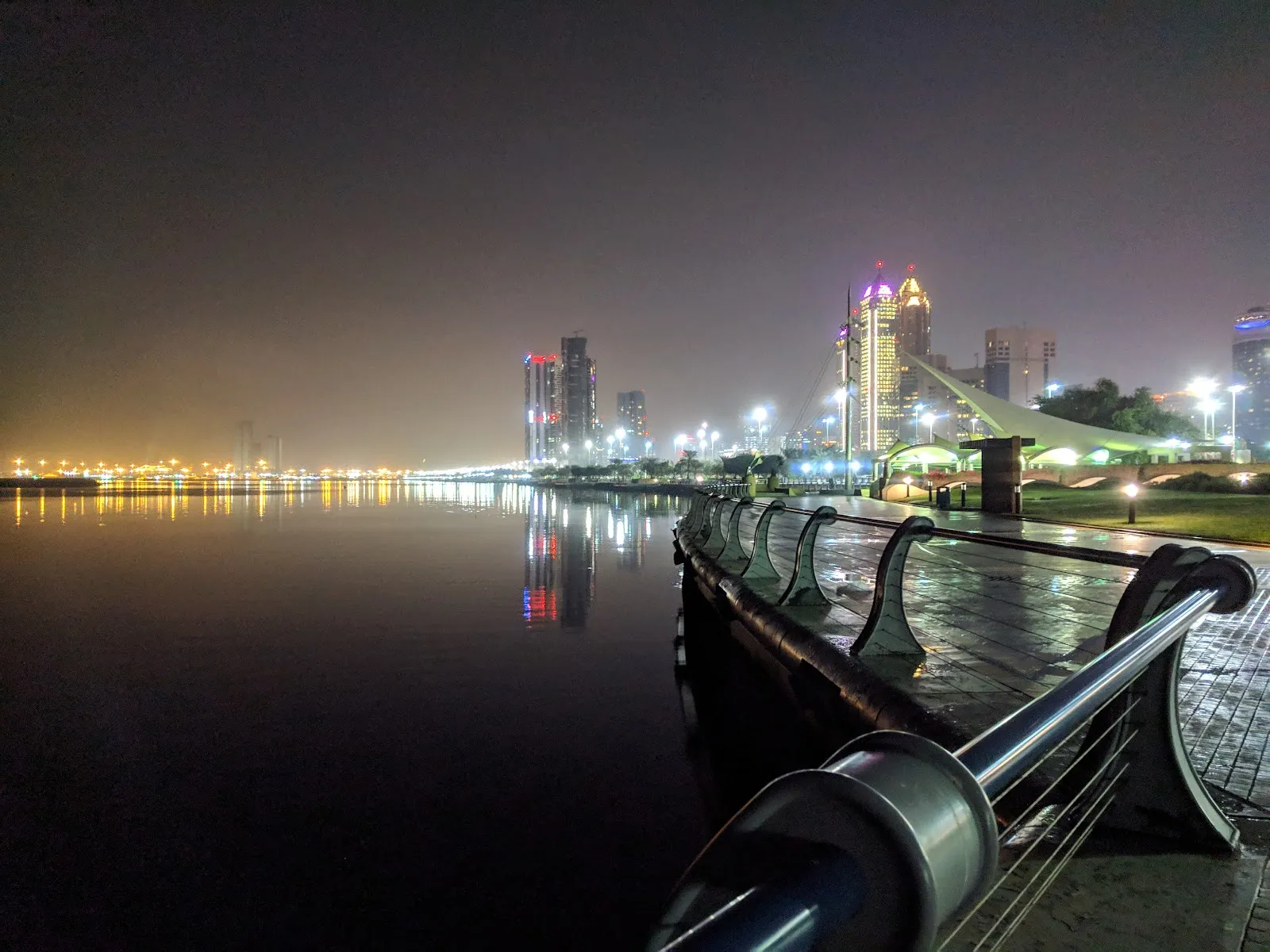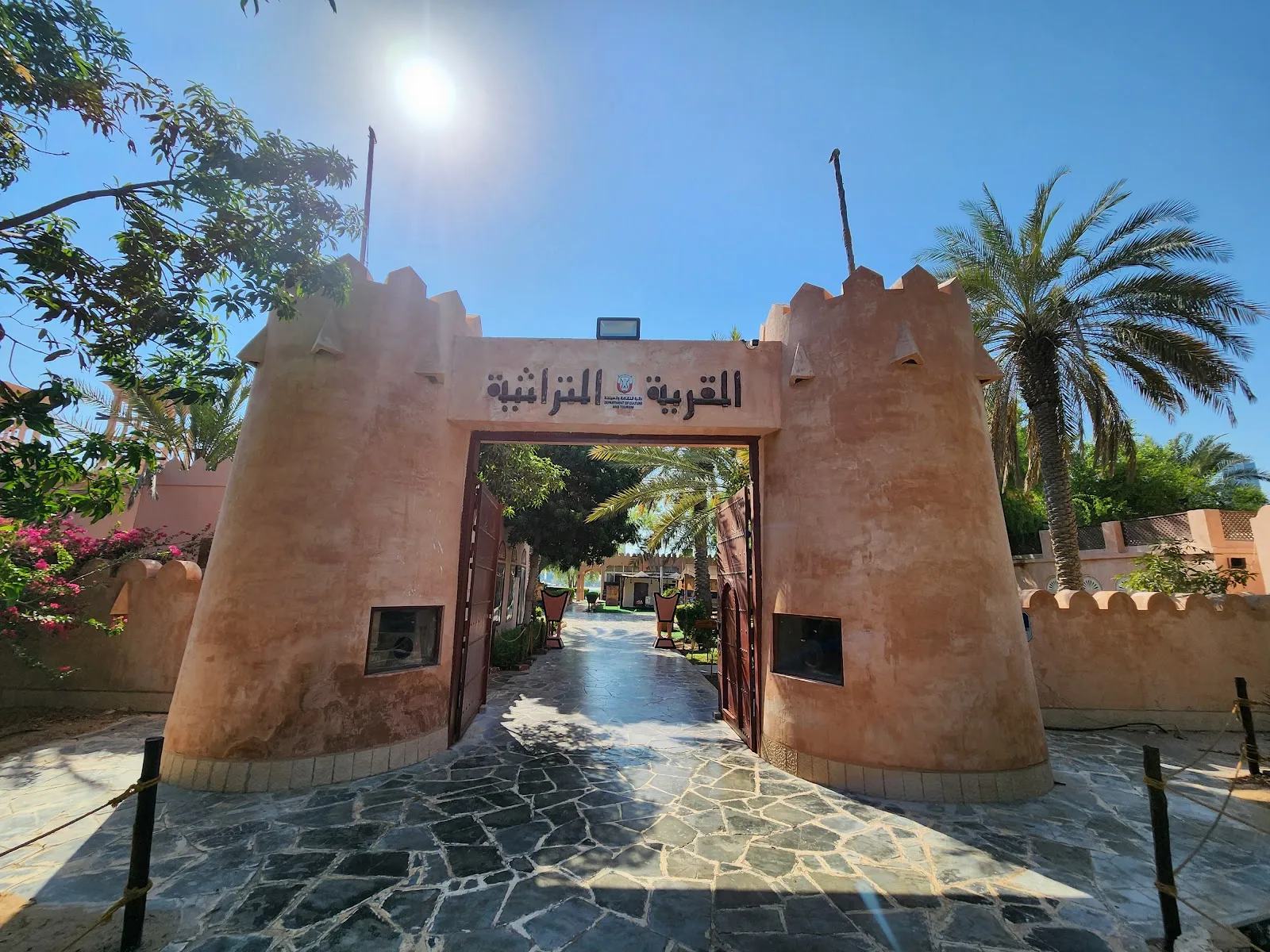
Emirates Heritage Village is an open-air cultural site on Abu Dhabi’s Corniche Breakwater, near Marina Mall. Its recreated settlement gives a sense of life in the emirate before oil transformed the city. Look inside traditional homes, visit the small museum and souk, and see how crafts such as pottery, weaving and metalwork are made. Displays also introduce desert living, irrigation, agriculture and pearl diving. The waterfront setting brings views across the water towards Abu Dhabi’s modern skyline.
A reconstructed village on the Breakwater
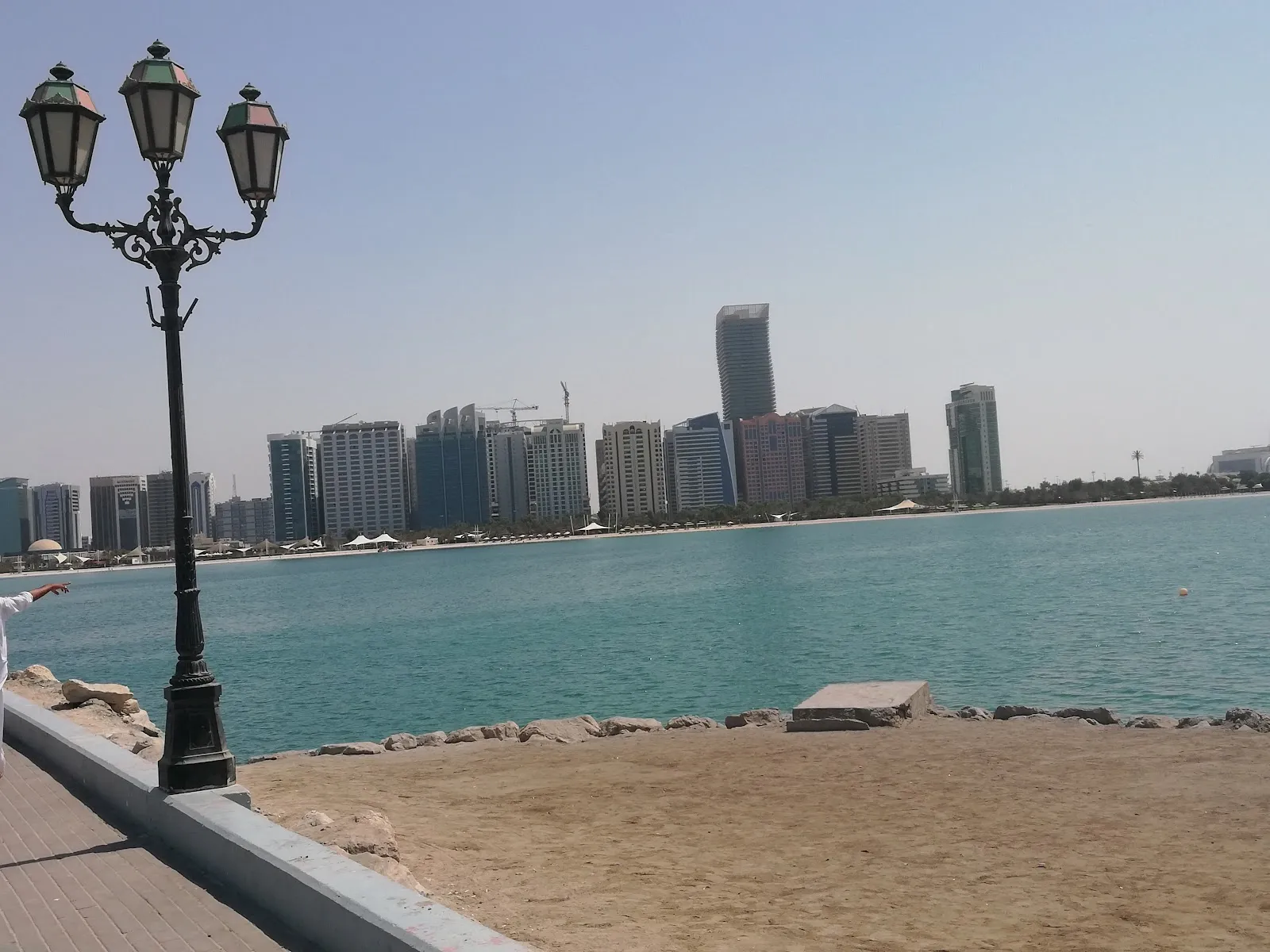
Emirates Heritage Village is a recreation of traditional settlement life, managed by the Emirates Heritage Club. Its setting on Abu Dhabi’s Corniche Breakwater places it beside the water, with the city skyline visible across the bay. The village is not an archaeological site; its buildings and displays are assembled to introduce visitors to ways of life that preceded the emirate’s oil-led transformation.
The layout brings together elements associated with desert and oasis communities, as well as fishing and trade. The camp area includes tents made in the Bedouin style, a fire setting and coffee pots. Elsewhere, the village has traditional houses, a mosque, a small souk and a fort-like museum building. Together, these spaces offer a picture of daily life and the different settings people lived and worked in.
Crafts, irrigation and older livelihoods
Workshops make traditional skills part of the visit. Artisans demonstrate pottery, weaving and metalwork, and displays also include spinning and glassblowing. The work is a chance to see how handmade goods take shape; some accounts of the workshops describe opportunities to try a craft under supervision, though activities can differ. Small shops sell locally made crafts and souvenirs.
The displays also touch on how people made a living in the region. Pearl diving, fishing and agriculture were important trades before oil became central to the economy. A falaj irrigation display explains how water was channelled to support cultivation, including palm groves. These details help connect the household objects and buildings to the practical demands of life in a desert environment.
What to look for as you walk around
Notice how the recreated homes use different materials. Barasti houses are made with palm leaves, while other displays represent houses built from palm materials or mountain stone. The tents, courtyard homes and camp area show distinct forms of shelter within the same village. Everyday objects in the museum and rooms add context to the buildings outside.
The souk and workshops provide a closer look at making and trading goods, while the waterfront gives the visit a contrasting view of present-day Abu Dhabi. The village is compact enough for a short walk, and its open-air setting means the surroundings are part of the experience. Families can use the houses, irrigation display and craft work as starting points for talking about how daily routines and livelihoods have changed.
Häufige Fragen
Where is Emirates Heritage Village?
It is on Abu Dhabi’s Corniche Breakwater, near Marina Mall.
What can you see at Emirates Heritage Village?
The recreated village has traditional homes, a mosque, souk, museum displays, a camp area and workshops demonstrating crafts such as pottery, weaving and metalwork.
How long do you need at Emirates Heritage Village?
Plan on about 30 to 60 minutes for a visit.
When is a good time to visit?
Late afternoon brings softer light around the village and its waterfront setting.