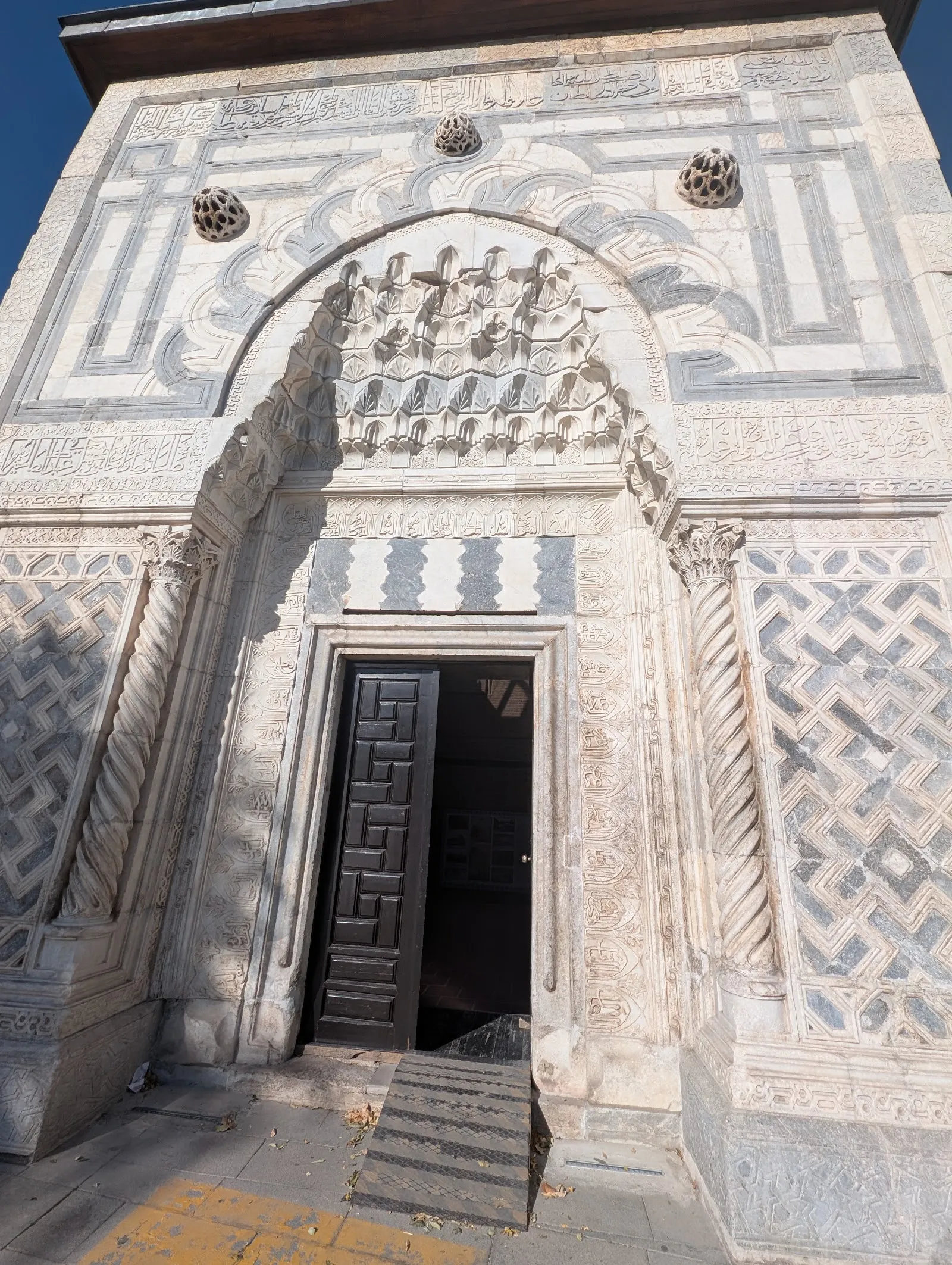
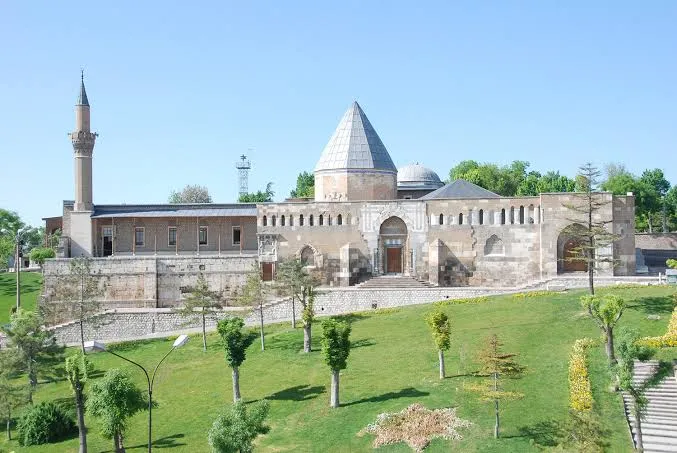
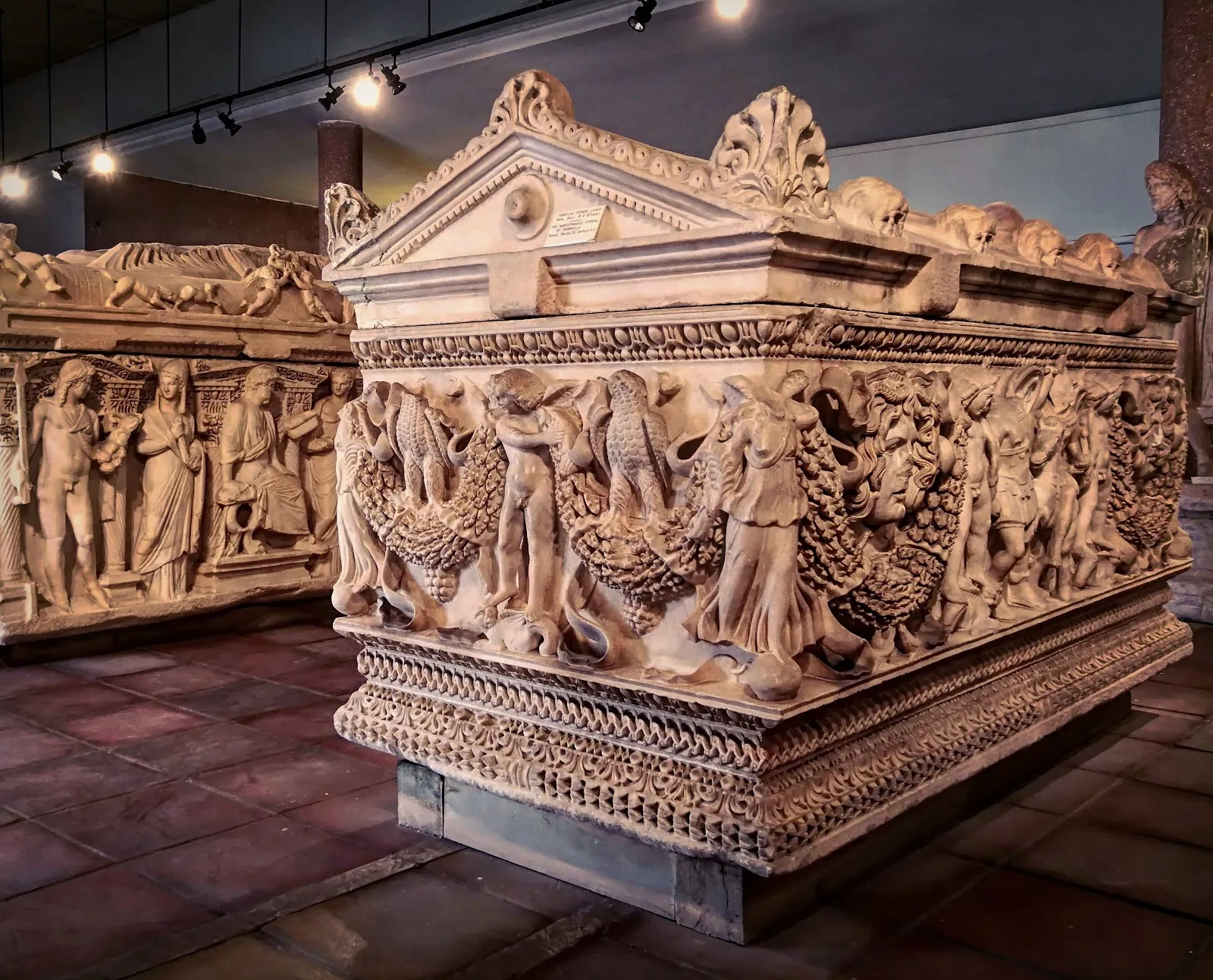
The Mevlana Museum stands on Mevlana Caddesi in Konya's Karatay district. It holds the tomb of Jalaluddin Rumi, the 13th-century Sufi poet and thinker, and occupies the former lodge of the Mevlevi Order. The turquoise-tiled dome over the mausoleum is the best-known sight in the city. Inside you will find Rumi's sarcophagus, old manuscripts and Qur'ans, musical instruments, dervish clothing and the rooms where the first dervishes lived. The tomb is still a place of prayer, so the mood is quiet, and gardens with roses surround the complex.
From rose garden to dervish lodge
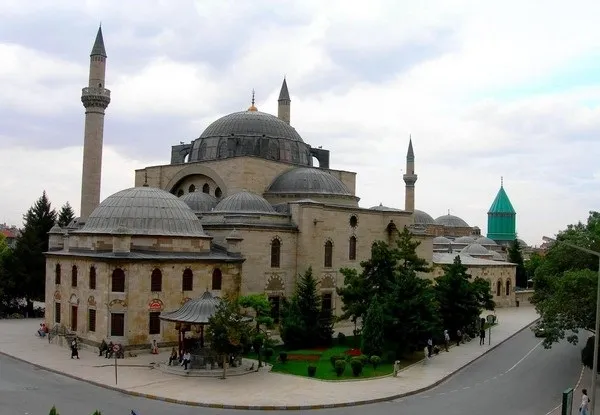
The land under the museum was once the rose garden of the Seljuk palace. Sultan Alaeddin Keykubad gave it to Bahaeddin Veled, the father of Mevlana Celaleddin Rumi, and a lodge grew up on the site over time.
Rumi died on 17 December 1273 and was buried beside his father. The mausoleum was built in 1274, and the architect is named as Bedrettin of Tabriz. Its tiled, fluted dome gives the complex its other name, the Green Dome (Kubbe-i Hadra). The lodge became the centre of the Mevlevi Order, the Sufi order that grew from Rumi's ideas and is known for the whirling dervishes. It has been open to visitors as a museum since 1926.
Inside the mausoleum
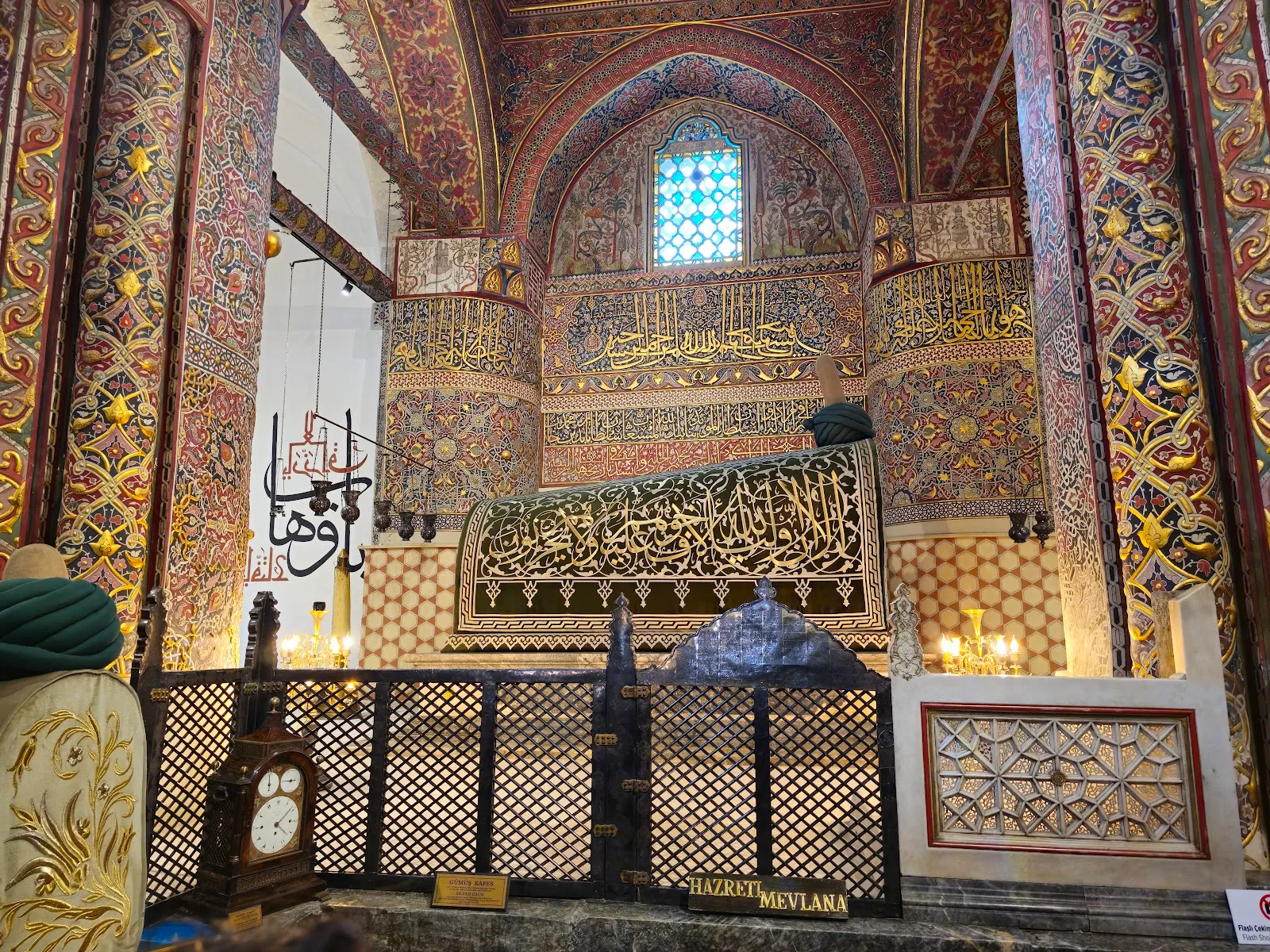
The entrance leads into an L-shaped hall. At its centre stands the large sanduka, the cenotaph placed over Rumi's burial chamber. A green cover embroidered in gold with verses from the Qur'an lies directly beneath the dome. Around it are the tombs of Rumi's family and followers.
The tomb stands on four thick columns known as elephant's feet, and the tiles, inscriptions and reliefs around it are worth slow looking. Rumi's sarcophagus is a fine piece of woodworking. At the entrance, a silver door carries an inscription about those who enter incomplete leaving perfected.
Visitors come here to pray as well as to look. Many stop at the tombs with open hands, so give them room and keep conversation quiet.
Rooms and collection
The lodge rooms show how the Mevlevi community lived and worshipped. You pass the dervish cells where the first dervishes trained in seclusion, the kitchen (Matbah), the Tilavet Chamber for Qur'an recitation, and the Semahane, the hall used for the ritual.
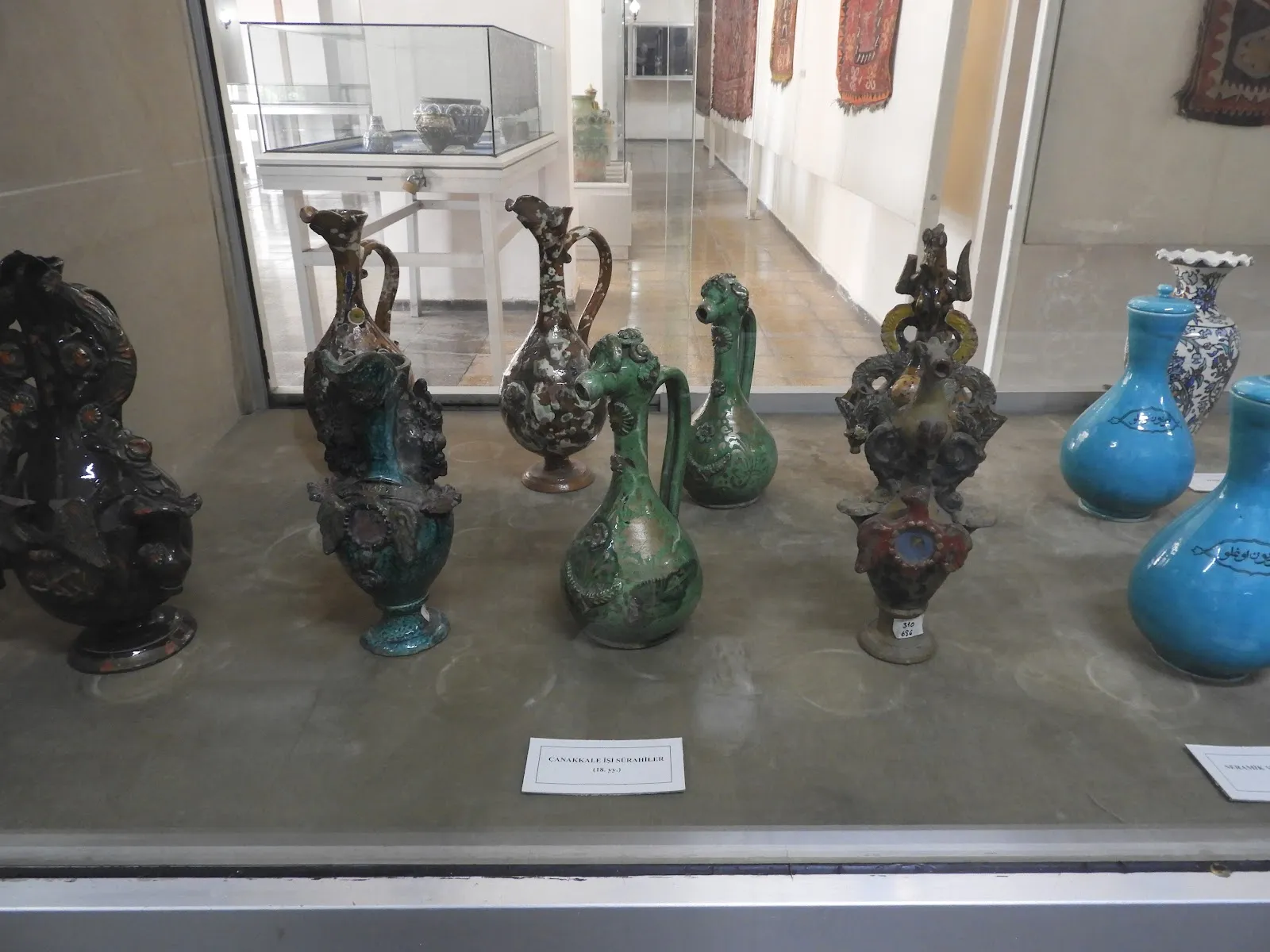
The displays include old manuscripts and Qur'ans, copies of the Mesnevi, musical instruments, dervish clothing and calligraphy. One of the Mesnevi copies dates from 1278. Rugs and illustrated Qur'ans make up a good share of the later additions.
The museum is stronger on tradition and history than on explaining Rumi's ideas, and the captions give little detail on what the Mesnevi says. Reading a short introduction to his work first makes the old volumes more meaningful.
Grounds and the whirling ceremony
The complex sits near a park, with gardens, fountains and roses around the buildings. Throughout the day the music of the ney is played, which adds to the quiet. Seating inside is limited, and visitors tend to move steadily through the rooms rather than linger.
The museum is not the place to watch the whirling ceremony. For performances of the sema, go to the Mevlana Cultural Centre nearby.
Häufige Fragen
Where is the Mevlana Museum?
It is on Mevlana Caddesi, Aziziye, in the Karatay district of Konya, close to the city centre.
How long do you need at the Mevlana Museum?
Plan one to two hours to see the tomb, the dervish rooms and the displays, and to walk through the gardens.
Can you watch the whirling dervishes at the museum?
The ceremony is held at the Mevlana Cultural Centre nearby. The museum itself shows the history of the order, its clothing and its instruments.
Do you need to cover your shoes?
Foot covers are provided before you enter the tomb chamber.
When is the best time to visit?
Early in the morning, when the site is quieter. Advance tickets are recommended.
Is there information in English?
Some displays have English text, but the explanations are brief. A little reading on Rumi beforehand helps.