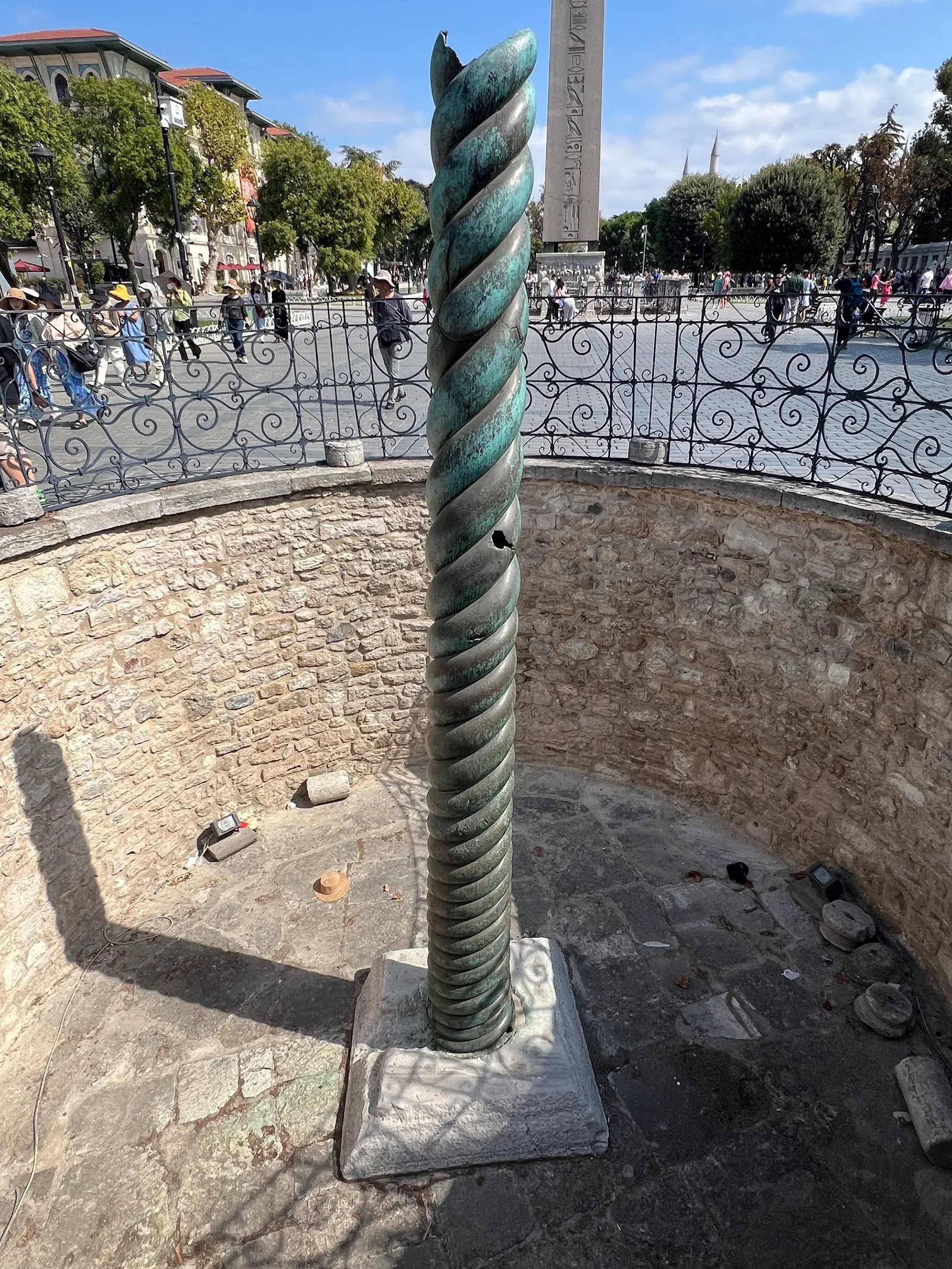
The Serpent Column is a small ancient bronze monument in Sultanahmet Square, on the site of Constantinople’s old Hippodrome. It commemorates the Greek victory over the Persians at Plataea in 479 BC and was first erected at Delphi before Emperor Constantine brought it to Constantinople. Three intertwined serpents once supported a golden tripod; today, the twisted shaft and fragments of the serpent heads remain. Stop to read the nearby information panel, then take in the column alongside the square’s other historic monuments.
A monument from Delphi
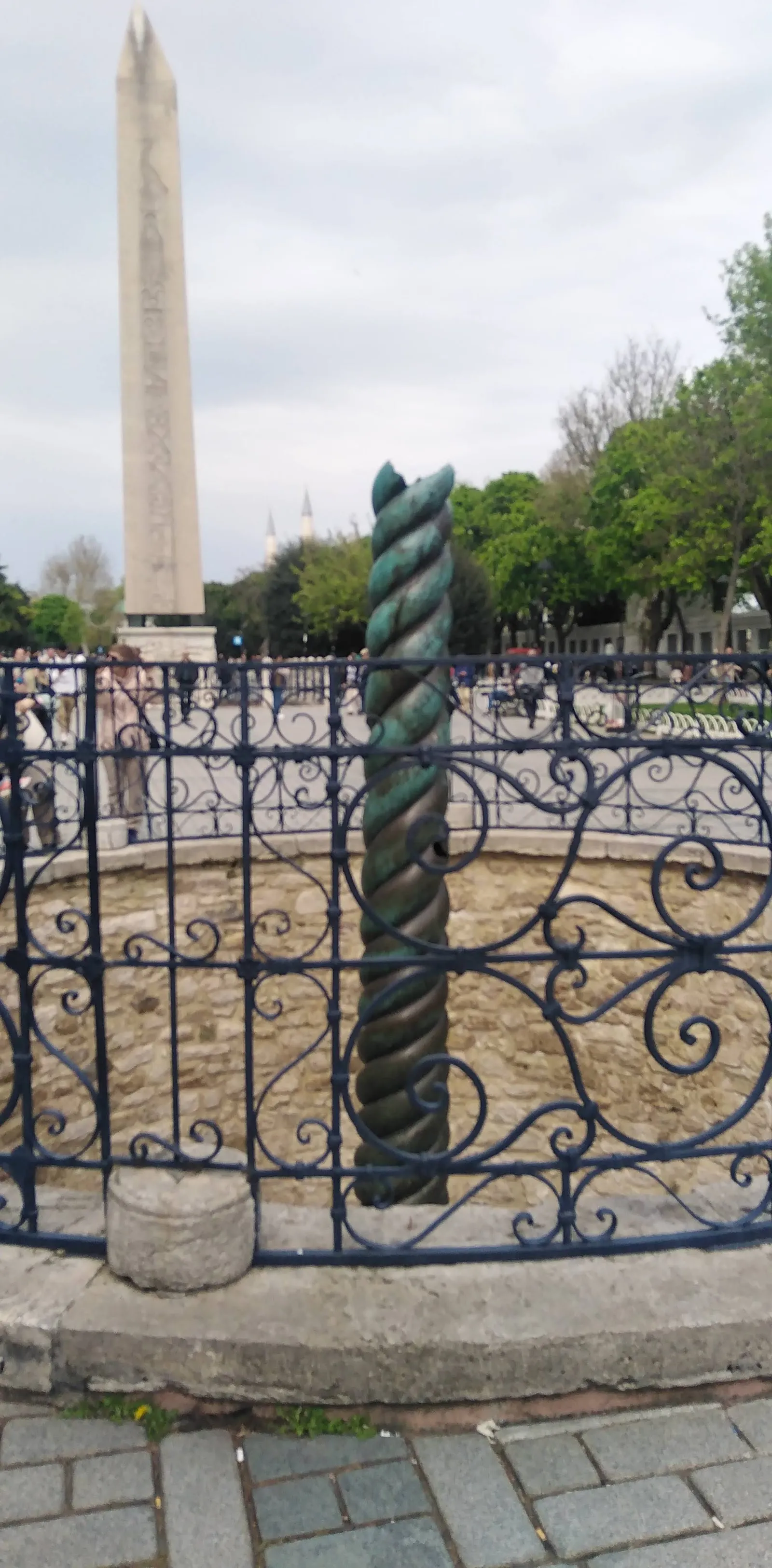
The Serpent Column began as a monument at the sanctuary of Apollo in Delphi, Greece. It commemorated the Greek victory over the Persian Empire at the Battle of Plataea in 479 BC. Also known as the Serpentine Column or Plataean Tripod, it connected a military victory with a public dedication at one of ancient Greece’s major sanctuaries.
The monument was made of bronze and originally supported a golden tripod. Its three intertwined serpents formed the column’s upper structure. The dedication also recorded the Greek communities involved in the wider Persian Wars: their names were inscribed along the coils. The golden element is gone, but the column’s surviving form still carries traces of its original design and purpose.
From Delphi to the Hippodrome
Emperor Constantine moved the column to Constantinople, placing it in the city’s Hippodrome, now Sultanahmet Square. Its relocation brought an ancient Greek monument into the setting of a new imperial capital. There, it stood among the Hippodrome’s monuments and public spaces, where its history could be read alongside the city’s own changing story.
Over time, the serpent heads were lost, and the monument’s appearance changed. A fragment of an upper jaw survives in Istanbul. The column’s later life also included a practical use: a channel through a base added in a later period connected the serpents to a fountain system. In the 1390s, travelers associated the serpents with protection against snakes, a belief that became part of Ottoman Istanbul’s relationship with the monument.
What remains in Sultanahmet Square
Today, the bronze shaft is modest in scale, and the missing heads and tripod are no longer there to show the full original composition. Its significance lies in the combination of a visible ancient object and the long journey it represents: from a dedication at Delphi to a place in Constantinople’s Hippodrome, and then into the present-day square.
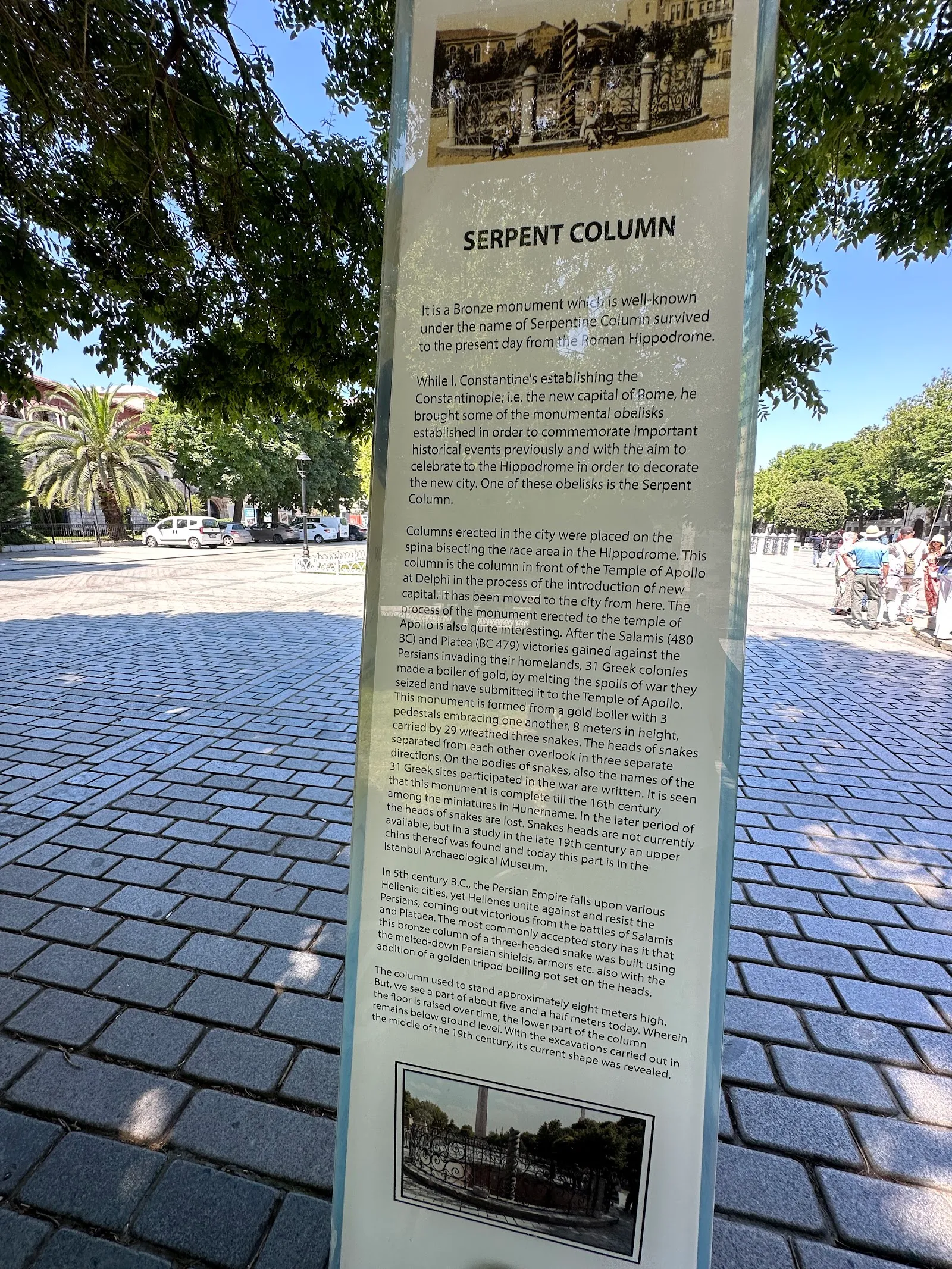
Take time to look at the column itself and read the information panel beside it. The surrounding square helps place the monument in context: the Obelisk of Theodosius and the Walled Obelisk are nearby, and the area can be combined with visits to Hagia Sophia or the Blue Mosque. The Serpent Column is an easy stop while walking through Sultanahmet, especially for anyone interested in ancient Greek history and the layers of Istanbul’s past.
Häufige Fragen
Where is the Serpent Column?
It stands in Sultanahmet Square, on the site of Constantinople’s old Hippodrome in Istanbul.
What does the Serpent Column commemorate?
It commemorates the Greek victory over the Persians at the Battle of Plataea in 479 BC.
How long should I spend at the Serpent Column?
Allow about 15 to 30 minutes to see the column and read the nearby information panel.
Is there an entrance fee?
The Serpent Column is in Sultanahmet Square, which is listed as free to visit.


