
The Kamondo Stairs link Bankalar Caddesi, Istanbul’s historic banking street, with the upper streets of Galata. Built by the Kamondo family in the late 19th century, the curving stone staircase is known for its Neo-Baroque and early Art Nouveau details, including its winding shape and railings. It is a brief stop for architecture and photographs, with views of the stairway from both ends. Come early if you want room to take pictures; the steps are also part of a steep route, so take care when descending in wet weather.
A staircase between Galata and Bankalar Caddesi
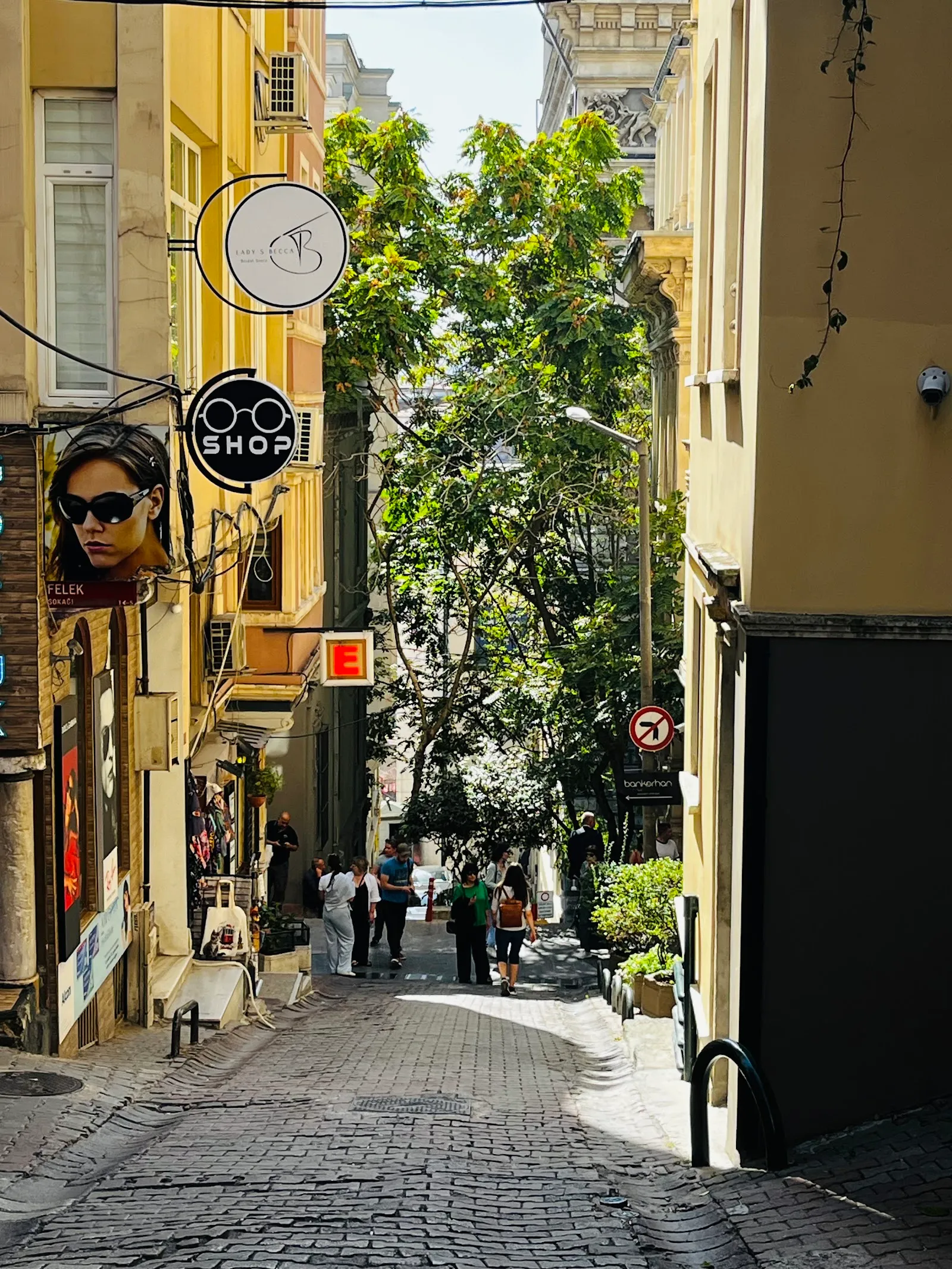
The Kamondo Stairs rise from Bankalar Caddesi towards the upper streets of Galata. Bankalar Caddesi, also known as Voyvoda, was part of Istanbul’s late Ottoman financial district, with banks, insurers and exchange institutions along the street. The steps connect that commercial area with the streets above, and remain a route through the steep neighbourhood.
The staircase was commissioned by the Kamondo family, a prominent Sephardic Jewish-Ottoman banking family. It is commonly linked to the family’s grandchildren and their journey to school. The steps also served everyday movement between Galata and the banking street below. Their family name remains attached to this public passage.
Curves shaped for a steep route
The staircase’s form sets it apart from a straight flight of steps. Oval turns, twin arms and wavy railings shape the ascent, while openings in the stone include planted spaces. Its design combines Neo-Baroque and early Art Nouveau influences with a practical route through the slope.
The winding layout is associated with safer movement on the steep ground. The stairs replaced a more direct, difficult route, and their curves break up the descent. The steps are still steep, so take care, particularly in wet weather.
A short stop in the Galata neighbourhood
The Kamondo Stairs are easy to pass if you are focused on the larger sights nearby, but they make a concise architecture stop on foot between Galata and Karaköy. Look at the staircase from both ends to see how its two arms meet and how the turns fit the slope. The railings and stonework are worth a closer look before moving on.
The stairs became widely photographed after Henri Cartier-Bresson photographed them in the 1960s. They remain a popular setting for pictures, and local pedestrians use them as part of their daily route. Early morning is a useful time to visit if you want fewer people in your photos. The stairs are open around the clock, but their steep surface calls for care when descending, especially in rain.
Häufige Fragen
Where are the Kamondo Stairs?
They connect Bankalar Caddesi with the upper streets of Galata in Istanbul, between the Galata and Karaköy areas.
Who built the Kamondo Stairs?
The Kamondo family commissioned the staircase in the late 19th century. Its construction is associated with the family’s grandchildren and their route to school.
When is the best time to visit the Kamondo Stairs?
Go early in the morning if you want fewer people in your photographs.
How long does a visit take?
It is a short stop to see the staircase and take photographs. The available information does not establish a typical visit length.


