In Konyaaltı, west of Antalya’s old quarter, this archaeological museum brings together finds from the city and the wider Mediterranean region. Its galleries trace local history from prehistoric times through the Roman and Byzantine periods, with objects from sites including Perge. Look for the Roman sculptures in the Hall of Gods, carved sarcophagi and mosaics. English descriptions help make the collections easier to follow, and the grounds include an outdoor display area.
A collection from across the region
The museum brings together archaeological finds from Antalya and nearby ancient regions, including Lycia, Pamphylia and Pisidia. Objects from sites such as Perge help connect the displays to places you can visit elsewhere in the area.
The collections cover a long span of local history, from prehistoric periods to the Roman and Byzantine eras. Pottery, sculptures, mosaics and other objects show how the region’s communities and artistic traditions changed over time. The exhibits are arranged by subject and period, so you can move through the story in sections rather than face one undifferentiated display.
Roman sculpture and carved sarcophagi
The Hall of Gods is a key stop for its Roman statues of Greek deities, including Zeus, Athena and Hercules. Many of the sculptures came from Perge. Take time to examine the carved details and the differences between individual figures; the scale and workmanship are central to the display.
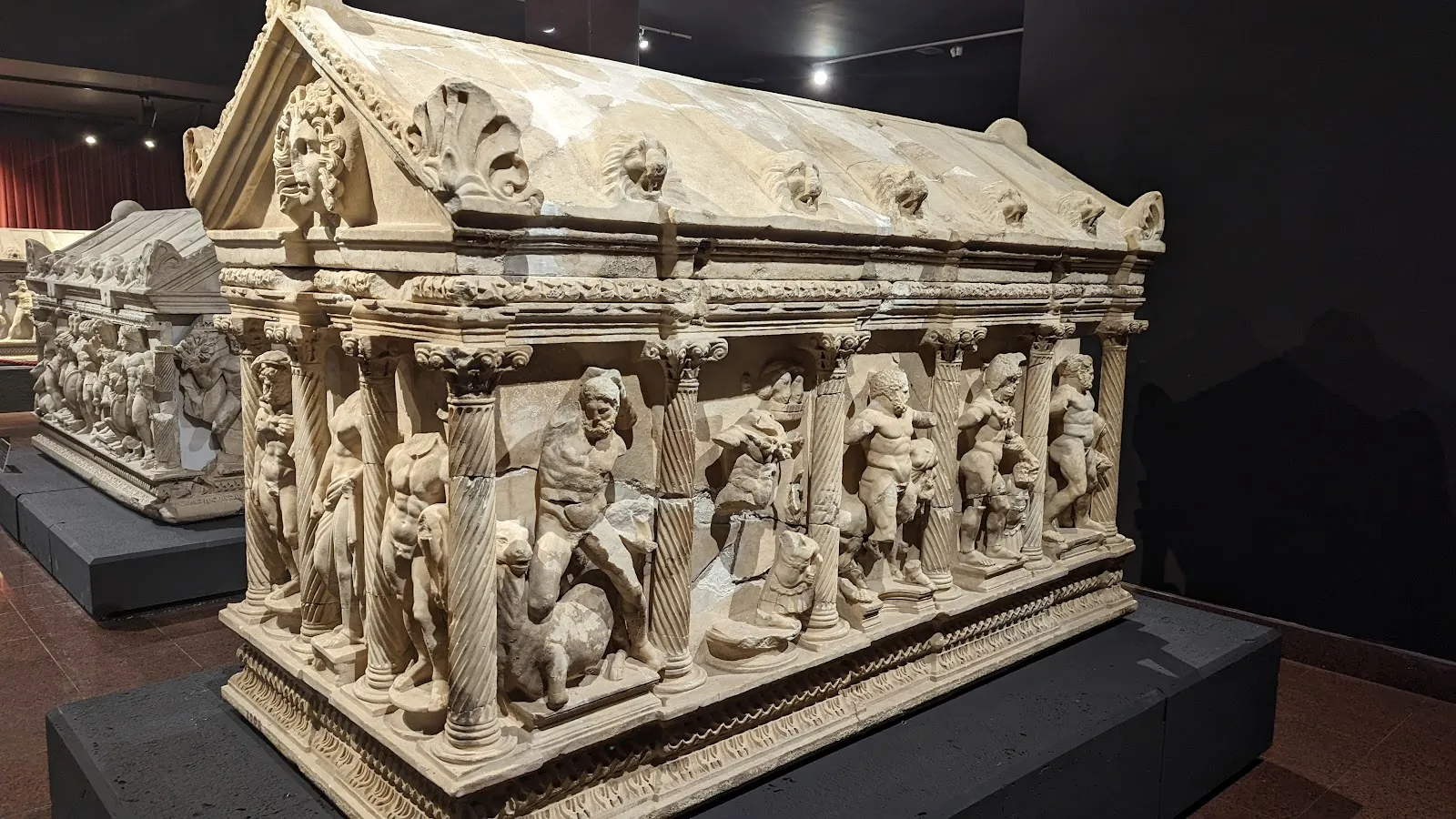
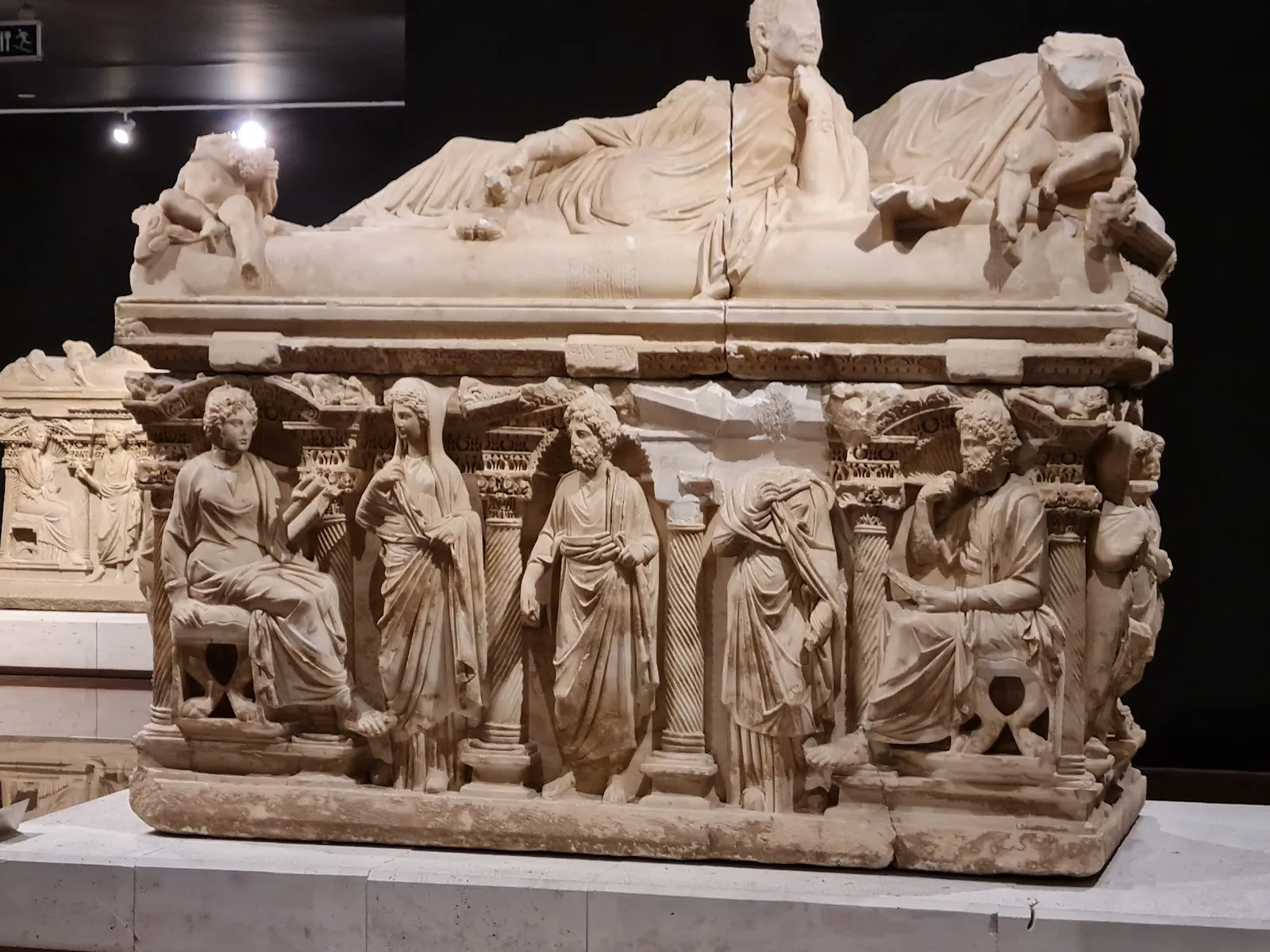
The sarcophagi gallery gives another close look at ancient stone carving. Their reliefs reward a slower visit, so it is worth leaving room between the larger sculpture halls instead of hurrying from one highlight to the next. Mosaics add another element to the collection, alongside smaller archaeological objects and finds from excavations across the region.
From prehistoric finds to later periods
The museum’s displays extend beyond classical antiquity. Finds from prehistoric times sit alongside material from the Roman and Byzantine periods, giving a wider view of the area’s past. The collection also includes objects associated with later eras, including the Seljuk and Ottoman periods.
English descriptions accompany the exhibits and help explain their context. The galleries are arranged to make the collection approachable even if you are not familiar with the region’s archaeology. Rather than trying to cover every case in detail, choose a few sections that interest you and leave time for the major sculpture and sarcophagus displays.
Planning time for your visit
Set aside at least an hour; a longer visit gives you more time to read the labels and study the sculpture and mosaics. The museum also has an outdoor gallery and garden, with archaeological pieces displayed outside. A gift shop and cafeteria are located near the exit, and the grounds offer a place to pause after the galleries.
The museum is in Konyaaltı, west of Antalya’s old quarter. It has accessible entrance, restroom and parking facilities, along with a restaurant and visitor services. There is an admission fee, and advance ticket booking is recommended. Early morning or later afternoon can help you avoid busier periods.
Häufige Fragen
How long should I spend at Antalya Archaeology Museum?
Allow at least an hour. Add more time if you want to read the displays closely and explore the outdoor gallery.
What are the museum’s main highlights?
Look for the Roman statues in the Hall of Gods, the carved sarcophagi and the mosaics. The collection also includes finds from Perge and other regional sites.
Are there English descriptions?
Yes. English-language descriptions accompany the exhibits, so you can use them to follow the displays without an audio guide.
Is there an admission fee, and should I book ahead?
The museum charges admission, and advance ticket booking is recommended. The available information does not give a ticket price.