Wat Mangkon Kamalawat, also called Wat Leng Noei Yi, is a Chinese Buddhist temple in Bangkok’s Chinatown. Its red lanterns, dragon motifs and detailed carvings set it apart from the city’s Thai-style temples. Inside, you can explore halls and shrines with Buddhist, Taoist and Confucian imagery, or pause to pray and make a wish. The temple is also a lively setting for Chinese New Year and the Vegetarian Festival. Visit on a weekday morning for a quieter look around, and dress respectfully for this place of worship.
A Chinese Buddhist temple in Chinatown
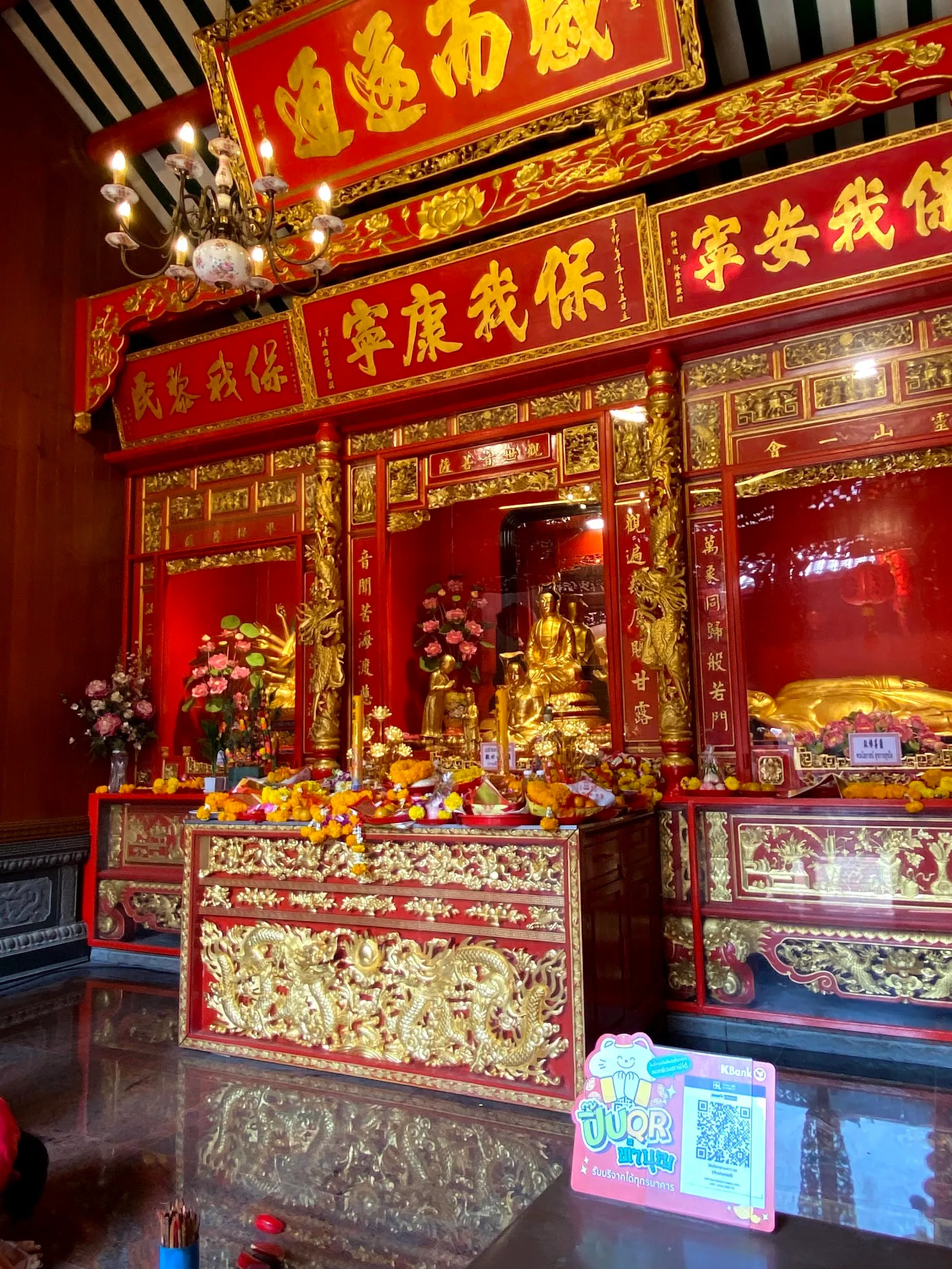
Wat Mangkon Kamalawat, also known as Wat Leng Noei Yi, is one of Bangkok’s major Chinese Buddhist temples. It sits in Chinatown and is associated with the Mahayana Buddhist tradition. The temple is also known as the Dragon Lotus Temple, a name reflected in its dragon and lotus decoration.
Its history is linked to the Chinese Buddhist community in Bangkok. The temple opened in the late 19th century and became a place for Chinese Buddhist practice in the city. Its importance is especially visible during major religious and Chinese calendar events, when people come to pray and take part in ceremonies.
What to see inside
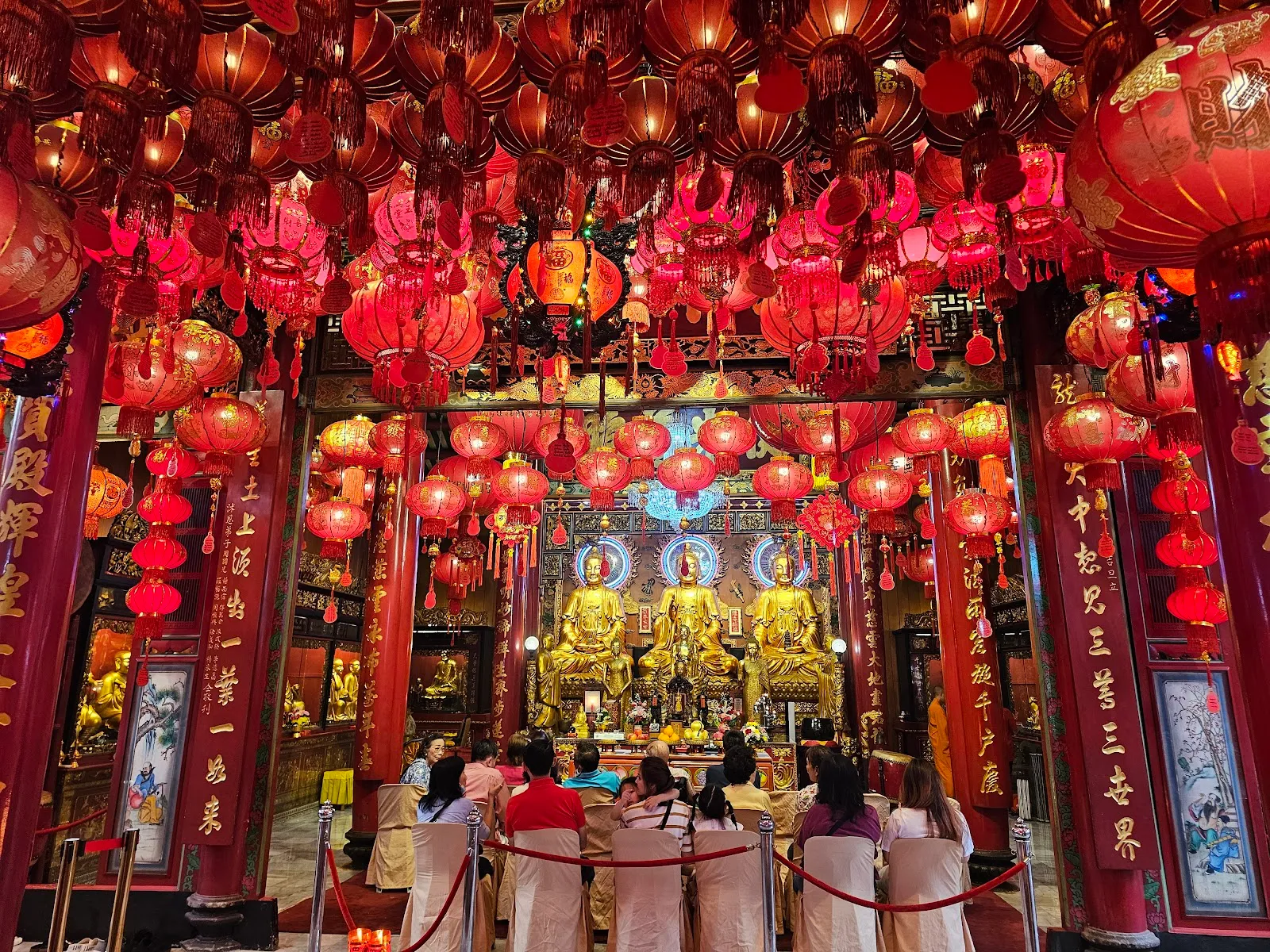
The street entrance, marked by red lanterns and dragon decoration, gives only a partial sense of the complex beyond it. Courtyards, halls and smaller shrines sit within the temple grounds. The main hall is flanked by guardian statues, while other spaces contain further shrines and sacred figures.
Look for the carved details, Chinese-style paintings and bright colours across the buildings. Dragon imagery appears in the temple’s decoration, alongside floral motifs and lanterns. The halls also contain Buddhist statues, including a laughing Buddha, as well as figures associated with Chinese religious traditions. The mix of Buddhist, Taoist and Confucian shrines makes the site a place to encounter several strands of Chinese religious practice together.
Prayer, festivals and visiting respectfully
People come to pray, make merit and ask for good fortune. Rituals here include prayers intended to ward off bad luck, and visitors may make wishes about personal matters such as work or life. Follow the lead of those worshipping, keep your voice low in prayer areas and dress with respect for the temple setting.
Chinese New Year brings red decorations, drums and dragon performances, and the temple also observes the Vegetarian Festival. These occasions add a festive dimension to a visit, but the grounds can become busy. For a calmer look around, choose a weekday morning. Incense offerings are not permitted, while candles may be lit in designated areas. Donations and some temple services use cashless payment. Admission is free, and Wat Mangkon MRT station is a short walk away.
Häufige Fragen
Is there an entry fee for Wat Mangkon Kamalawat?
Admission is free. Donations can be made through the temple’s cashless system.
How do you get to Wat Mangkon Kamalawat?
The temple is in Bangkok’s Chinatown, and Wat Mangkon MRT station is a short walk away.
What should I wear to Wat Mangkon Kamalawat?
Dress appropriately for a place of worship and behave respectfully in the prayer areas.