Lungshan Temple is an active Buddhist temple in Taipei’s Wanhua District, founded in 1738 by settlers from Fujian. Guanyin is its principal figure, alongside altars to Taoist and folk deities, including Yue Lao, associated with love and marriage. Look for carved stone and bronze dragon columns, detailed woodwork and colorful roof ornaments. You can also observe worshippers praying and making offerings; give them space and keep your voice low. The temple is close to Longshan Temple Station and the historic Bopiliao area.
A temple founded in 1738
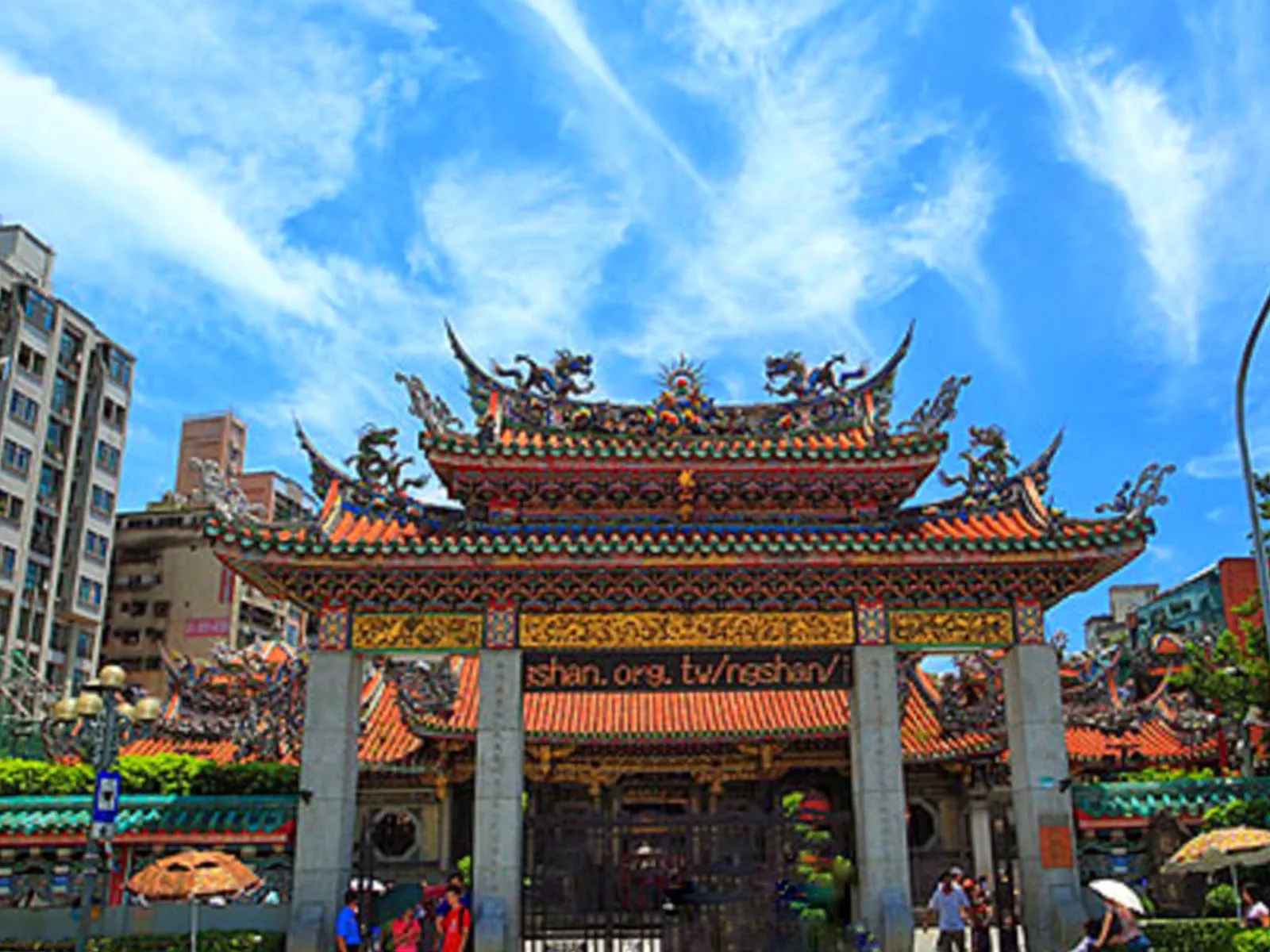
Settlers from Fujian founded Lungshan Temple in 1738 as a place to honor Guanyin, the bodhisattva associated with mercy. It became a gathering place for the early Chinese community in Bangka, the former name of Wanhua. The temple remains an active religious site, with worshippers coming to pray and make offerings.
Guanyin is the principal figure, but the temple also has altars for Taoist and Chinese folk deities. Among them is Yue Lao, linked with love and marriage, and Wenchang Dijun, associated with culture and literature. The range of figures reflects the varied beliefs observed here; it is not solely a Buddhist site.
Architecture and restoration
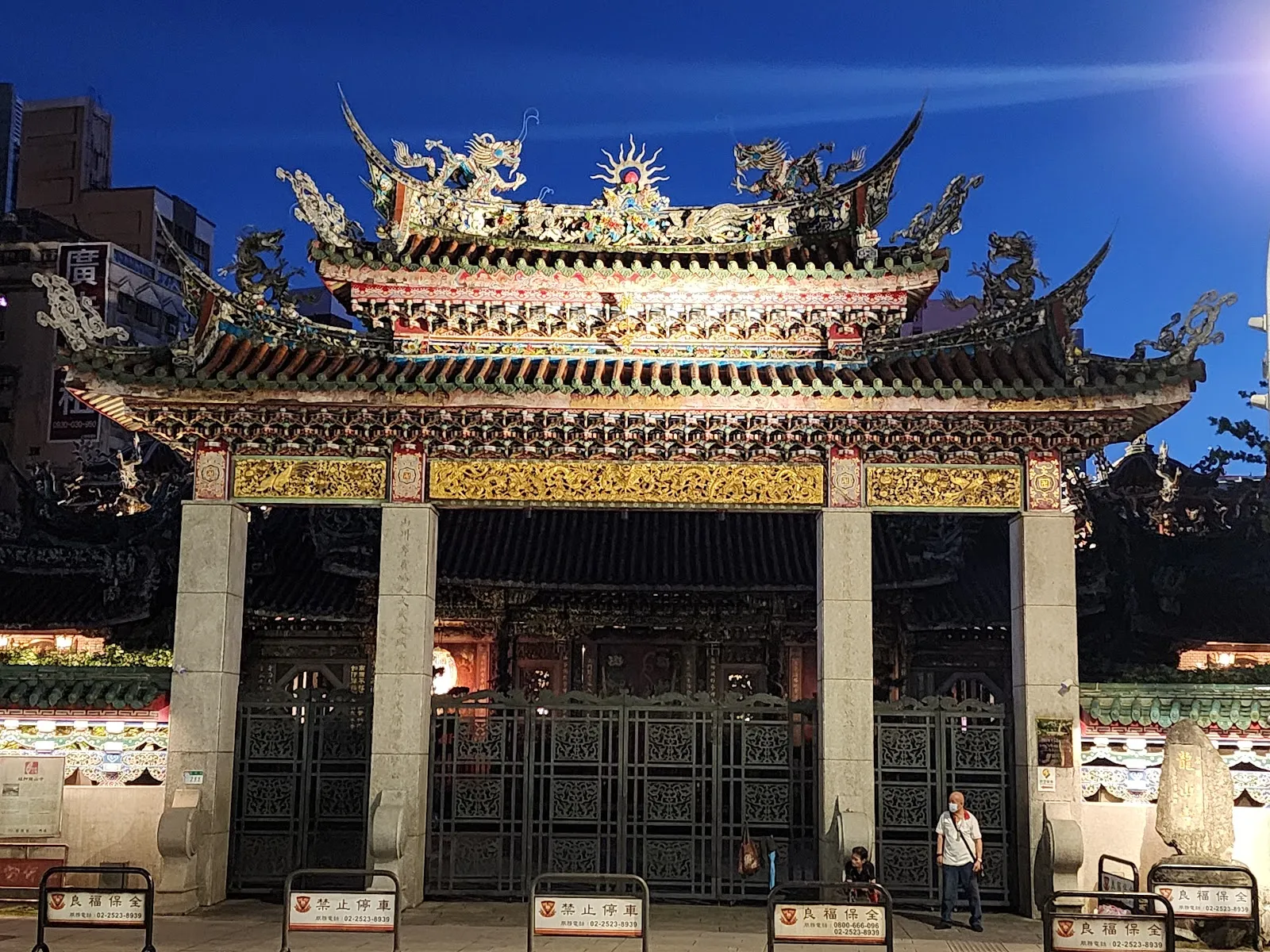
Look closely at the stone and bronze columns, including dragon carvings, as well as the painted and carved details across the buildings. Roof decorations made with porcelain and glass add color above the courtyards. Woodwork, ornate eaves and a decorated entrance archway reward a slower circuit of the temple.
The complex has been rebuilt more than once after disasters and war damage. During air raids in the Second World War, part of the temple was destroyed, but the statue of Guanyin survived. The survival of the statue became an important part of local belief about the temple. Its present appearance reflects both traditional southern Chinese temple design and a long history of repair.
A visit as a place of worship
People come here to pray, light incense and make offerings, so the temple is part of daily religious life as well as a place to see historic architecture. You may encounter prayer or chanting during your visit. Keep your voice low, avoid interrupting worshippers and leave room for people moving through the halls. Take care around the carved details and follow the cues of those praying.
Information posted around the site can help you understand the deities and their roles. Fortune-telling practices are also part of the temple’s traditions; instructions are provided on site. The temple is at No. 211, Guangzhou Street, and Longshan Temple Station on the Blue Line is a convenient route, with Exit 1 near the entrance. Bopiliao Historic Block is nearby for a second stop focused on Wanhua’s past.
Häufige Fragen
Is Lungshan Temple free to visit?
The available information describes entry as free.
How do I get to Lungshan Temple?
Take Taipei Metro’s Blue Line to Longshan Temple Station and use Exit 1.
What is Lungshan Temple dedicated to?
Guanyin is the temple’s principal figure. Its altars also honor Taoist and Chinese folk deities, including Yue Lao.
How should I behave at the temple?
Keep your voice low and give worshippers room. Do not walk in front of or disturb people who are praying.