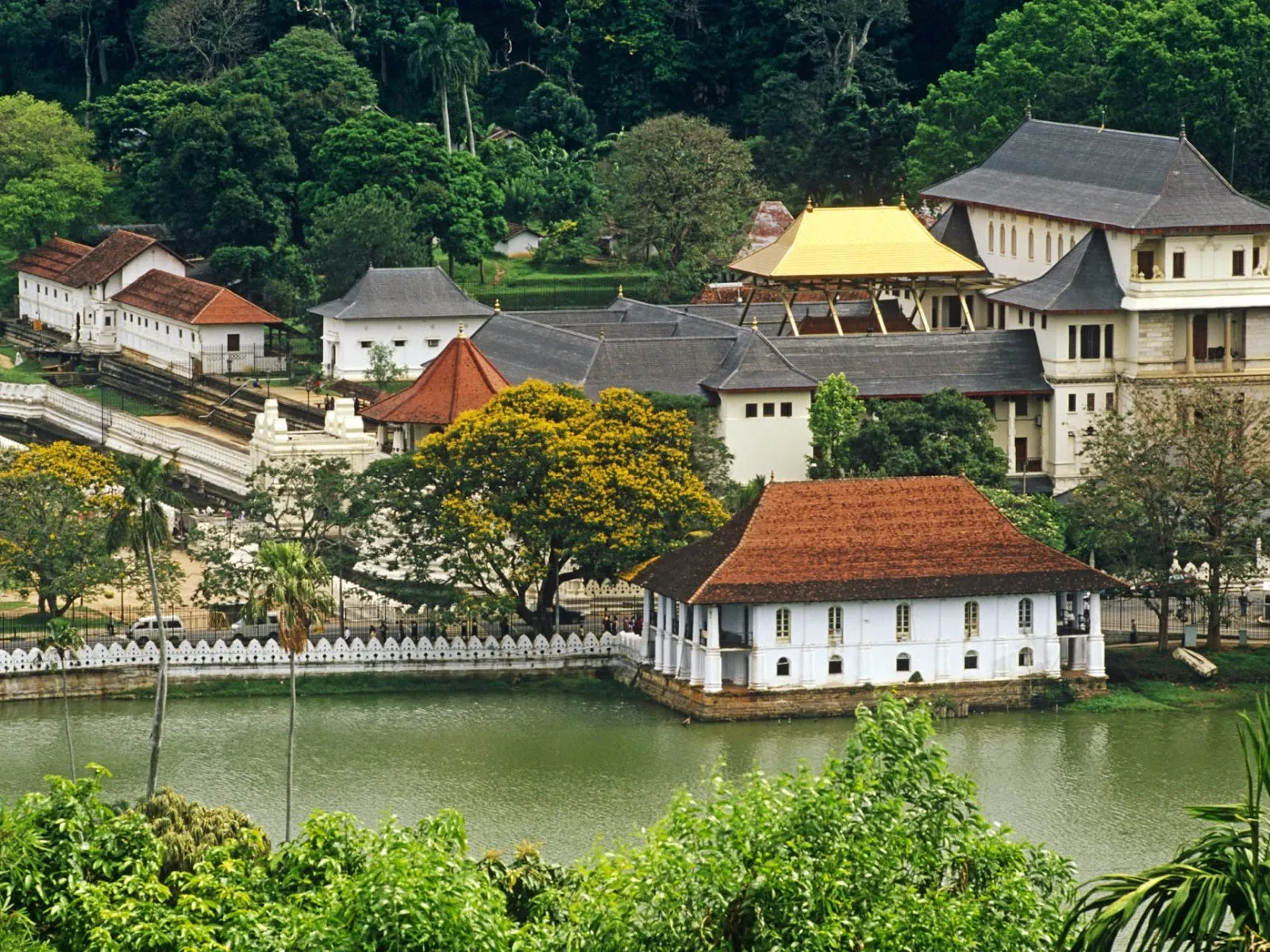
Sri Dalada Maligawa, the Temple of the Tooth, sits beside Kandy Lake inside the former royal palace complex. It houses a tooth relic of the Buddha, the most important Buddhist relic in Sri Lanka, and devotees come to worship every day. The golden-roofed shrine has a quiet inner courtyard, murals of the Buddha's life and carved wooden pillars. The wider complex holds smaller shrines, museums and the Octagon. UNESCO listed the site in 1988. Treat it as a working place of worship and time your visit around the daily rituals.
The relic and how it reached Kandy
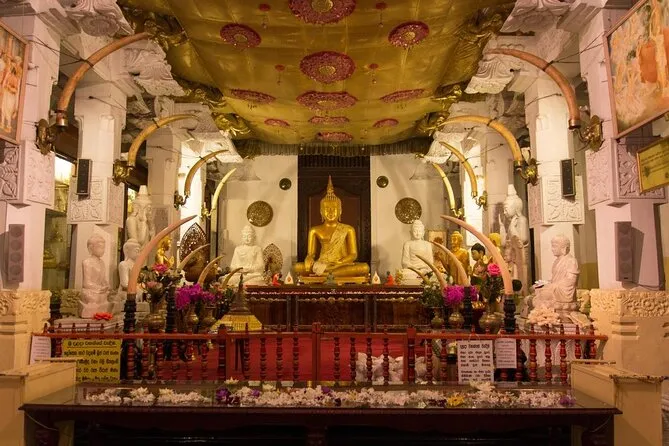
The tooth relic is the reason for the temple. Accounts say that after the Buddha's passing, his remains were divided and sent to monasteries for worship. This tooth was kept by the rulers of Kalinga in ancient India until about the 4th century CE.
It was then carried to Sri Lanka by Princess Hemamala and Prince Dantha, during the reign of King Keerthi Sri Meghavarna. Kandy was the last royal capital of the island, and the relic was kept here in a shrine within the palace complex.
The relic also carried political weight. It is believed that whoever holds it holds the governance of the country, and the kings of Kandy guarded it with great care. Today it is a place of pilgrimage for Sri Lankans and for Buddhists from abroad.
What to see in the complex
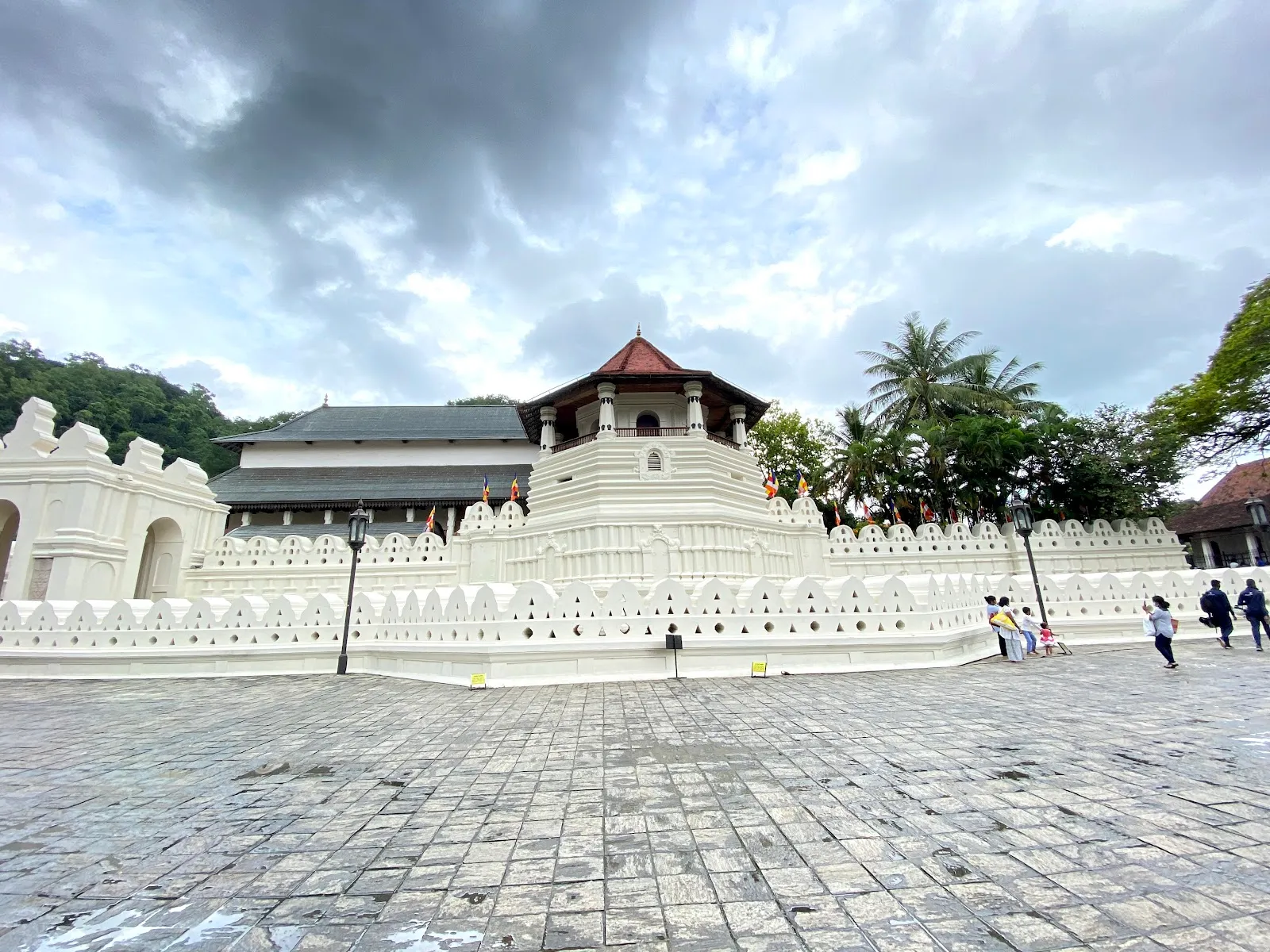
The Temple of the Tooth is part of a larger group of civil and religious buildings. Besides the main shrine, there are smaller temples and shrines, the royal palace, a library and several museums. The kings of Kandy built them with granite, limestone, wood, ivory and marble.
The main temple has a golden roof, an inner courtyard, murals that show scenes from the Buddha's life and carved wooden pillars. The relic itself is kept in a gold casket shaped like a dagoba, which holds a series of six smaller caskets.
Two older structures draw particular attention: the Pattirippuwa, known as the Octagon, and Pallemale Viharaya. The museum is unusual in Asia. Its exhibition follows how Buddhism spread across the continent and beyond, from the Buddha's simple teachings to the many schools of followers today.
Rituals and ceremonies
Daily puja is the heart of a visit. During the offerings, the room that houses the relic is open to devotees and visitors, and it is guarded closely. Watch quietly and follow the lead of those around you.
Ceremonies such as Thevava and Gilanpasa Pooja are part of the temple's life. Observing them gives more insight into Buddhist practice than walking quickly through the exhibits. An evening light ceremony is also held at the temple.
The temple is a living place of worship, so keep your voice low, dress as required and follow the staff's instructions.
Planning the visit
The temple sits at the end of Dalada Weediya, right beside Kandy Lake. It opens very early, at dawn, and closes in the evening. Arriving in the morning or evening usually gives a quieter experience than the peak hours.
Before sunset, the pools outside reflect the changing colour of the sky. After dark the temple looks different again, and some travellers find that is when its architecture is at its best.
On the same trip, the Peradeniya Botanical Gardens are about 6 km from the city. A fire show is held near the temple several times a week.
Häufige Fragen
What should I wear to Sri Dalada Maligawa?
Dress modestly and follow the attire rules set by the temple authorities. Visitors who do not meet them can be refused entry.
What is the best time to visit?
Early morning or evening is calmer and fits the daily rituals. Arriving before sunset also lets you see the light on the pools outside.
Is Sri Dalada Maligawa a UNESCO World Heritage Site?
Yes. It was designated in 1988 as part of the sacred city of Kandy, and sits within the former royal palace complex.
Is the temple wheelchair accessible?
The entrance, restroom and parking lot are wheelchair accessible. Parking is paid.
What else is there to see besides the main shrine?
The complex includes smaller shrines, the royal palace, a library and museums. The museum covers the spread of Buddhism across Asia.