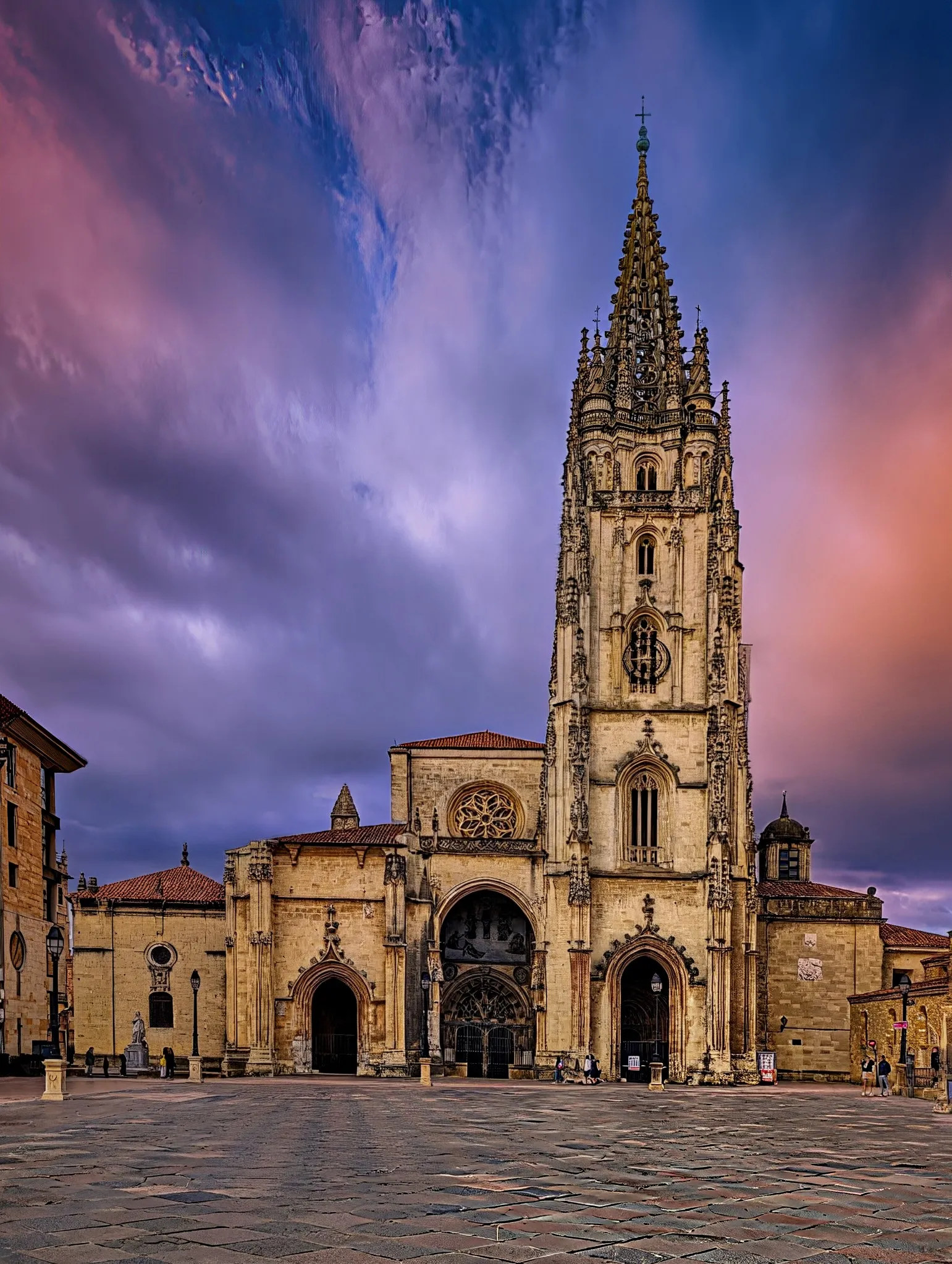
The Cathedral of San Salvador, also known as Oviedo Cathedral, stands on Plaza Alfonso II el Casto in the old town. It was founded in the 9th century under King Alfonso II, and later building added Gothic, Romanesque, Baroque and Renaissance work, so the exterior and interior show several periods at once. The 80-metre bell tower is the clearest Gothic feature. Inside, the Cámara Santa holds some of Spain's most important Christian relics, including the Cross of the Victory and the Holy Shroud. Allow time for the interior, where the chapel, cloister and crypt are.
From the 9th century to today
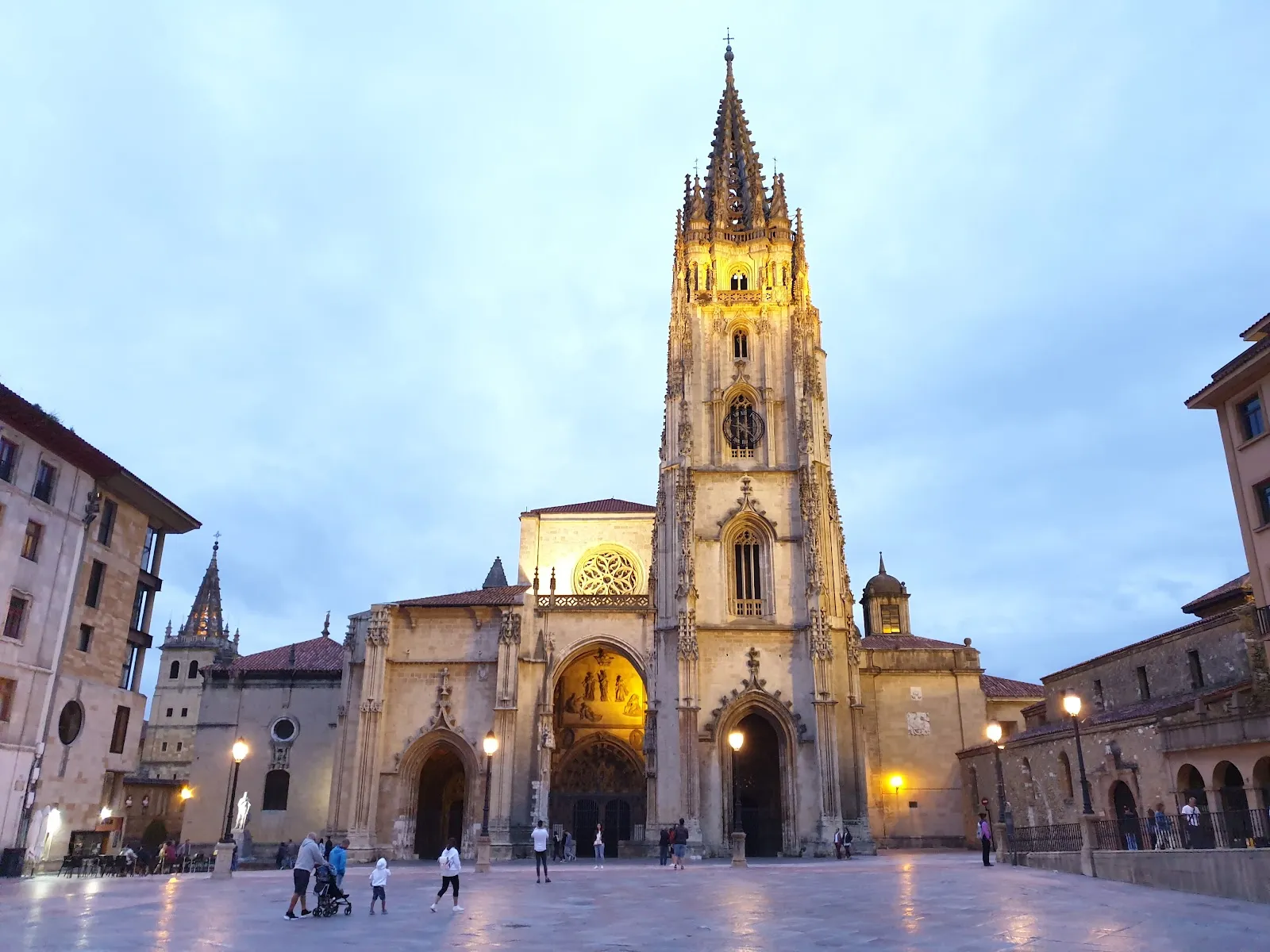
King Alfonso II founded the cathedral in the 9th century, and the early building follows the Asturian Pre-Romanesque style, a style that developed in the region.
Over the centuries the cathedral was expanded and rebuilt several times. Gothic is the dominant style today, with Romanesque, Baroque and Renaissance elements added alongside it. The cathedral also served as the royal mausoleum of the Kings of Asturias, which adds to its importance in the region's history.
The cathedral is closely linked to the Camino de Santiago. A saying holds that pilgrims should visit Oviedo before continuing to Santiago, and many pilgrims stop here. The first stage of the Camino Primitivo passes through the city centre, so the cathedral is often the first major building that walkers see.
Inside the cathedral
The Cámara Santa, or Holy Chamber, is the cathedral's most important space. It is one of Spain's leading collections of Christian relics and is listed by UNESCO. Its holdings include the Cross of the Victory, which is linked in local tradition to the battle of Covadonga, the Cross of the Angels, and the Holy Shroud.
The visit goes beyond the chamber. Visitors can also see the antechamber, the cloister, the crypt, the altarpiece and the royal tombs. A small church museum displays objects from the cathedral's history, and the old choir stalls are shown together, with their carved misericords on display.
A modern chapel dedicated to Covadonga stands out against the gold of the older areas. The contrast is worth a moment, since it shows how the building has changed over time.
Outside, the square holds a monument to Alfonso II el Casto and a garden called the Garden of the Kings.
How a visit works
The interior is paid. The cultural visit runs Monday to Saturday, and the audio guide, which works through an app on your phone, adds context to each room.
The tower costs extra on top of the interior ticket. Seniors and students pay a lower rate than adults.
The entrance has wheelchair access, and there is an accessible restroom and an assistive hearing loop. Tickets can be bought in advance, which is recommended.
Häufige Fragen
Is there an entry fee?
Yes. The interior is paid, the tower costs extra, and seniors and students pay a lower rate. Check the official website for current prices.
How long do you need?
Most visits inside take between about an hour and two hours, depending on how much time you spend in the chamber and the rooms.
Is there an audio guide?
Yes. The audio guide runs on your phone through an app, so install it before you visit.
Is the cathedral on the Camino de Santiago?
Yes. It is tied to the Camino de Santiago, and many pilgrims stop here. The first stage of the Camino Primitivo passes through the city centre.