The Casas Colgadas, or Hanging Houses, are medieval homes with wooden balconies that jut out over the Huécar gorge in Cuenca. They are among the country's most photographed sights and stand within the UNESCO-listed old town. See them from San Pablo Bridge, then go up to the cathedral and the lookouts above the gorge. One of the houses holds a museum of Spanish abstract art, and another has a restaurant with a tasting menu served in a single cliff-side room. Plan a visit for spring or autumn, and stay at least one night to see the houses lit up after dark.
Origins and history
Moorish settlers founded Cuenca in the 8th century. Castilian forces took the town in 1177 under Alphonse VIII, who made it a royal town with a bishop overseeing its buildings. The old town grew along a narrow ridge between two river gorges, and its medieval layout survives in the steep cobbled streets and the old wall.
The houses date from the 14th and 15th centuries. They were built as homes, and the cliff edge gave the town a strong defensive position as well as room to build. Some were rebuilt in the early twentieth century. Several names are used for them, including Casas del Rey and Casas Voladas, meaning Flown Houses.
The walled city is a UNESCO World Heritage Site. Its Gothic cathedral is one of the town's great buildings and is visible from the houses' viewpoints.
What is inside the houses
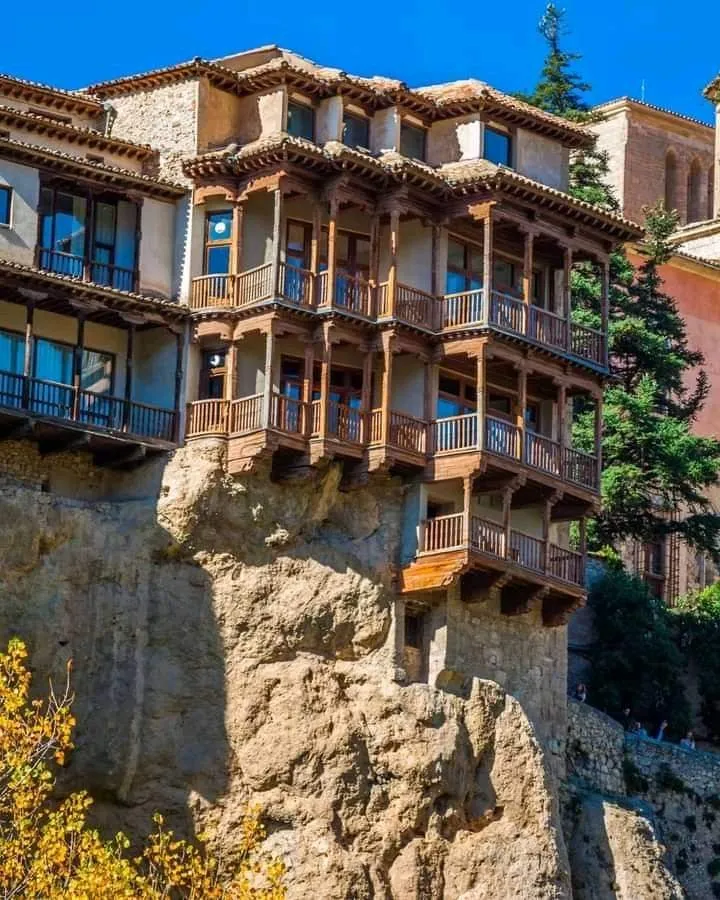
Three of the houses survive. Casa de la Sirena, the House of the Mermaid, holds a restaurant. The two Casas del Rey, the Houses of the King, house the Museo de Arte Abstracto Español.
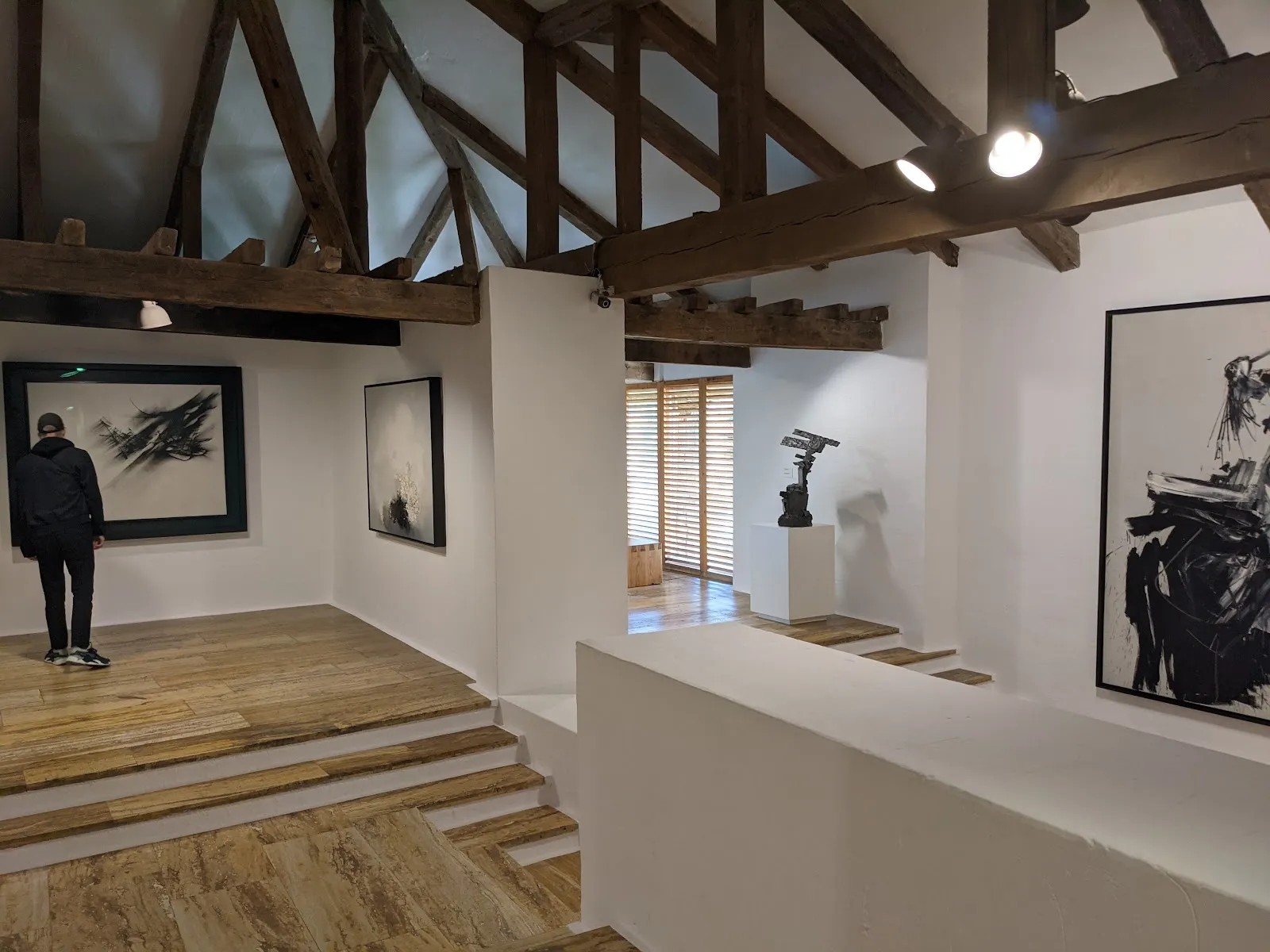
The museum shows paintings and sculptures by Spanish abstract artists of the 1950s and 1960s, the painters and sculptors who shaped Spanish art through the middle of the twentieth century. Admission to the museum is free.
The houses were built on the cliff itself, so the rooms sit almost directly over the river gorge. Standing inside gives a different sense of the drop than the view from outside.
How a visit works
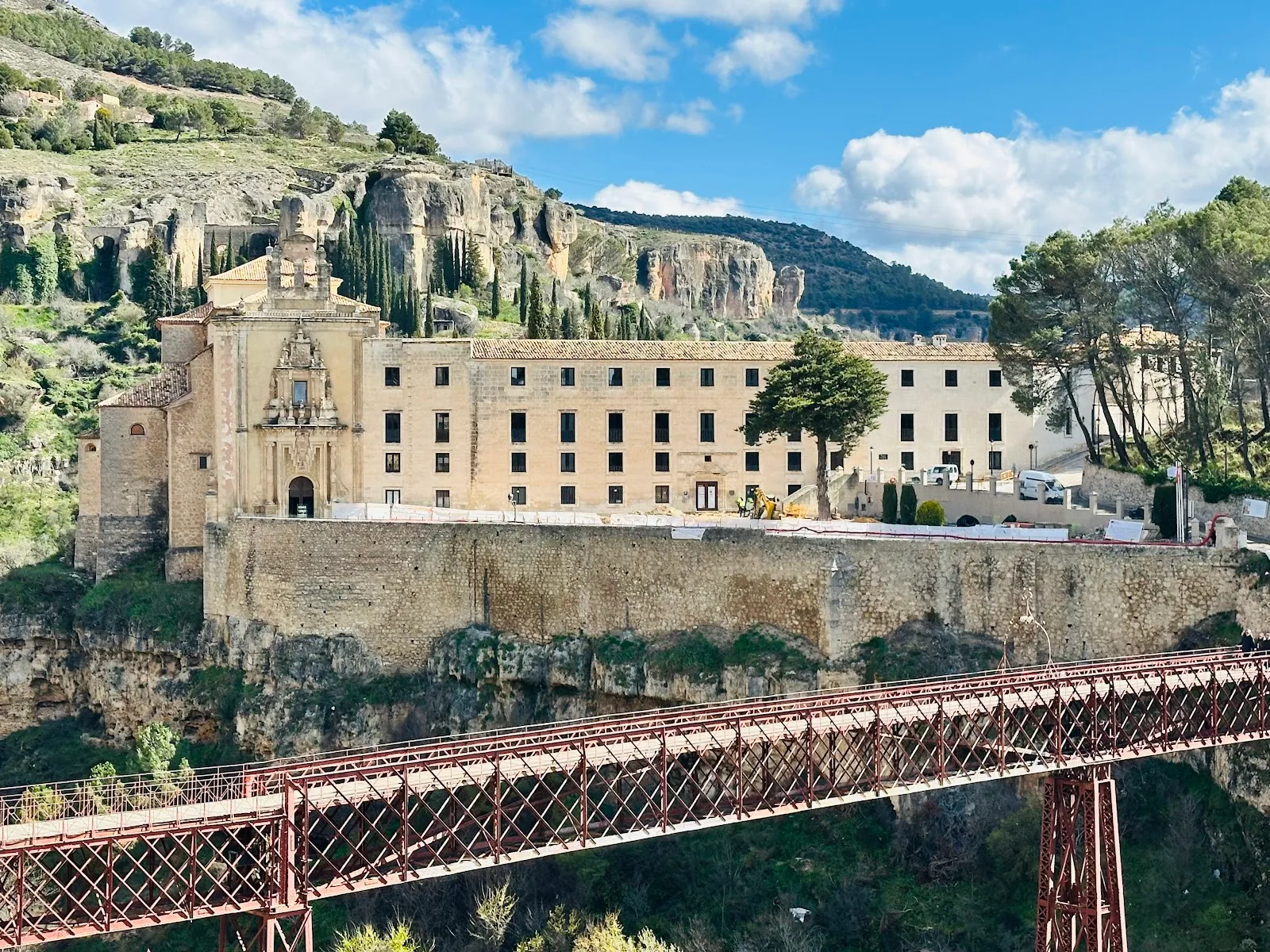
The best-known viewpoint is San Pablo Bridge, a 40-metre steel bridge that connects the Parador to the old town. The Parador occupies the former Convent of San Pablo, set in the bend of the Huécar. From the bridge, the houses sit on the far side of the gorge.
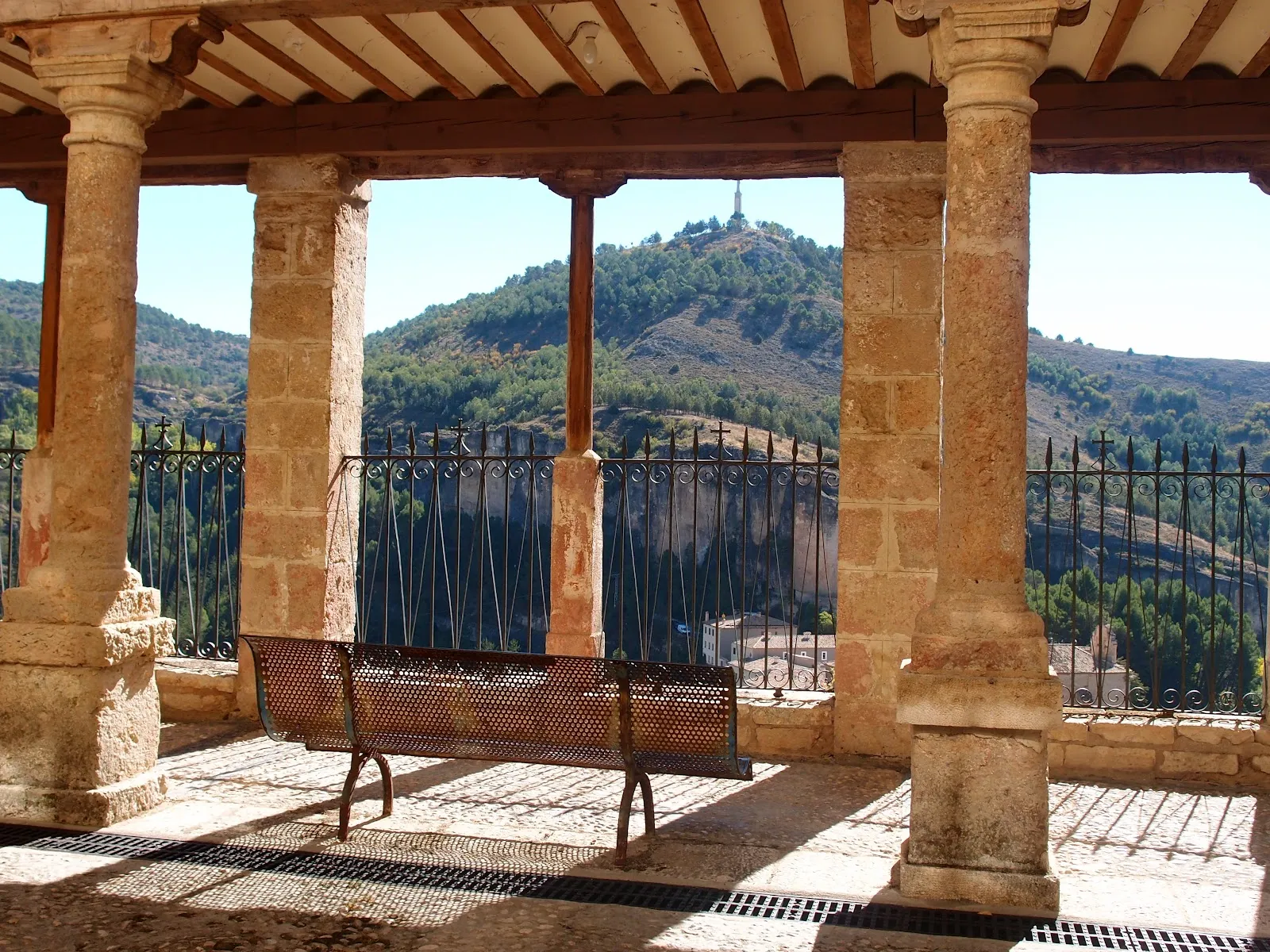
Another lookout sits just behind the Church of St Peter. It takes in the Parador, the bridge, the houses and most of the old town. From the cathedral patio you can also see the houses, so two views are possible in one stop.
Light changes the scene. Sunset gives a golden glow on the balconies, but the light fades quickly, so arrive early enough to find your spot. Driving up to the Parador and the houses is hard on the steep, narrow streets. Park at Calle Larga, across from the old wall and castle ruins, and continue on foot or by public transport.
Eating in one of the houses
La Casa de la Sirena is a restaurant in one of the three houses. Chef Jesús Segura runs its tasting menu, built on local products, with a particular role for sauces and creams.
The dining room keeps its exposed Castilian beams under a modern look, and its interior draws on the paintings of Millares. The room is a single space on the cliff, and it seats 18 diners at lunch and dinner. Plan a table ahead, since so few seats are available at each service.
Häufige Fragen
Is there an entry fee?
The views from the bridge and the public lookouts cost nothing. The museum inside the houses is free to visit.
Where is the best view of the Casas Colgadas?
The San Pablo Bridge gives the most direct view. The lookout behind the Church of St Peter and the cathedral patio also show the houses.
Where should I park?
Park at Calle Larga, across from the old wall and the castle ruins. The streets up to the Parador and the houses are steep and narrow, so walk or use public transport from there.
When is the best time to visit?
Spring or autumn, when crowds are thinner and the heat is milder. Stay until sunset for golden light, and stay a night to see the houses lit up after dark.