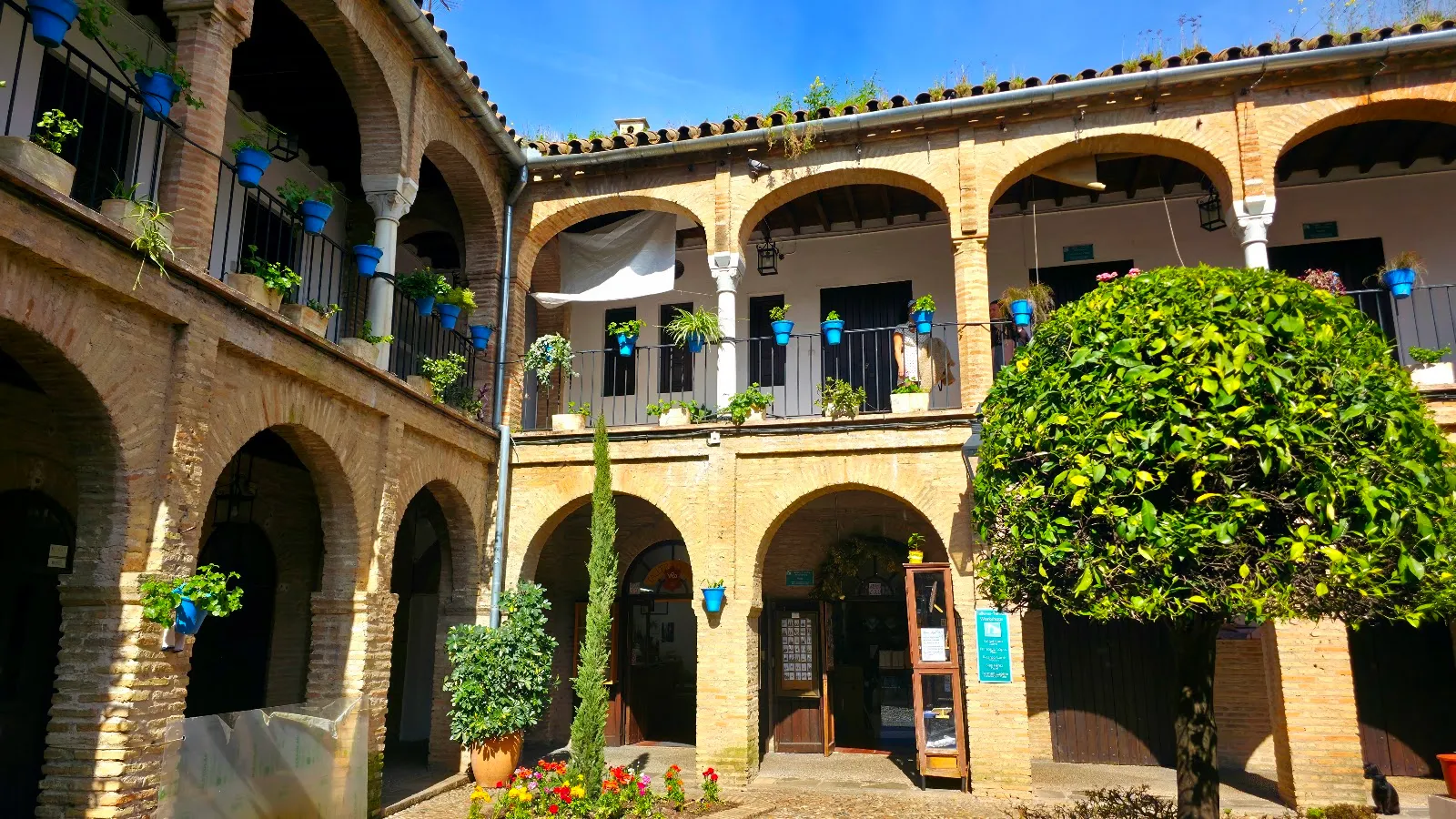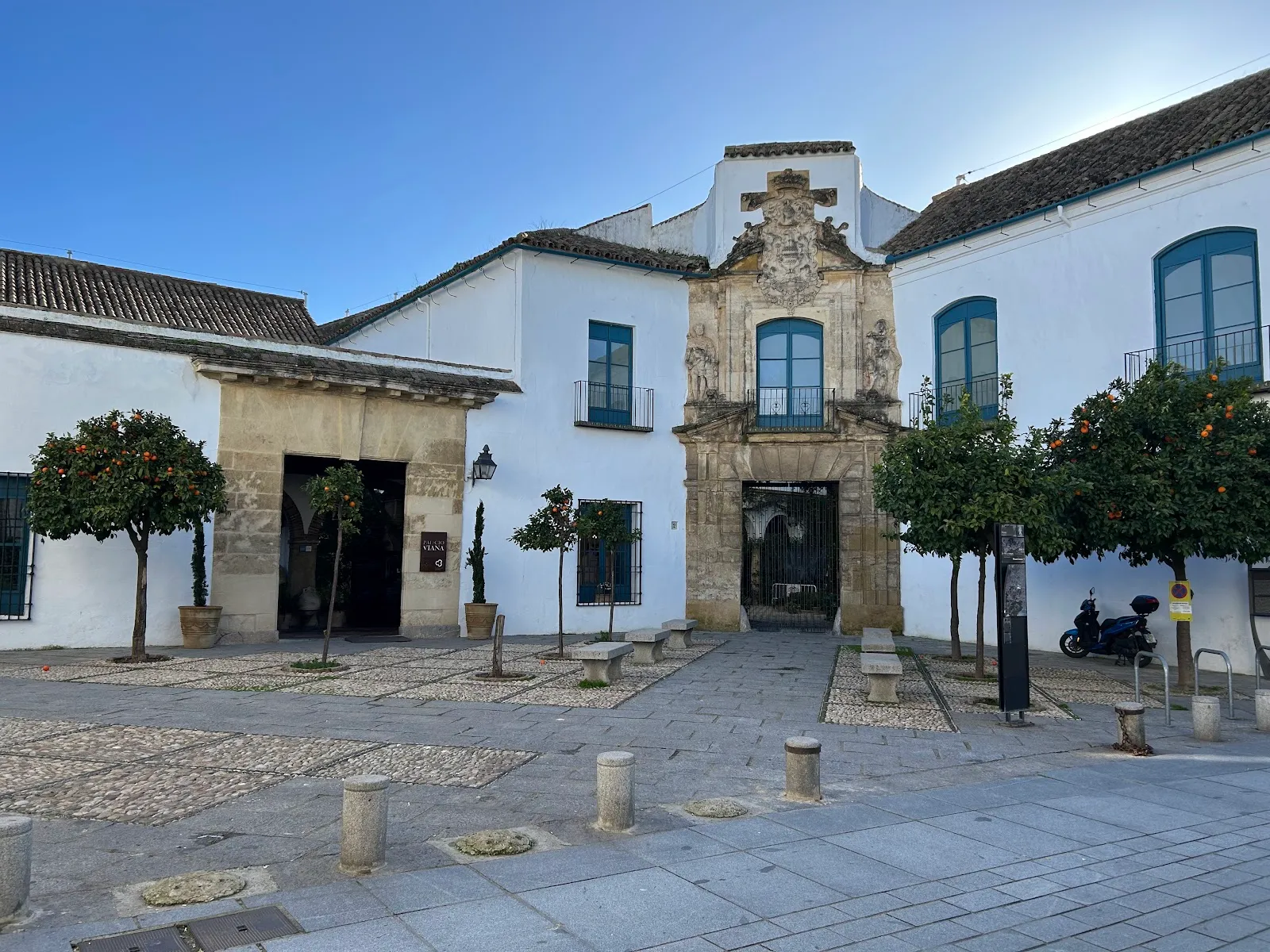
Palacio de Viana is a historic palace and museum on Plaza de Don Gome in Córdoba’s Santa Marina neighbourhood. Its twelve patios link gardens of different designs, with flowers, citrus trees, cypresses and fountains offering a quieter way to experience the city’s courtyard tradition. Inside, rooms preserve the art, furniture, tapestries and household objects of the noble families who lived here over several centuries. Walk the patios at your own pace, then join a guided visit of the living quarters to see how the residence was furnished and used.
Twelve patios in one palace
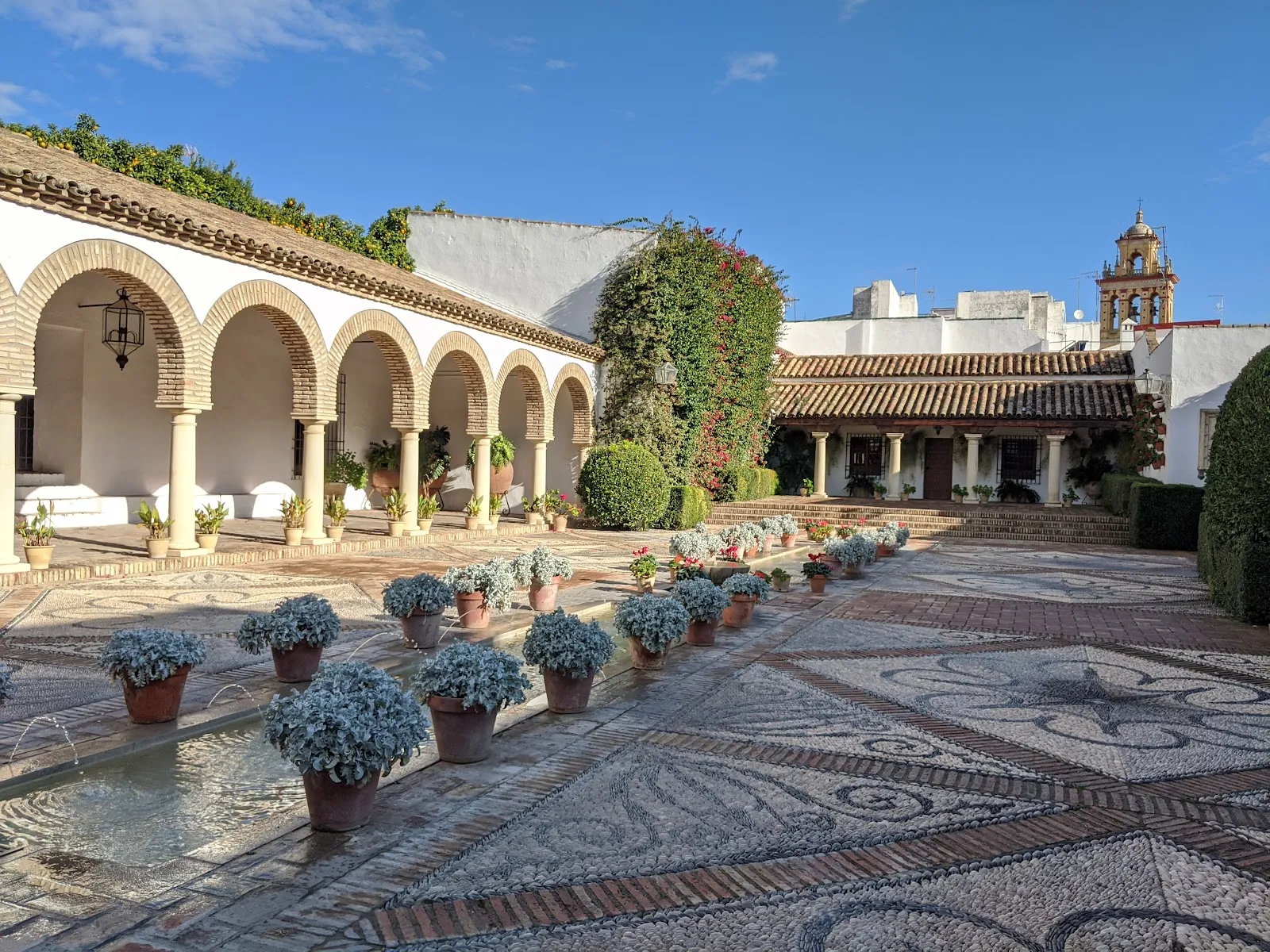
Palacio de Viana is known for the twelve patios gathered within its grounds. Each has a distinct arrangement, creating a changing sequence of planted spaces rather than one continuous garden. Flowers and pots brighten the walls; citrus trees, palms, cypresses and other plants add height and shade. Fountains and small water features appear throughout the courtyards.
The patios connect through a walkable circuit, so you can take them one at a time and notice how their designs differ. The Patio de Recibo sits by the main entrance and has a particular place in the palace’s layout. The Patio de la Madama is identified as the oldest courtyard; at its centre is a small temple framed by an arch and clipped cypresses.
Spring brings the patios’ flowers into focus. The palace is also a place to see Córdoba’s courtyard tradition outside the May patio festival, when many private courtyards elsewhere in the city open to the public only for the event. Here, the gardens and patios form part of a permanent historic residence.
A residence shaped over generations
The palace began as a noble home in Córdoba and grew over several centuries. Its owners added to the building and its collections, leaving a mixture of architectural styles and furnishings. The result gives the rooms and courtyards different characters, reflecting the changes made by successive generations rather than a single design plan.
The residence was associated with the Marquesses of Villaseca and later the Marquesses of Viana. It became a museum open to the public in the 1980s. Its preserved rooms help explain the setting of aristocratic domestic life: this is a historic house with objects arranged within a former home, not simply a display of isolated pieces.
What to see inside
The interior collection includes paintings, tapestries, furniture, ceramics, books and other household objects. Flemish tapestries and antique furnishings sit among collections that also include weapons and decorative objects. The rooms, halls, staircases and galleries give the visit a different perspective from the open patios, showing how the residence’s interiors were furnished and used.
A guided visit covers the palace’s private quarters and history. The patios can be explored independently, making it possible to combine a quieter garden walk with a closer look at the house. If you want to understand both sides of the site, leave enough time for the guided rooms as well as the courtyard circuit.
Häufige Fragen
How many patios does Palacio de Viana have?
The palace has twelve patios, each with its own design and planting.
Can you visit the palace interior as well as the patios?
Yes. The patios can be explored independently, and a guided visit takes you through the interior living quarters.
When is a good time to visit Palacio de Viana?
Spring is a good time to see the patios in flower.
Is Palacio de Viana open on Mondays?
No. It is closed on Mondays.