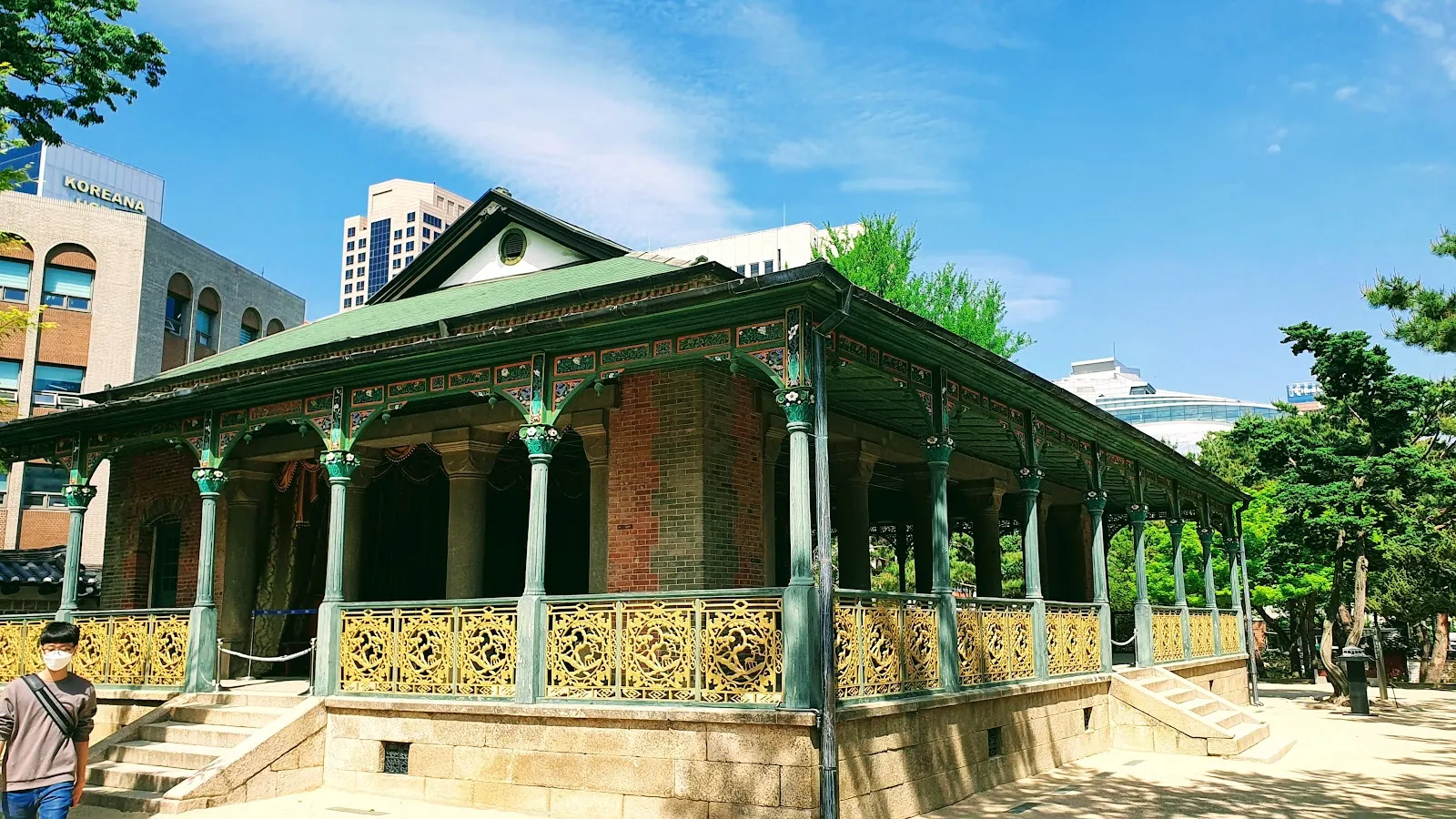
Jeonggwanheon is a distinctive building within Deoksugung Palace at 99 Sejong-daero in Seoul. Its traditional Korean roof meets Western-style corridors, with Romanesque and Joseon-style decoration across the interior and exterior. The building survived the 1904 fire at the palace and was used for royal worship and meetings. Its design is believed to be the work of Russian architect Seredin Sabatin. Look closely at the decorative details to see how the two architectural traditions come together.
Architectural details
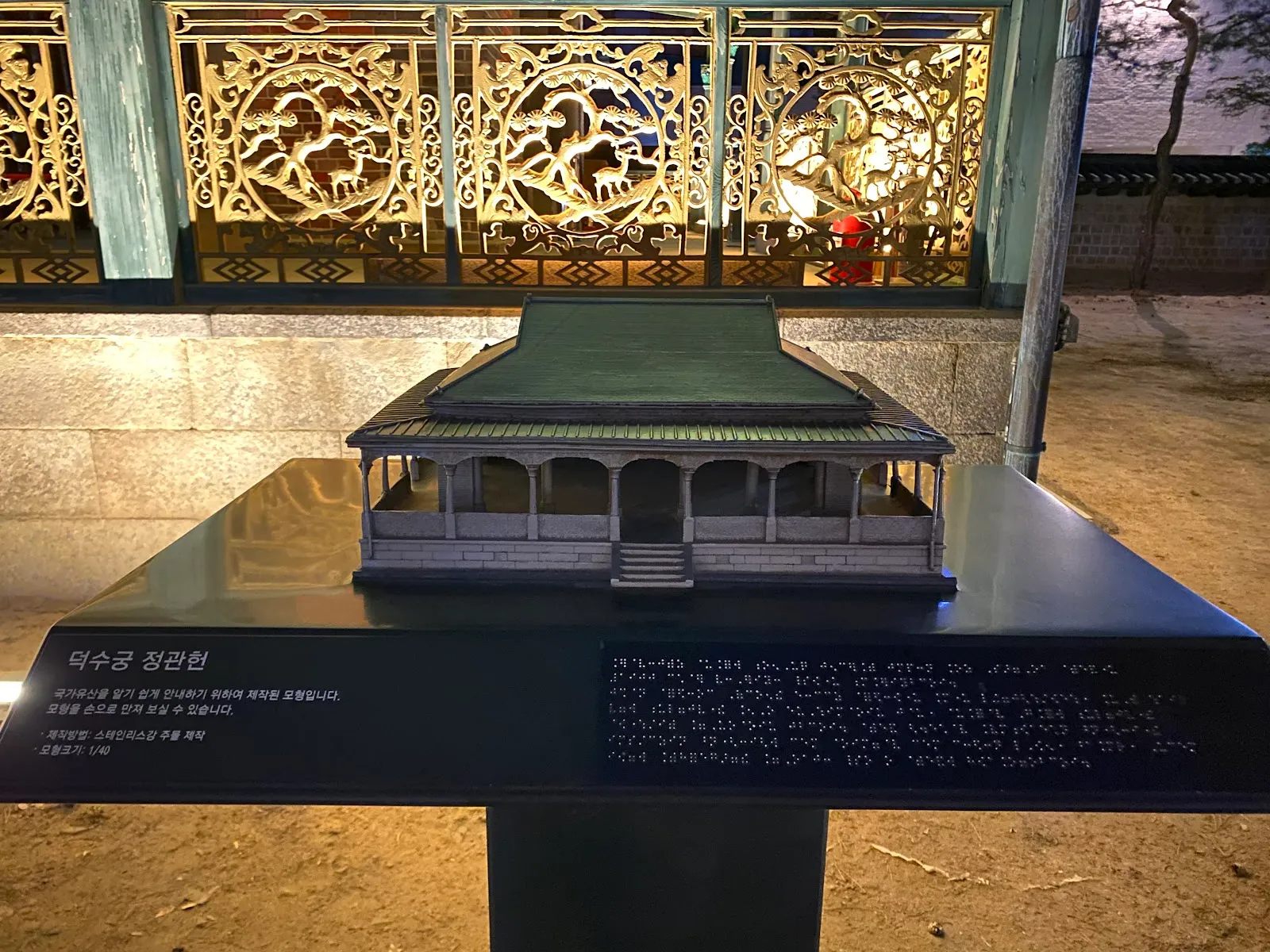
Jeonggwanheon brings together traditional Korean roof forms and Western-style corridors. Romanesque and Joseon-style decoration appears across the building, so take time to look at both the exterior and the interior. Its design is believed to be by Russian architect Seredin Sabatin.
A building with several uses
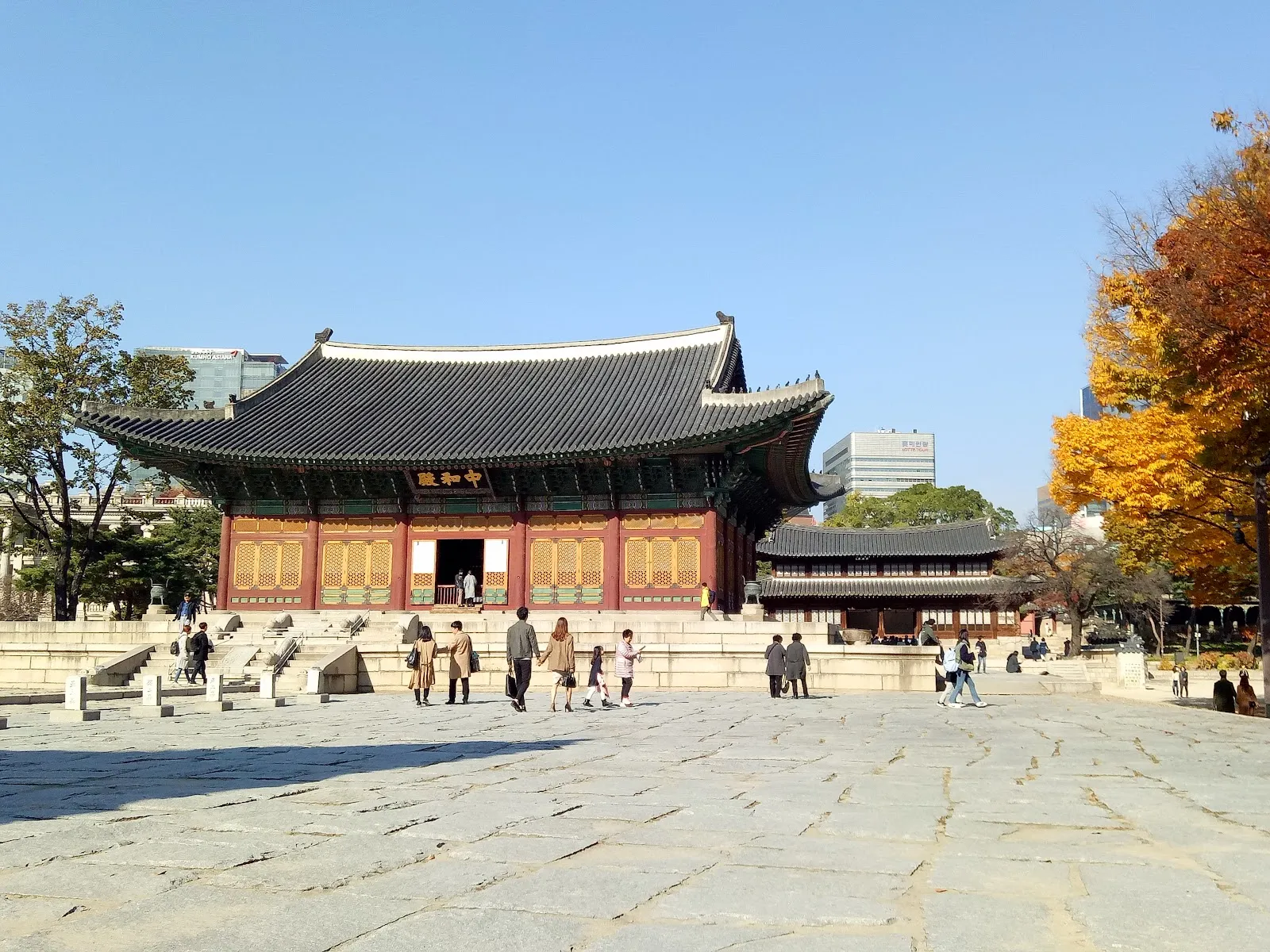
Jeonggwanheon served different purposes over time, including royal worship and meetings. It survived the great fire at Deoksugung Palace in 1904, placing it among the buildings associated with the Korean Empire’s turbulent era.
Häufige Fragen
Where is Jeonggwanheon?
It is within Deoksugung Palace at 99 Sejong-daero in Seoul.
What architectural styles can you see at Jeonggwanheon?
The building combines traditional Korean roof forms with Western-style corridors and Romanesque and Joseon-style decoration.
What was Jeonggwanheon used for?
Its uses included royal worship and meetings.
Did Jeonggwanheon survive the 1904 fire?
Yes. The building survived the great fire at Deoksugung Palace in 1904.