Gwangjang Market is a covered traditional market at 88 Cheonggyecheon-ro in Seoul’s Jongno District. Opened in 1905, it brings food stalls together with shops selling textiles, hanbok and vintage clothing. Come to sample Korean market dishes such as crispy mung bean pancakes, spicy rice cakes and bite-size seaweed rolls, then browse beyond the food aisles. An early visit can mean fewer people and fresher food. The second floor is a good place to look for vintage finds.
A market dating to 1905
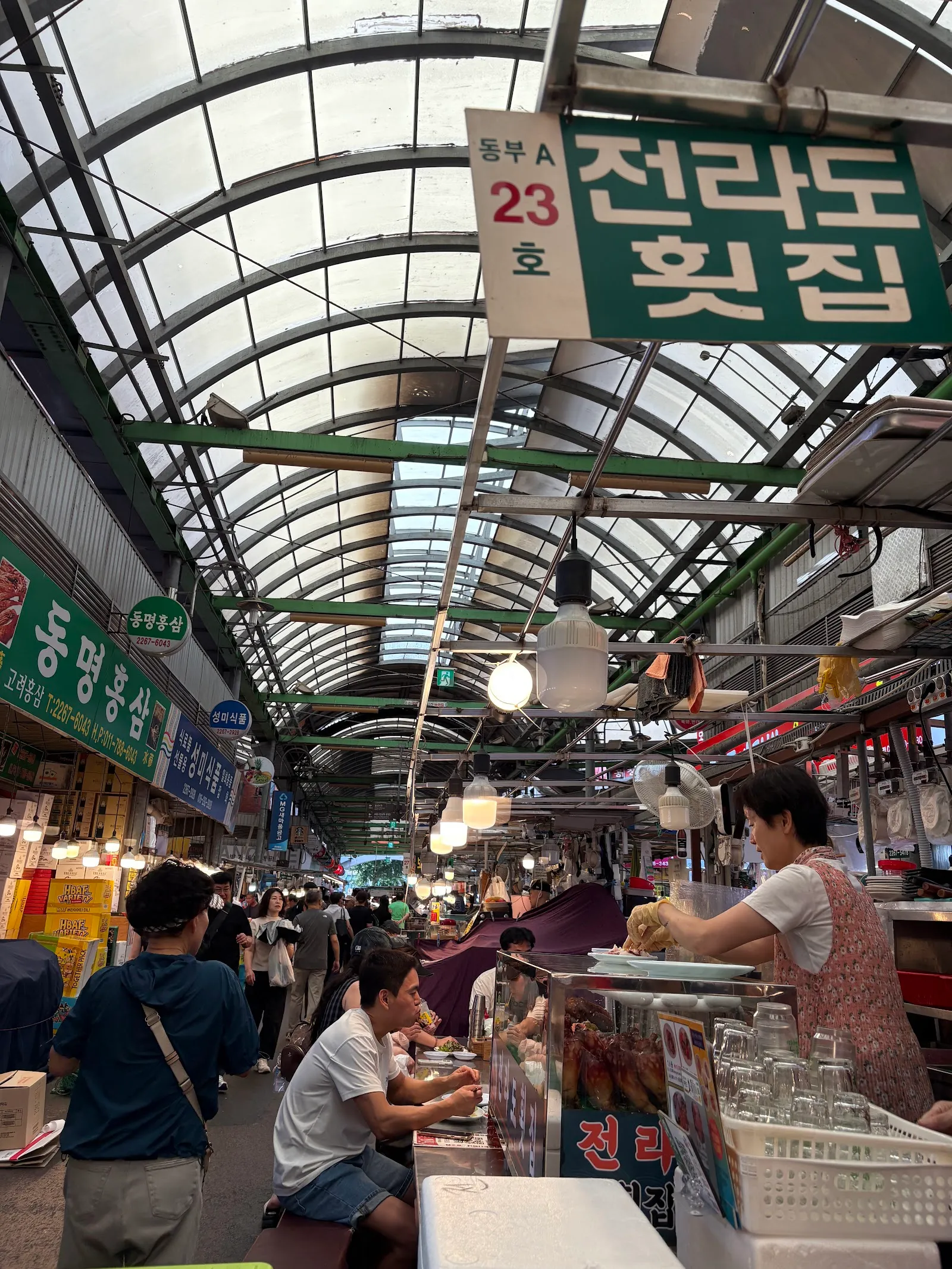
Gwangjang Market opened in 1905 and grew from a trading place for regional farmers and suppliers into one of Seoul’s major traditional markets. Today, food stalls sit alongside shops selling fabrics, clothing, produce and household goods. The market’s long trading history is part of daily life here: people come to eat, shop and look for goods as well as to explore.
The market is covered, with narrow aisles and rows of stalls. Food is concentrated in busy corridors, where counter seating lets you eat close to the cooking. Other sections are known for textiles and traditional clothing. The mix means you can move from a quick snack to a browse through fabric shops without leaving the market.
What to eat at the stalls
Bindaetteok, a savoury mung bean pancake, is one of the market’s signature dishes. It is cooked until crisp and is often paired with a vinegary dipping sauce. Tteokbokki brings chewy rice cakes in a spicy sauce, while mayak gimbap are small seaweed-wrapped rice rolls. You can also find sundae, a Korean blood sausage, and kalguksu, hand-cut noodles served in broth.
Stalls prepare food in front of their counters, and the range makes it easy to sample a few things rather than settle on one meal. Take a lap first, note what catches your eye, then choose where to sit. Some food stalls and restaurants draw queues, especially around dinner, so an early visit can make it easier to look around and find food.
Textiles, hanbok and vintage finds
Food is the market’s best-known draw, but Gwangjang also has a long connection with fabrics and traditional clothing. Shops sell textiles and hanbok, the traditional Korean dress, as well as wedding-related goods. Even if you are not shopping for clothing, the fabric displays give you another way to explore the market’s commercial side.
Head upstairs to browse vintage clothing and other second-hand finds. The selection extends beyond food and textiles, so leave time to look around if shopping interests you. The market is a practical stop for anyone who wants to combine a meal with a search for fabrics, traditional goods or vintage pieces.
Planning a visit
Gwangjang Market is at 88 Cheonggyecheon-ro in Jongno District. It is open daily, and an early visit is a useful choice if you want fewer crowds and fresher food. During busier meal periods, the food aisles can feel crowded; walking around before sitting down helps you compare stalls and decide what to try.
Bring cash for food purchases, and consider asking stallholders about dishes you have not tried before. With many choices in one place, sharing a few different items is a simple way to taste more of the market’s cooking. After eating, browse the clothing and textile shops or continue upstairs to the vintage section.
Häufige Fragen
What food should I try at Gwangjang Market?
Look for bindaetteok, tteokbokki and mayak gimbap. Sundae and kalguksu are also found at the market.
What can you buy at Gwangjang Market besides food?
Shops sell textiles, hanbok, wedding goods and other traditional products. The second floor has vintage clothing and other finds.
When is a good time to visit Gwangjang Market?
Early in the day is a good choice for fewer crowds and fresher food options.
Where is Gwangjang Market?
The market is at 88 Cheonggyecheon-ro in Seoul’s Jongno District.