Changgyeonggung Palace is a Joseon-era royal residence in Seoul, beside Changdeokgung Palace. Its courtyards, traditional buildings and broad, green grounds make for a quieter palace visit, with room to explore at an unhurried pace. Look for Honghwa Gate, Okcheongyo Bridge and the palace halls, then take time in the gardens and greenhouse. Informational signs explain the site’s history, and hanbok is a popular choice for photographs. It suits visitors who want historic architecture and greenery without the crowds of Seoul’s busiest palace.
A palace built for the royal family
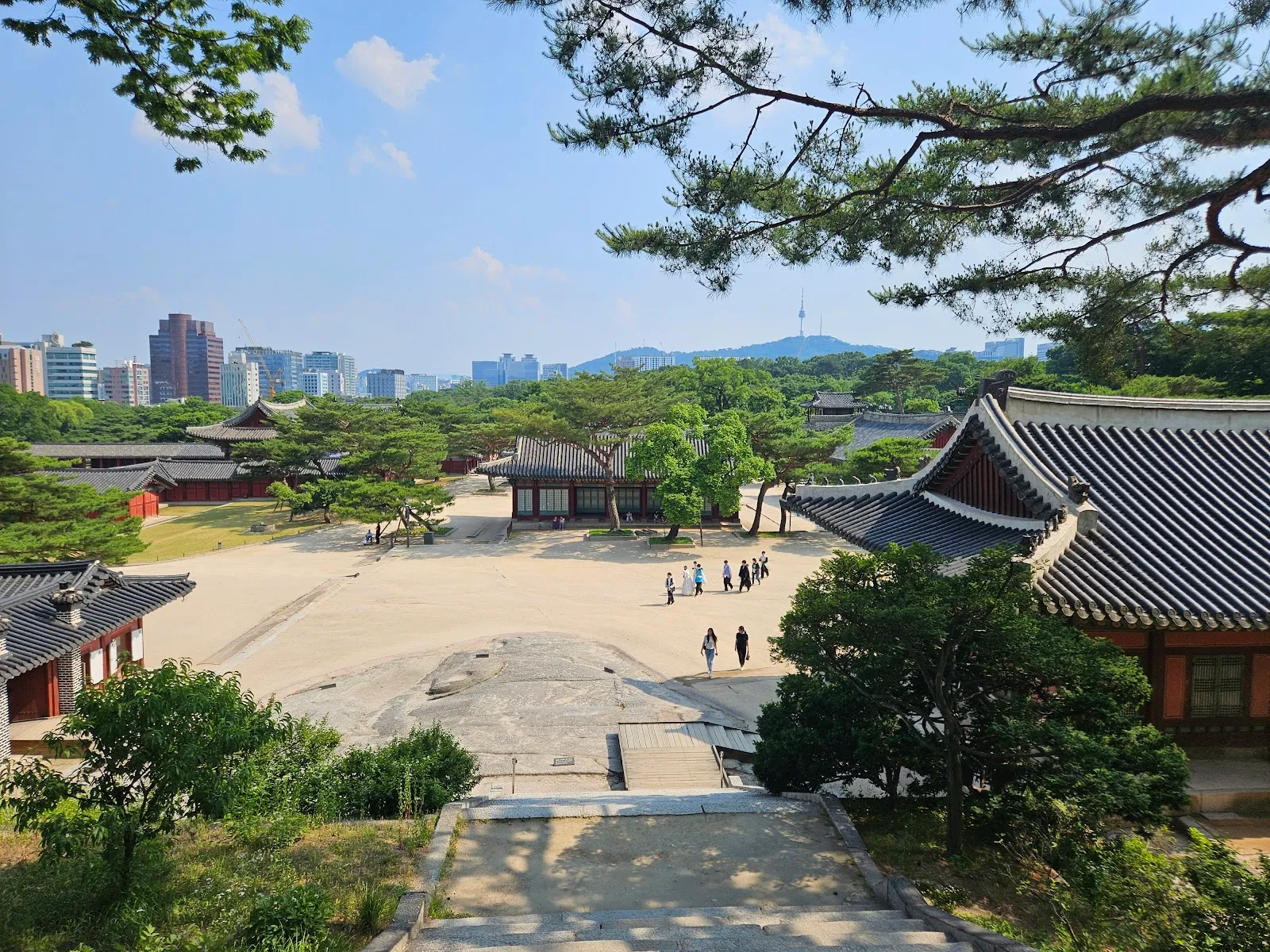
Changgyeonggung began as a royal residence built by King Sejong for his father, King Taejong. The palace was expanded under King Seongjong in 1483, when it was also renamed. It later served as living quarters for queens and other members of the royal family. Its position beside Changdeokgung made it convenient for family members to move between the two palaces.
The two adjoining sites are known together as the East Palace complex. Changgyeonggung occupies the eastern and southern side, while Changdeokgung lies to the west. Changgyeonggung’s buildings were arranged on an east-west axis, unlike the north-south orientation typical of royal palace layouts.
Gates, bridge and palace halls
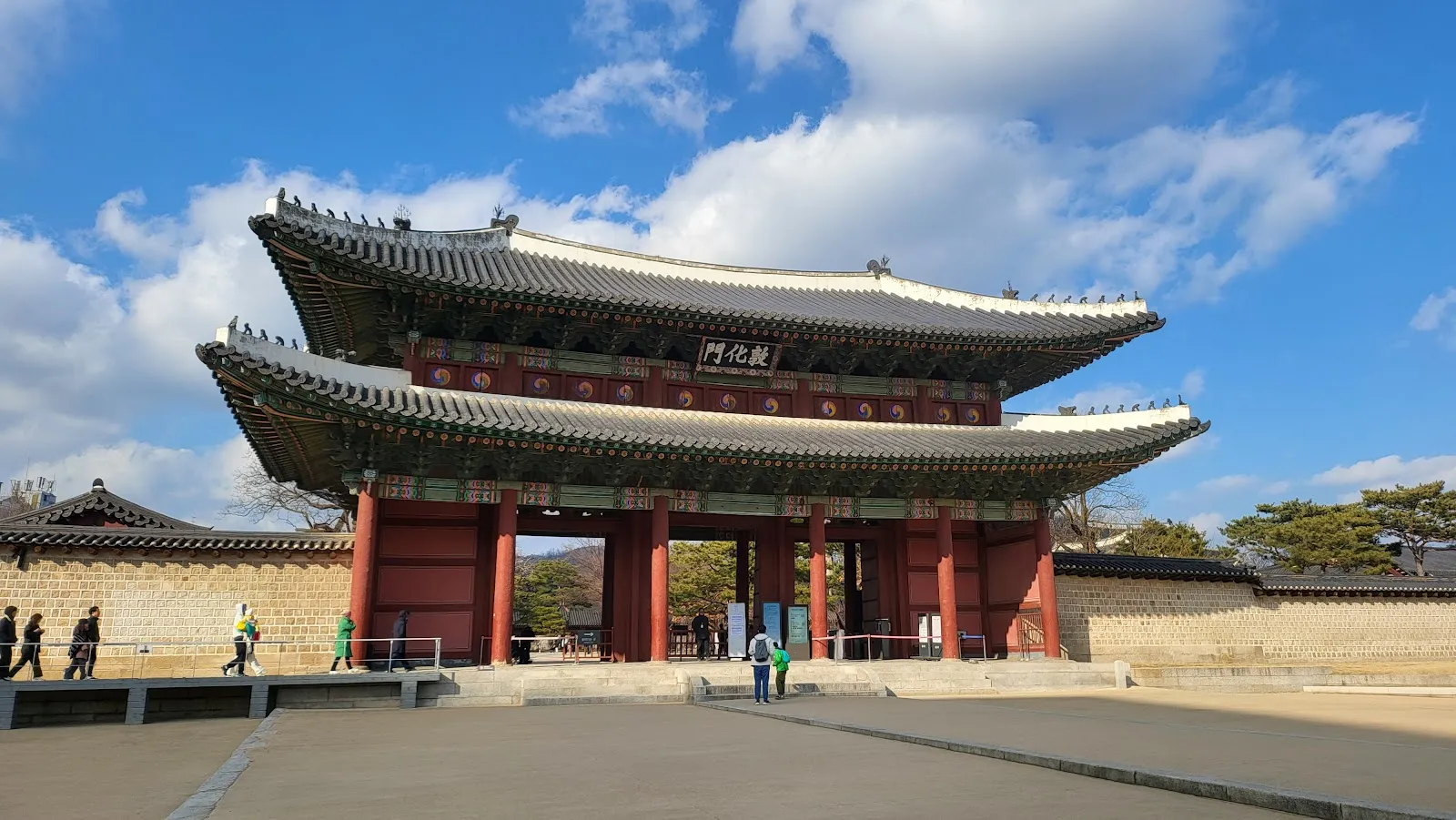
Honghwa Gate marks the palace entrance. From there, Okcheongyo Bridge leads toward Myeongjeongmun Gate and Myeongjeongjeon Hall. The bridge’s arched form crosses a palace pond, a feature found in royal palace grounds. As you walk, look for carved motifs on the buildings and read the signs explaining the site’s history.
Fires and the Japanese invasions damaged many of the palace’s structures, and fewer buildings remain than the complex once contained. Restoration work has brought buildings back over time. The surviving halls and courtyards give a sense of the palace’s residential role, with living quarters taking up more space than government buildings.
Gardens and the greenhouse
Green space is a large part of the visit. Paths pass through gardens and shaded areas, with gazebos and pagodas among the grounds. The greenhouse adds a different kind of architecture to the walk and contains tropical plants. In autumn, foliage colors the grounds; after snowfall, the palace scenery takes on a quieter character.
During the Japanese colonial period, the palace grounds were converted into a park with a zoo and botanical garden. The zoo and garden have since moved to Seoul Land. Today, the grounds offer space to pause between the palace buildings and the garden paths.
Häufige Fragen
How long should I spend at Changgyeonggung Palace?
Allow about two hours to explore the palace grounds.
Is Changgyeonggung Palace near Changdeokgung Palace?
Yes. The two palaces stand beside each other and together are known as the East Palace complex.
Can I buy tickets at the gate?
Ticket vending machines are available at the gates. Advance ticket purchase is recommended.