
Ojukheon is a traditional wooden house in Gangneung where the artist Shin Saimdang lived and her son, the Confucian scholar Yi I, was born. It is among the oldest houses of the Joseon period still standing in Korea, and its name refers to the black bamboo in the courtyard. Walk among the old buildings, the ancestral shrine and the gardens with lotus pools and bamboo groves, then visit the exhibition halls with the family's relics.
Where the name comes from
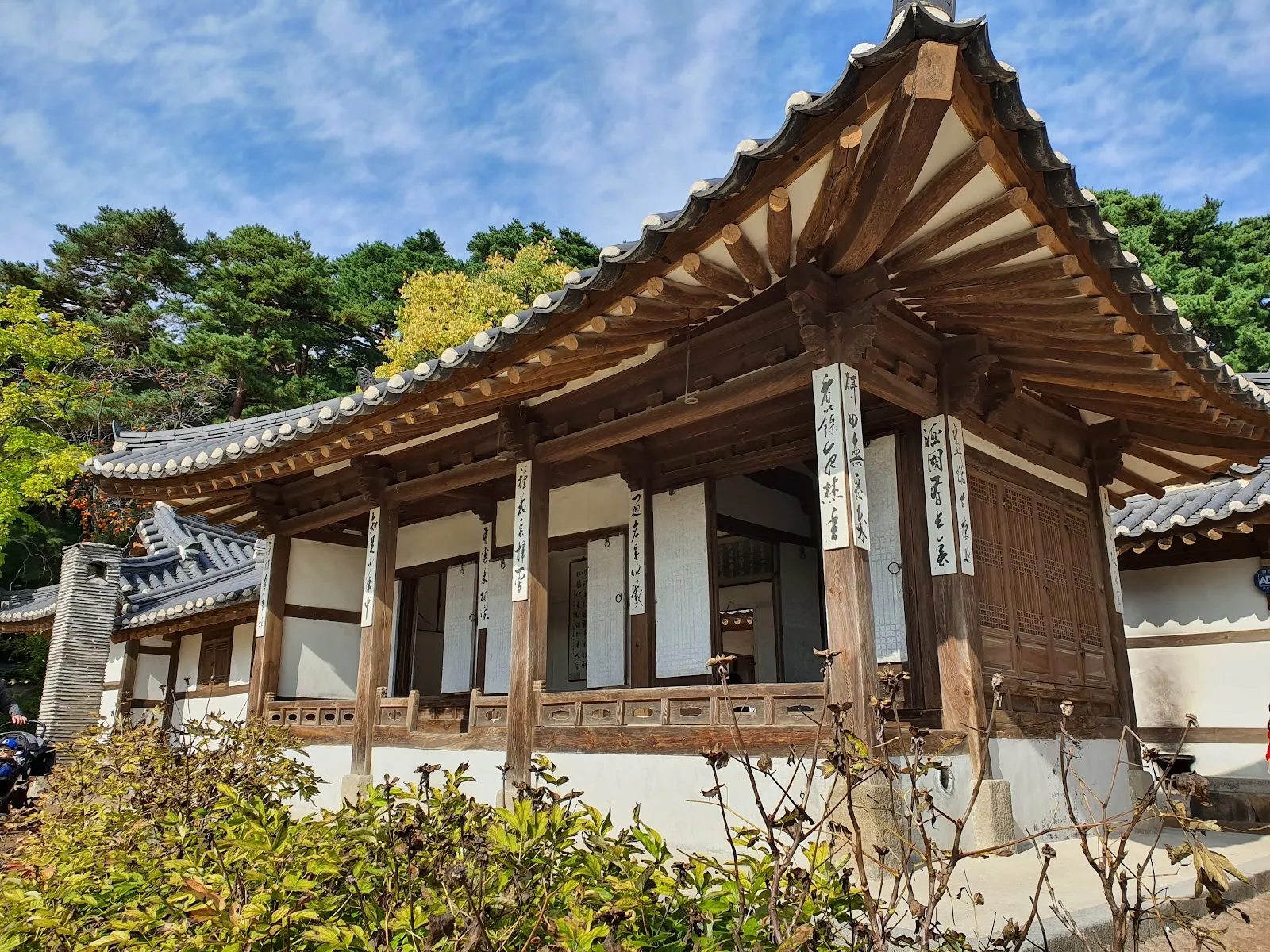
The name Ojukheon refers to the black bamboo that grows in the courtyard. The word ojuk describes a bamboo variety with dark bark, and the stems here are thin, about the width of a finger, growing in dense groves around the buildings.
The bamboo is one of the first things that stands out on a walk through the grounds, and it gives the house its character, even in colder months when the rest of the garden is quiet.
Shin Saimdang and Yi I
Shin Saimdang (1504 to 1551) is remembered as a model of Korean womanhood and as an artist. Her son Yi I (1536 to 1584) was a philosopher and government official, and he is counted with Toegye Yi Hwang among the great scholars of the Joseon Dynasty.
The two are also on the banknotes. Shin Saimdang appears on the 50,000 won note and Yi I on the 5,000 won note. Yi I was chosen for the 5,000 won note in 1972, and the house where he was born has appeared on that note with him.
Architecture and the old house
The main house is a wooden residence from the mid-Joseon period. Its rooms and courtyards show how a noble family lived in that era, and the simple wood structure stands out among the gardens and open lawns.
The Mongryongsil Chamber is the room where Yi I was born. It is one of the places on the grounds that visitors most often mention, because it ties the family story to the building itself.
Inside the grounds
Munseongsa Shrine is the ancestral shrine of Yi I. Nearby, the Eoje Pavilion once held the scholar's relics, and the Yulgok Memorial Hall and an exhibition hall display relics of the Yulgok family.
A money museum sits beside the historic buildings. It holds Korean banknotes from different periods, including notes issued before the Japanese occupation, so it works well as a second stop after the main house.
Planning the visit
Allow one to two hours to move between the halls, shrine, gardens and exhibitions. The grounds are large and open, so it is easy to spend more time on the photo spots and paths.
Hanbok experiences are offered on site, which is a good choice for families or anyone who wants to dress in traditional clothing for photos. The entrance and parking lot are wheelchair accessible, and toilets are available both inside and outside the buildings.
Spring is the most popular season for the grounds, when the cherry blossoms and magnolias are in bloom. Autumn is also quiet and pleasant for a walk, even when the leaves have not yet changed.
Häufige Fragen
Is there an entry fee?
The ticket price is not listed in the material used here. Entry is discounted on Culture Day, the last Wednesday of the month, and booking tickets in advance is recommended. Check the official website for current prices.
How long do you need at Ojukheon?
Plan one to two hours to see the halls, shrine, gardens and exhibitions.
Is Ojukheon good for children?
Yes. The site suits families, and hanbok experiences are available on the grounds.
Is Ojukheon wheelchair accessible?
The entrance and the parking lot are wheelchair accessible.
Which banknotes show the people who lived at Ojukheon?
Shin Saimdang is on the 50,000 won note, and Yi I is on the 5,000 won note.


