Reise planen
Sprache: Deutsch
ReiseplanerPlane deine Reise auf einer Karte

Top-Reiseziele

EnglishDeutschFrançaisEspañolPortuguêsPortuguês (BR)Italiano
Reisehinweis · SüdafrikaJohannesburg liegt in oder nahe einem Gebiet, für das Regierungen von allen außer unbedingt notwendigen Reisen abraten: Alexandra (Johannesburg), Berea (Johannesburg), Hillbrow (Johannesburg), Johannesburger Innenstadt (CBD), Yeoville (Johannesburg).Die Empfehlung hängt von Ihrem Reisepass ab. Lesen Sie vor der Buchung die Hinweise Ihrer eigenen Regierung.Offizielle Hinweise
Gebiete mit Warnungen
  • Alexandra (Johannesburg) · nicht notwendige Reisen vermeiden · Frankreich, Italien
  • Berea (Johannesburg) · nicht notwendige Reisen vermeiden · Spanien, Frankreich, Italien
  • Cape Flats · nicht notwendige Reisen vermeiden · Frankreich, Italien
  • Hillbrow (Johannesburg) · nicht notwendige Reisen vermeiden · Spanien, Frankreich, Italien
  • Johannesburger Innenstadt (CBD) · nicht notwendige Reisen vermeiden · Deutschland, Frankreich
  • Pretoria Innenstadt (CBD) · nicht notwendige Reisen vermeiden · Deutschland, Spanien, Italien
  • Sunnyside (Pretoria) · nicht notwendige Reisen vermeiden · Spanien, Italien
  • Yeoville (Johannesburg) · nicht notwendige Reisen vermeiden · Spanien, Frankreich, Italien

Außerdem von einer Regierung genannt: Arcadia (Pretoria) (Spanien), Gebiet nahe Phabeni Gate und Numbi Gate (Hazyview) (Frankreich), Atteridgville (Pretoria) (Italien), Durban Innenstadt (CBD) (Deutschland), Informelle Siedlungen in Durban (Spanien), Mamelodi (Pretoria) (Italien), Marabastad (Pretoria) (Spanien), Port Elizabeth (Gqeberha), Innenstadt (CBD) (Deutschland), Rotunda-Busbahnhof (Johannesburg) (Spanien)

RegierungHinweiseAktualisiertHinweise lesen
Vereinigtes Königreich (FCDO)No specific advice against travel; general precautions only–Hinweise lesen
Vereinigte Staaten (State Dept)Exercise increased caution27. Mai 2025Hinweise lesen
Kanada (Global Affairs)Exercise a high degree of caution–Hinweise lesen
Deutschland (Auswärtiges Amt)Keine generelle Warnung für das gesamte Land (regional advisories)28. Okt. 2026Hinweise lesen
Neuseeland (SafeTravel)Exercise increased caution due to violent crime–Hinweise lesen
Frankreich (Ministerium für Europa und Auswärtige Angelegenheiten)Vigilance renforcée (zone de vigilance renforcée pour l'ensemble du pays) (regional advisories)–Hinweise lesen

Täglich anhand der veröffentlichten Hinweise der Regierungen geprüft; zuletzt geprüft am 3. Nov. 2026.RoamLedger fasst offizielle Hinweise zusammen; es handelt sich nicht um Empfehlungen einer Regierung.

Constitutional Court of South Africa
Wahrzeichen

Constitutional Court of South Africa

The Constitutional Court of South Africa stands on Constitution Hill in Braamfontein, Johannesburg, within the former Old Fort Prison Complex.

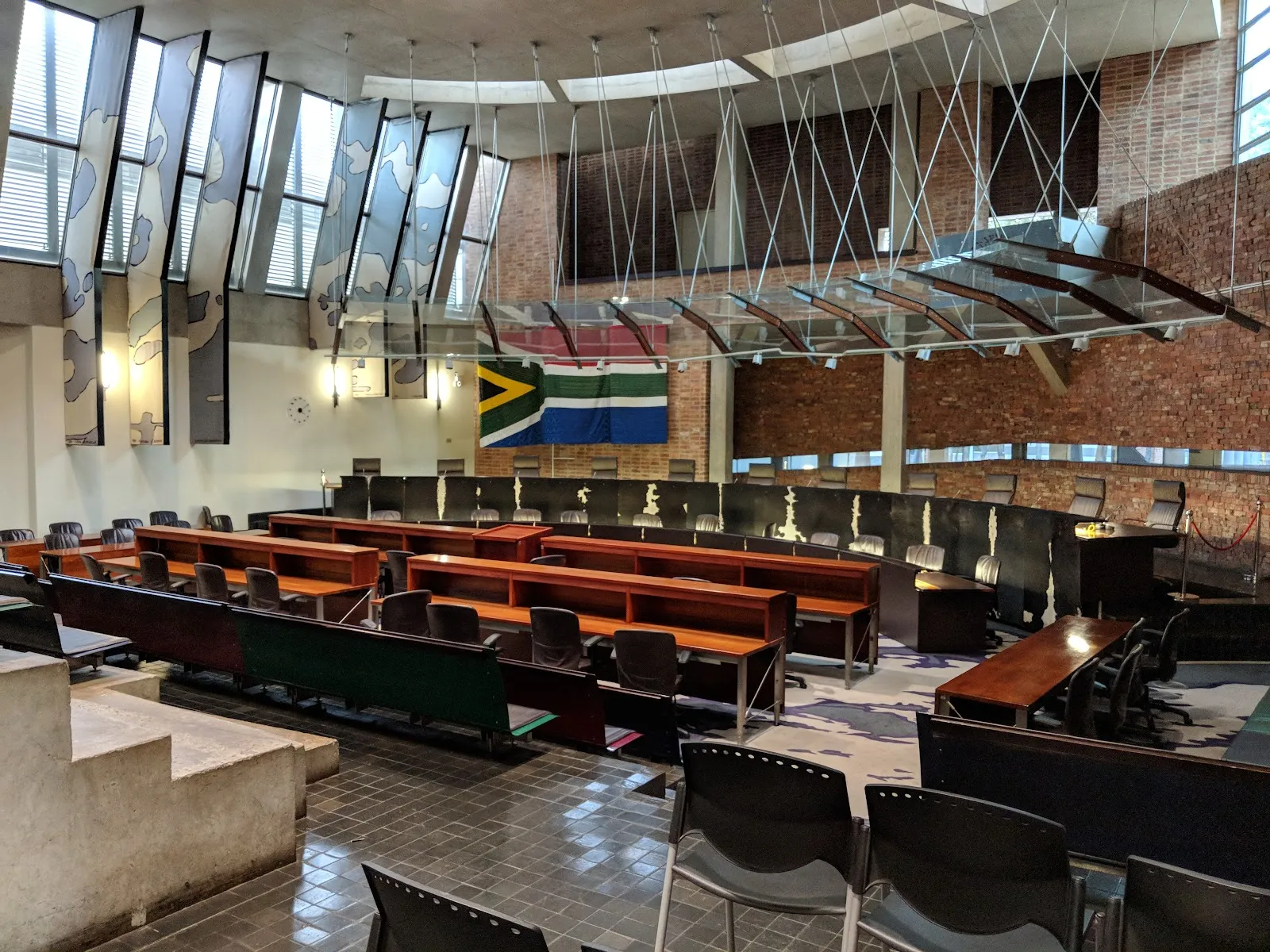
The Constitutional Court of South Africa stands on Constitution Hill in Braamfontein, Johannesburg, within the former Old Fort Prison Complex. Its public courtroom and self-guided displays connect the country’s recent history with the work of its highest court. Look for the low windows, which place people walking outside at eye level with those inside, and take time with the art, woodwork and glass. The courtroom is free to enter, including on sitting days, when access is first come, first served.

A court on Constitution Hill
Constitutional Court of South Africa

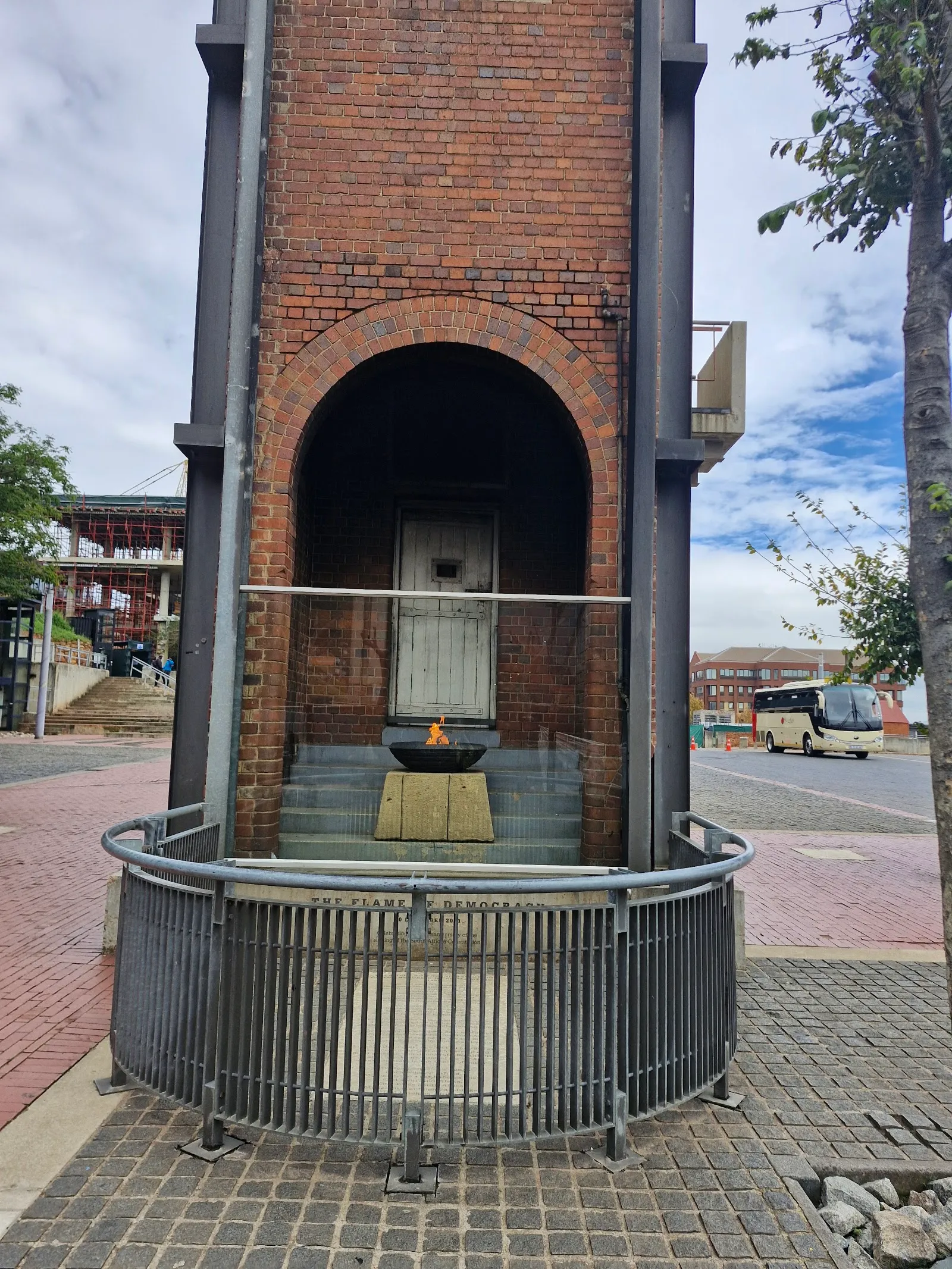
The Constitutional Court is part of Constitution Hill in Braamfontein, on the site of the Old Fort Prison Complex. The complex included Number Four, where liberation leaders, including Gandhi and Mandela, and many other people were held. A visit places the court within that history and the country’s transition to democracy.

The route up the Great African Stairs uses bricks from the demolished Awaiting Trial Block. From there, visitors reach Constitution Square and can continue to the prison and court. The court is accessible on its own as well as through a Constitution Hill visit.

Design shaped by its setting
Constitutional Court of South Africa

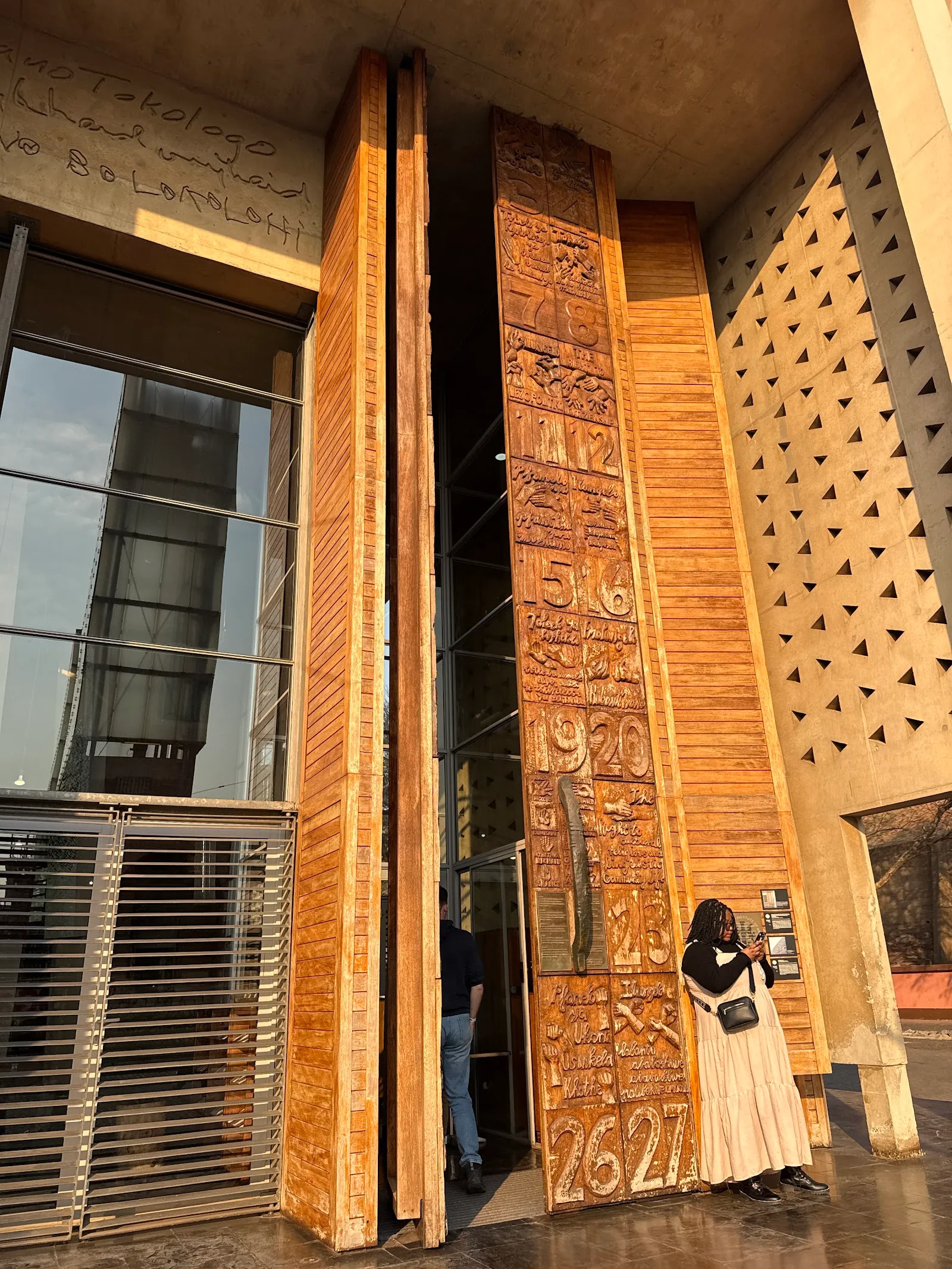
Inaugurated in 2004, the court’s design draws on the African idea of justice under a tree. Its construction incorporated around 150,000 bricks and former stairwells from the Awaiting Trial Block. The materials give the building a human scale, with wood, glass and sunlight alongside its public spaces.

Inside, art lines the corridors outside the courtrooms. The works interpret freedoms set out in South Africa’s Bill of Rights, and the collection includes local and international art. Quotes by Nelson Mandela are also displayed inside. Take time to look around the corridors as well as the courtroom.

The courtroom and public access

The main courtroom is open to the public without an entry charge. On days when a case is being heard, courtroom access is first come, first served, so arriving early gives you a better chance of getting in. Court sessions take place during only part of the year; the material available describes a six-month session period.

Look at the courtroom windows set close to ground level. They allow people outside to be seen at foot level and represent the principle that no one is above the law. The public displays use photographs and videos to trace the history behind South Africa’s freedom and constitutional democracy. Self-guided tours are free on public holidays.

Häufige Fragen

Is the Constitutional Court free to visit?

The main courtroom is free to enter. Self-guided tours are also free on public holidays.

Can the public watch a court session?

The main courtroom is open to the public, including on sitting days. Access is first come, first served, so arrive early.

What do the low courtroom windows represent?

The windows sit at ground level, where people outside can be seen at foot level. They symbolise equality before the law.

Where is the Constitutional Court?

It is on Constitution Hill, at 1 Hospital Street in Braamfontein, Johannesburg.
Weitere Highlights in Johannesburg

Alle entdecken