The African Renaissance Monument stands on one of the twin Mamelles hills in Ouakam, on the western edge of Dakar. The bronze and copper statue shows a man, a woman and a child rising from a volcanic peak with their faces toward the Atlantic. It was unveiled in 2010 for Senegal's fiftieth year of independence from France, and it is the tallest statue in Africa. Walk up to the base for wide views over the coast, or pay to go inside to an observation room and a museum on African history and art. Plan the visit for sunset, when the bronze is at its best.
Building the monument
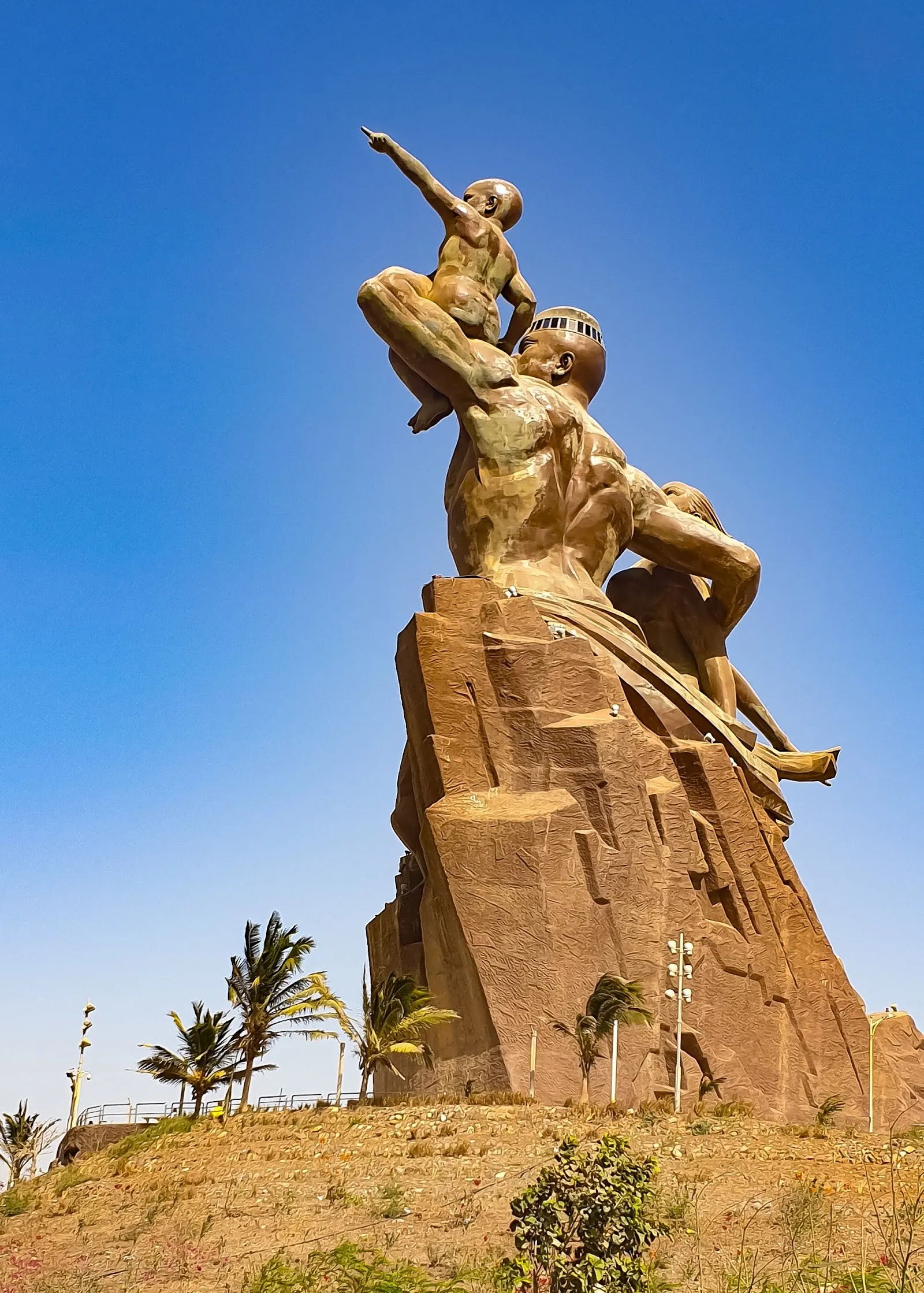
Senegal marked fifty years of independence from France in 2010, and the statue was unveiled that year to mark the occasion. The bronze and copper group shows a man, a woman and a child coming up out of a volcanic mountaintop, looking out over the sea. Senegalese architect Pierre Goudiaby designed it, and the North Korean construction firm Mansudae Overseas Projects built it.
The figures are meant to show a continent leaving centuries of oppression behind and moving forward. That idea is the core of the monument's meaning, and it is the first thing most guides explain at the base.
Climbing to the base
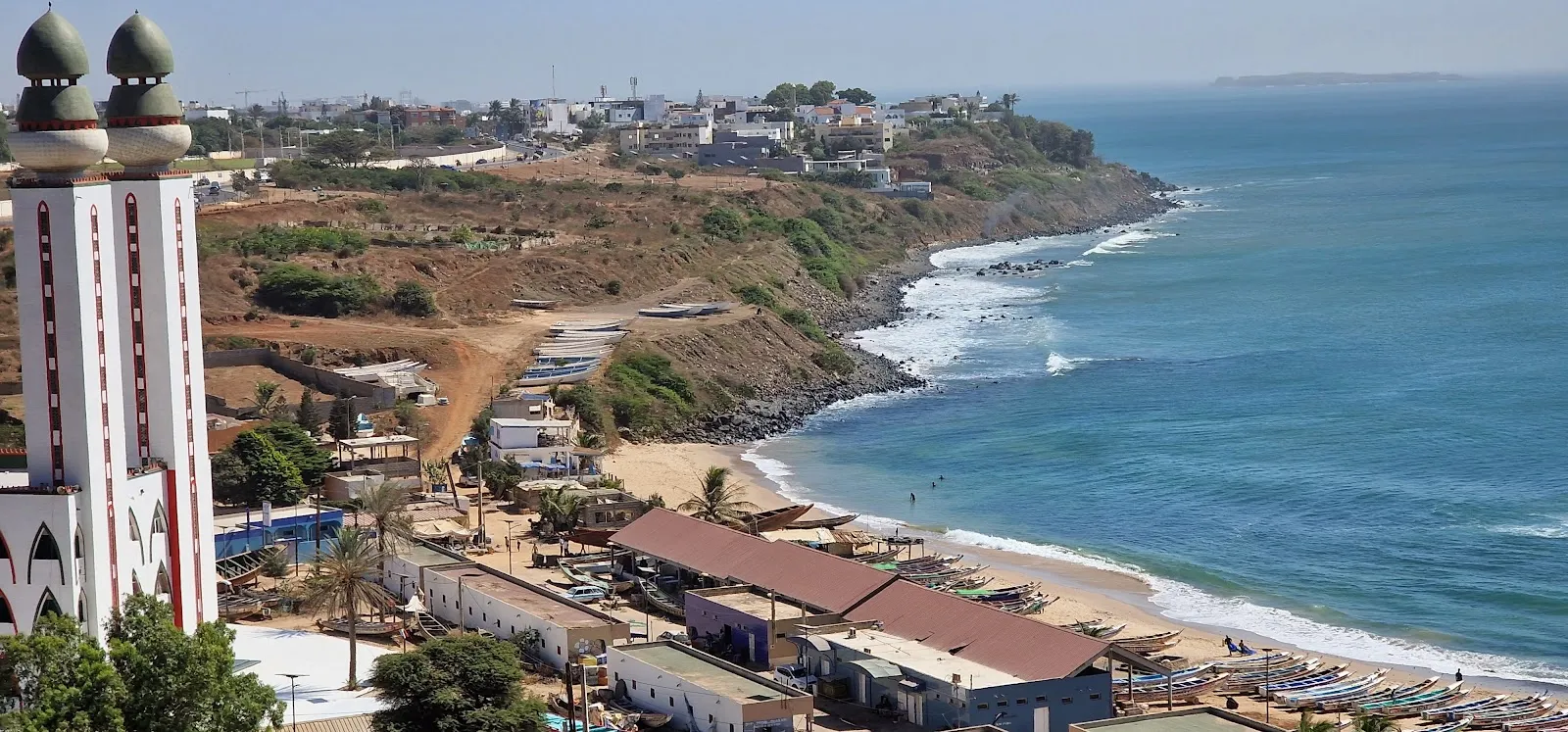
The base is reached by a long flight of stone steps that climbs the hill. The walk is free, so you can see the figures up close before you decide whether to pay for the museum and the top.
From the platform at the foot of the statue, the view turns through 360 degrees. It covers the Cap-Vert peninsula, the Atlantic shoreline and the nearby Mamelles Lighthouse, which is a short trip away and makes a good second stop for the day.
Inside the statue
Inside the figure, an elevator carries visitors to an observation room in the man's head. A small exhibition room sits beside it. On the ground floor, a slideshow explains how the monument was built, and a fresco shows key African figures.
The Hall of Kings holds sculptures and historical objects. The museum also has artifacts from many African countries, given to the monument at the opening ceremony. The elevator is often out of service or charged separately, so do not plan the whole visit around it.
How a visit works
Entry to the museum and the top is by ticket. Visitors go through in small groups, which keeps the rooms calm and the visit easy to follow. Guided tours run in French and English, but many descriptions are in French, so confirm the language of your group before you join it.
Allow one to two hours for the museum, the climb and time at the top. Buy tickets in advance, since demand can build at busy times.
Controversy and upkeep
The monument is debated in Senegal. Critics point to its cost and to its socialist-realist style, and some Senegalese do not think the investment was wise or that the statue speaks for their country.
Salt air from the ocean is hard on bronze and concrete, so keeping the site in good repair is an ongoing task. Visitors who ask questions at the entrance will get a fuller picture of the project's history.
Häufige Fragen
Is there an entry fee?
The steps and the walk to the base are free. The museum and the top are paid, and buying tickets in advance is recommended.
How long do you need?
Plan one to two hours to cover the museum, the climb and time at the top.
Is the elevator inside the statue working?
The elevator goes to an observation room in the man's head, but it is often out of service or charged separately, so check before you plan around it.
Are the tours in English?
Guided tours are offered in French and English, but many descriptions are in French. Confirm the language of your group when you buy tickets.
When is the best time to go?
Sunset gives the best light on the bronze, and the views over the Atlantic are a good reason to plan the visit for late in the day.