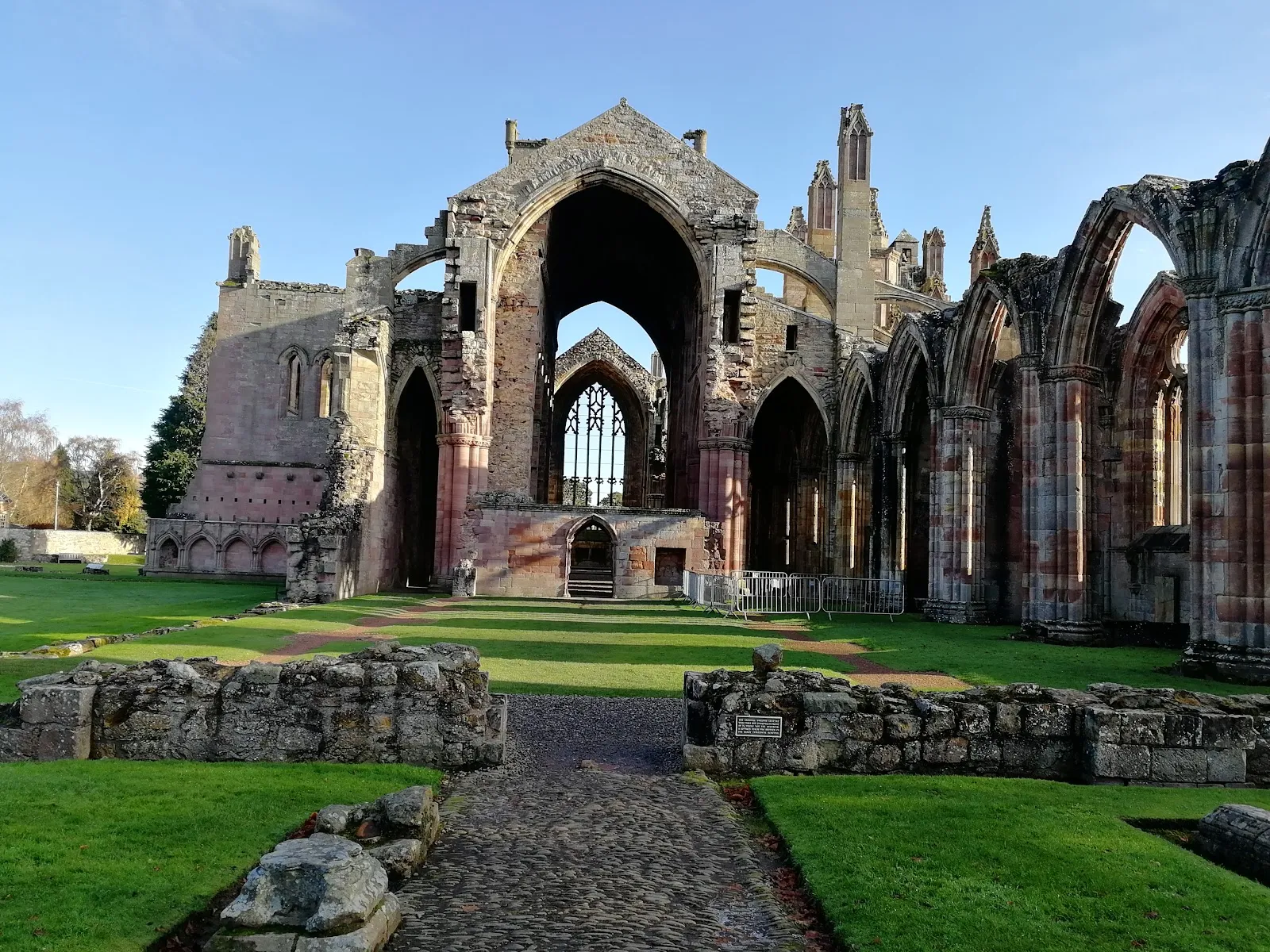
Melrose Abbey is a partly ruined Cistercian monastery in Melrose, in the Scottish Borders, below the Eildon Hills. Founded by King David I in 1136, it is known for its Gothic church, finely carved red sandstone and its connection to Robert the Bruce: his heart is said to rest at the abbey. Look for the small pig playing bagpipes among the carvings, then visit the museum to see sculptures from the building’s exterior. If access allows, climb the bell tower for views over Melrose.
A Cistercian abbey founded in 1136
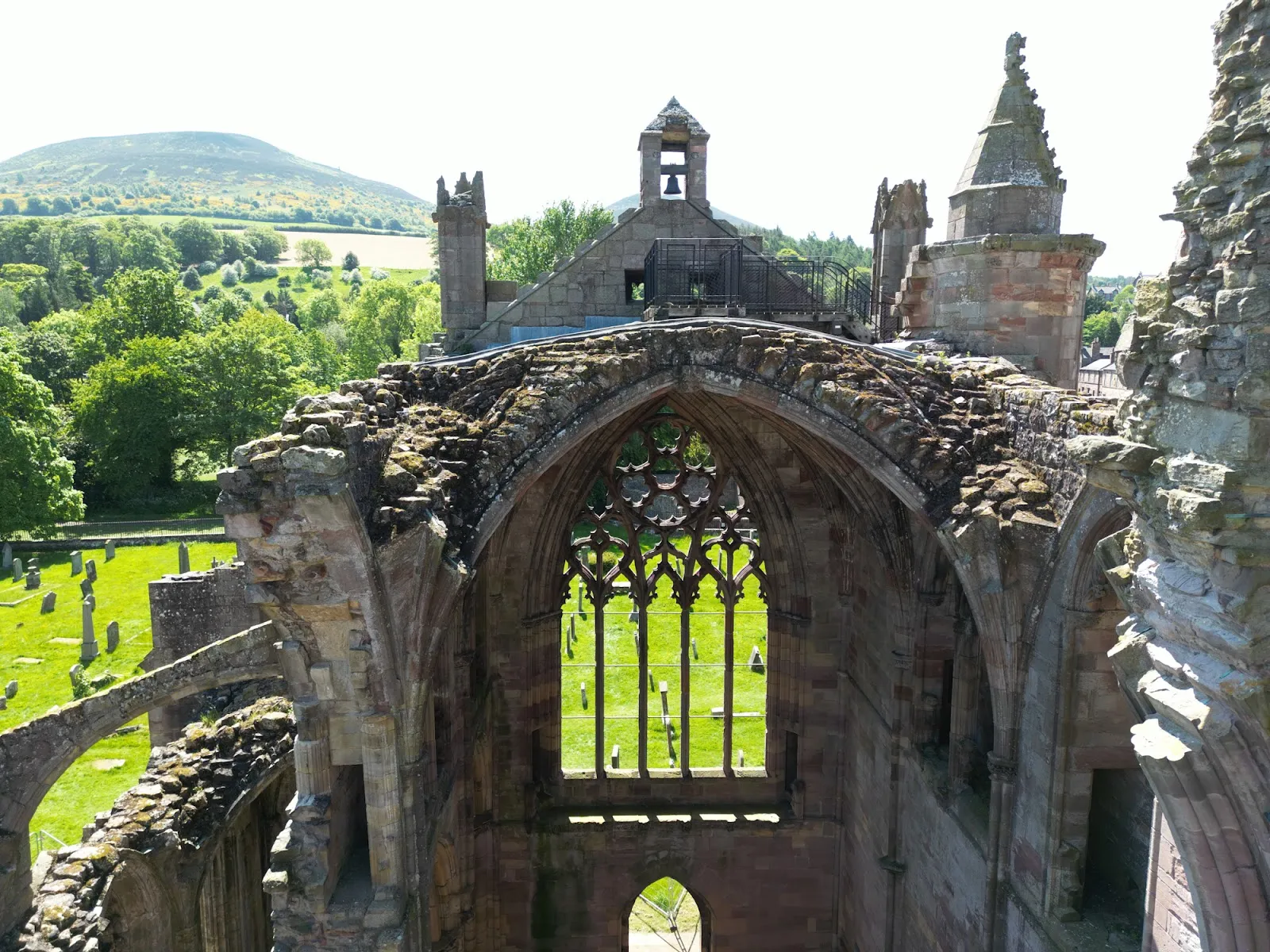
King David I established Melrose Abbey for Cistercian monks in 1136. It became the chief house of the order in Scotland and grew wealthy through its land and sheep farming. The community remained here until the Reformation. An earlier monastery associated with St Cuthbert stood in the area, but the abbey visitors see today began in the 12th century.
Melrose’s position near the English border brought repeated attacks during the Middle Ages. English forces damaged the abbey in the 14th century; after an attack in 1385, much of it was rebuilt on a grand scale. The surviving church is therefore a record of both medieval ambition and later destruction. Its rose-coloured sandstone sets it apart from other Border abbeys.
Carvings, graves and the museum
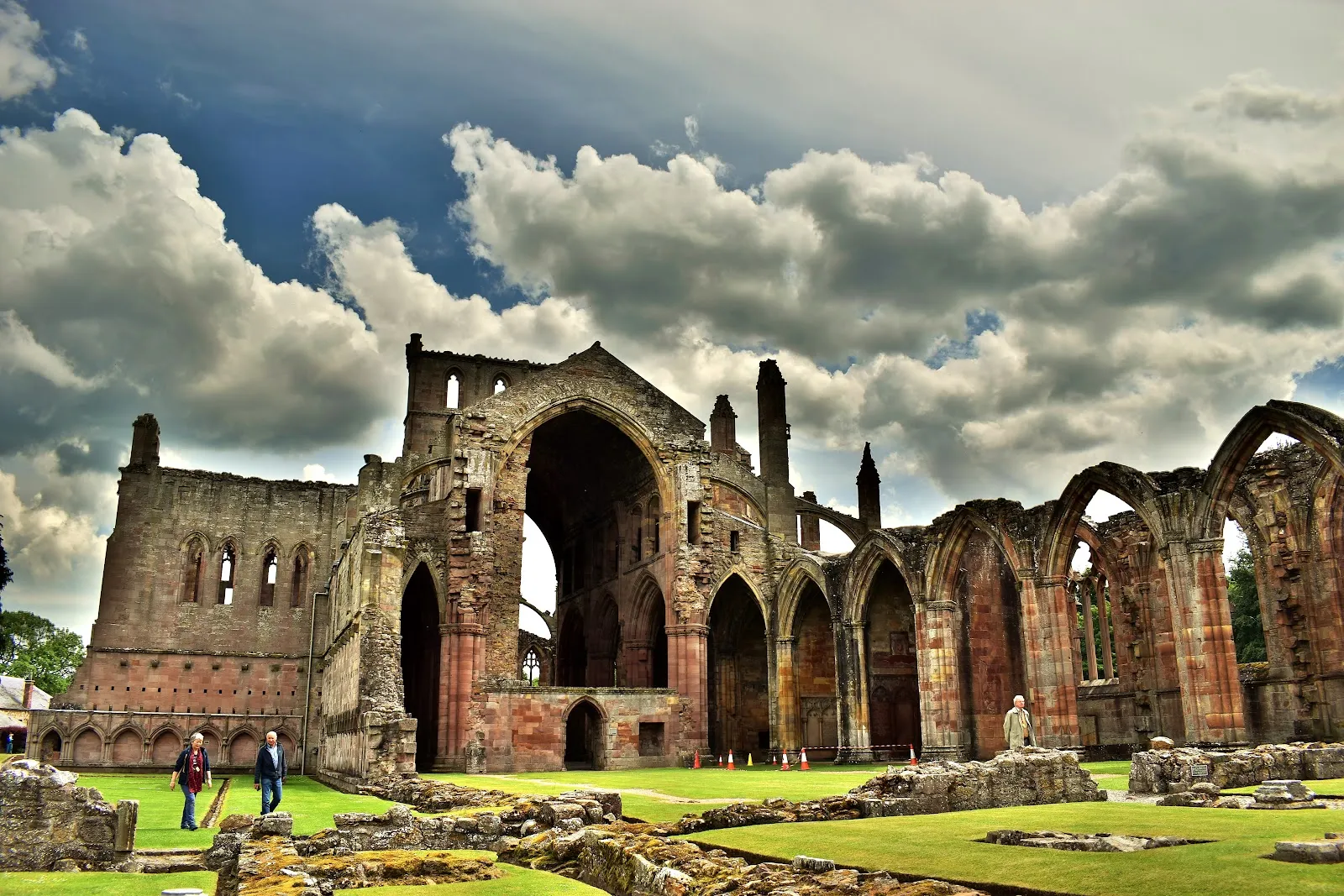
The church ruins retain ornate Gothic stonework, with arches, carved details and sections of tall wall that trace the scale of the original building. Look closely at the exterior carvings for a pig playing bagpipes, one of the abbey’s distinctive details. The remains are substantial enough to give a sense of the church’s layout, even though the building is no longer complete.
The abbey grounds include graves and memorials connected with Scottish history. Robert the Bruce’s heart is said to have been buried at Melrose, in the chapter house. His body was buried at Dunfermline Abbey. A plaque marks the site associated with his heart; the story received renewed attention after a casket believed to contain it was found in 1996.
A small museum displays sculptures removed from the abbey’s exterior. These pieces offer a closer look at the carving work than the larger structure allows. Tickets also include access to the gardens, according to information about the site.
Views from the abbey tower
When the tower is open to visitors, its climb gives a view across Melrose and toward the Eildon Hills. The abbey sits close to the River Tweed, with the surrounding landscape visible from the town and its higher viewpoints. Tower access can depend on conditions at the site, so check what is open when planning your visit.
Preservation work can affect which parts of the ruins are accessible, and visitor numbers may be limited for safety. Booking ahead is recommended. The site has wheelchair-accessible parking, an accessible entrance and an accessible restroom. For a quieter visit, consider going on a weekday. Guides and audio tours have also been available for visitors who want more context about the abbey’s history and surviving features.
Häufige Fragen
When was Melrose Abbey founded?
King David I founded the abbey for Cistercian monks in 1136.
Is Robert the Bruce buried at Melrose Abbey?
His heart is said to be buried in the chapter house. His body was buried at Dunfermline Abbey.
What can you see inside Melrose Abbey?
The ruins include Gothic arches and carved stonework, graves and a small museum with sculptures from the abbey’s exterior. The bell tower may also be open to visitors.
Should I book Melrose Abbey tickets in advance?
Advance booking is recommended. Preservation work or safety limits can affect access to parts of the site.
Is Melrose Abbey wheelchair accessible?
The site lists an accessible entrance, restroom and parking. Access around the ruins may be affected by preservation work.