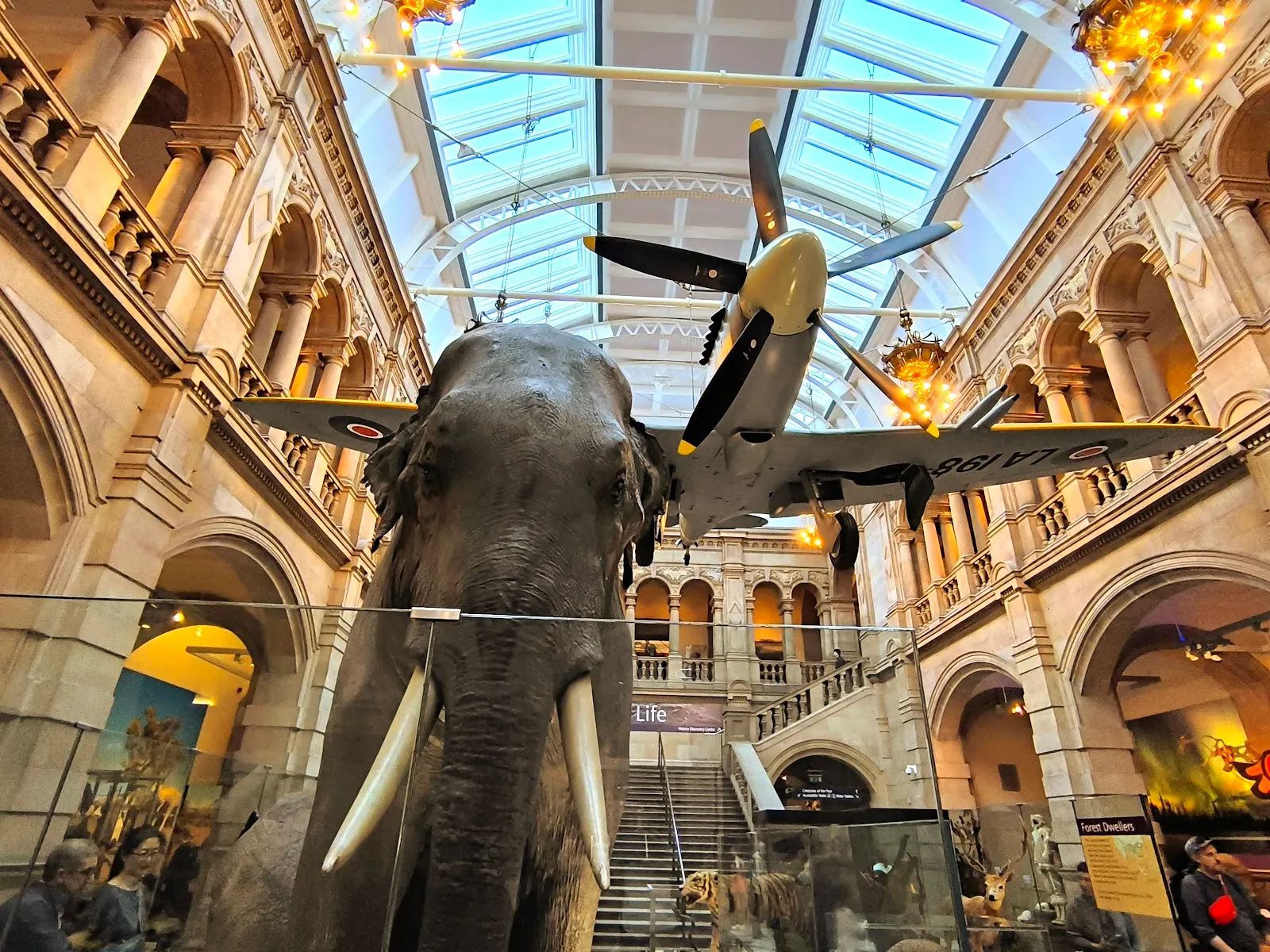
Kelvingrove Art Gallery and Museum is a free museum and art gallery on Argyle Street, beside Kelvingrove Park in Glasgow’s West End. Its red sandstone building and grand Centre Hall set the scene for 22 galleries spanning art, natural history and Scottish history. Look for Salvador Dalí’s Christ of Saint John of the Cross, works by Scottish artists, ancient Egyptian objects and a Spitfire suspended above the floor. A lunchtime organ recital adds music to a visit that can easily fill an afternoon.
A sandstone landmark with a grand central hall
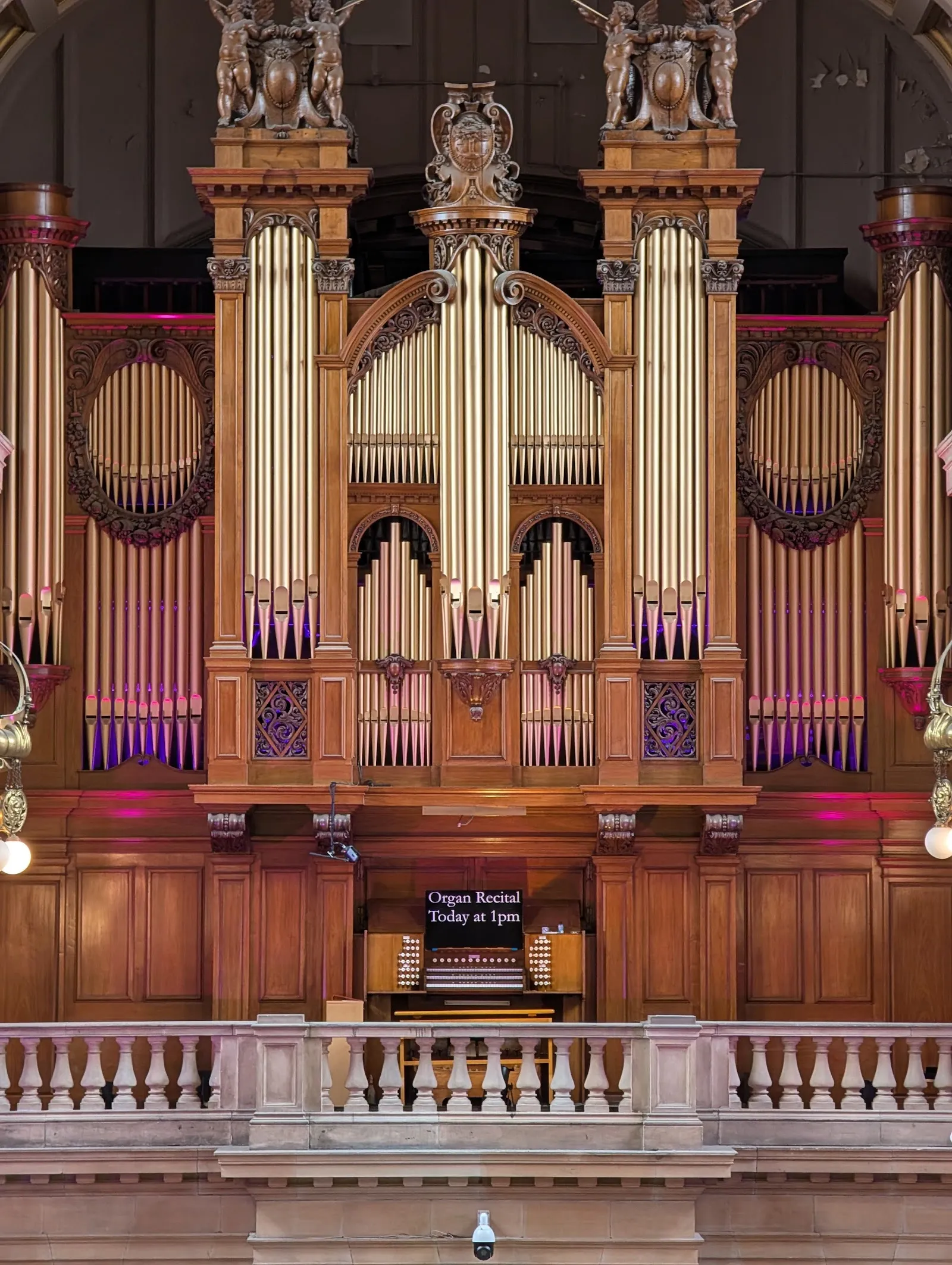
Kelvingrove Art Gallery and Museum opened in 1901 for the Glasgow International Exhibition. Its Spanish Baroque-style red sandstone exterior is a landmark beside Kelvingrove Park. Inside, the Centre Hall draws the eye upward to its high ceiling and pipe organ, commissioned for the exhibition’s concert hall. The organ remains in use for recitals.
The museum’s 22 themed galleries bring together art, natural history and cultural collections. More than 8,000 objects range from paintings and armour to ancient Egyptian artefacts and Scottish archaeological finds. The scale and variety mean you can follow your interests rather than see every room in one visit.
Art, history and natural history in the galleries
Salvador Dalí’s Christ of Saint John of the Cross is one of the collection’s best-known works. Its gallery includes a multimedia presentation based on Dalí’s notes about the painting’s composition and interpretation. Other art highlights include French Impressionist and Dutch works, Scottish Colourists, the Glasgow Boys and pieces by Charles Rennie Mackintosh. The collection also includes paintings by Monet, Renoir, van Gogh and Rembrandt.
Beyond the art galleries, look for objects from ancient Egypt, prehistoric Scotland and other cultures, as well as displays on Scottish history and wildlife. Arms and armour have their own place in the museum, and a Spitfire hangs in the west court. The mix of subjects lets you move from a painting to a natural history display or historical artefact without leaving the building.
Planning your visit
Admission is free, and the museum has a café and restaurant for a break during a longer visit. Families can explore at their own pace; some displays are interactive, and a Mini Museum is aimed at younger children. The museum’s broad collection includes plenty beyond child-focused exhibits, so it suits adults with specific interests in art, history or natural history too.
Organ recitals take place in the Centre Hall around lunchtime. Check the current schedule before planning your visit around a performance, as the reported Sunday recital time differs from the weekday time. If you arrive to find a queue at the main entrance, the side entrance on Argyle Street is another option. Parking is available, though spaces can be difficult to find. The adjoining park is a natural next stop for a walk after the galleries.
Häufige Fragen
Is Kelvingrove Art Gallery and Museum free?
Yes. Admission is free, and donations are welcome.
How long should you spend at Kelvingrove?
Allow at least three to four hours to explore the galleries without rushing. A full visit can take longer.
What are the main things to see at Kelvingrove?
Highlights include Dalí’s Christ of Saint John of the Cross, the Centre Hall pipe organ, the suspended Spitfire and collections covering art, natural history and Scottish history.
When is the organ recital at Kelvingrove?
Recitals take place around lunchtime in the Centre Hall. Check the current schedule before visiting, as Sunday timing differs from the weekday time reported.