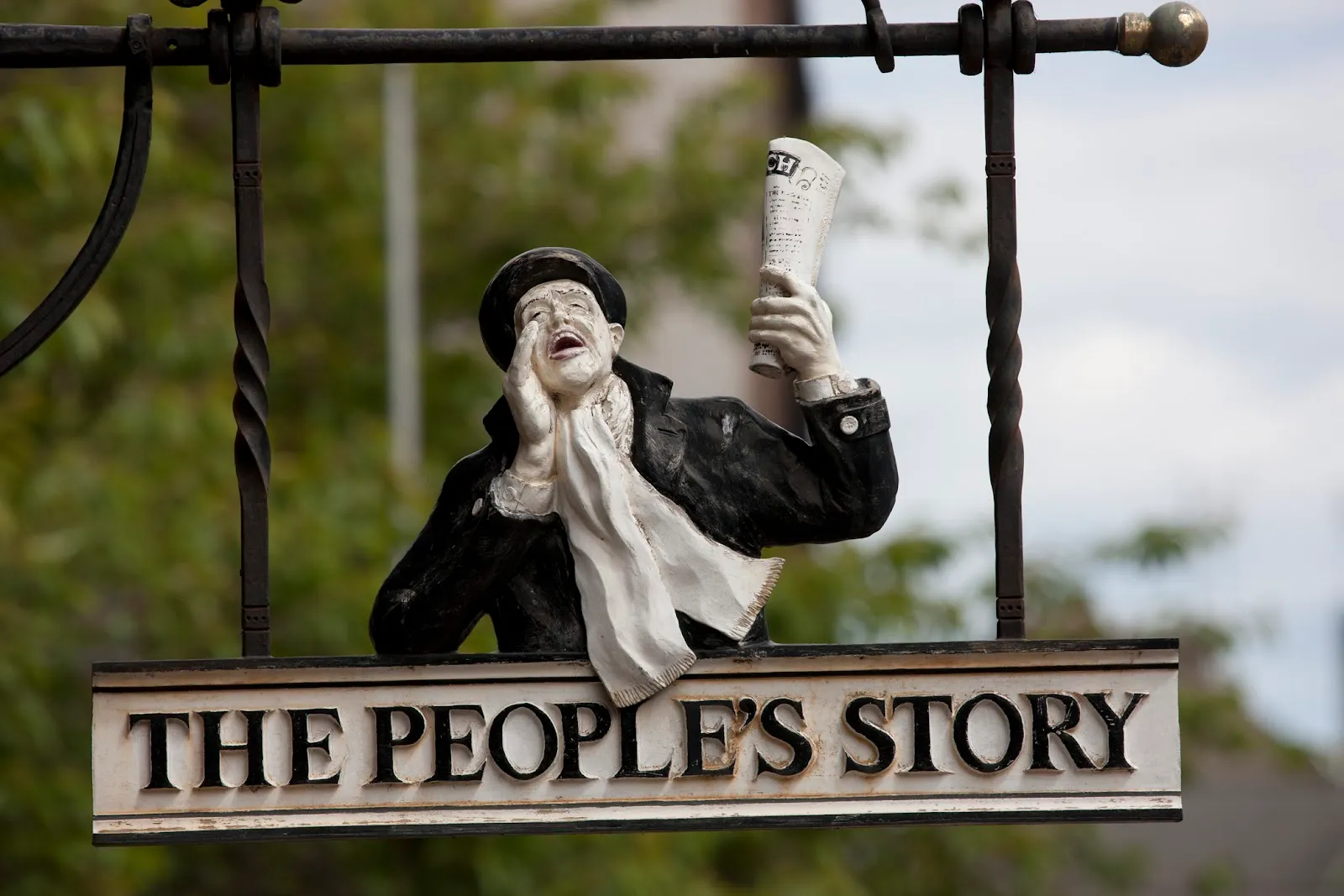
Inside the Canongate Tolbooth on Edinburgh’s Royal Mile, The People’s Story Museum traces working-class life from the 18th to the late 20th century. Personal accounts, photographs and everyday objects show how residents worked, lived and spent their free time. Look for trade union and protest banners, wax figures depicting daily scenes, and displays on trades such as bookbinding. The museum is free to enter, with a suggested donation of £5. Its three floors are reached by stairs, so allow 30 to 60 minutes and plan for steps between displays.
Working-class life on the Royal Mile
The People’s Story Museum is housed in the Canongate Tolbooth at 163 Canongate, on Edinburgh’s Royal Mile. Its collection focuses on the lives and experiences of ordinary residents, particularly working people, from the 18th century to the late 20th century. Personal accounts, photographs, household objects and tools help tell that story through daily life rather than through the city’s powerful figures alone.
The displays cover work and employment, housing, leisure, crime and social change. They also touch on crafts and trades, and on the conditions in which people lived. The result is a local account of Edinburgh shaped by the people who worked in its industries and communities.
Banners, workshops and recreated rooms
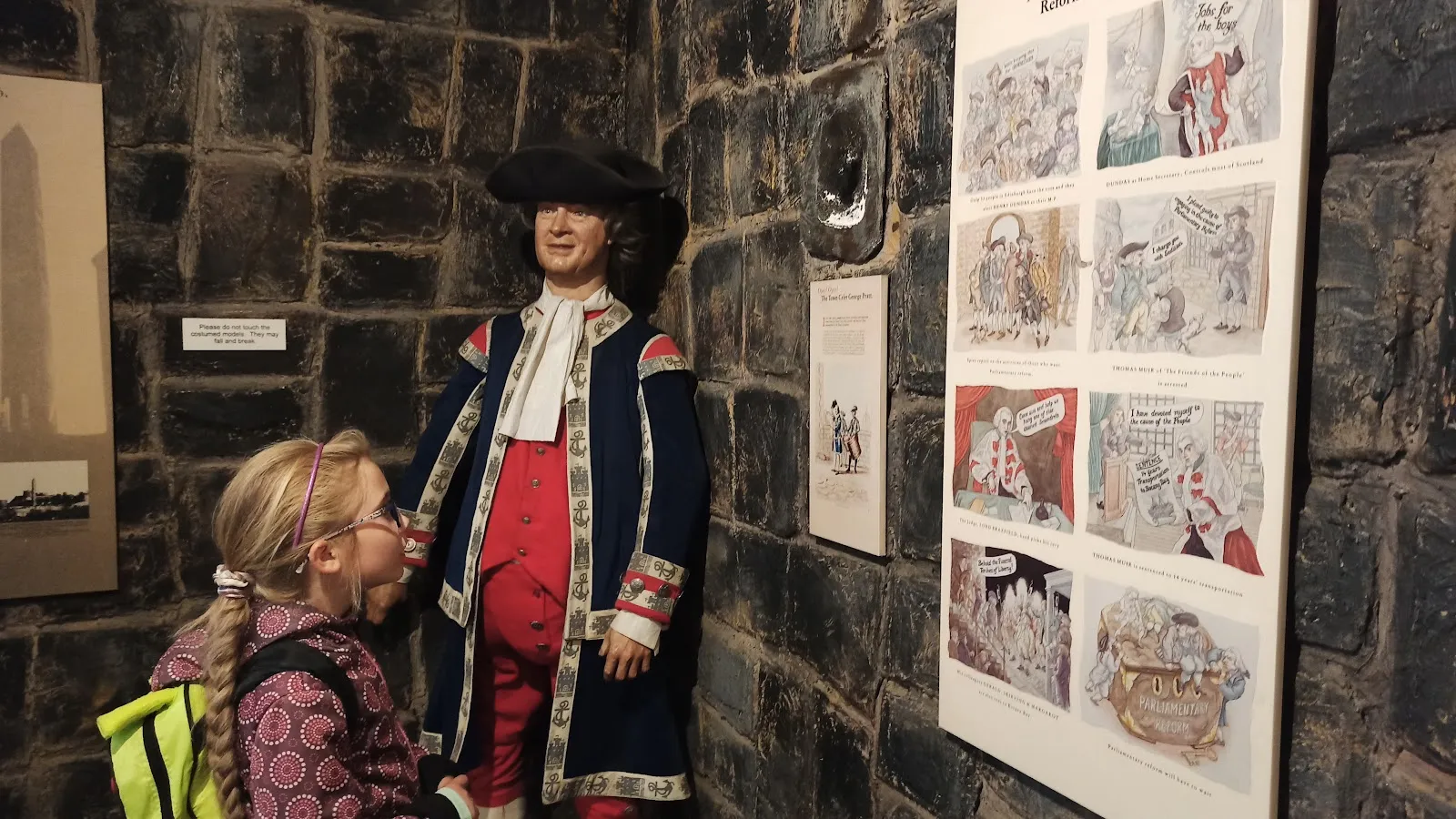
Look for trade union banners and material connected with reform and protest movements, including Votes for Women flags. Wax figures and staged scenes depict aspects of everyday life. Displays include a wartime kitchen, a bookbinder’s workshop and a jail cell, while other exhibits address housing, leisure and work.
The collection also explores Edinburgh’s breweries, including businesses that have since closed. Objects and personal accounts give context to the city’s trades and changing working lives. Some displays focus on workers’ efforts to secure rights and better conditions, including the role of trade unions and social movements.
The Canongate Tolbooth
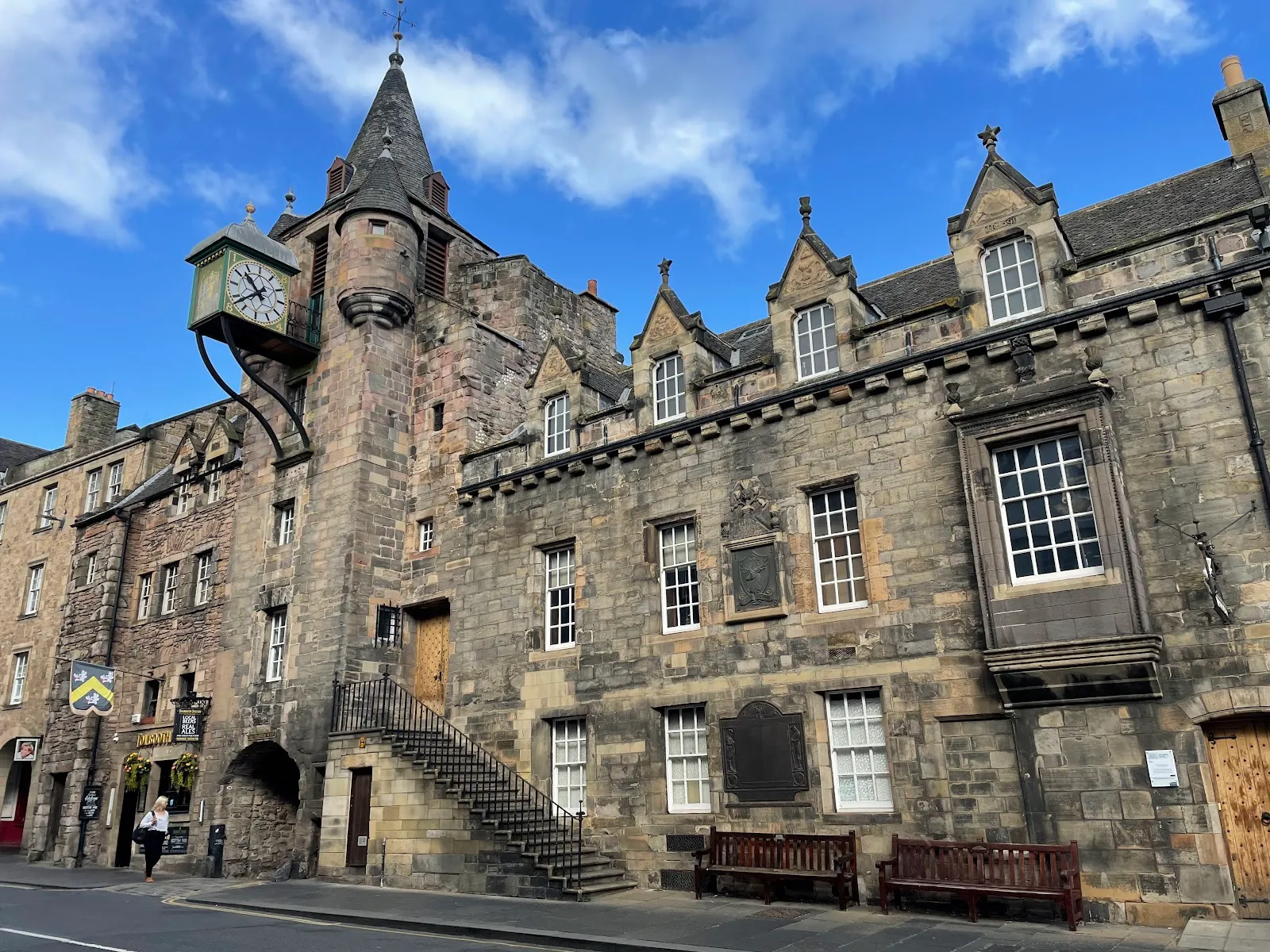
The museum occupies the Canongate Tolbooth, a landmark on the Royal Mile that dates to 1591. Before becoming a museum, the building was used as a courtroom, a prison and a meeting place for the town council. Its clock and turrets make it easy to recognise from the street.
The museum is arranged over three levels, and visitors need to use stairs to reach the displays. Some information panels contain substantial text, so allow time to read as you move through the rooms. The Museum of Edinburgh stands across the road, making it straightforward to combine the two stops. Admission to The People’s Story is free, and a £5 donation is suggested.
Häufige Fragen
Is The People’s Story Museum free?
Yes. Entry is free, and visitors can consider making a £5 donation.
How long should I spend at The People’s Story Museum?
Allow around 30 to 60 minutes to see the displays.
Is the museum wheelchair accessible?
The venue information lists a wheelchair-accessible entrance, elevator and restroom.
Are there stairs inside The People’s Story Museum?
Yes. Displays occupy three levels, and stairs are part of the visit.