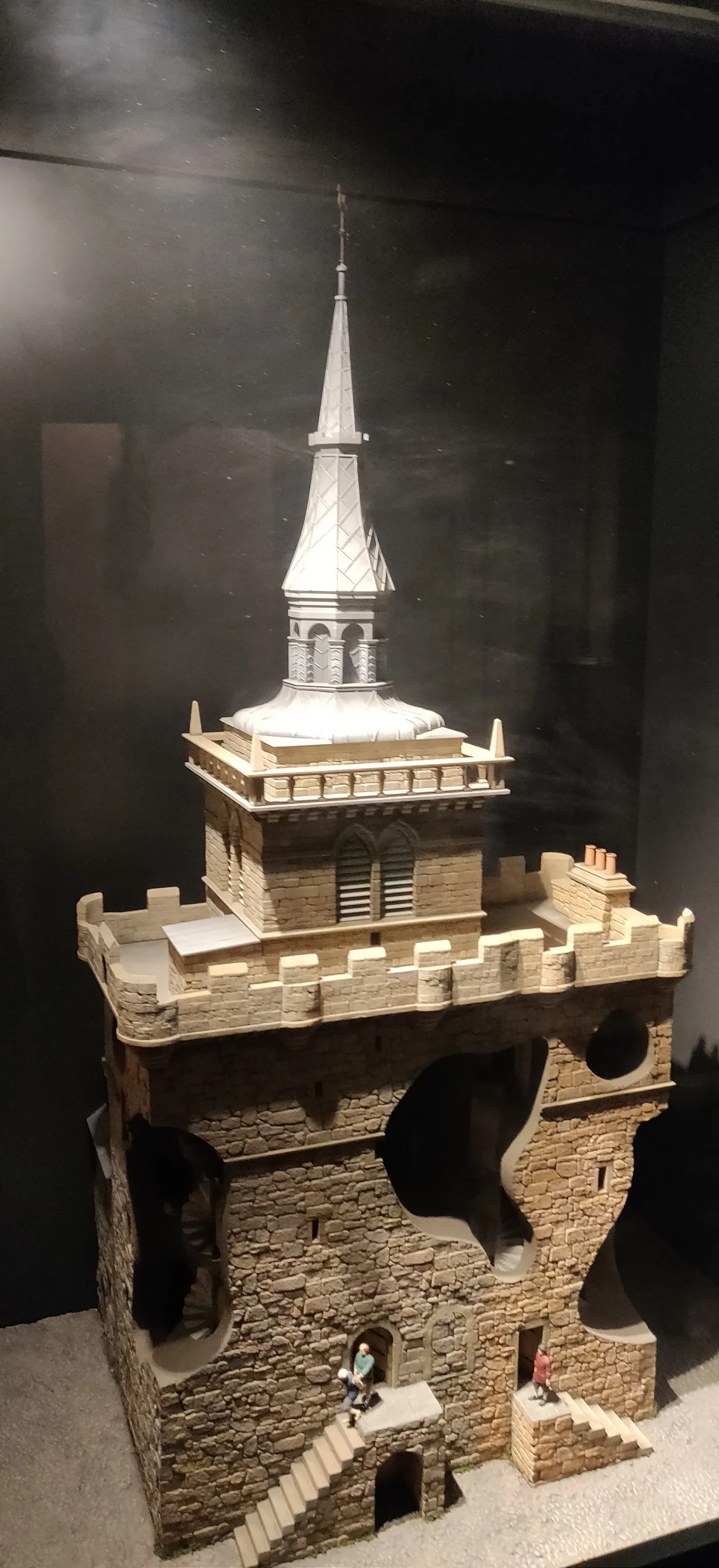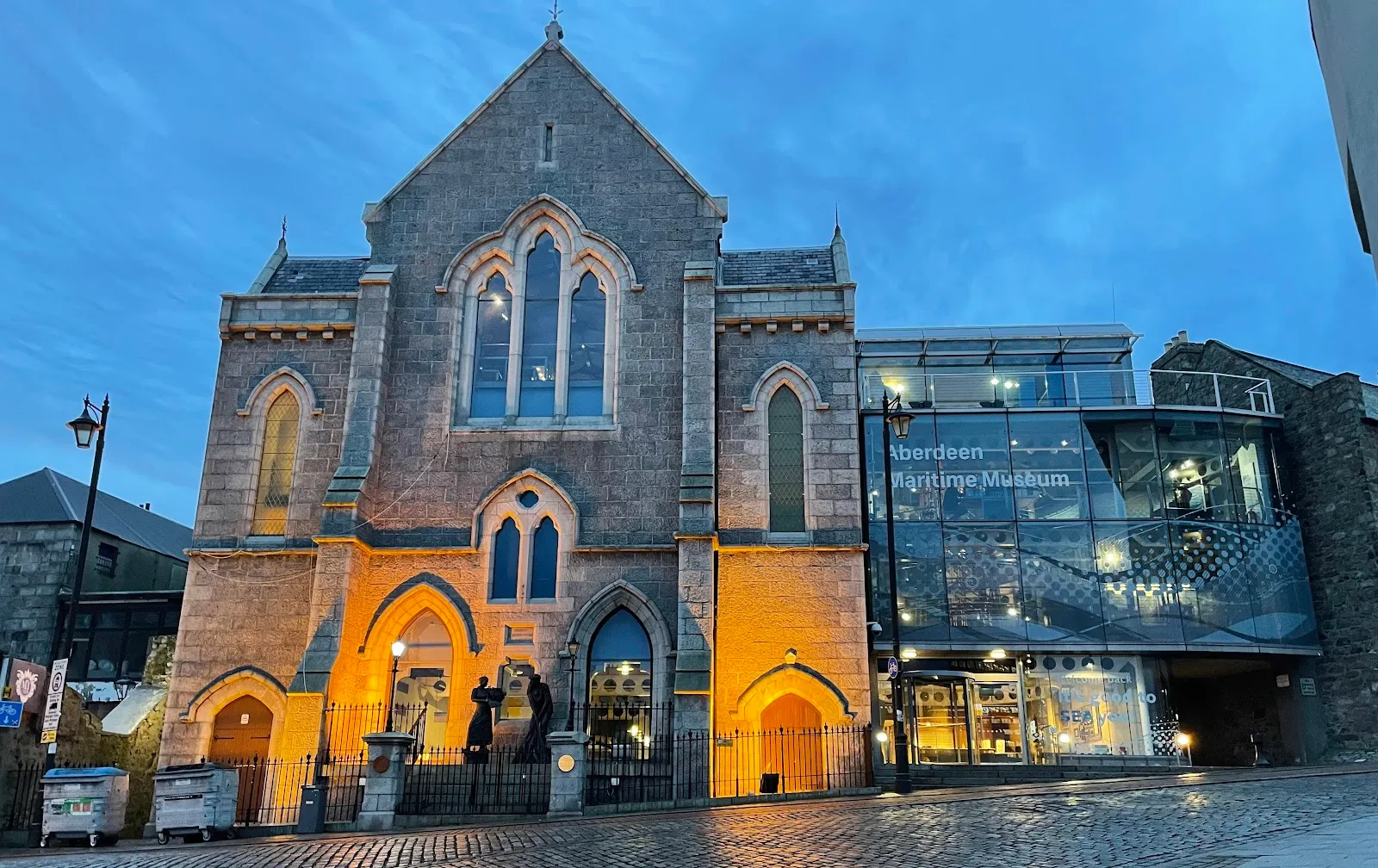
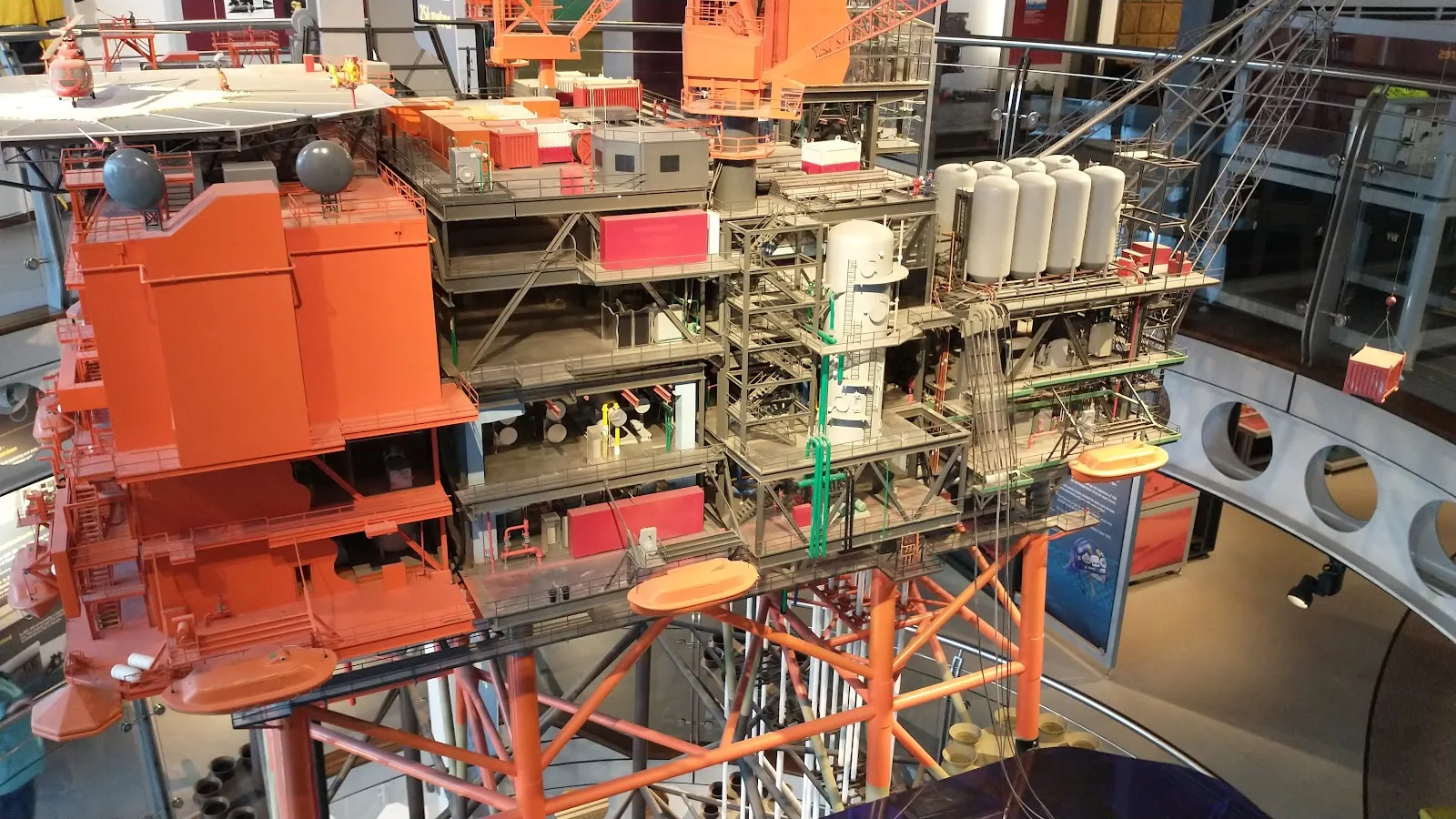
On Shiprow near Aberdeen Harbour, this free museum traces the city’s connection with the sea, from fishing and shipbuilding to North Sea oil and gas. Its galleries occupy Provost Ross’s House, built in 1593, a former church and a modern glass extension. Look for ship models, historic equipment, films and interactive displays, including a tall model of an offshore oil platform. Several floors of exhibits and views over the harbour make this a useful stop for understanding Aberdeen’s working port and maritime past.
Aberdeen’s connection with the sea
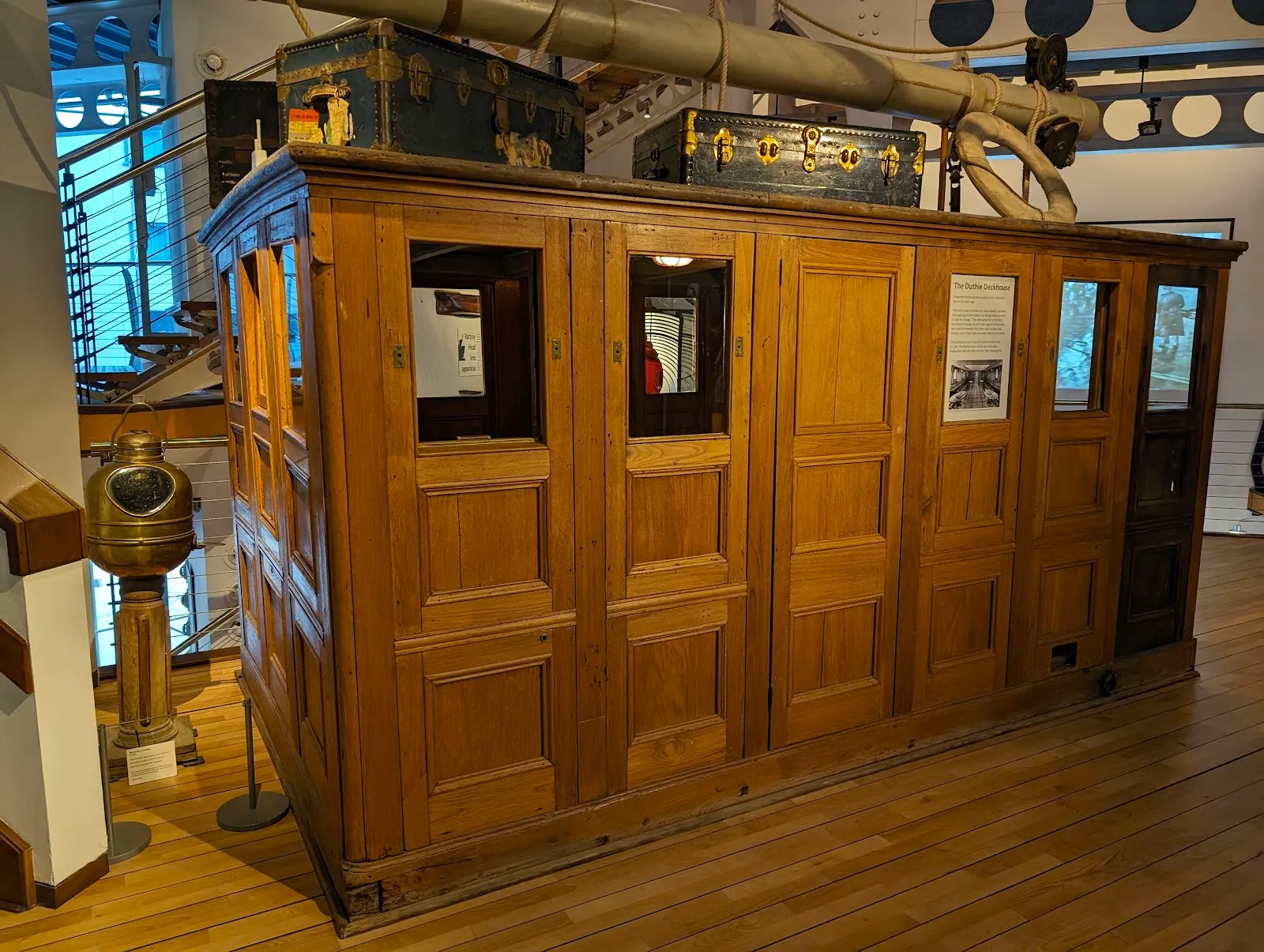
The museum follows the city’s maritime history from early fishing and trade to shipbuilding, sailing ships and the North Sea oil and gas industry. Its collections also cover the port, marine industries, rescues at sea and shipwrecks. Films, panels, historic objects and interactive displays explain how work at sea shaped Aberdeen.
The oil and gas galleries bring the city’s modern offshore industry into focus. A tall model of an oil platform rises through the museum, giving a close view of the structure. Other displays include ship models and equipment connected with fishing, shipbuilding and offshore work.
Historic buildings on Shiprow
The museum occupies several connected buildings on Shiprow, one of Aberdeen’s historic streets. Provost Ross’s House dates to 1593 and is among the city’s oldest domestic buildings. A former church is also part of the complex, linked to the other buildings by a modern glass extension.
The contrast between old stonework, the church’s Gothic stained glass and the glass addition gives the museum a distinct setting. The harbour is visible from inside, linking the exhibits to the working port nearby.
Galleries and exhibits
The displays extend across several floors, with rooms devoted to different parts of Aberdeen’s maritime story. Models, paintings and equipment sit alongside films and interactive material. Among the subjects are clipper ships, fishing, ship design and the development of offshore oil and gas.
The top-floor Gateway to the North gallery introduces the region’s archaeology, with exhibits spanning 1136 to 1660. Take your time moving between floors: the range of rooms makes it easy to spend longer than a quick museum stop.
Planning your visit
Entry is free, and donations can be made in the shop by cash or card. The museum has lifts, accessible toilets and benches on each floor. A small shop is on site, and there is also a café.
Families can look for quizzes and activities during their visit. If you want to support the museum, consider making a donation before you leave.
Häufige Fragen
Is Aberdeen Maritime Museum free?
Yes. Entry is free, and donations are welcome.
How long should I spend at Aberdeen Maritime Museum?
Allow at least an hour. Two hours gives you time to explore the galleries across several floors.
What can you see at Aberdeen Maritime Museum?
Exhibits cover fishing, shipbuilding, sailing ships, the port and the North Sea oil and gas industry. Displays include ship models, historic equipment, films and interactive material.
Is Aberdeen Maritime Museum accessible?
The museum has lifts between floors, accessible toilets and benches on each floor.