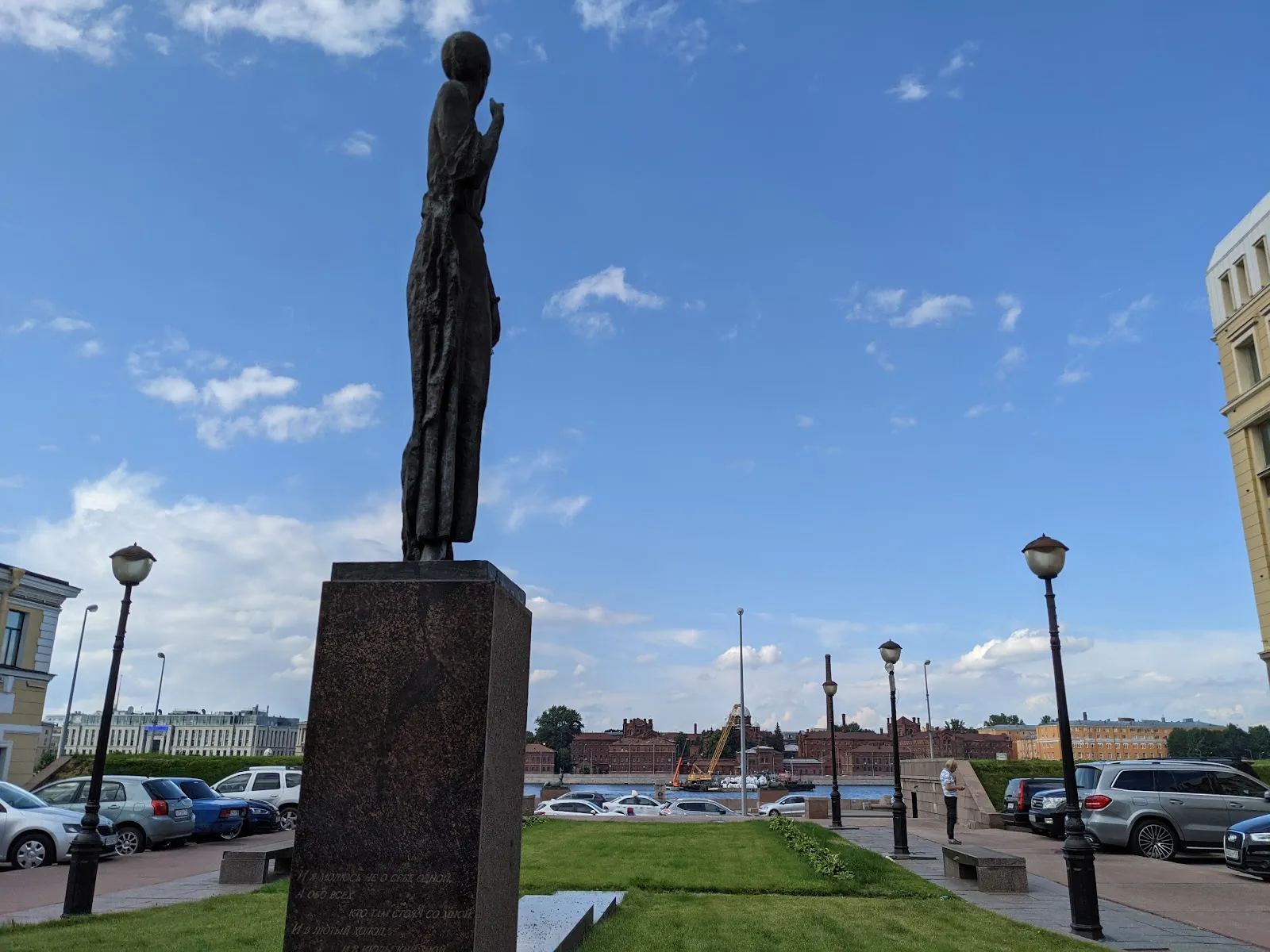
On the Neva embankment in St Petersburg, the Monument to Anna Akhmatova faces Kresty prison, linking the poet’s memory to the political persecution evoked in her poem Requiem. Sculptor Galina Dodonova’s bronze figure stands on a granite pedestal inscribed with lines from the poem. The quiet setting gives you time to read them and consider the history behind the memorial. Across the road, the Shemyakin lions also commemorate victims of political repression.
A memorial facing Kresty prison
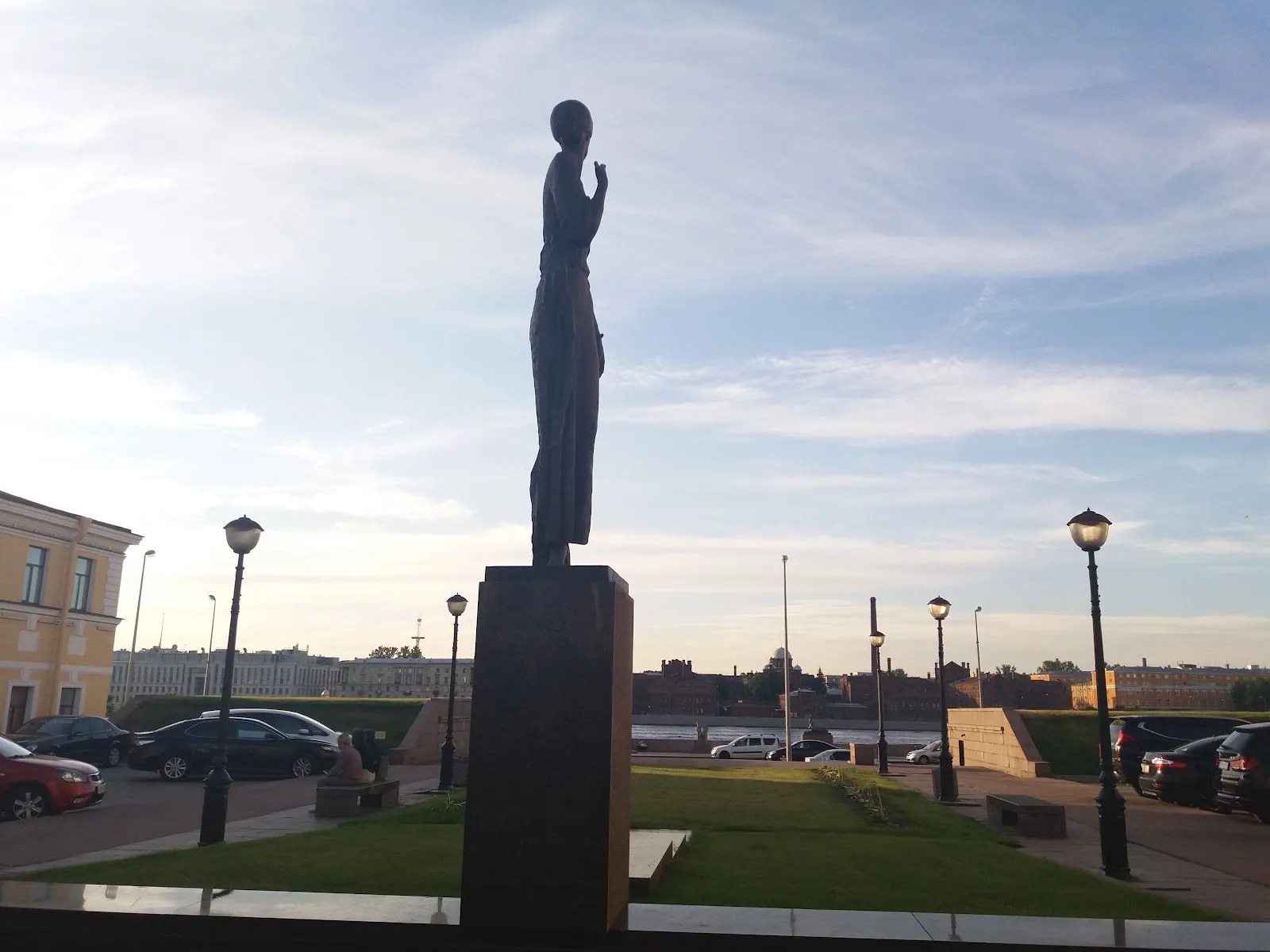
The monument stands between Shpalernaya Street and the Robespierre Embankment, on the Neva. Its position opposite Kresty prison gives the memorial a direct connection to the poem Requiem and its account of political persecution. The prison is across the river from the statue.
Akhmatova’s poem imagines a monument to her standing where she waited outside the prison. Lines from Requiem are inscribed on the pedestal, bringing that image into the place itself.
The statue and nearby memorials
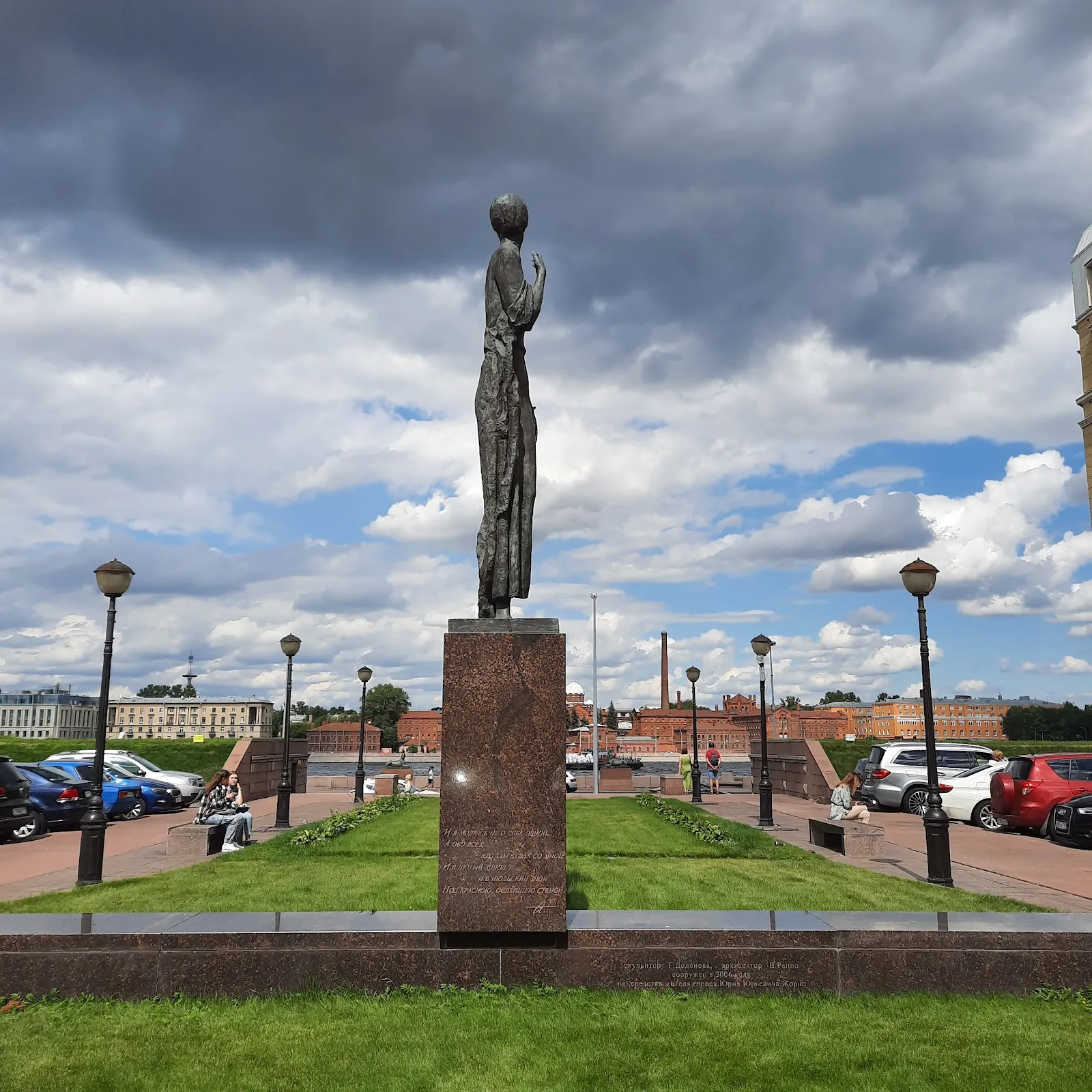
Sculptor Galina Dodonova created the bronze statue. It was unveiled in 2006, marking 40 years since Akhmatova’s death. The figure is restrained in form, with its placement and the words on the pedestal carrying much of the memorial’s meaning.
Across the road, the Shemyakin lions also commemorate victims of political repression. Seeing both memorials gives the stop a wider context beyond Akhmatova’s personal connection to Kresty.
Häufige Fragen
Where is the Monument to Anna Akhmatova?
It stands on the Neva embankment between Shpalernaya Street and the Robespierre Embankment, opposite Kresty prison.
What is inscribed on the monument?
Lines from Anna Akhmatova’s poem Requiem appear on the granite pedestal.
Who made the statue, and when was it unveiled?
Sculptor Galina Dodonova created the bronze statue. It was unveiled in 2006, 40 years after Akhmatova’s death.