Cottage Palace is a small country residence and museum in Alexandria Park, Peterhof, built for Emperor Nicholas I and his family. Its hilltop setting looks out over the Gulf of Finland, while the rooms preserve furnishings and details of royal family life. Inside, guided tours explain the palace rooms and the household that used them. The building’s English country-house style, with balconies, bay windows and openwork arches, gives it a different character from Peterhof’s grander palaces.
A country residence for Nicholas I’s family
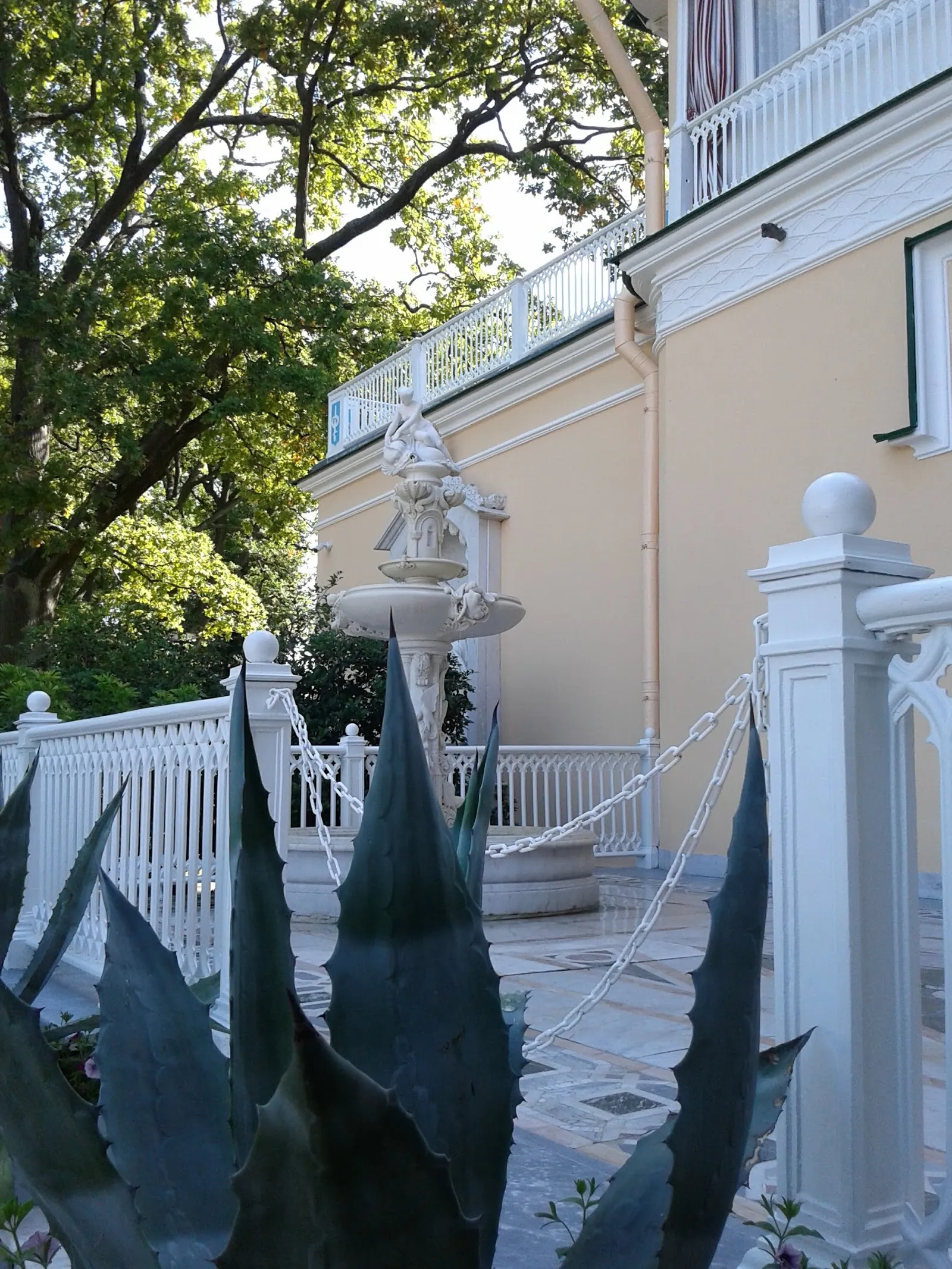
In 1826, Emperor Nicholas I commissioned Scottish architect Adam Menelaws to design a small country house beside Peterhof. The residence was built for his wife and family in the English country-house style, rather than as a grand ceremonial palace.
The design reflects that brief. Balconies, bay windows and openwork arches give the building a lighter appearance. Its setting on a hill in Alexandria Park also provides views towards the Gulf of Finland.
Changes to the house
Architect Andrei Stackenschneider added a dining room with an open terrace in 1841. The terrace was decorated with a fountain.
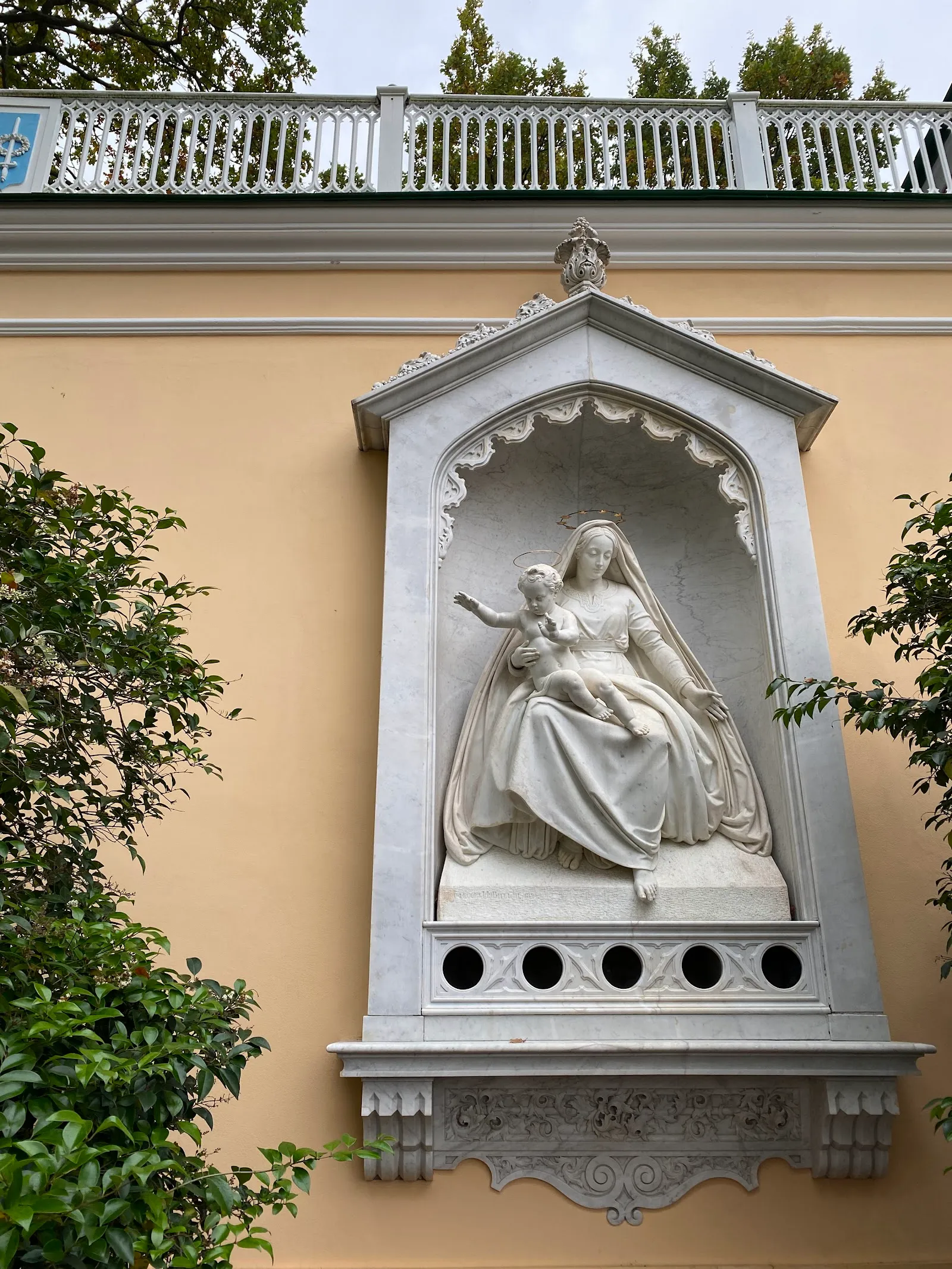
The palace’s neo-Gothic details fit the architectural style associated with Alexandria Park. Cottage’s domestic scale and country-house design set it apart from the more formal palaces at Peterhof.
Inside the museum
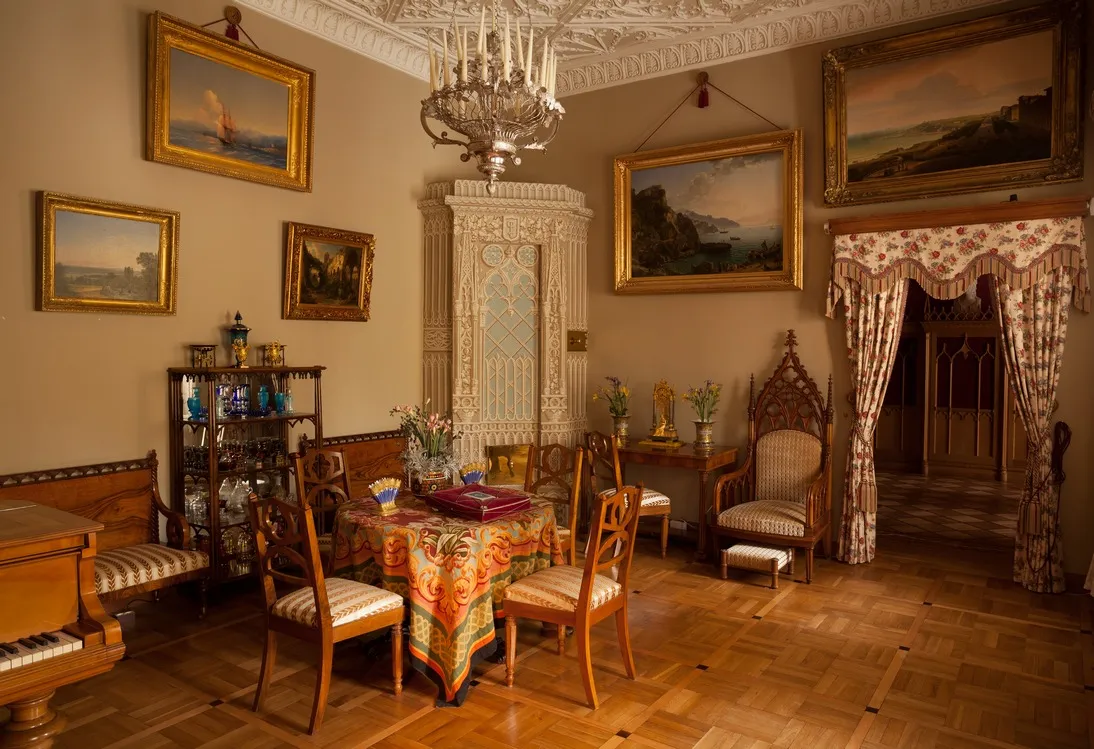
The rooms preserve furnishings and details of daily life from the Tsar era. Together, they offer a picture of how Nicholas I and his family lived in the residence.
Guided tours cover the rooms and the family’s life. The tours are included in the entrance fee, and provide context for the objects and interiors on display.
Häufige Fragen
Where is Cottage Palace?
It is in Alexandria Park in Peterhof, St Petersburg.
When is Cottage Palace open?
The museum is open on Saturdays and Sundays and closed Monday through Friday.
Are guided tours included in the entrance fee?
Yes. Guided tours are included and cover the palace rooms and Nicholas I’s family.
Who built Cottage Palace?
Nicholas I commissioned Scottish architect Adam Menelaws to design the country house in 1826.