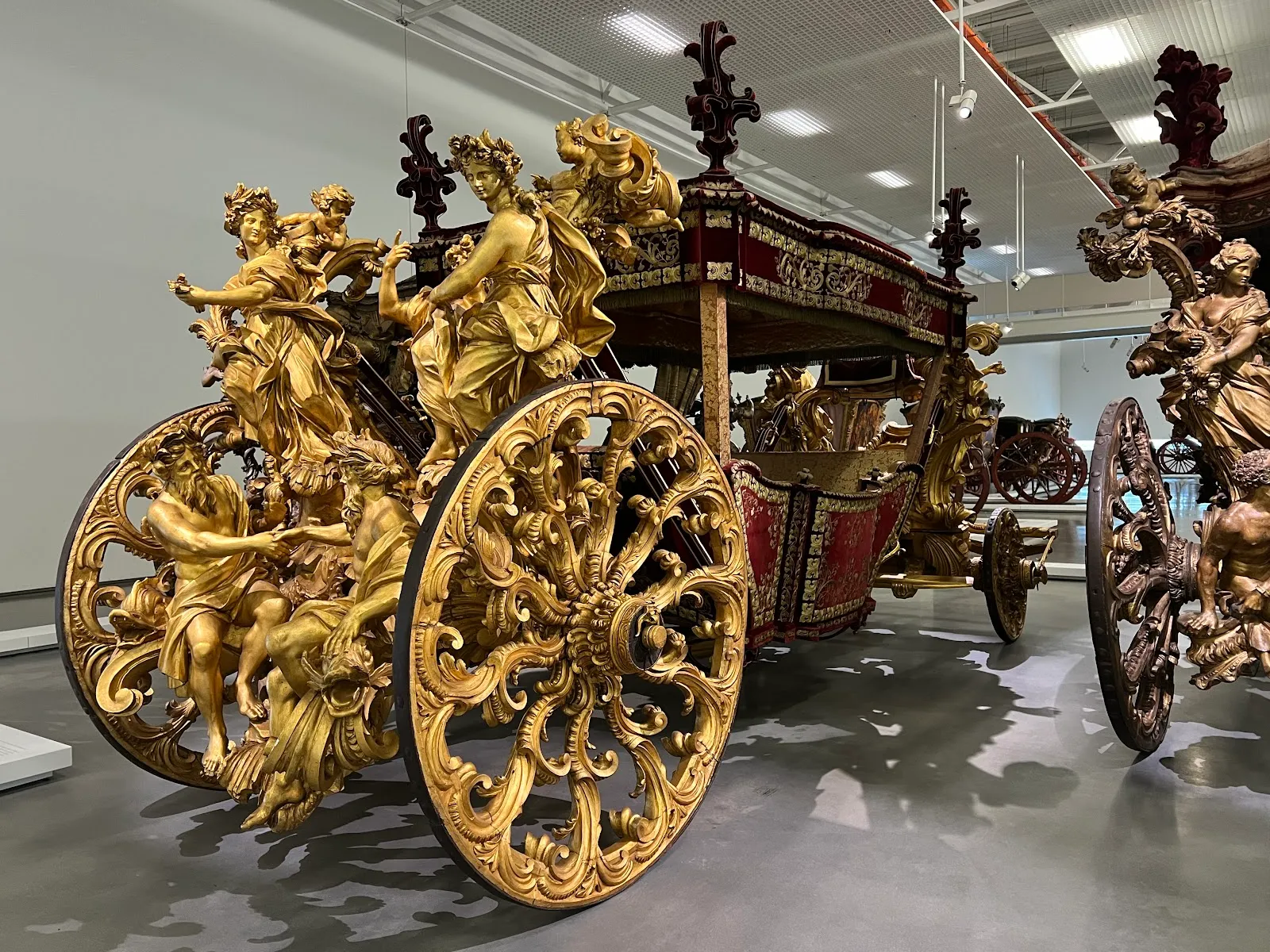
In Lisbon’s Belém district, the National Coach Museum traces the history of royal and ceremonial transport through an exceptional collection of horse-drawn vehicles. Coaches from the 16th to 19th centuries range from richly gilded court carriages to more practical designs, with finely worked details that reward a closer look. The modern gallery contrasts with the historic vehicles, and the former Royal Riding School across the street adds another part of the collection. Look for the 16th-century coach associated with King Filipe II and the ornate Coach of the Oceans.
Royal transport on display
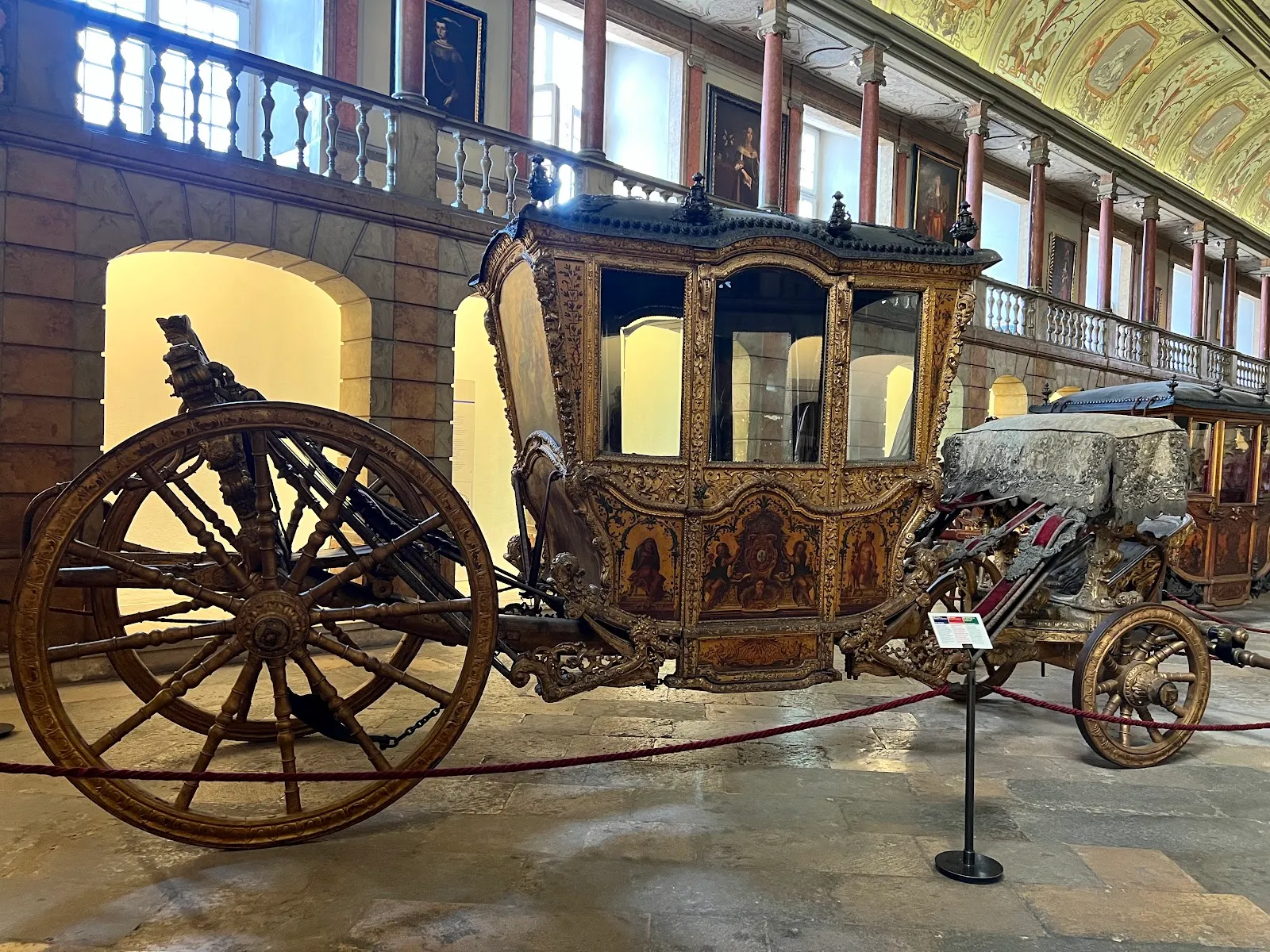
The National Coach Museum in Belém is devoted to horse-drawn vehicles used by Portugal’s royal household and other European courts. Its collection spans several centuries, from the 16th through the 19th, and includes ceremonial coaches, berlins, chaises, cabriolets, sedan chairs and other forms of transport. The vehicles show how travel for the wealthy changed before motor vehicles became part of the picture.
Some carriages were used for royal journeys; others had diplomatic, papal or ceremonial roles. Their decoration ranges from carved and gilded ornament to painted scenes and richly finished interiors. Look closely at the sculptural work and the different shapes of the vehicles, rather than viewing the collection as a row of similar coaches.
Details to look for

Among the oldest objects is a 16th-century coach associated with King Filipe II of Portugal, also known as Filipe III of Spain. Another prominent object is the Coach of the Oceans, a lavish vehicle connected with the Portuguese embassy procession to Pope Clement XI. Its elaborate decoration makes it a useful point of comparison with the collection’s other ceremonial coaches.
The exhibits also trace changes in design, from heavily ornamented Baroque and Rococo styles to later, more restrained forms. The museum’s timeline gives context to those shifts and to the eventual move from horse-drawn vehicles toward motor transport. On the upper floor, you can find additional artworks and miniature coaches.
Two buildings in Belém
The museum began in 1905, when Queen Amélia established it to preserve and display vehicles from the Portuguese Royal Household. The collection was first shown in the Royal Riding School. A contemporary museum building opened nearby in 2015, and the former riding school remains part of the visit, across the street from the main gallery.
The modern building’s clean-lined architecture provides a striking contrast with the ornate historic vehicles inside. Plan to visit both spaces if you want to see the museum’s two different settings. The museum is on Avenida da Índia in Belém, close to other major sights in the district, so it can be combined with a day of sightseeing nearby.
Häufige Fragen
What can you see at the National Coach Museum?
The collection includes royal and ceremonial horse-drawn vehicles from the 16th to 19th centuries, along with sedan chairs and miniature coaches. Highlights include the coach associated with King Filipe II and the Coach of the Oceans.
Does the museum have more than one building?
Yes. The main collection is in a modern gallery, and the former Royal Riding School across the street is also part of the museum visit.
How long should you allow for a visit?
Allow around 1 to 3 hours. The collection is extensive, and there are exhibits on the upper floor as well as the former Royal Riding School.
When is a good time to visit?
A weekday is a good choice if you prefer a quieter visit.


