
Santa Cruz Monastery, known in Portuguese as Mosteiro de Santa Cruz, stands on Praça 8 de Maio in Coimbra's old town. Its church is a National Monument and holds the tombs of Portugal's first two kings, Afonso Henriques and Sancho I. Inside, you can see blue and white azulejo panels, a Renaissance pulpit, a Baroque organ and carved choir stalls. The church is free to enter, while the cloisters, treasury and garden are charged separately. Allow time for the quiet cloisters and the relicários, which hold finely crafted sacred objects.
Foundation and early history
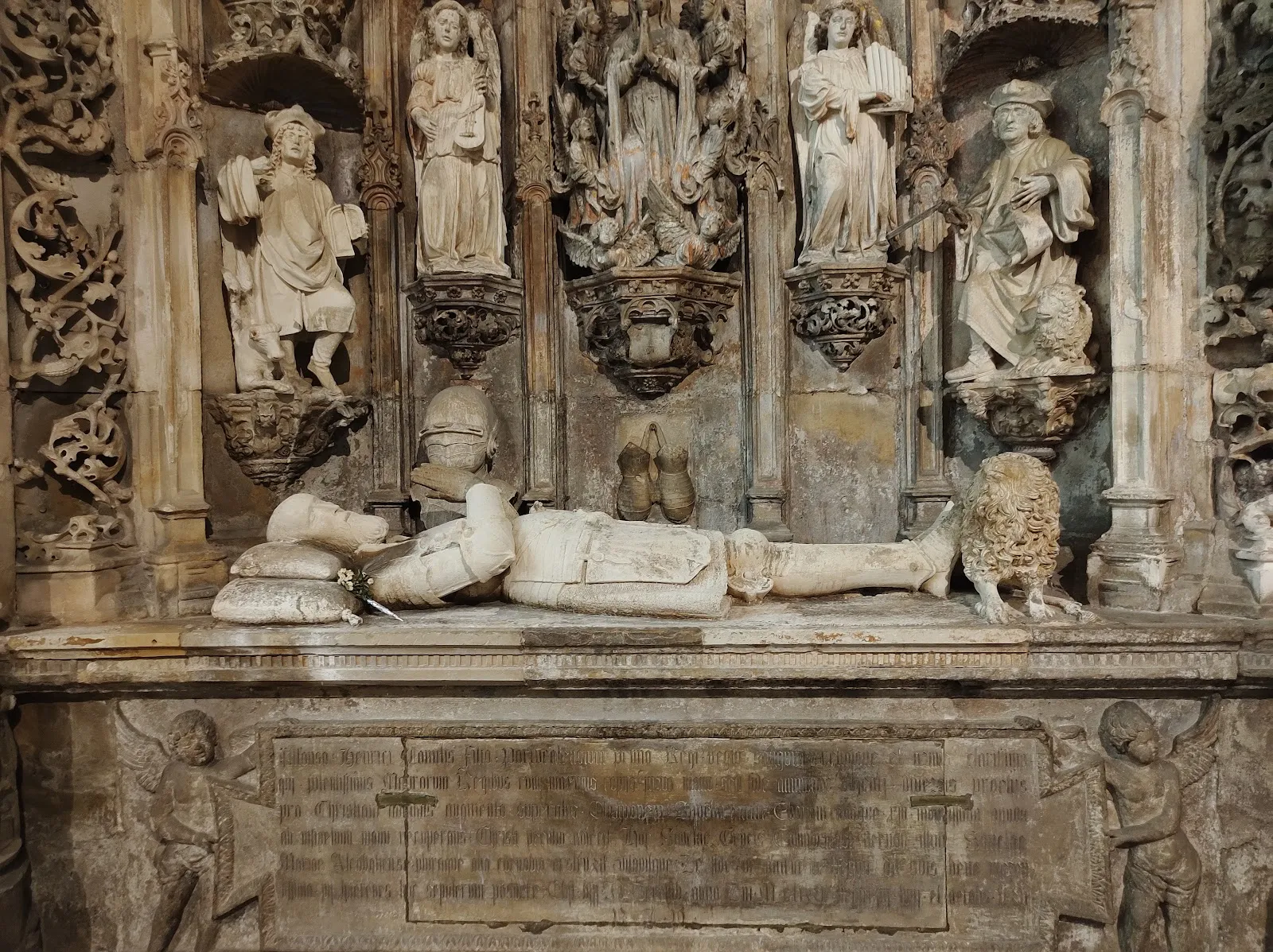
The monastery was founded in 1131, during the reign of Afonso Henriques, by a group of twelve Canons of St Augustine. The community followed the Augustinian order and became the most important monastic house of the first royal dynasty. Saint Theotonius, Portugal's first saint, inspired the house, and the church became a meeting place for clergy and nobles, Afonso Henriques among them.
Coimbra was the kingdom's capital during Afonso Henriques's reign, and the monastery's school and library were respected by scholars and political figures through the Middle Ages. One source credits the monastery with the founding of the university in Coimbra, which grew out of that medieval school. Construction of the monastery and church ran from 1132 to 1223.
The 16th-century rebuild
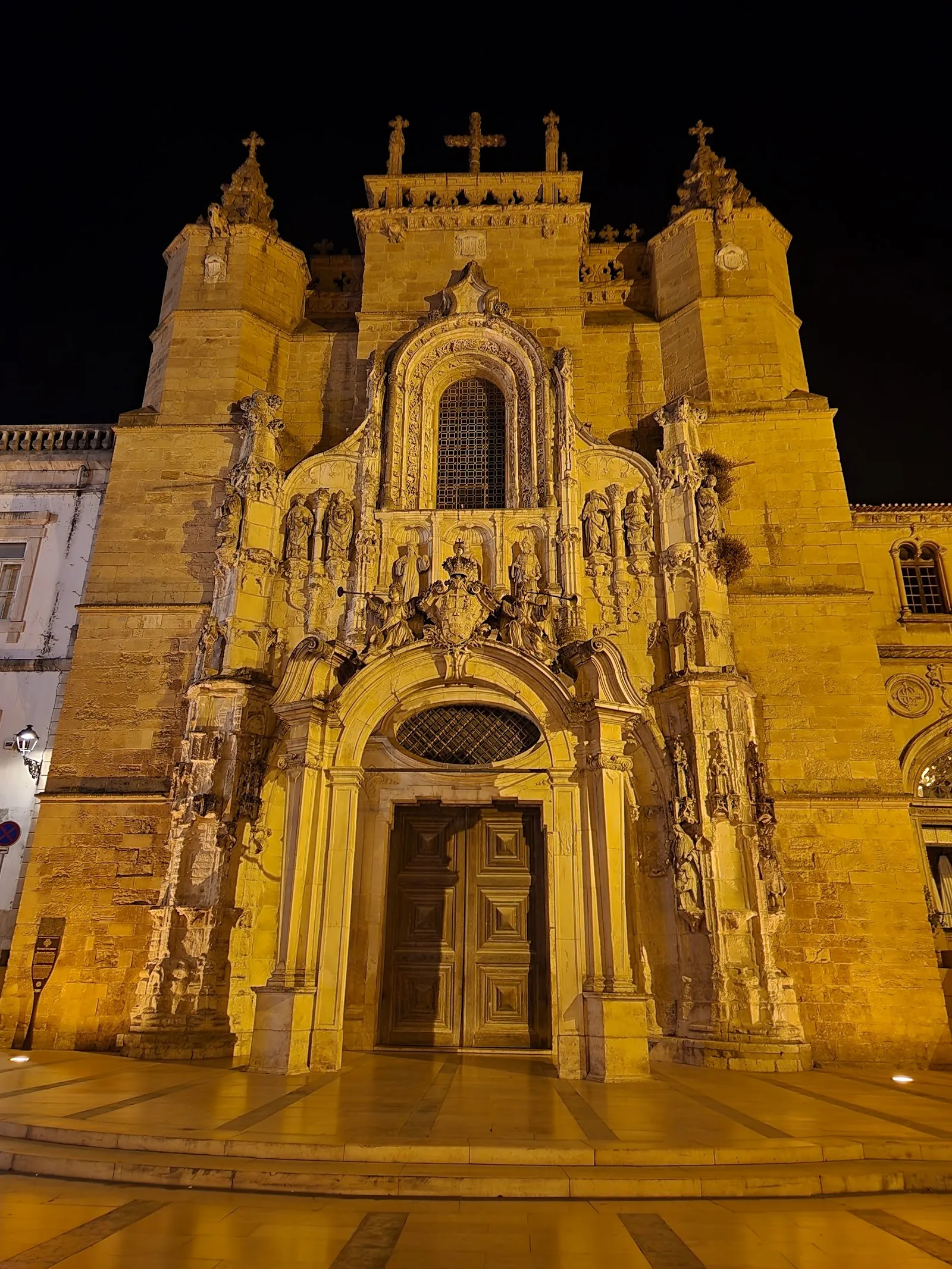
Most of what you see today dates from a major restoration in the 1500s. The work followed the Gothic style of its time, while the portal and other details show the Manueline style, which flourished when overseas wealth flowed into Portugal. The façade is plain and dignified, so the richer decoration waits inside.
The cloister, designed in 1524, is one of the clearest examples of this period. The blue and white azulejos and the organ came later, in the Baroque period. The Renaissance pulpit also dates from the Renaissance, and it stands out among the church's furnishings.
Inside the church
The tombs of Afonso Henriques and his son Sancho I are the main draw. Both sit in ornamented tombs in the Manueline style. The church has the status of a National Pantheon, a recognition made in 2003.
The main altar, with its ornate carvings and gold details, draws the eye upward. The relicários and the treasury hold sacred objects and relics, many of them finely crafted. The blue and white tile panels show the finding of the Holy Cross by Saint Helen and scenes from the life of St Augustine. A choir sits upstairs, reached through a door with no sign, so ask staff if you want to find it.
Cloisters, sacristy and garden
The cloisters are the quieter part of the complex. They are not large, but their symmetry and calm make them easy to wander. The tiled walls photograph well in soft morning or late-afternoon light.
The sacristy has its own azulejo panels. A separate ticket opens the garden, where the ceramics are worth a look. The complex has a wheelchair accessible entrance and an accessible restroom.
Around the square
The monastery faces Praça 8 de Maio, a spacious square with a dancing fountain in front of the church. The Santa Cruz Café sits on the same square. Walking down from the university, you reach the pedestrian street Rua Visconde da Luz, which ends at the square.
After your visit, go back to Rua Ferreira Borges, pass under the arch, climb the steps and turn left onto Rua Sobre Ripas. There you will find the 16th-century Sub-Ripas Palace and Torre de Anto, a tower that now holds an exhibition on Coimbra's fado music.
Häufige Fragen
Is there an entry fee?
The church is free to enter. The cloisters, treasury and garden are charged separately, so check the current prices before you go.
Are tickets needed in advance?
Buying tickets in advance is recommended for this site.
Is the monastery wheelchair accessible?
The entrance and the restroom are wheelchair accessible.
Whose tombs are inside the church?
The tombs of Afonso Henriques and his son Sancho I, Portugal's first two kings, are inside the church.


