Collegium Maius, at Jagiellońska 15 in Kraków’s Old Town, is the oldest surviving building of the Jagiellonian University. Its Gothic courtyard, with arcades and a well, is a quiet stop near the city’s main sights. Inside, the university museum displays historic scientific instruments, manuscripts and ceremonial rooms. Look for the copper Jagiellonian Globe, one of the oldest known globes to show America, and check the clock-show schedule before planning your visit.
The oldest surviving university building
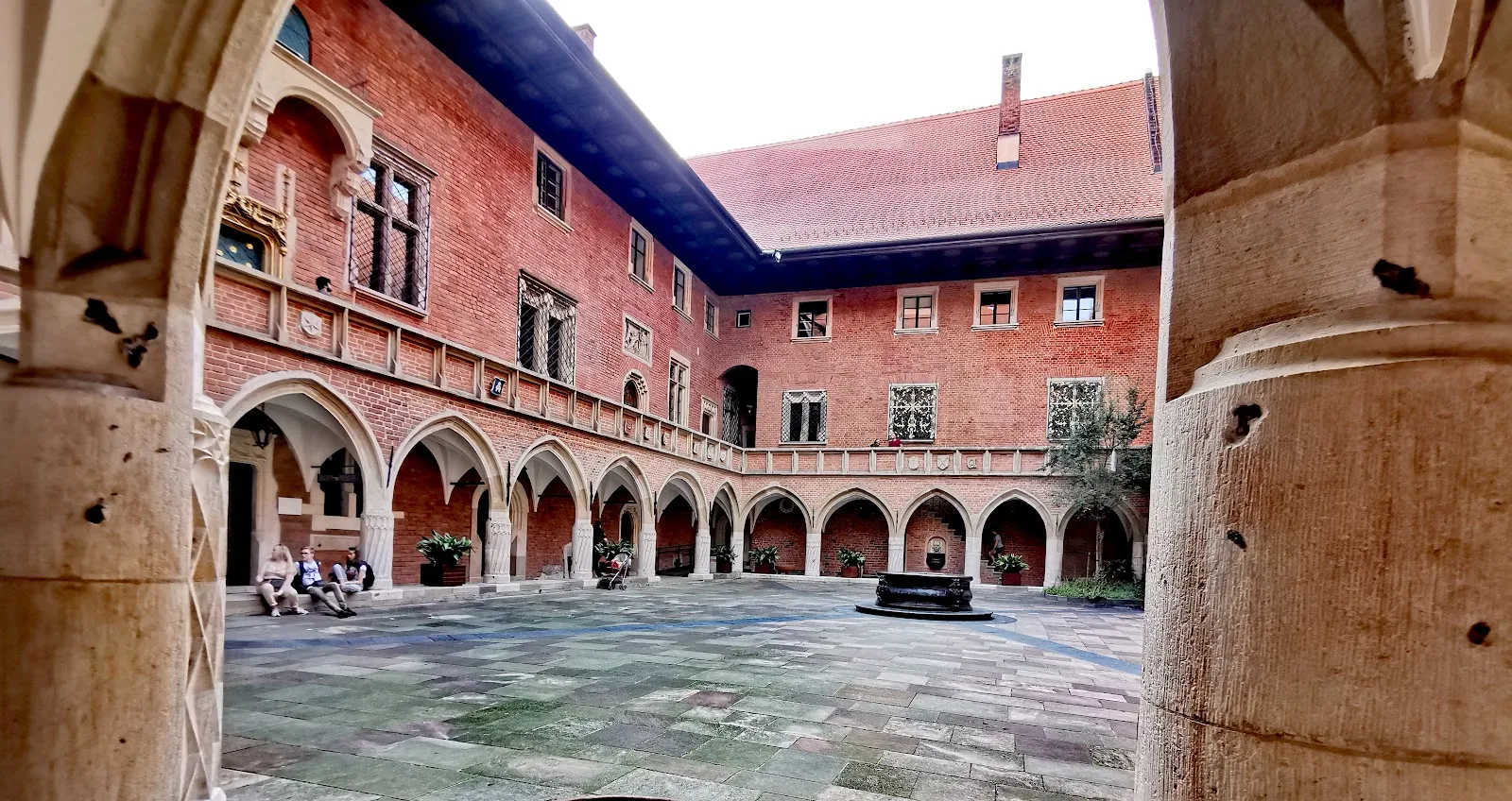
Collegium Maius is the oldest surviving building of the Jagiellonian University, whose origins date to 1364, when King Casimir the Great founded the Kraków Academy. The building developed as part of the university district and became a home and workplace for professors. It is now the Jagiellonian University Museum.
The university’s oldest buildings recall a period when teaching and daily life took place within the same academic community. Professors lived upstairs, while students attended lectures on the ground floor. Nicolaus Copernicus, the astronomer associated with the heliocentric theory, studied at the university. The building also has a connection to Karol Wojtyła, who later became Pope John Paul II.
Courtyard and Gothic details
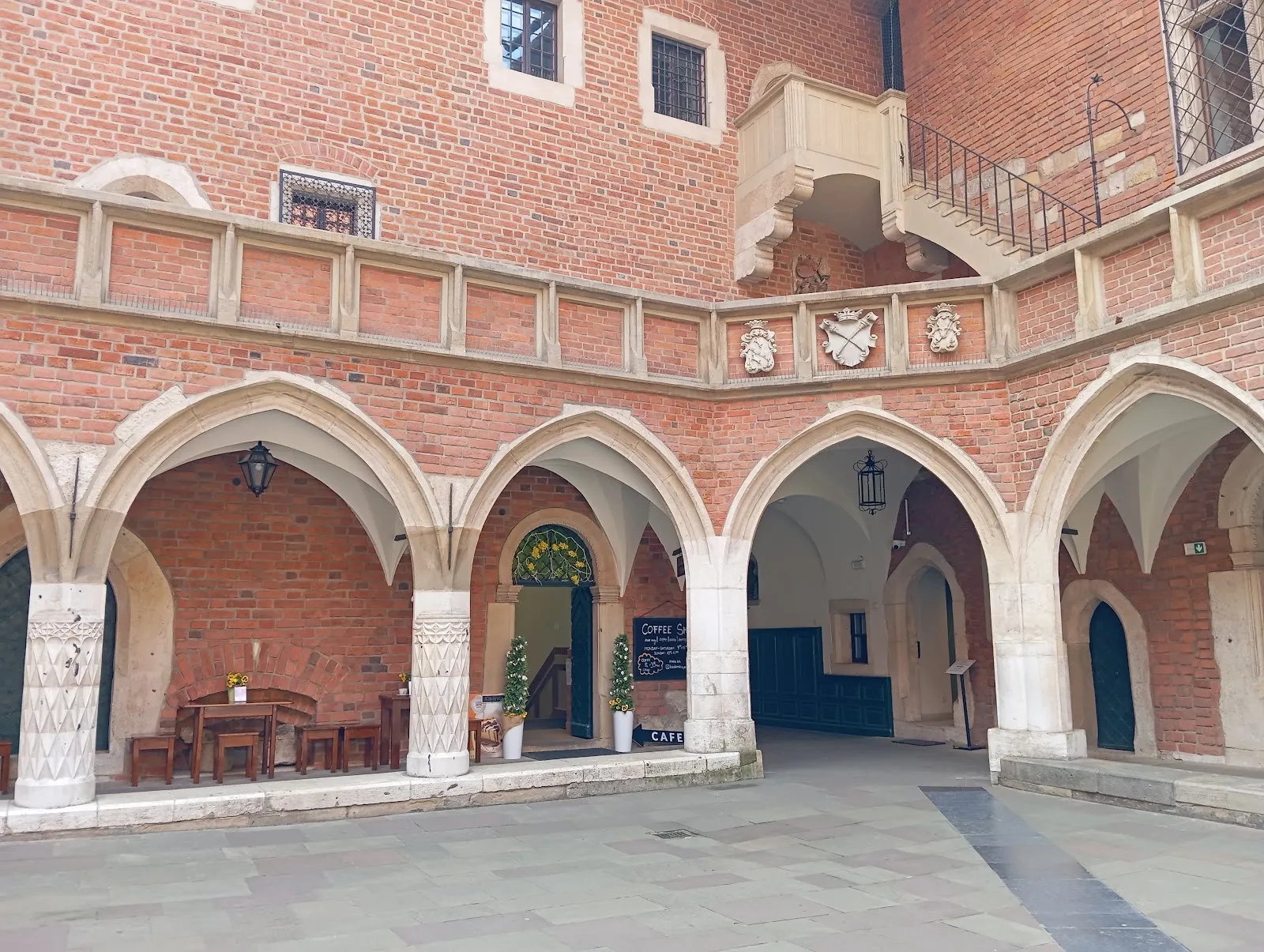
The arcaded courtyard is the building’s most distinctive space. Its galleries are framed by Gothic arches, and a well stands in the middle. Look closely at the brick and stonework, the internal gallery and the staircases leading to the upper floors. The larger staircase is known as the Professors’ Stairs.
The courtyard can be visited separately from the museum rooms. From here, the building’s balconies and upper galleries give a sense of how the college was arranged around a shared interior space. Its location on Jagiellońska Street places it within Kraków’s historic university district, close to the Old Town’s other sights.
Collections and the guided visit
The museum’s collection traces the university’s history through scientific instruments, manuscripts, globes and objects accumulated over centuries. Among its notable astronomical instruments are examples from the 16th century. The copper Jagiellonian Globe, made around 1510, is particularly striking: it is considered the oldest existing globe to show America, labelled as newly discovered lands.
A guided visit takes you through historic rooms, including lecture halls and ceremonial spaces, as well as the university’s collections. The museum has a 30-minute standard tour and a more detailed tour lasting about an hour. Weekday museum visits are by guided tour, so check the official website for current arrangements before you go. Allow time to look around the courtyard as well as the rooms included in your tour.
The courtyard clock
A mechanical clock in the courtyard has carved wooden figures, including representations of Copernicus and university figures. It puts on a moving display at selected times, but it does not run every hour. Check the museum’s schedule before choosing when to arrive, then aim to be in the courtyard shortly before the performance. The courtyard and clock give you a glimpse of the building’s academic history without requiring a museum tour.
Häufige Fragen
Do you need a guided tour to visit the museum?
Weekday access to the museum is by guided tour. The courtyard can be visited separately.
How long does a Collegium Maius tour take?
The standard guided tour takes about 30 minutes. The full tour lasts about an hour.
Does the courtyard clock run every hour?
No. The clock show takes place at selected times, so check the museum’s schedule before your visit.
What is the Jagiellonian Globe?
It is a copper globe made around 1510 and considered the oldest existing globe to show America.