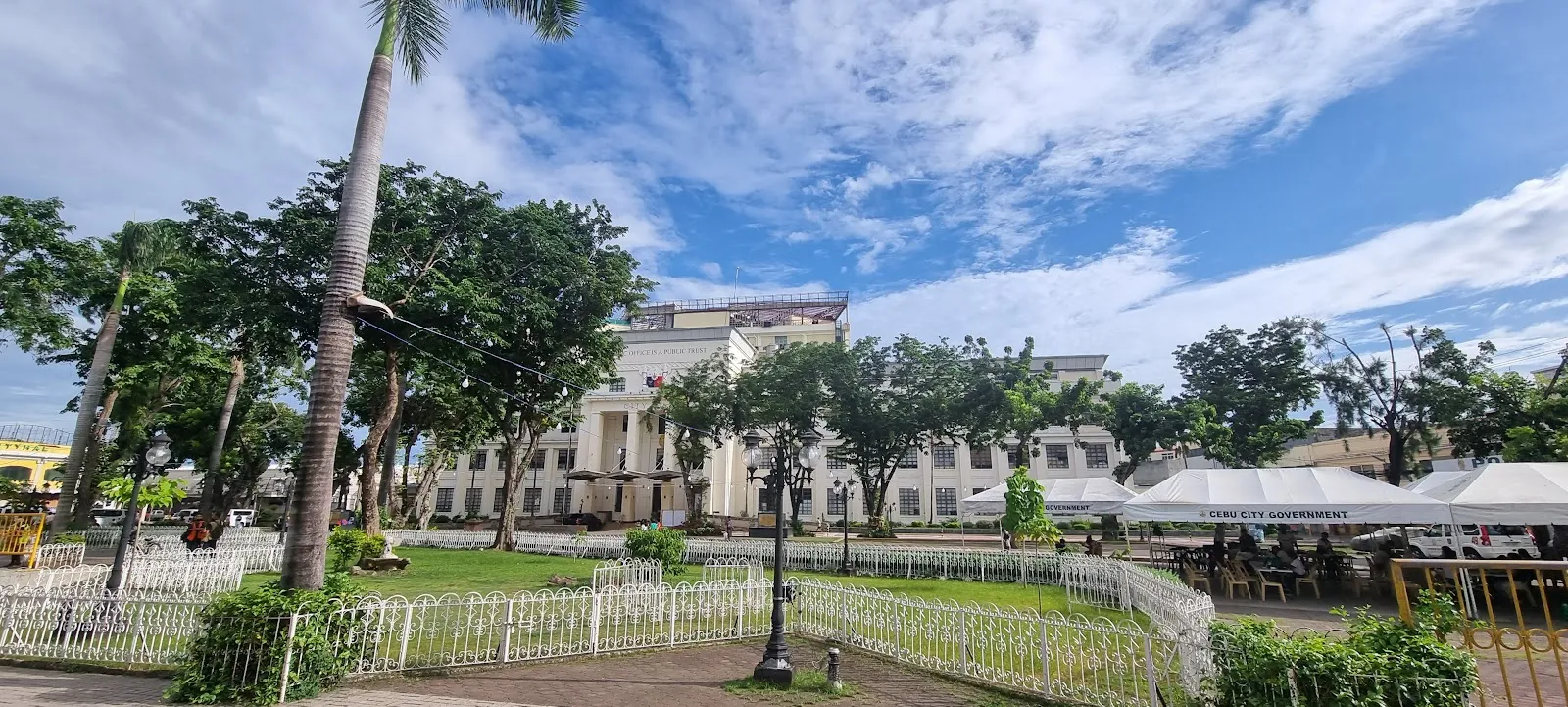
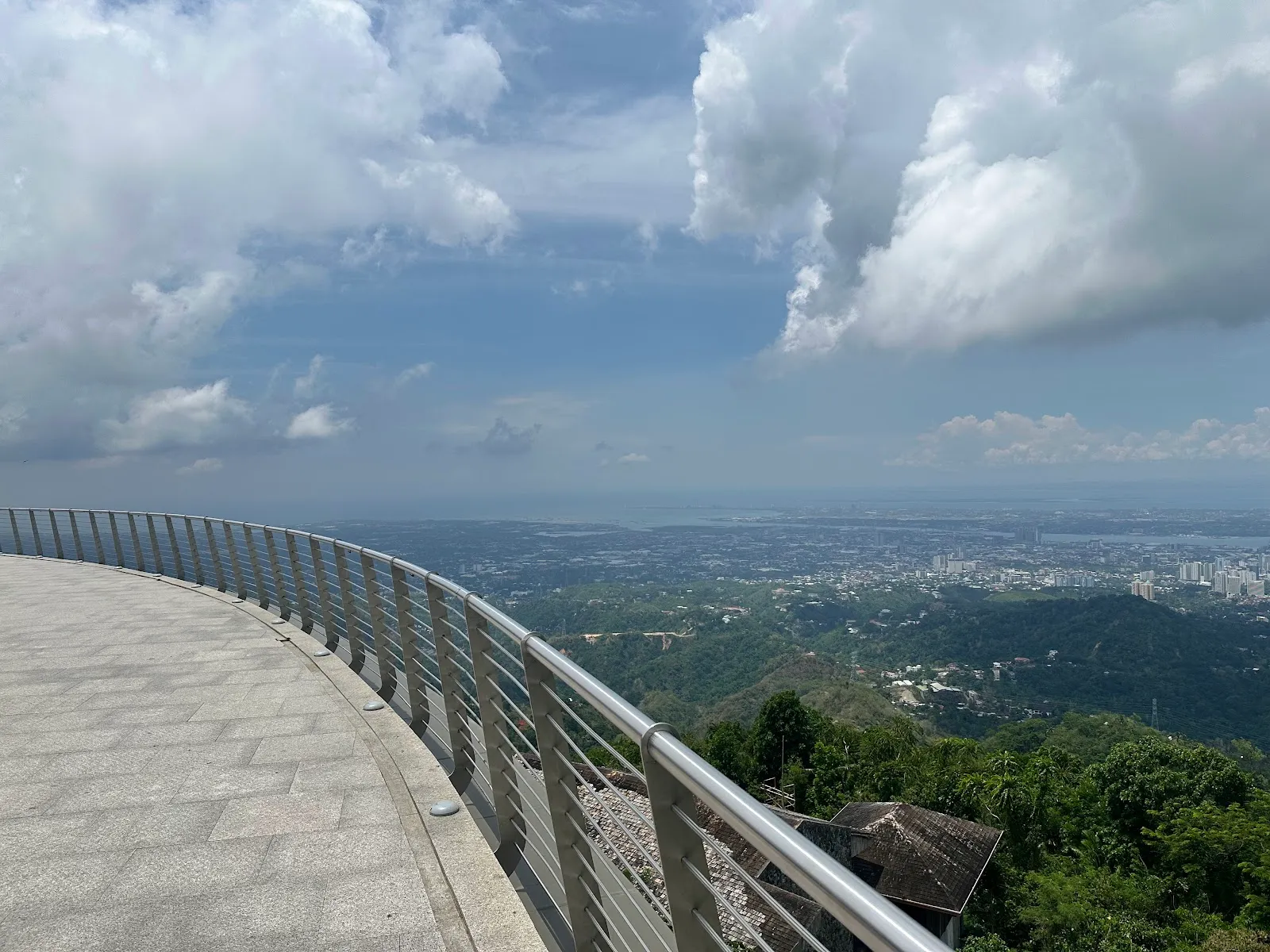
Fort San Pedro stands on A. Pigafetta Street inside Plaza Independencia, a short walk from the old pier. The Spanish built it under Miguel López de Legazpi, and it is the oldest and smallest fort in the Philippines. Its plan is triangular, with two sides facing the sea and one facing the land. The thick stone walls, bastions and cannons are the main draw, and you can walk along the upper walls. A small museum inside shows paintings, documents and Spanish-era artifacts. Most visitors finish in a short time, which makes the fort an easy stop between other sights in the area.
From a wooden palisade to a stone fort
In 1565, Miguel López de Legazpi set up a wooden palisade to protect the new Spanish settlement from hostile groups and Muslim raiders. The first defense was made of wood.
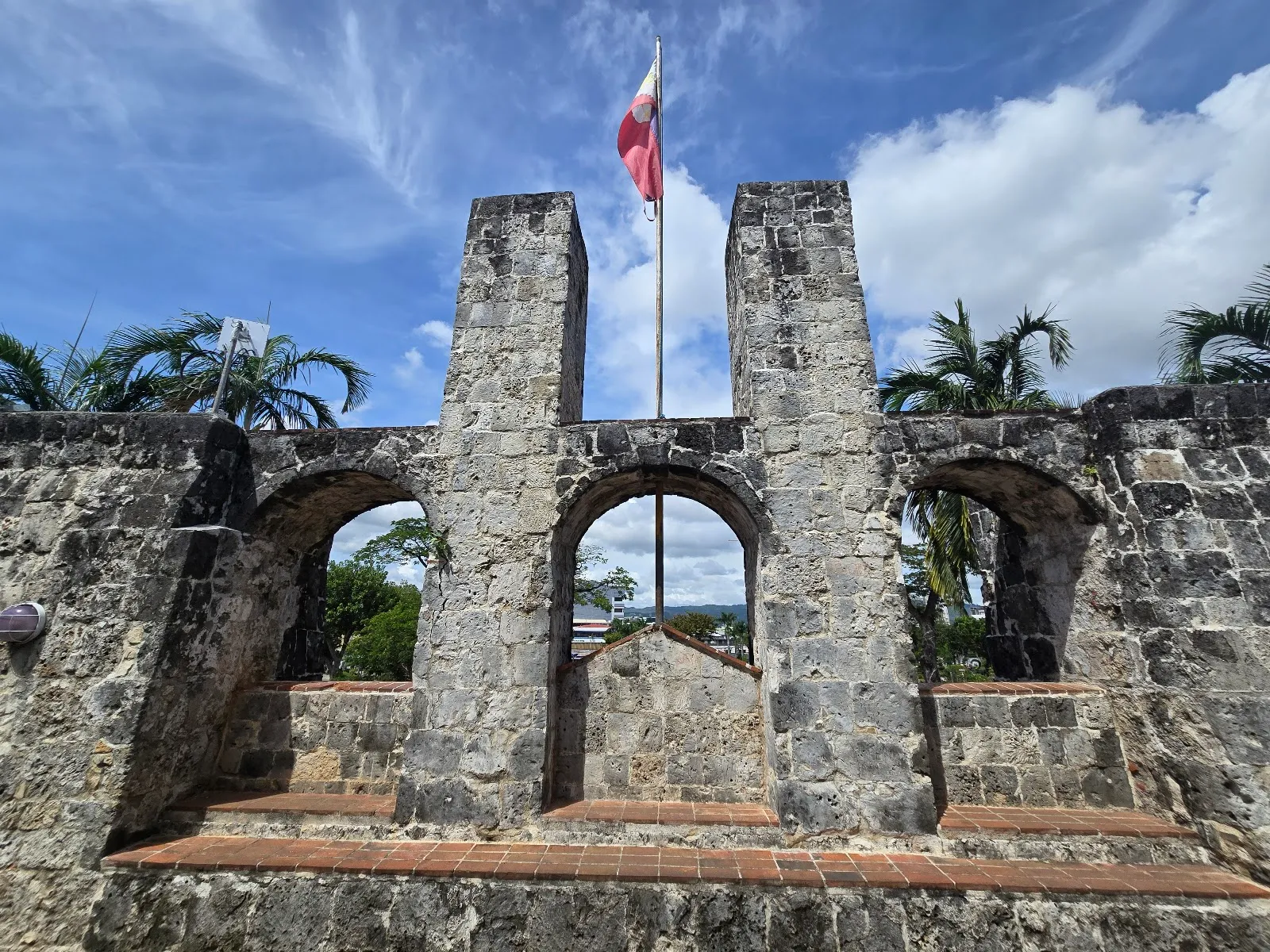
The fort was rebuilt in stone in the 18th century, when pirate attacks along the coast became frequent. The thick walls were built from coral stone, and the mortar used to hold them together is said to have contained egg whites.
Over the centuries the fort changed roles. It has been used as a garrison, a prison, a barracks, a school and even a zoo. Spaniards, Cebuanos and Americans have all sheltered there at different times.
The walls, bastions and cannons
The fort has three bastions, named La Concepcion, San Ignacio de Loyola and San Miguel. The walls are the best place to see how the defense was arranged, since you can look out over the sea side and the land side.
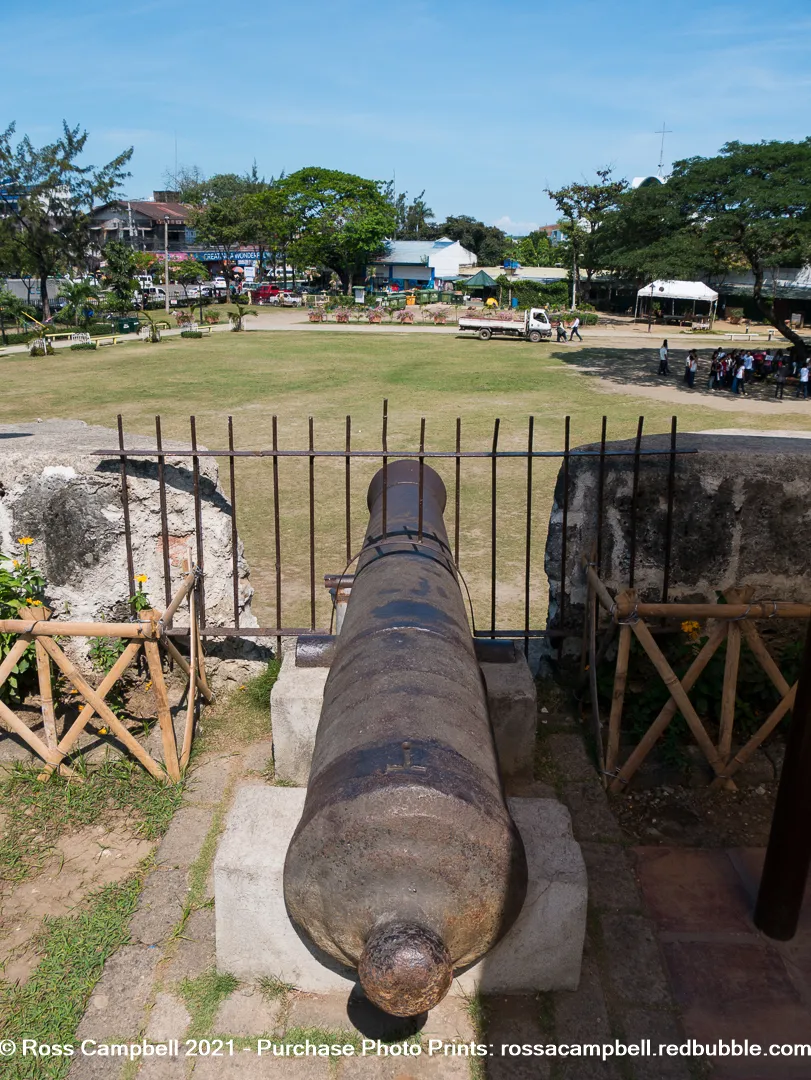
Around fourteen cannons are displayed around the fort. Standing next to them on the walls gives a clear sense of the fort's military purpose.
The open courtyard is planted with greenery, and the stone walls make a good setting for photos.
Inside the small museum
The museum occupies a few rooms and shows paintings, documents, sculptures, photographs and Spanish-era clothing. Information boards explain the history of the fort and the city.
A statue of Legazpi stands at one end of the fort's remains. It is a short stop, but it helps place the fort within the wider Spanish settlement of Cebu.
Musicians sometimes play near the courtyard, and stalls outside the gates sell keychains and local souvenirs.
Planning the visit
The entrance fee is commonly reported at PHP 30 for adults. Children are free, and seniors and students pay less.
The entrance, restroom and parking lot are listed as wheelchair accessible. The parking area for cars can be some distance from the fort, and the walk is short.
The fort is a few minutes' walk from Magellan's Cross, and it is close to the National Museum Cebu. Visitors often combine the three in one walk. The fort is also rented out for weddings, receptions and reunions, so check on the day if you want to see the grounds without an event.
Häufige Fragen
Is there an entrance fee?
Yes. The fee is commonly reported at PHP 30 for adults, with children free and reduced rates for seniors and students. Check the current price at the entrance.
How long do you need at Fort San Pedro?
Most visits take 30 to 60 minutes, since the fort is small and can be walked around quickly.
Is Fort San Pedro wheelchair accessible?
The entrance, the restroom and the parking lot are listed as wheelchair accessible.
How do I get to Fort San Pedro?
The fort is on A. Pigafetta Street inside Plaza Independencia, near the pier. Jeepneys do not reach the gates, so take a ride to Plaza Independencia and walk across the park.
Is it a good place for photos?
Yes. The stone walls, cannons and courtyard are popular subjects for photos.