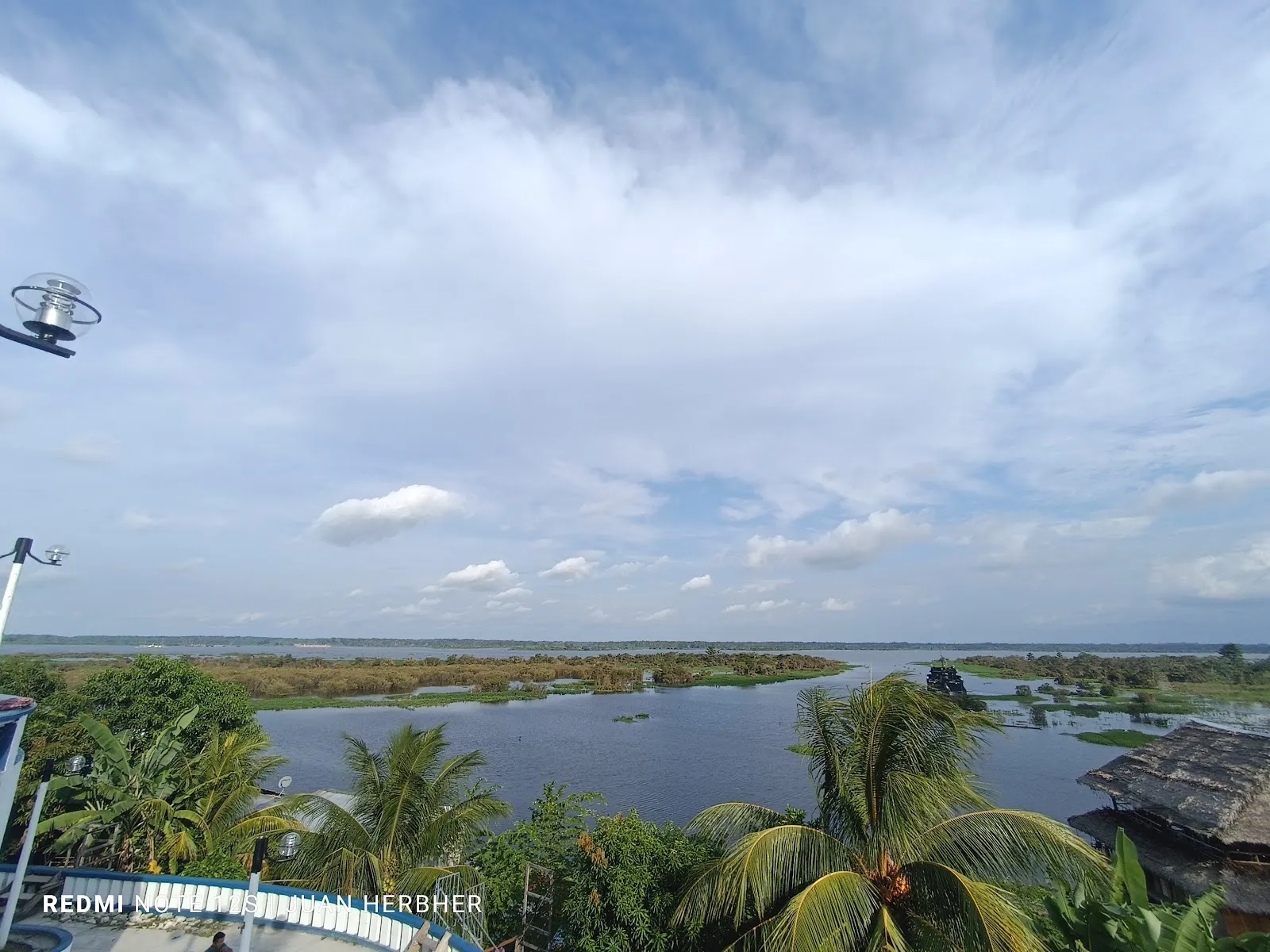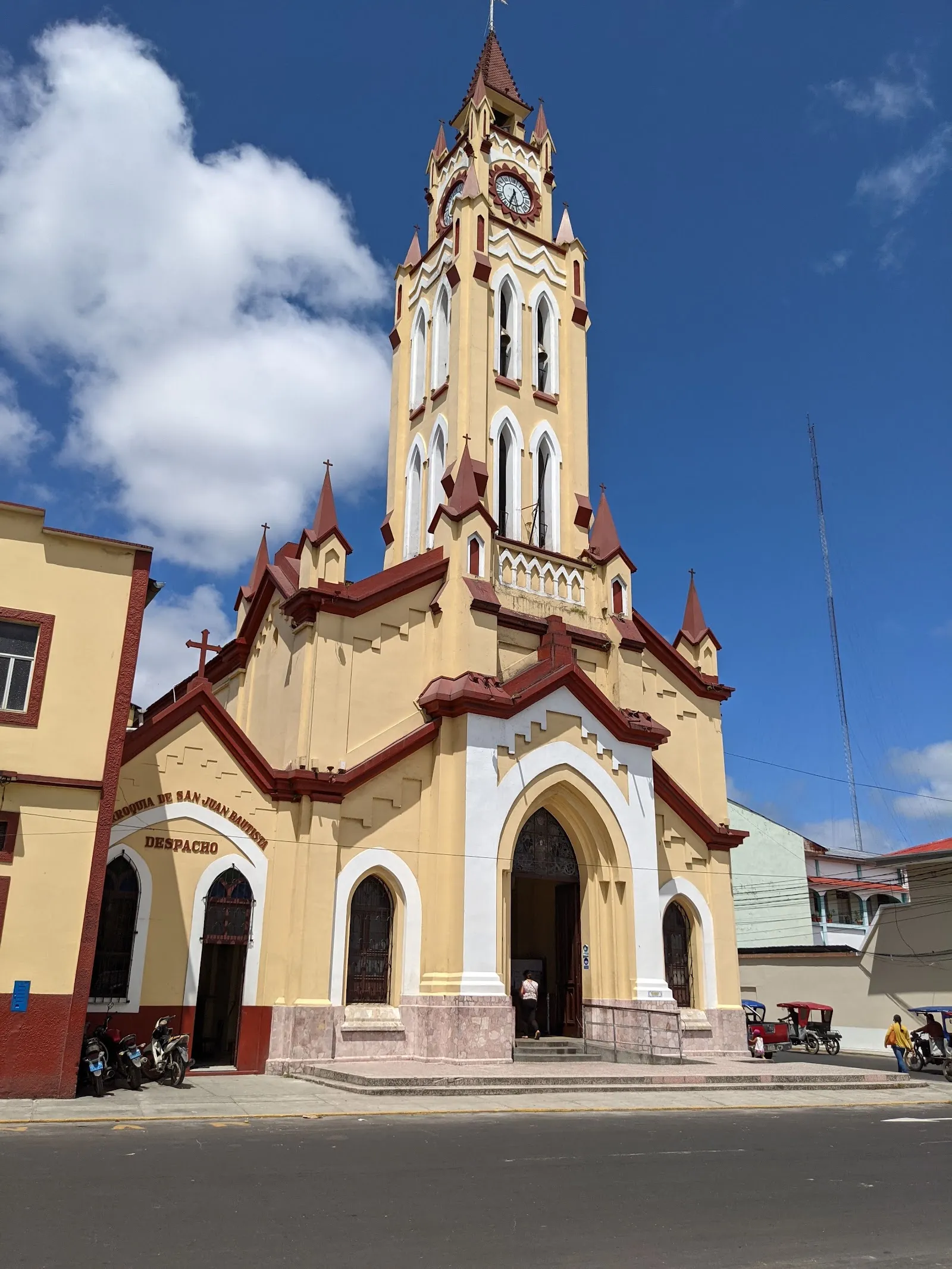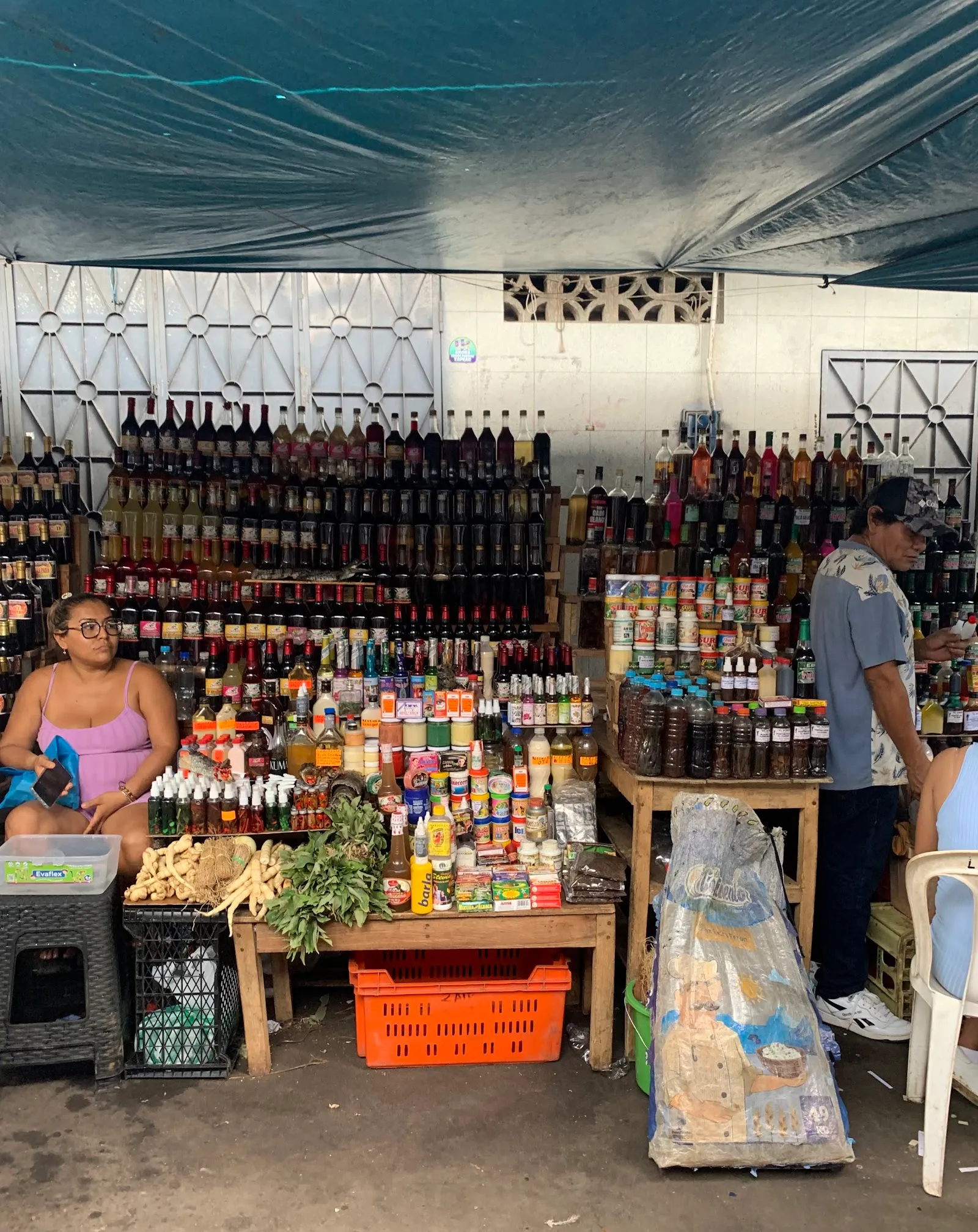
Mercado Belén is the market at the edge of Belén, a neighborhood of wooden houses built on rafts along the Itaya River, at the southeast end of Iquitos. Stalls sell river fish, jungle fruit, vegetables, grains, chickens and cane sugar, and families run most of the stalls. Go for the fish stalls, the grilled food at the long communal tables, and the canoes moving between the floating huts. Come early, keep valuables close, and expect mud after rain.
The floating neighborhood of Belén
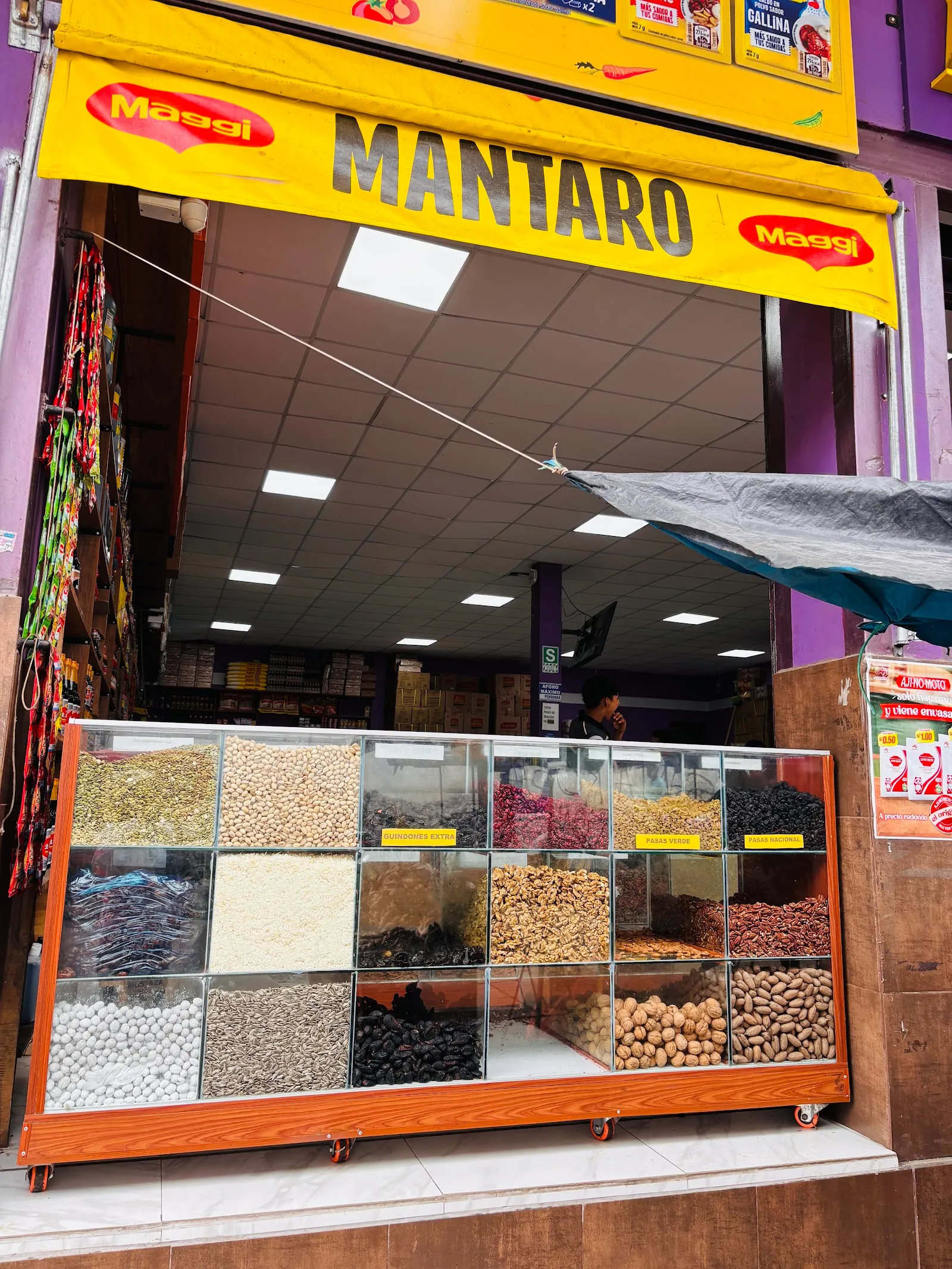
Belén lies at the southeast end of Iquitos, on the Itaya River. Its houses are built on rafts, so for most of the year they float and rise and fall with the water. In the low-water months the rafts sit on the river mud instead.
Around seven thousand people live here. Canoes move from hut to hut, carrying produce and goods to trade. A walk of a few blocks down the river from the Plaza de Armas leads into the neighborhood, where the market is.
What the stalls sell
Large river fish are a main draw, including paiche, zúngaro and doncella. Vegetables, tropical fruit and grains fill other stalls, alongside cane sugar.
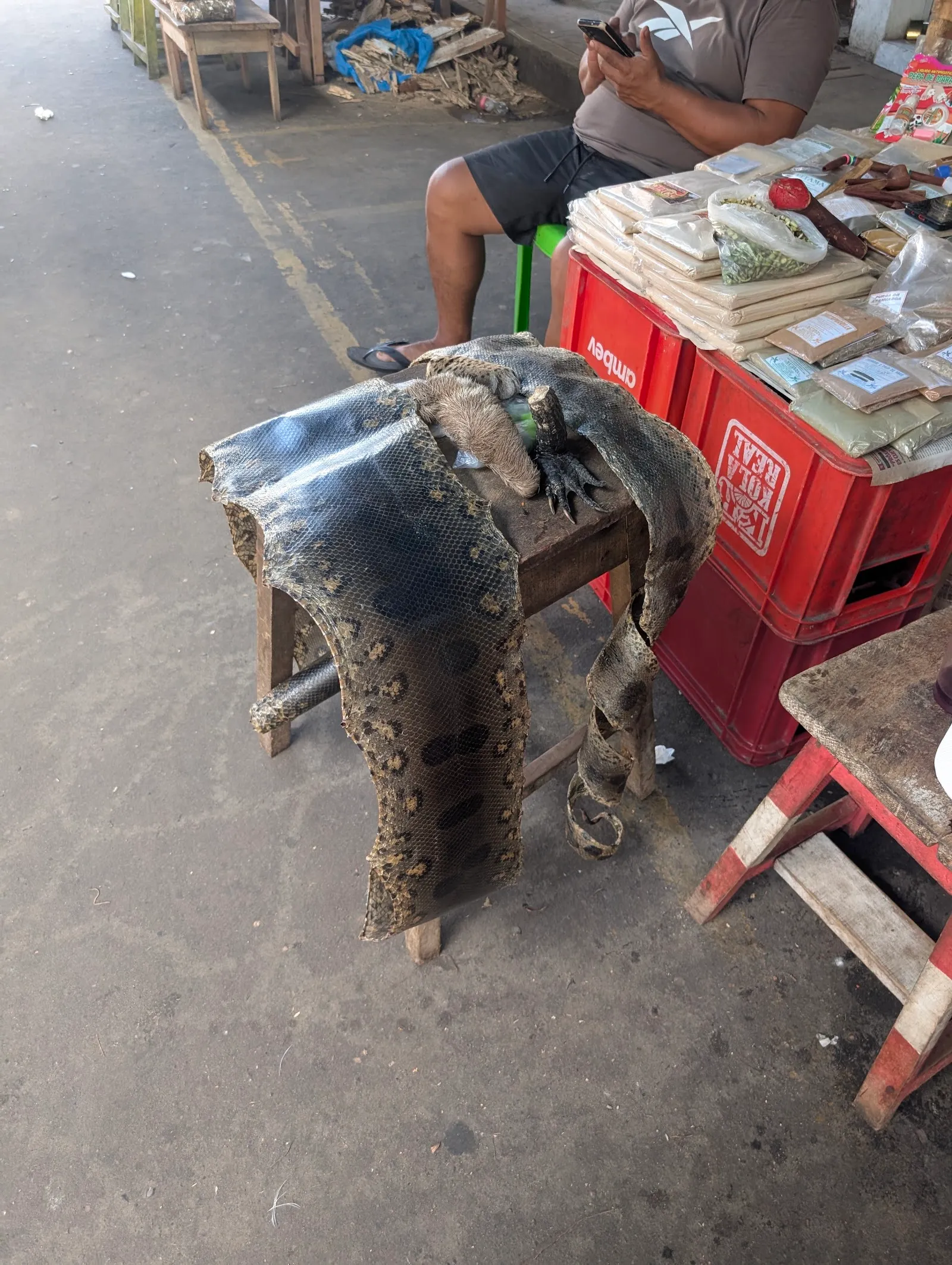
Live chickens and processed chicken are on sale, and some stalls show anaconda skin and turtle meat. A few stalls sell traditional medicines and handcrafted goods. Some vendors make cigarettes from home-grown tobacco.
Eating at the market
Several stalls serve food ready to eat, and the long communal tables are the place to sit. Cecina with tacacho is among the popular dishes. Grilled crocodile feet are also sold.
Surí a la brasa, grilled insect grubs, are considered a delicacy locally. Order them if you are an adventurous eater. Stalls also sell bijao leaves, used to wrap the traditional dish juane.
Visiting on a practical level
The market opens early and runs through the week, with Sunday the busiest day. After rain the floor turns to mud and collects rubbish, and some aisles are narrow, so expect to be jostled. Dogs walk through the market.
Debit cards and NFC mobile payments are available on site. Keep important documents at your hotel, and keep your phone out of sight while you walk.
Häufige Fragen
Is Mercado Belén open on Sundays?
Yes. The market is open every day of the week, Sunday included, and the Sunday session ends in the early afternoon. Sunday is the busiest day, with the most exotic fish and meat on display.
Can I pay by card at Mercado Belén?
Debit cards and NFC mobile payments are available on site. Haggling is part of buying here, so keep some cash with you as well.
Is it safe to visit Mercado Belén?
Many visitors find it safe if they stay alert. Keep your phone, watch and wallet out of sight, and leave important documents at your hotel.
Can I take photos of the market and vendors?
Many vendors allow photos if you ask politely first. Accept a refusal without argument.