
Frere Hall is a colonial-era building in Civil Lines, Karachi, completed in 1865. It was first built as a town hall and now houses a library and the Sadequain Gallery. The building mixes Venetian-Gothic forms with local and British elements, and its walls are made of yellow Karachi limestone. Visitors come for the pointed arches, the ceiling mural on the upper floor, and the park of Bagh-e-Jinnah that surrounds the building.
From town hall to library
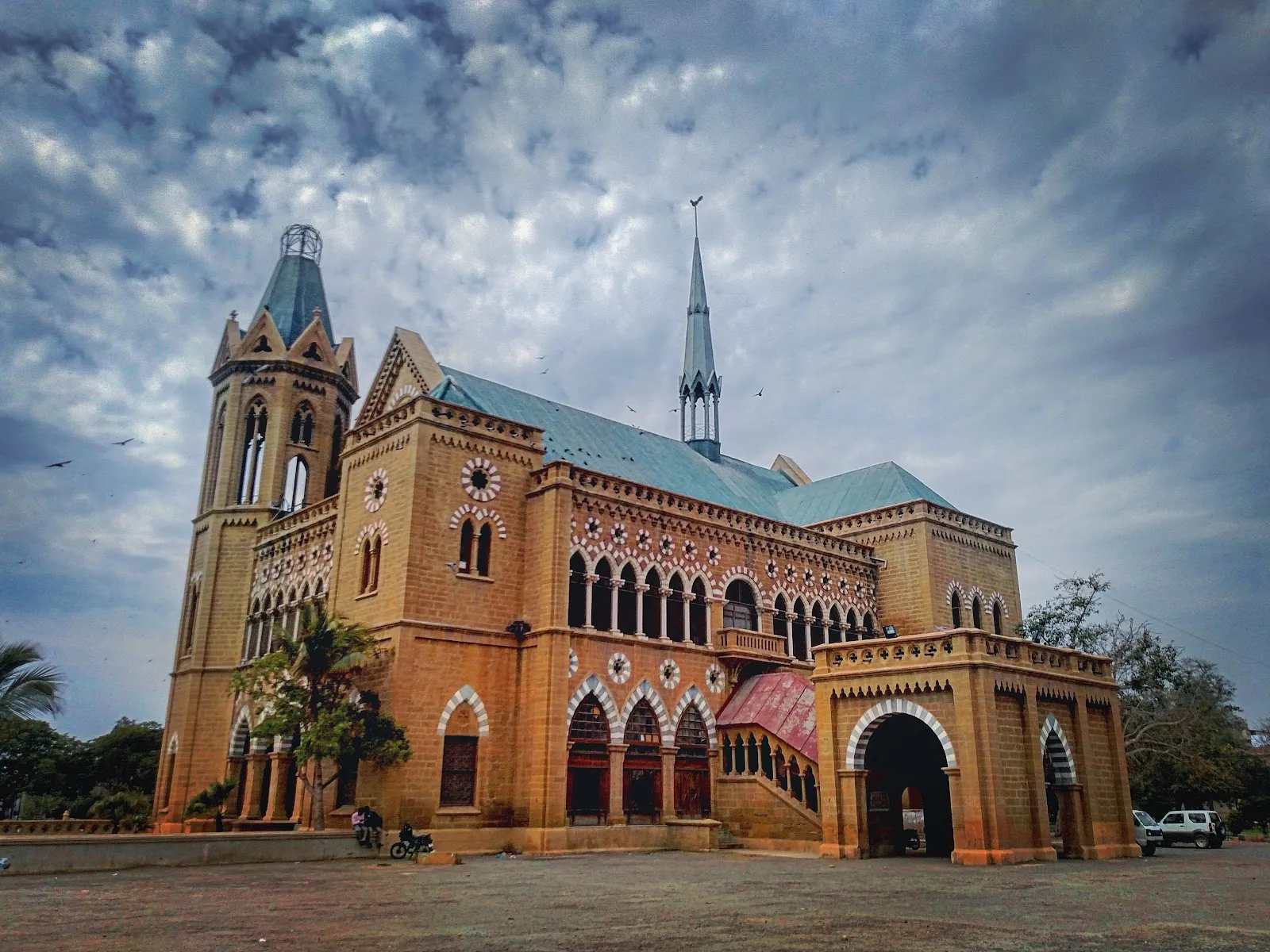
Frere Hall was completed in 1865, during the British colonial period, and was built as Karachi's town hall. It is named after Sir Henry Bartle Frere, a British Commissioner of Sindh who supported economic development in Karachi.
After the British left, the building was redecorated with Islamic art. Over the years it has hosted public events, including city festivals, and a national museum was housed here for some time before moving to a separate building at Burns Garden.
The hall was closed for several years, from 2002 to 2011, after repeated attempted attacks near the nearby US consulate. It reopened when the consulate moved further away.
Architecture and the exterior
The building was designed by the British architect Henry Saint Clair Wilkins. It uses local yellow limestone, and its facade has pointed arches, carved details, mosaic-decorated pillars and buttresses. The octagonal tower rises about 22 metres.
The interior has high ceilings, and the stone and arches are the first details most visitors notice. The gardens around the building are kept green and calm, which makes the outside a pleasant place to walk before or after going in.
Inside the hall
The ground floor holds the library, which has old books and newspapers and a rare books collection that is worth a visit if you enjoy reading and archives.
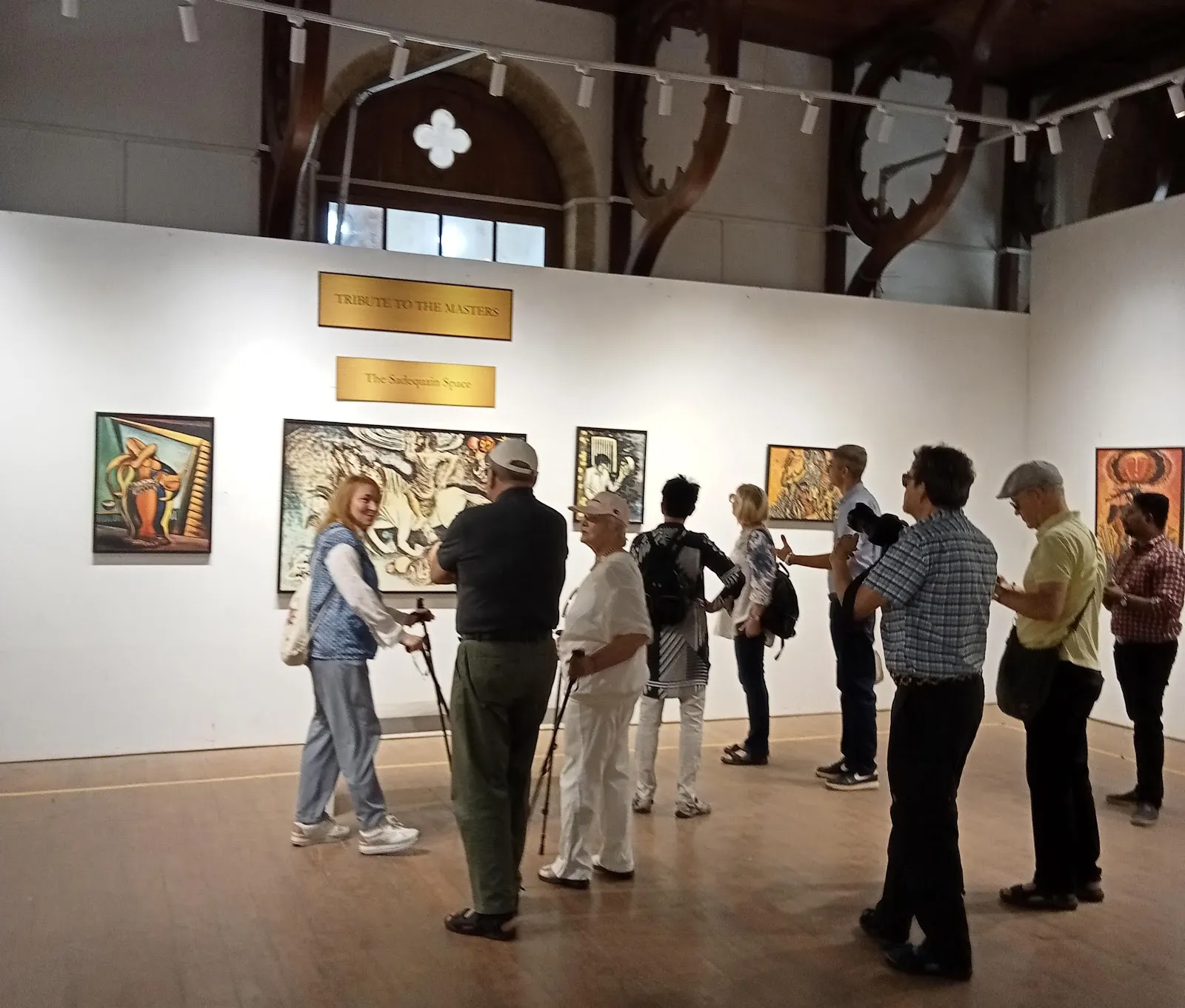
The upper floor houses the Sadequain Gallery. Its main feature is the ceiling mural Arz-o-Samawat (Earth and the Heavens), painted by Syed Sadequain Ahmed Naqvi in the 1980s. The mural was left unfinished. The gallery also displays stone busts, including one of King Edward VII, and oil paintings.
Allow time for both floors. The gallery and library close earlier than the park, so plan the visit before the afternoon ends.
Bagh-e-Jinnah
The park around the hall covers about 38 acres and was formerly known as Queen's Lawn. It is a common place for family picnics, book fairs and weekend strolls.
The park is useful for a visit even if the hall is closed, since it may stay open when the building is not.
Häufige Fragen
Is there an entry fee for Frere Hall?
Entry is free for the public, though donations may be welcomed.
Do I need to book tickets in advance?
Getting tickets in advance is recommended. Check ahead for VIP events, which can restrict access to some areas.
Who designed Frere Hall?
The British architect Henry Saint Clair Wilkins designed the building, which was completed in 1865.
What is the ceiling mural at Frere Hall?
The mural Arz-o-Samawat (Earth and the Heavens) by Sadequain is on the upper floor, in the Sadequain Gallery. It was painted in the 1980s and left unfinished.
Can I visit the park if the hall is closed?
The surrounding park, Bagh-e-Jinnah, may stay open when the hall is closed. It covers about 38 acres and is popular for picnics and walks.


