
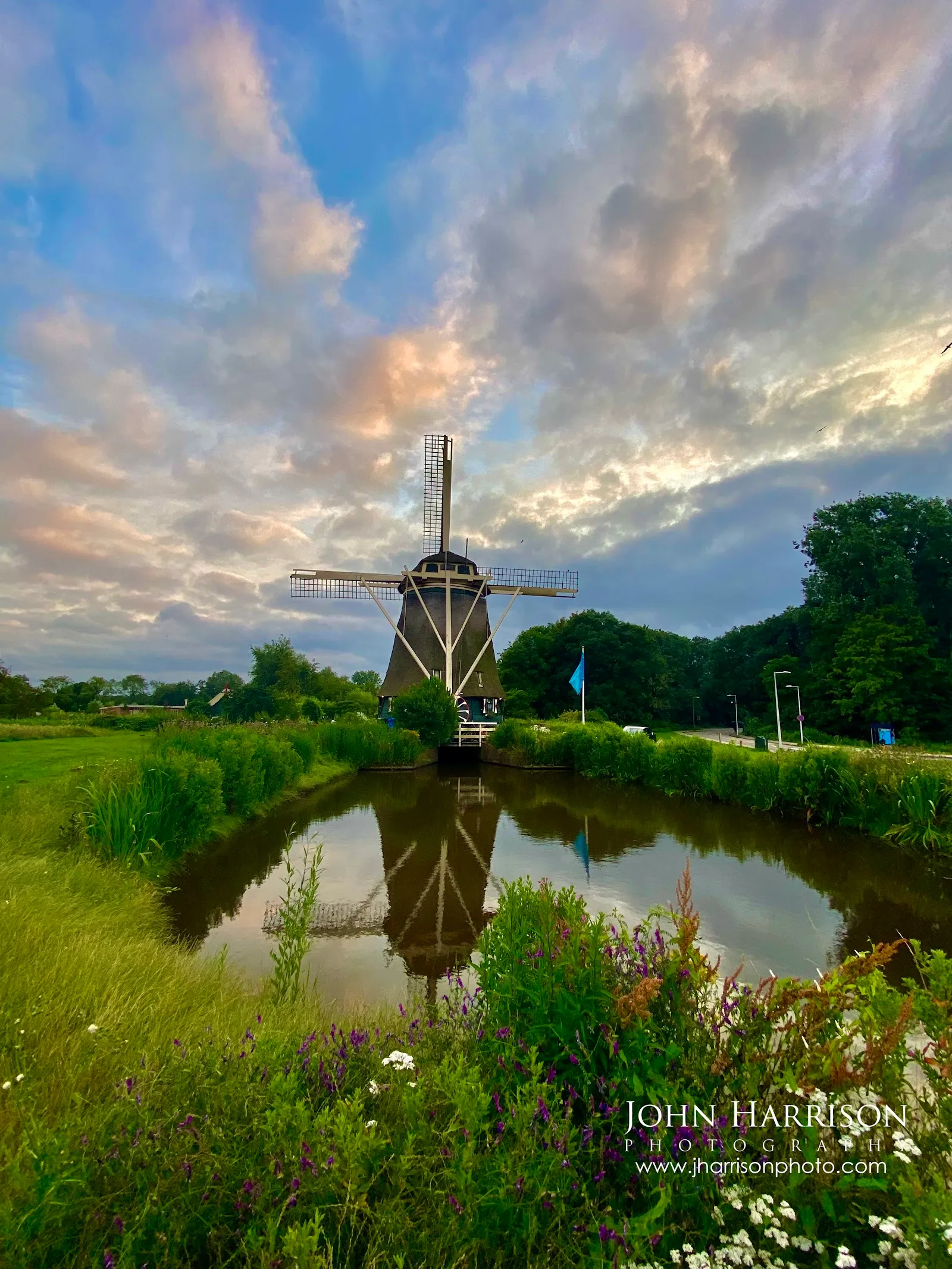
De Riekermolen is a polder windmill dating from 1636, beside the Amstel River in southern Amsterdam. You can admire it from the riverbank, where the mill, water and surrounding greenery make a quiet stop on a walk or bike ride. The mill is a private home and is not open to visitors, so plan to view it from outside. A nearby statue of Rembrandt recalls the drawings he made along the Amstel. Sunset can bring the windmill’s silhouette and reflection into view.
A polder mill beside the Amstel
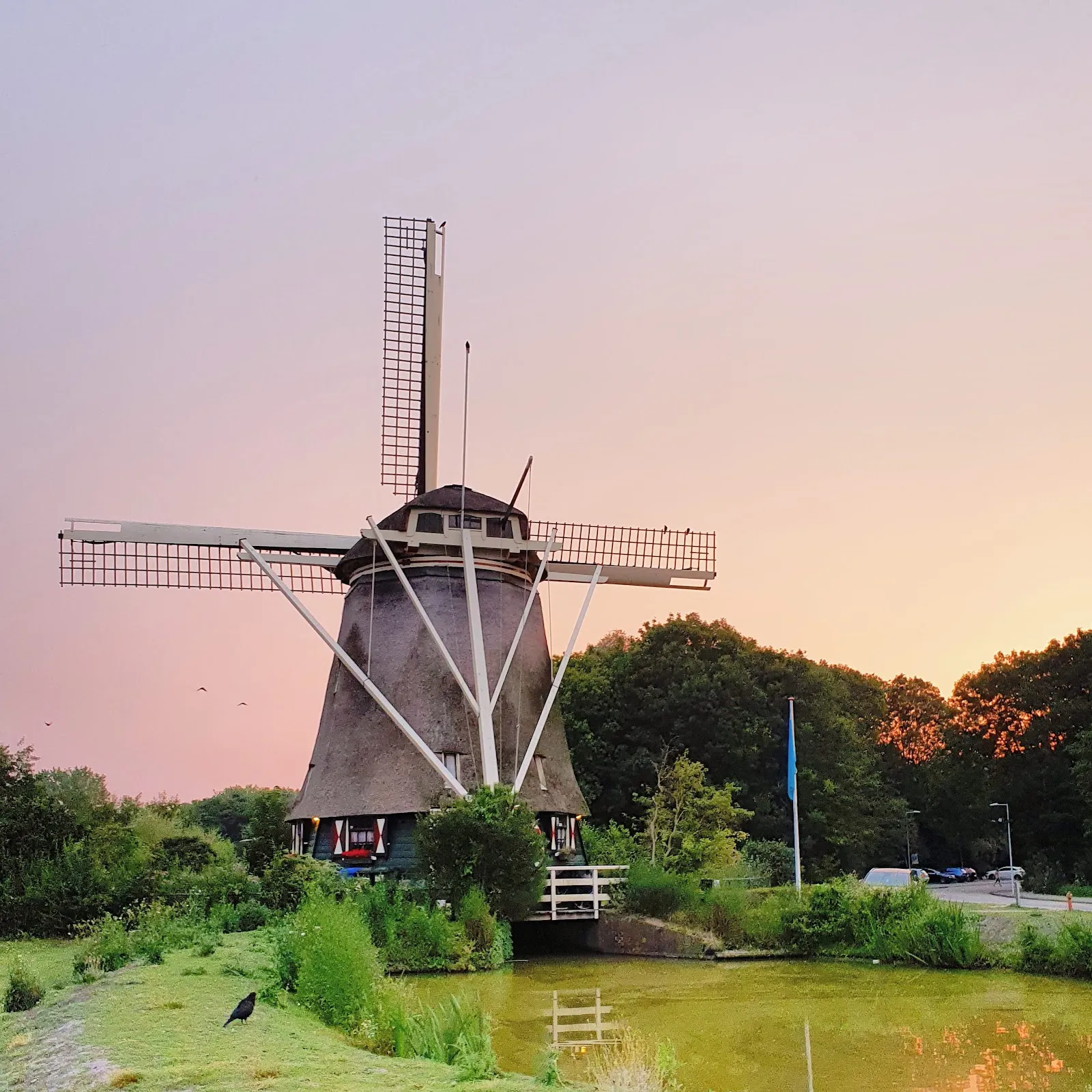
De Riekermolen dates from 1636 and stands near the Amstel River in southern Amsterdam. It is a polder mill, a working type of windmill associated with managing water in low-lying land. The mill does not stand in its original location, but it remains a landmark along the river.
The setting is part of the visit. Green banks and paths run beside the water, and the mill can be seen from outside. It is privately occupied, so visitors should not try to enter or disturb the residents.
The Rembrandt connection
A statue of Rembrandt stands beside the mill. It recalls the painter’s drawings along the banks of the Amstel. The statue was made by Han Wezelaar and unveiled in 1969, during the 300th anniversary of Rembrandt’s death.
The riverside makes the mill a natural pause on a walk or bike ride. At sunset, the windmill can appear in silhouette, with its reflection on the water. The mill itself is not open to the public, so the visit is an outdoor stop rather than an interior tour.
Häufige Fragen
Can you go inside De Riekermolen?
No. The windmill is a private home and is not open to the public. View it from outside and respect the residents’ privacy.
Where is De Riekermolen?
It stands beside the Amstel River in southern Amsterdam.
What is the nearby statue of Rembrandt for?
The statue recalls Rembrandt’s drawings along the Amstel. It was made by Han Wezelaar and unveiled in 1969.
When is a good time to visit De Riekermolen?
Sunset is a good time to see the windmill against the sky and its reflection on the water.


