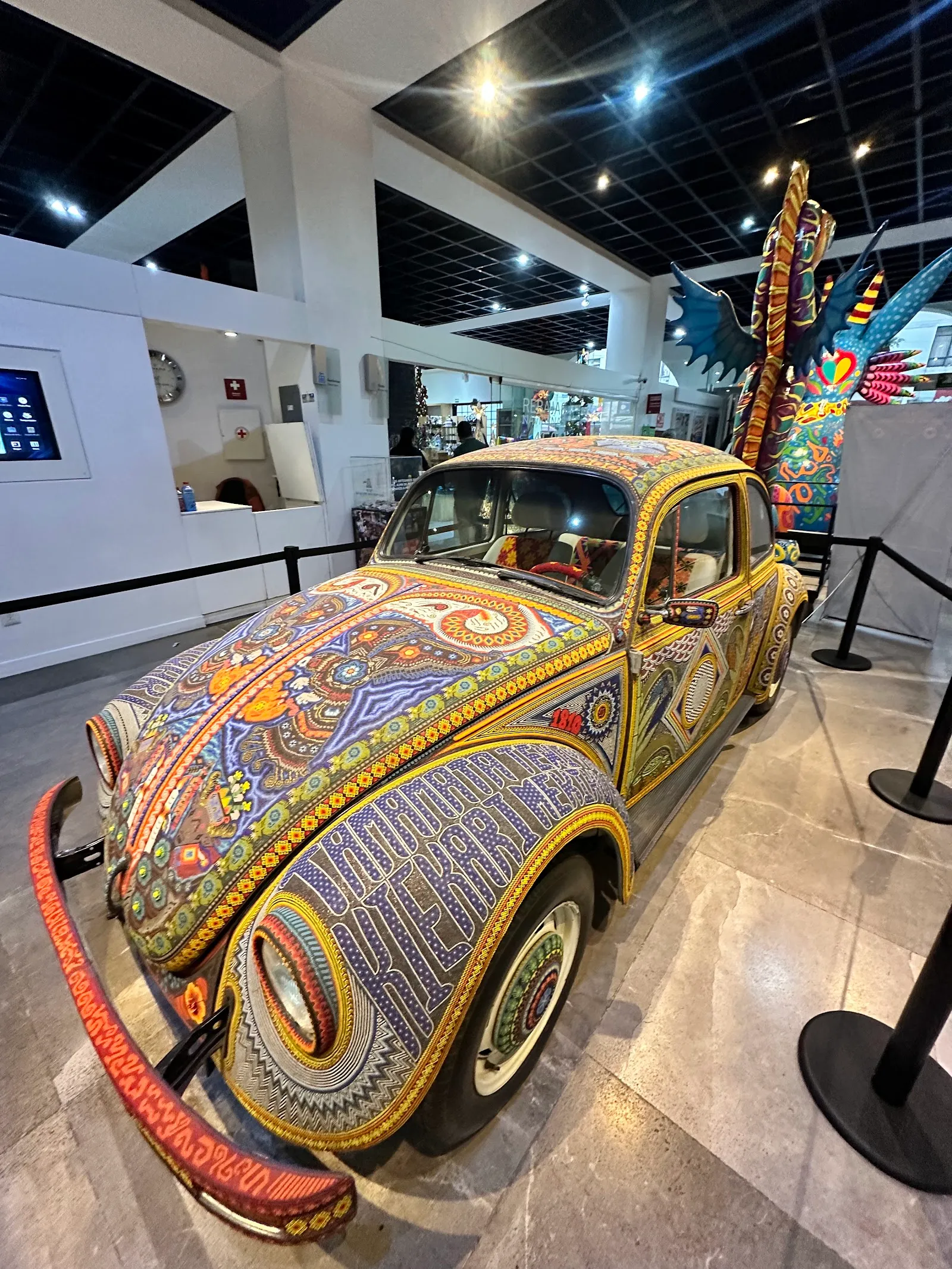
The Museum of Popular Art sits in the historic centre of Mexico City, a few steps from the Alameda Central. Its 1920s art deco building was once a fire station, and it now holds about 3,000 pieces of Mexican folk art across three floors. You will find costumes, baskets, ceramics, masks, toys, miniatures, papier-mâché figures and skulls, with crafts from almost every Mexican state. A Volkswagen Beetle covered in seed beads is one of the standout pieces. Plan two hours to see the collection properly.
From fire station to folk art museum
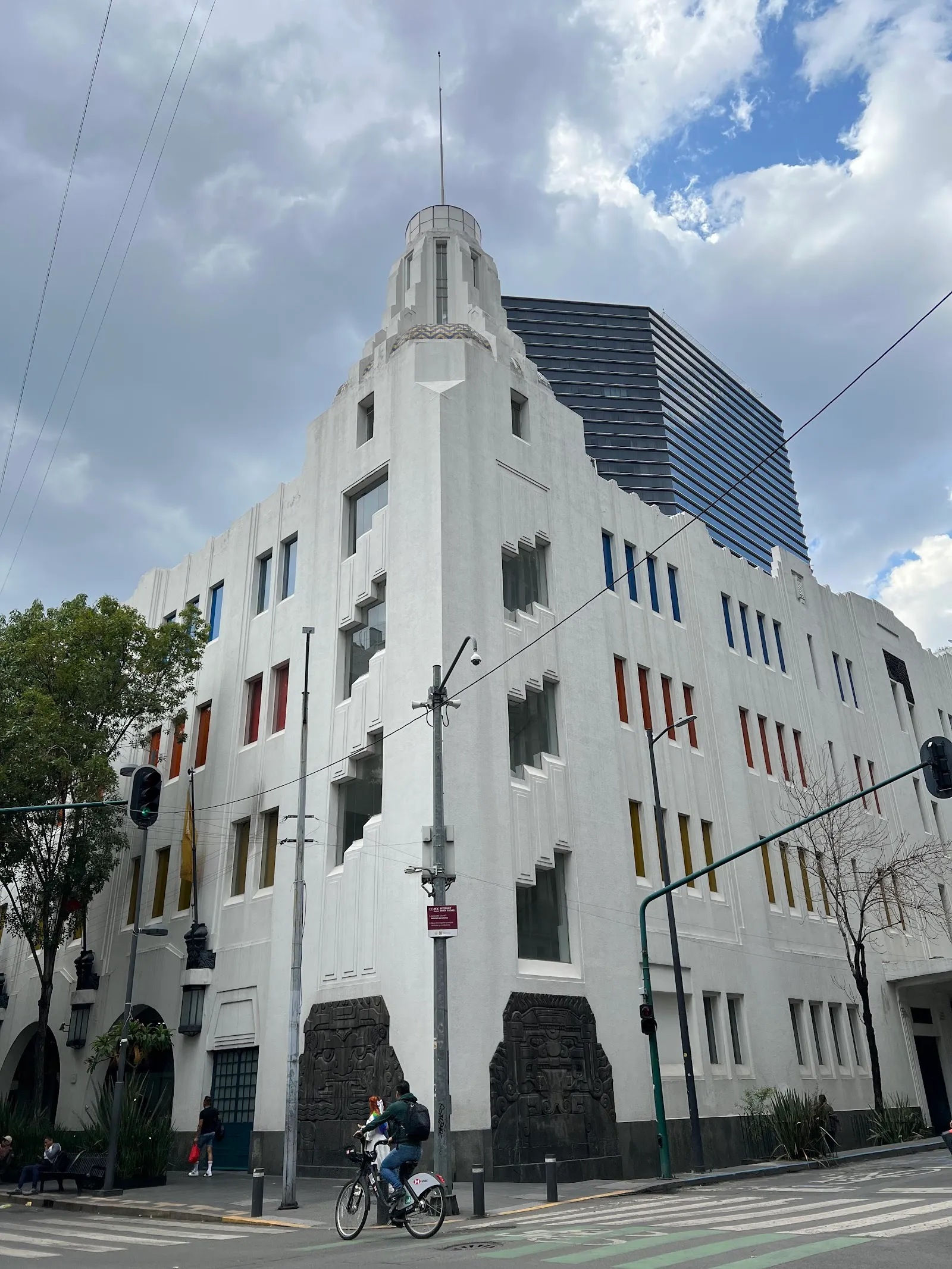
The museum occupies a 1920s art deco building in Mexico City's historic centre. The building once served as the city's fire department headquarters, and its conversion keeps the architecture of that era visible inside.
Today the building holds a large collection of Mexican folk art in climate-controlled rooms. The displays are arranged by theme over several floors rather than by region, so a single room can bring together pieces from different states.
The Alameda Central is a few steps away, which makes the museum an easy stop before or after a walk through the centre.
What is on the three floors
The collection covers textiles, pottery, glass, toys, piñatas, silver and gold work, and masks. Ceramics from Jalisco, piñatas from Puebla and ceremonial masks from Chiapas are among the regional pieces on show.
Alebrijes, the brightly painted wooden creatures, appear in several sizes and materials. Day of the Dead figurines and dioramas are also on display, and the museum's collection of papier-mâché figures is large.
On the top floor, a group of piñatas hangs from the ceiling. Four permanent rooms hold most of the collection, and background music plays in the galleries. Many visitors begin on the top floor and work down, following the room numbers, which is the route the signs suggest.
Workshops, events and the gift shop
The museum runs art workshops for children and adults. Alebrije workshops are among the activities on offer, along with puppet shows and documentary screenings.
A cinema club, lectures, workshops and summer courses run through the year. Night visits take place on the last Wednesday of each month.
Each year the museum sponsors the Alebrije Parade, in which large folk creatures move through the streets of Mexico City.
The gift shop carries crafts sourced directly from communities around Mexico, and the range includes both functional pieces and gallery-level work.
Visiting on the day
Advance tickets are recommended. The museum has a wheelchair accessible entrance, parking and restroom, and seating is wheelchair accessible too. Stairs and a lift connect the three floors.
Families will find a nursing room, a changing table and a gender-neutral restroom. A restaurant is on site. Bag check is free.
Allow about two hours for the collection, or three if you read every sign. Signs are in Spanish and English.
Häufige Fragen
Is there an entry fee?
Entry has been 60 pesos, and it is free on Sundays. Visitors over 60 and under 18 have also been admitted free. Check the current rules at the ticket desk before you go, since they can change.
How long do you need at the museum?
Plan about two hours for the collection. Allow three hours if you read every sign, which are written in Spanish and English.
Is the museum wheelchair accessible?
Yes. The entrance, parking, restroom and seating are wheelchair accessible, and a lift serves the three floors alongside the stairs.
Is the museum suitable for children?
Yes. Most displays are colorful, kid-friendly activities and workshops are offered, and there is a nursing room and a changing table.