The Catedral de Cuernavaca, officially the Cathedral of the Assumption of Mary, is a religious and historical complex in the centre of Cuernavaca. It brings together three churches: a chapel, an older cathedral with a pink façade, and a large white cathedral with detailed stone carving. The buildings combine Spanish colonial architecture with indigenous elements. Inside, you will find ornate altars, a museum with relics from indigenous peoples, real mummies on display, and a recently restored mural of missionary martyrdom in Japan. The quiet courtyard is a good place to slow down.
From monastery to cathedral
Franciscan missionaries built the cathedral as part of a fortress-like monastery complex. Its purpose was to help convert the indigenous population after the Spanish conquest.
The cathedral is considered one of the first and oldest Christian structures in the Americas. It is now a UNESCO World Heritage Site, listed with the group of earliest 16th-century monasteries on the slopes of Popocatépetl.
Architecture and defences
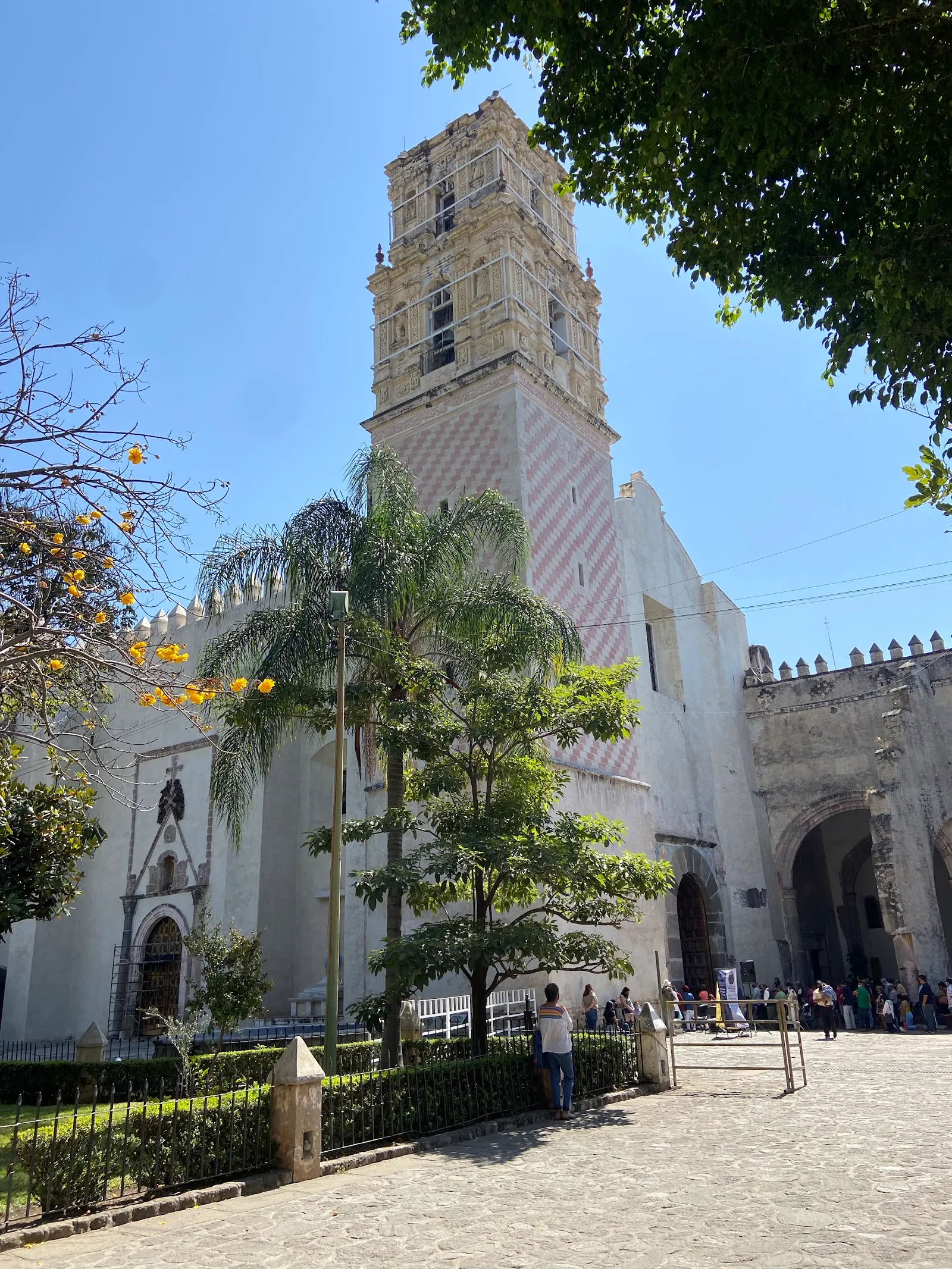
The massive stone walls and the fortress-like façade show how the complex was built in a period when war was a real threat. Battlements, merlons and buttresses are still visible on the church, and you can look for them from the courtyard.
The three churches differ in style. The older one has a pink façade, while the large white cathedral is known for its stone carving. The main altar in the cathedral is Churrigueresque, with the dense, ornate decoration typical of that style.
Inside the cathedral
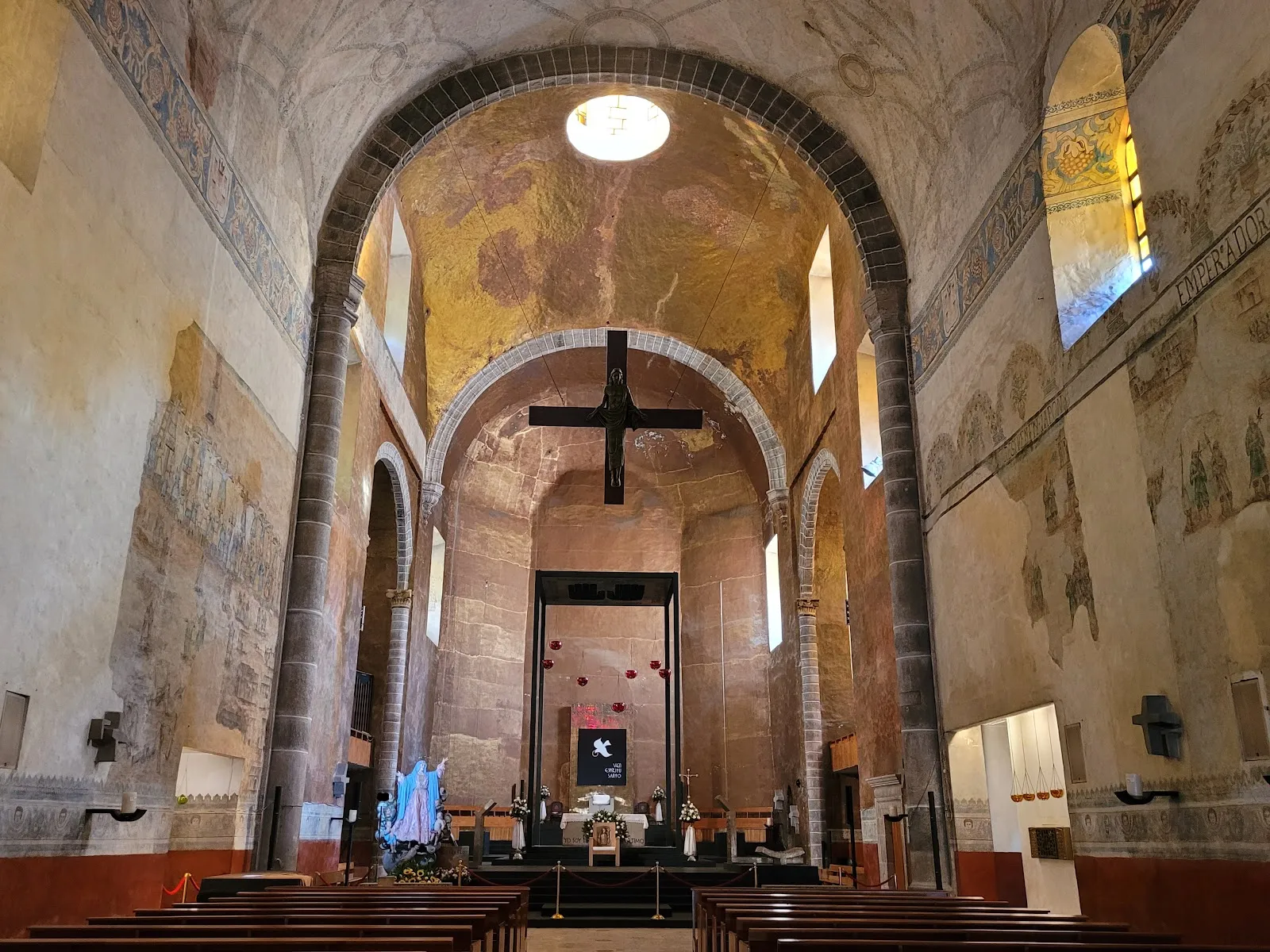
A large hanging figure of Christ is one of the first things you see when you walk in. The altars throughout the churches are impressive, and the detail on them rewards a slow look.
The mural of the martyrdom of missionaries in Japan dates from the 17th century. It was hidden for centuries and has been restored recently. The museum displays relics from indigenous peoples found in the area, along with other historical pieces. The mummies on display are real.
The courtyard and Sunday services
The cloisters and chapels surround a calm courtyard where you can stroll or sit quietly. The Sunday mass is held partly in the courtyard, and it may include a mariachi band.
In the evening, the buildings are lit, which changes how the stone looks. Many people visit at this time, when the complex is quieter.
Earthquake damage and what is open
Recent earthquakes damaged the cathedral and other church buildings, so some are closed to the public. Those buildings can be seen from the outside, and the courtyard remains open.
Across the road from the high walls of the Jardín Borda, the cathedral makes a good stop when you visit the gardens. The wheelchair accessible entrance and parking make the courtyard and the main areas easier to reach.
Häufige Fragen
Are parts of the cathedral closed?
Yes. Recent earthquakes damaged the cathedral and other church buildings, and some are closed to the public. You can view them from outside, and the courtyard is open.
Are the mummies real?
Yes, real mummies are on display in the cathedral complex.
Can I attend the Sunday mass?
Yes. The Sunday mass is held partly in the courtyard, and it may include a mariachi band.
Is the cathedral wheelchair accessible?
There is a wheelchair accessible entrance and a wheelchair accessible parking lot.
Is the cathedral lit at night?
Yes. The buildings are illuminated in the evening, which many visitors choose for the view.