Thean Hou Temple is a six-tiered Chinese temple on Robson Heights in Kuala Lumpur, dedicated chiefly to Mazu, the sea goddess. Built by the Hainanese community and opened in 1989, it combines Buddhist, Taoist and Confucian elements. Look for red lanterns, carved dragons and phoenixes, painted ceilings and the prayer hall’s altars. The hilltop grounds also give views across the city. Entry is free, and the temple is both a place of worship and a venue for wedding registrations and cultural events.
A temple built by Kuala Lumpur’s Hainanese community
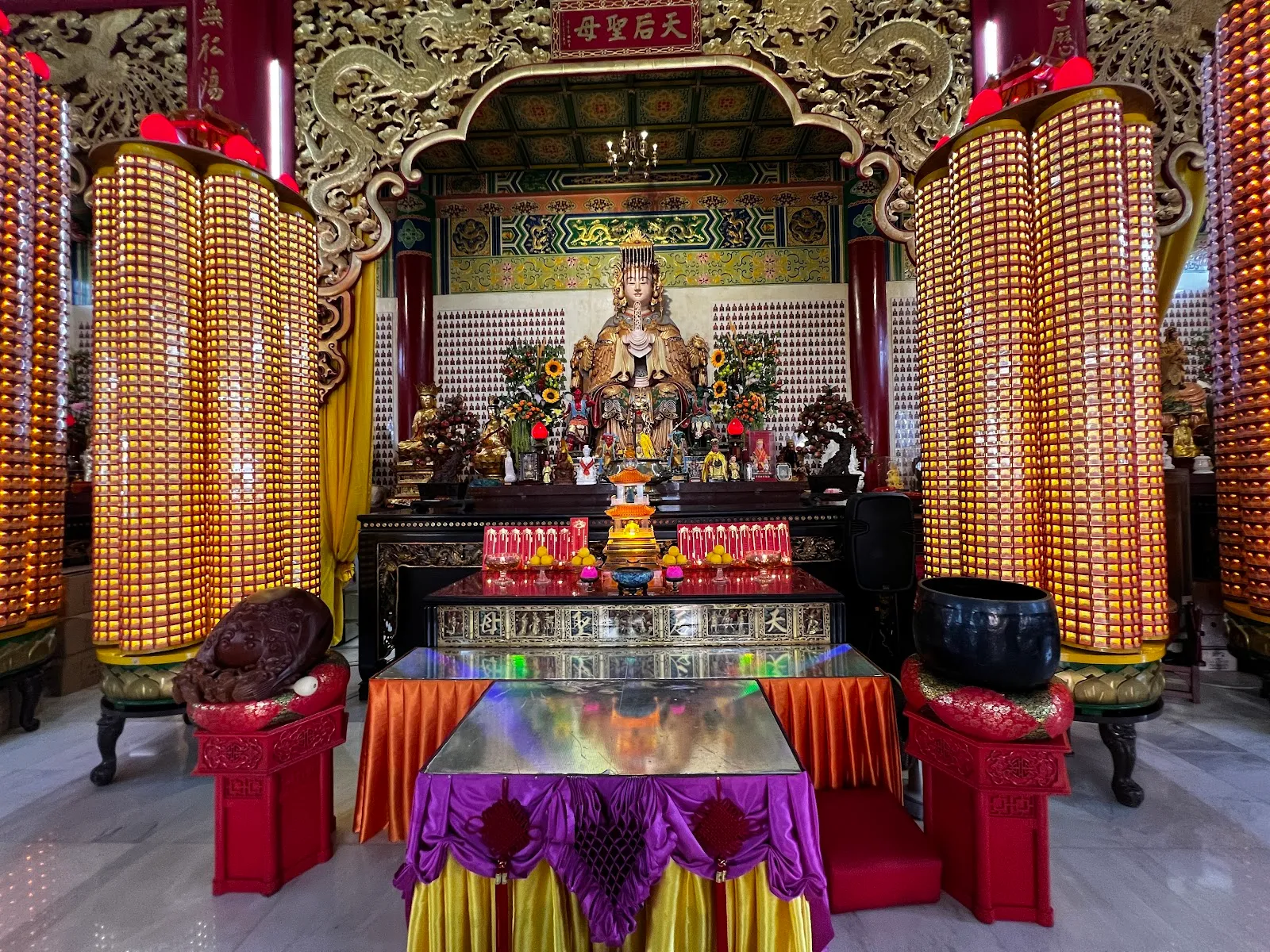
Thean Hou Temple stands on Robson Heights, above the city’s southern side. Malaysia’s Hainanese community built the complex between 1981 and 1987, and it opened for worship in 1989. Its name refers to the Heavenly Mother, and Mazu, the Chinese sea goddess, is its principal deity.
The temple is also associated with Guan Yin, the bodhisattva of compassion. This combination of deities and traditions is part of the site’s character. Its religious and cultural life continues alongside its role as a place to visit: the grounds host wedding registrations and ceremonies, as well as social and cultural gatherings.
Architecture and religious details
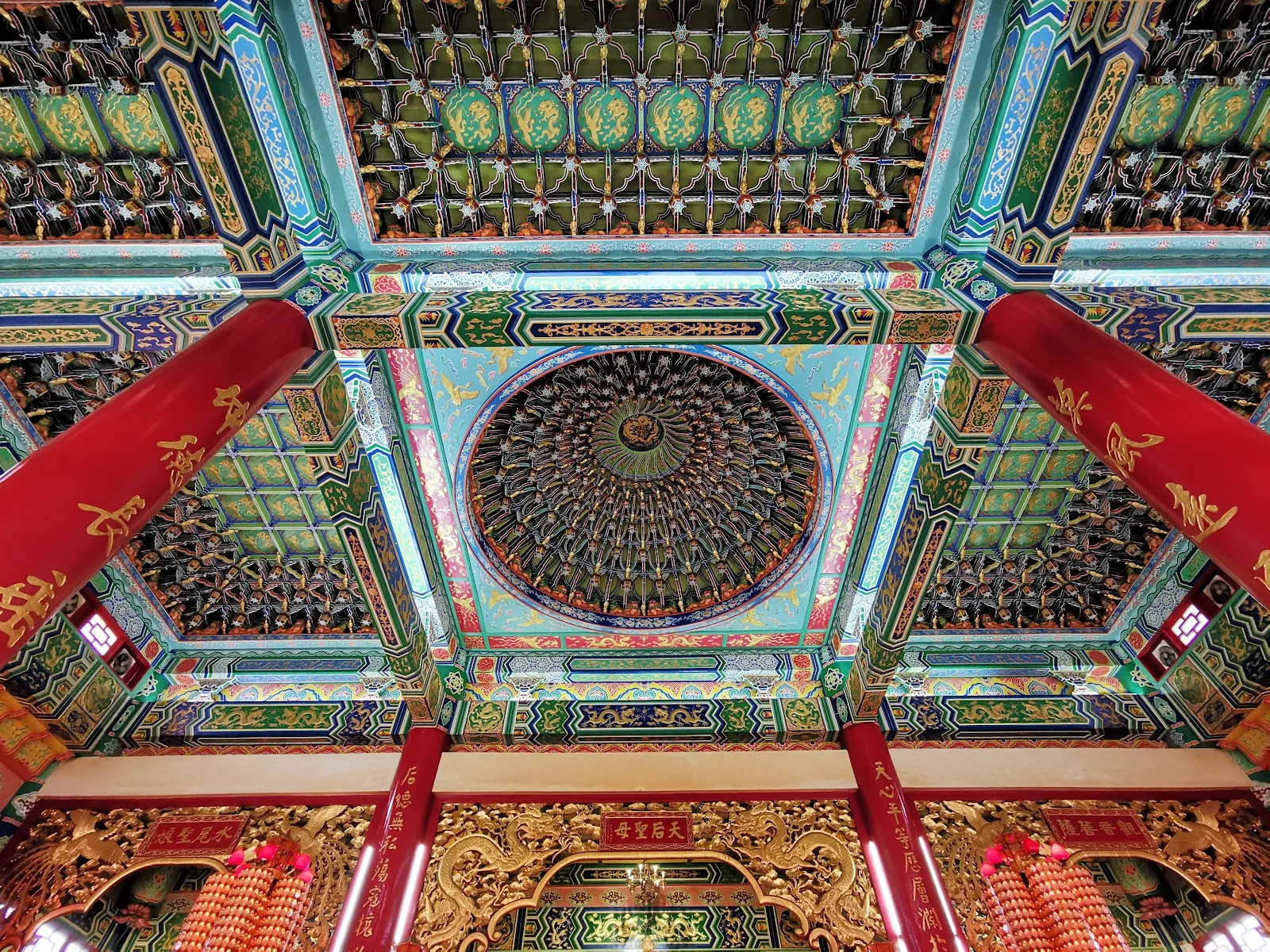
The six-tiered building brings traditional Chinese forms together with modern construction. Its arched entrance leads into a complex marked by red pillars, sloping roofs and decorative carvings. Dragons and phoenixes appear among the roof details, while painted ceilings and calligraphy add further layers to the interiors.
Inside, the prayer hall has three altars. Mazu is the central figure, with Guan Yin also worshipped at the temple. Buddhist, Taoist and Confucian influences can be seen in the architecture and decoration. The temple’s design therefore reflects more than one tradition, rather than presenting a single style throughout.
The grounds include a medicinal herb garden, a wishing well and a tortoise pond. There are also sculptures linked to the Chinese zodiac. These outdoor details give you more to explore beyond the main halls and elevated levels.
A place of worship and community gatherings
People come to pray, light incense and make offerings of flowers. The temple remains an active religious site, so move through prayer spaces with care and be considerate of worshippers. Clothing guidance is available at the entrance; follow any directions posted or given by temple staff.
The complex also has spaces for community activities. Its main conference hall has been used for educational, charitable, cultural and social events, including blood donation activities. Wedding registrations and ceremonies are another part of the temple’s use, and you may see couples taking photographs on the grounds.
Festival visits and the city outlook
Chinese New Year and the Mid-Autumn Festival bring extra activity to the temple. Red lanterns and festival decorations add colour, and the grounds can be busier than on an ordinary day. Chinese New Year celebrations may include performances and lantern displays. If you want a quieter look at the architecture, choose an earlier visit outside the busiest festival periods.
The temple’s hillside position opens up views towards Kuala Lumpur’s skyline. Its upper levels and grounds provide different angles over the city, with the temple’s rooflines in the foreground. Take time to look back at the building as well as out towards the skyline.
Getting there and exploring the grounds
The temple is at 65 Persiaran Endah, Taman Persiaran Desa. Its hilltop location makes a taxi or car a convenient choice. Public transport does not reach the temple directly, so plan for the final stretch rather than assuming you can arrive at the entrance by train or bus.
Once inside, follow the walking directions posted around the different levels to find the prayer halls and decks. The lower-ground floor has souvenir shops selling local crafts and cultural gifts. Entry is free. If driving, allow for paid parking nearby; the amount and parking arrangements can differ, so confirm them on arrival.
Häufige Fragen
Is entry to Thean Hou Temple free?
Yes. Entry is free.
How long should I spend at Thean Hou Temple?
Plan for about an hour to explore the temple and grounds.
How do you get to Thean Hou Temple?
A taxi or car is a practical option for reaching its hilltop location. Public transport does not serve the temple directly.
What is Thean Hou Temple dedicated to?
Mazu, the Chinese sea goddess, is the temple’s principal deity. Guan Yin is also worshipped there.
When is Thean Hou Temple busiest?
Major festivals, including Chinese New Year and the Mid-Autumn Festival, bring extra activity. Visit earlier or outside festival periods for a quieter experience.