
Hazrat Sultan Mosque is among the biggest mosques in Central Asia and one of the newest, completed in 2012 on Tauelsizdik Avenue in Astana. White marble walls, a main dome about 51 meters high and four tall minarets make it easy to spot across the city. The design blends Kazakh and Ottoman elements. Inside, the large prayer hall has chandeliers, calligraphy and tilework. Admission costs nothing if you come between prayers, so plan a calm visit, then walk to the nearby National Museum and Palace of Peace and Reconciliation.
Why the mosque was built
Work on Hazrat Sultan Mosque began in 2009 and the building was completed in 2012. Around 1,500 builders and craftsmen worked on it.
The mosque is named after Khoja Ahmed Yasawi, a Turkic sage and poet of the 12th century, who is honored as a saint in Islam. It is an important religious site for Muslims in Kazakhstan and a landmark of the capital.
The exterior
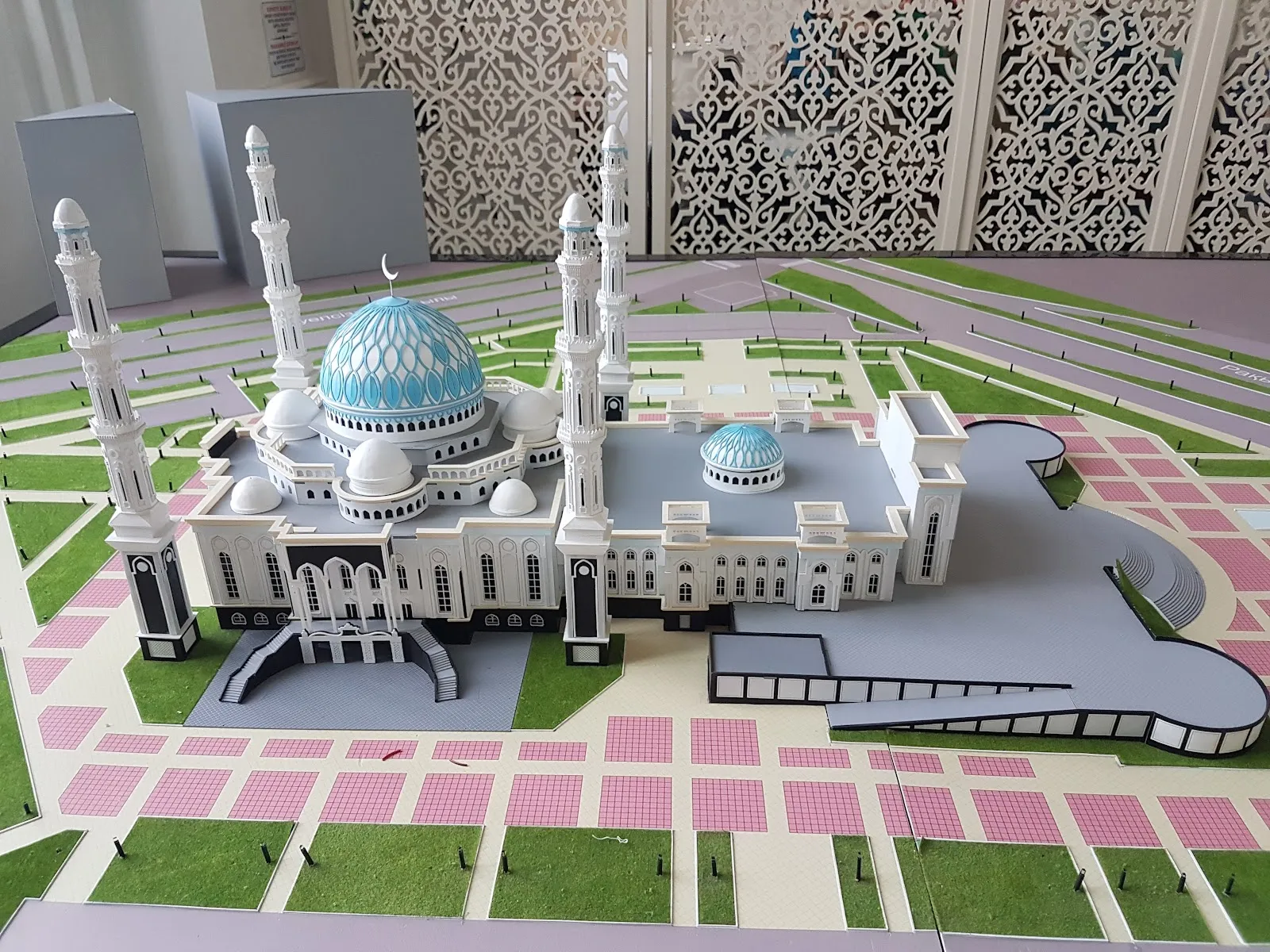
The facades are white marble, with a main dome about 51 meters high and four minarets of about 77 meters. Kazakh ornaments and Arabic calligraphy decorate the walls in soft tones.
The white marble, light arches and tall minarets give the building a floating look. It resembles an oriental palace more than a typical mosque, and it is best seen from the wide open ground around it.
Inside the prayer hall
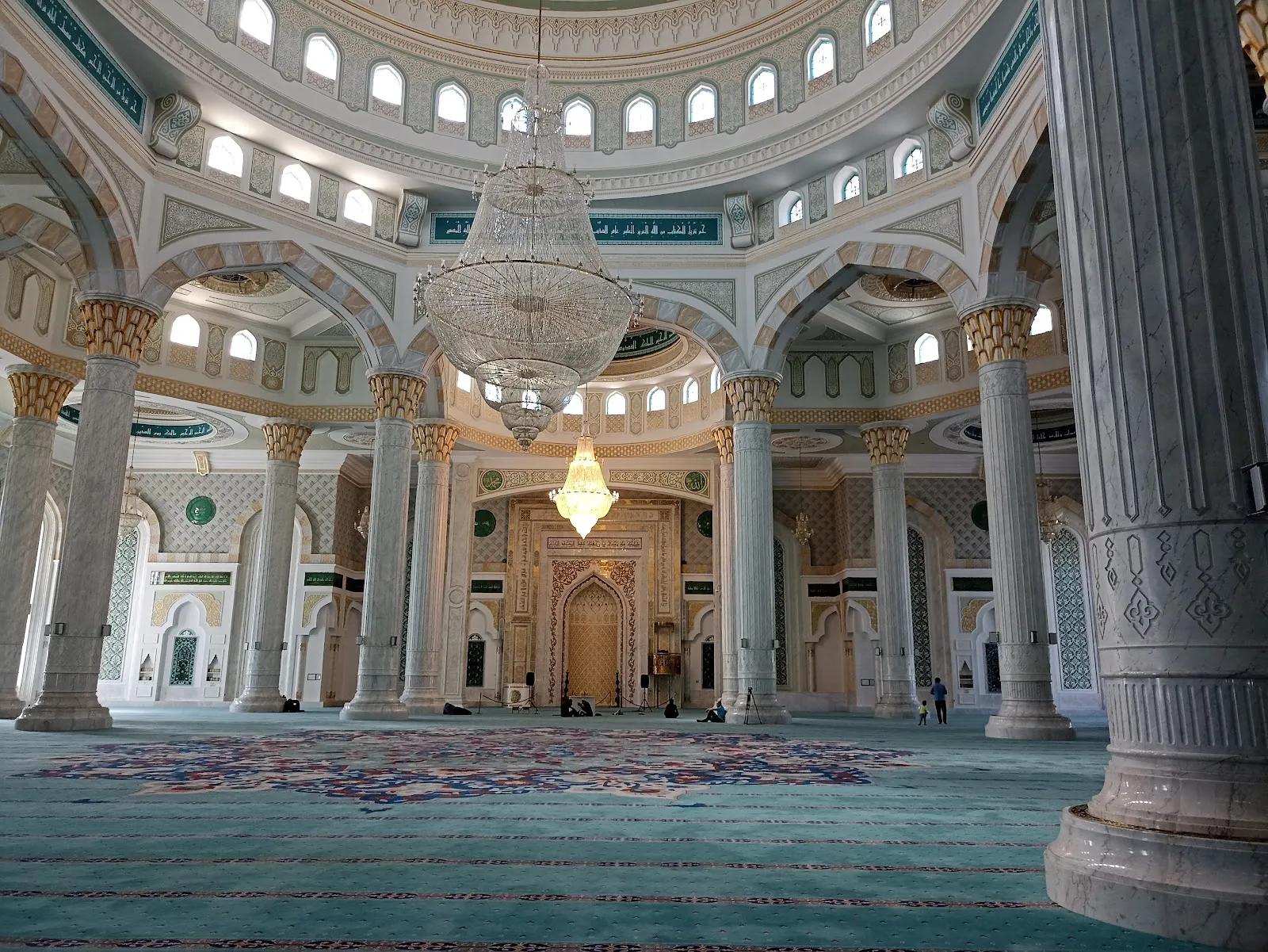
The interior is spacious and quiet. Chandeliers hang over the hall, and the walls and ceilings carry calligraphy, mosaics and tilework, with paintings and raised decoration in places. The hall can hold about 10,000 worshippers at one time.
A mufti is often on site, and the mosque is welcoming to women and children. Visitors who come to look rather than pray should keep to the areas open to them and move quietly.
Around the complex
The complex has shops and a restaurant. Outside, the square holds the Kazakh Eli monument, and the National Museum and the Palace of Peace and Reconciliation are next door.
From here you can walk to Nurzhol Boulevard or the Ishim River embankment. Boat trips leave further upstream on the Ishim.
Visiting on the day
Entry costs nothing when you come between the daily prayers. Long garments for women are kept on hand if you need one.
The entrance, restroom and parking lot are wheelchair accessible. Plan the visit for a quiet hour, then continue to the museum or the river, which are close by.
Häufige Fragen
Is there an entry fee?
Entry is free when you arrive between the five daily prayer times. Check the mosque's website for any changes to visitor access.
What should women wear?
Long garments are available for women who need one. Dress modestly and keep to the areas open to visitors.
Is the mosque wheelchair accessible?
Yes. The entrance, restroom and parking lot are wheelchair accessible.
How many people can the mosque hold?
It can hold about 10,000 worshippers at one time.


