Yoyogi National Stadium 1st Gymnasium is an indoor arena in Shibuya, Tokyo, designed by Kenzo Tange for the 1964 Olympics. Its sweeping suspended roof makes the building worth seeing even if you are not attending an event. Inside, the arena hosts basketball and volleyball matches, concerts and other large-scale events. Check the schedule before you go, since access depends on what is on. Harajuku Station and Meiji-jingumae Station are both about a five-minute walk away, and Yoyogi Park and Meiji Jingu Shrine are nearby.
Designed for the 1964 Olympics
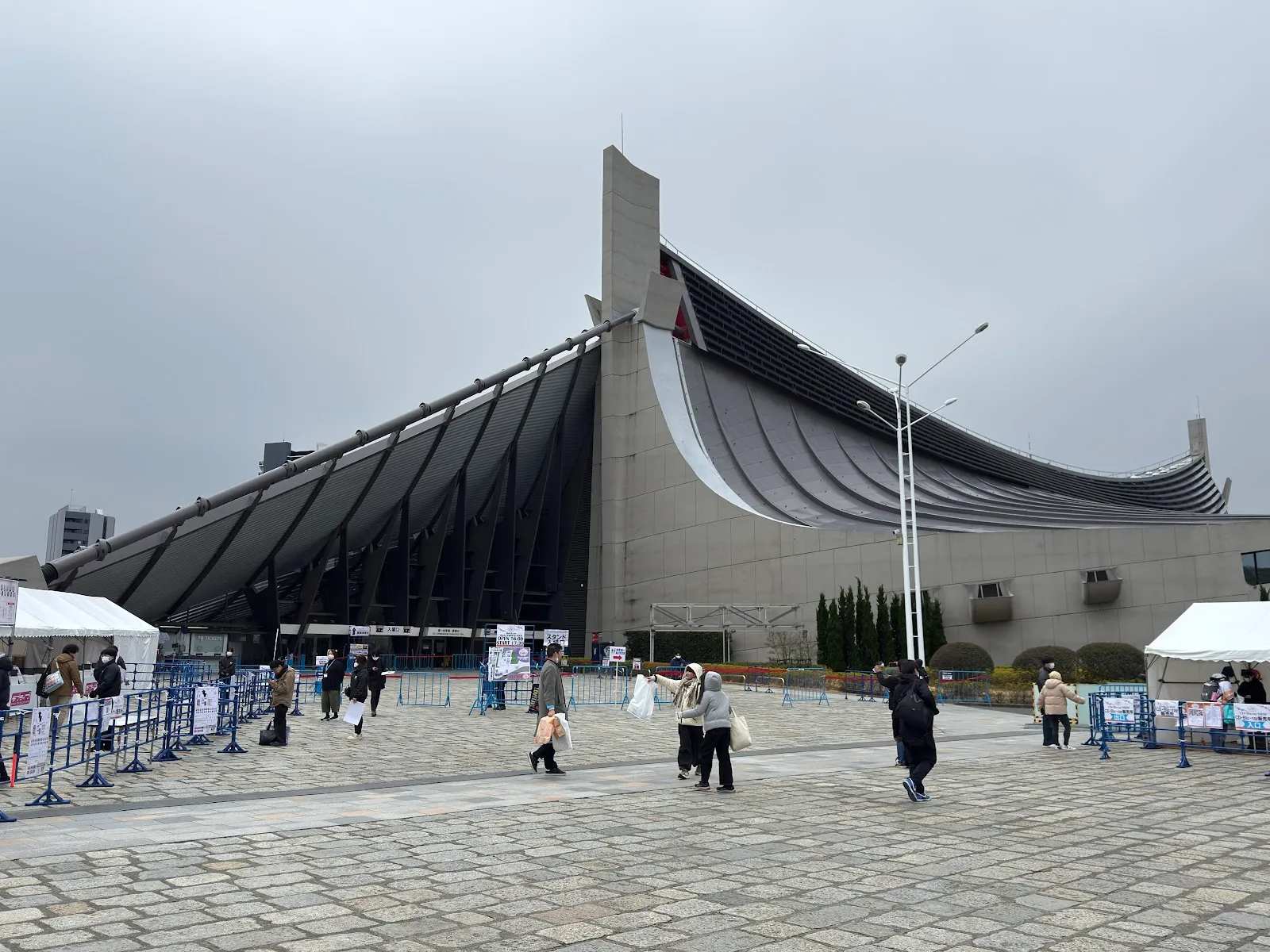
Kenzo Tange designed Yoyogi National Stadium 1st Gymnasium for the 1964 Tokyo Olympics. The arena hosted swimming and diving events, and the venue is now known for its bold modernist form as well as its sporting history. It was designated an Important Cultural Property of Japan in 2021.
The stadium is part of a complex with two gymnasiums. The first is the large main arena; the smaller second gymnasium has a distinctive snail-like shape. The buildings stand by Yoyogi Park in Shibuya, close to Harajuku and Meiji Jingu Shrine.
A roof held by cables
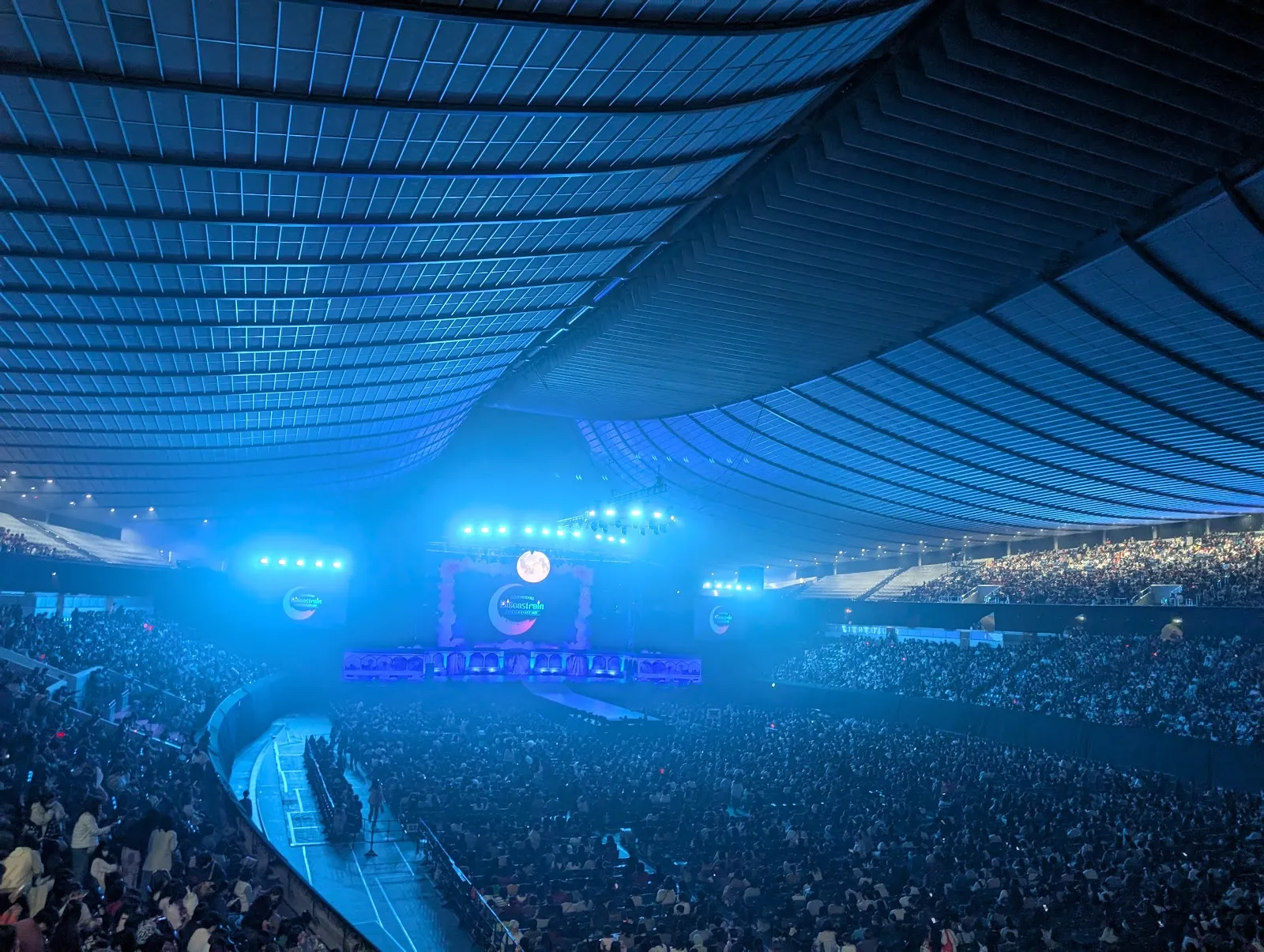
The first gymnasium is recognised by its sweeping roof, supported by a suspended cable structure rather than central pillars. Two large steel cables span between towers to carry the roof, creating a broad interior for events. Tange’s design combines a reference to Japanese shrine forms with modern structural engineering.
The roof’s curve gives the building a strong profile from outside. If you are passing through the area, it is worth taking time to look at the structure, even when there is no event you plan to attend.
From Olympic venue to event arena
The gymnasium continues to host sports and cultural events. Its calendar has included professional basketball, volleyball, martial arts, figure skating and ice hockey, as well as concerts and fashion shows. It also hosted handball during the 2020 Tokyo Olympics, which took place in 2021.
The arena’s atmosphere depends on the event. Concerts bring large crowds, and sports matches fill the space with the energy of live competition. Seating includes super seats, which are arranged for clear views of the arena. Sound can vary by show and by where you sit, so the building’s striking architecture may be a draw even if you are choosing an event primarily for its music.
Getting there and planning around an event
Harajuku Station and Meiji-jingumae Station are each about a five-minute walk away. Yoyogi Park and Meiji Jingu Shrine are close by, making it easy to pair an event with a stop in the surrounding area.
Check the event schedule before making the trip, as the venue is used for organised events rather than functioning as a regular sightseeing attraction. On rainy days, allow extra time for the walk. Before and after a show, the pedestrian bridge can become crowded. Food booths may be set up outside during events, while queues at vending machines inside can grow long.
Häufige Fragen
How do you get to Yoyogi National Stadium 1st Gymnasium?
It is about a five-minute walk from Harajuku Station or Meiji-jingumae Station. Yoyogi Park and Meiji Jingu Shrine are nearby.
What events are held at the stadium?
The arena hosts sports including basketball, volleyball, martial arts, figure skating and ice hockey, as well as concerts and fashion shows. Check the schedule to see what is on.
What is distinctive about the building?
Kenzo Tange designed it for the 1964 Tokyo Olympics. Its sweeping roof is supported by a suspended cable structure without central pillars.
Is food available during events?
Food booths may be set up outside during events. Indoor vending machines are available, but queues can be long.