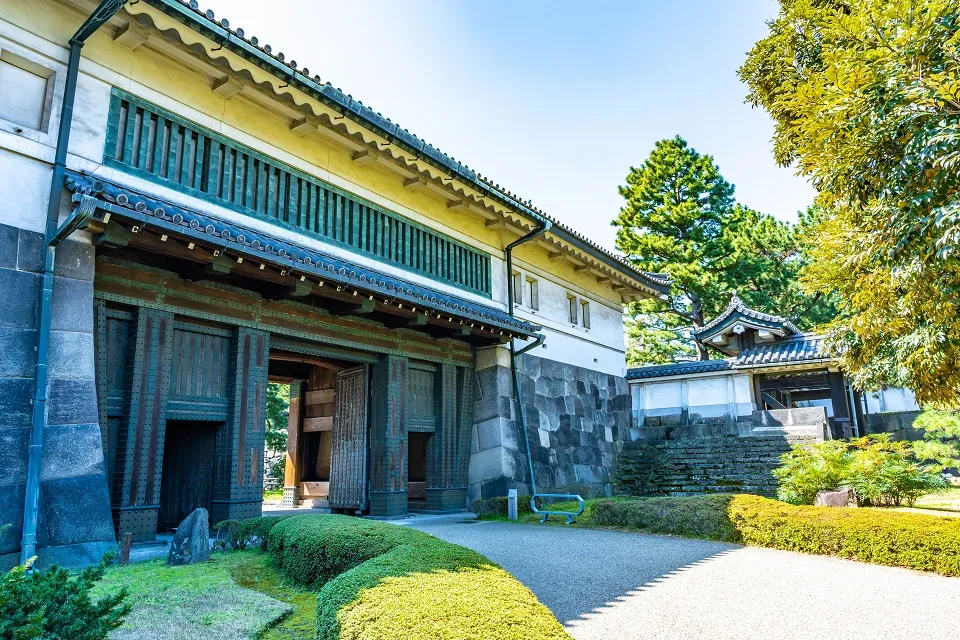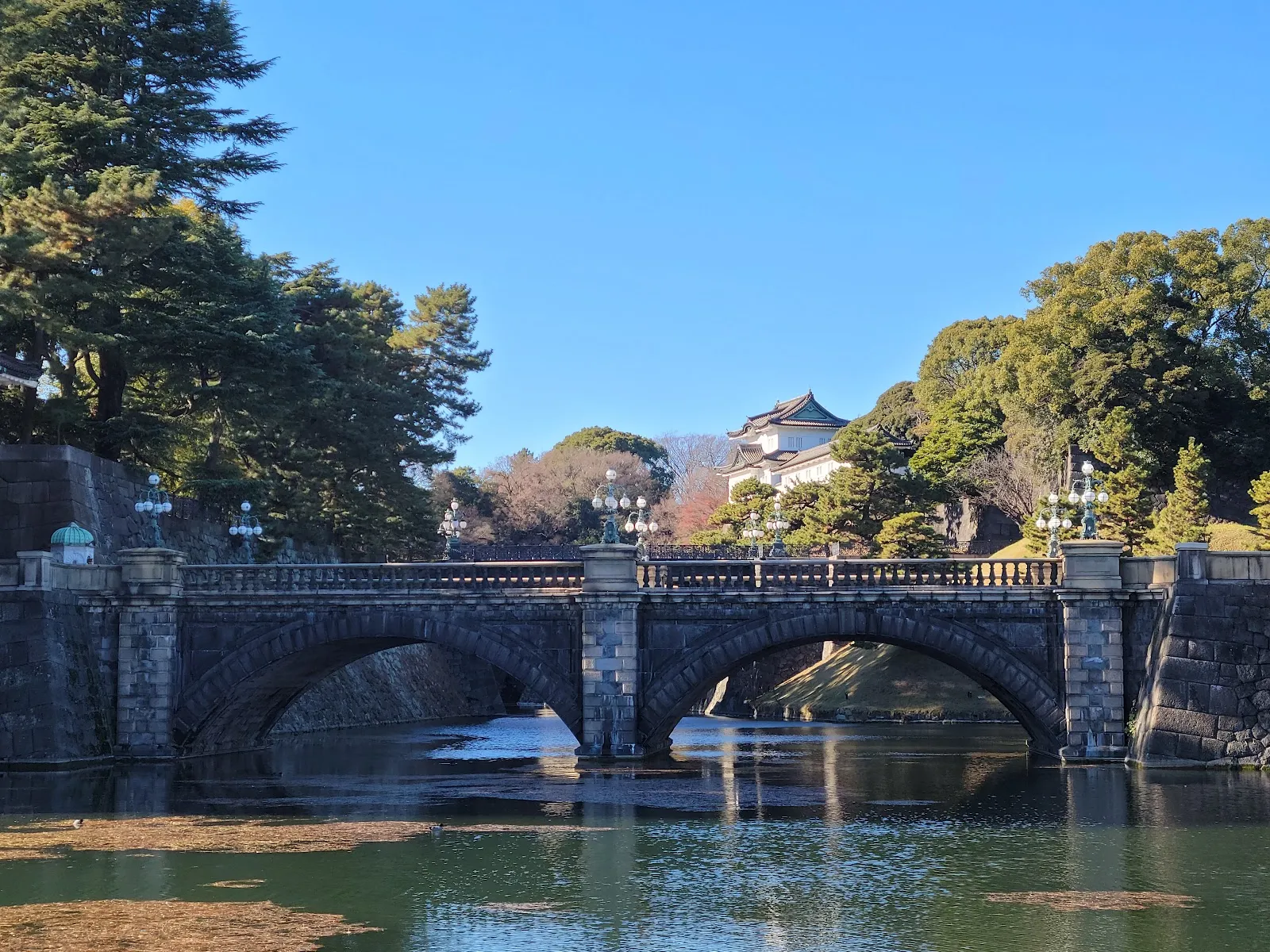
Nijubashi Bridge stands at the entrance to the Imperial Palace grounds in Chiyoda, central Tokyo. From Kokyo Gaien plaza, you can see two bridges over the moat, with the front stone arch known as Meganebashi, or Eyeglass Bridge. The paired arches, water and palace walls make a distinctive view, especially in cherry blossom season. The inner palace grounds are usually closed to the public, so plan to admire the bridges from outside and walk around the plaza for different angles.
Two bridges at the palace entrance
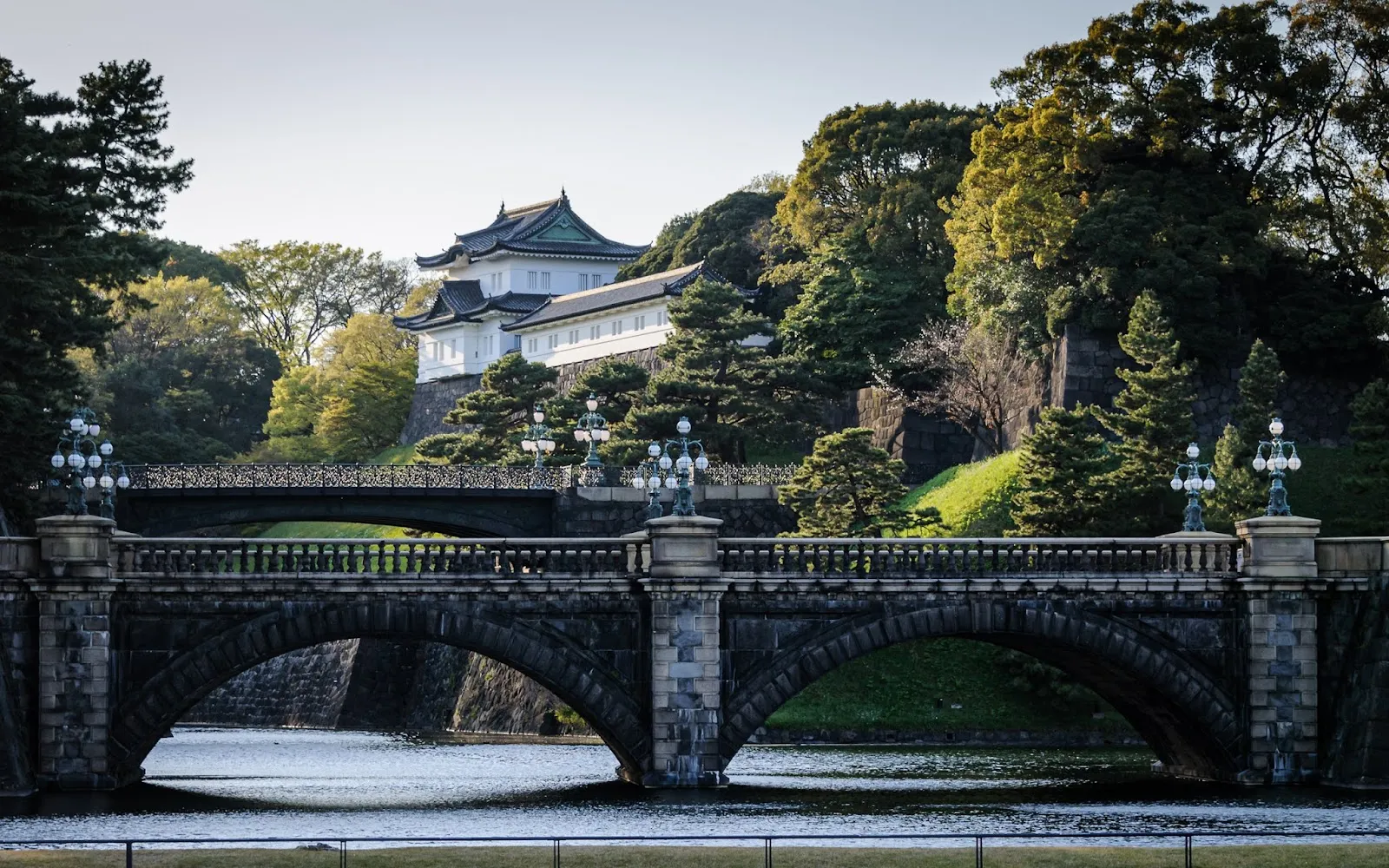
From Kokyo Gaien, the broad plaza in front of the Imperial Palace, you can look towards two bridges that lead to the inner palace grounds. The stone arch in front is Meganebashi, meaning Eyeglass Bridge, a name linked to its shape. The rear bridge is Nijubashi, or Double Bridge. Its name comes from an earlier wooden structure with two levels.
The bridges span the moat beside the former Edo Castle grounds. Their arches and the water below make the approach easy to recognize, while the palace walls and carefully kept surroundings give the view its setting. Fushimi-yagura, a watchtower visible behind the bridge, was moved from Kyoto in 1628.
From the wooden bridge to the present structure
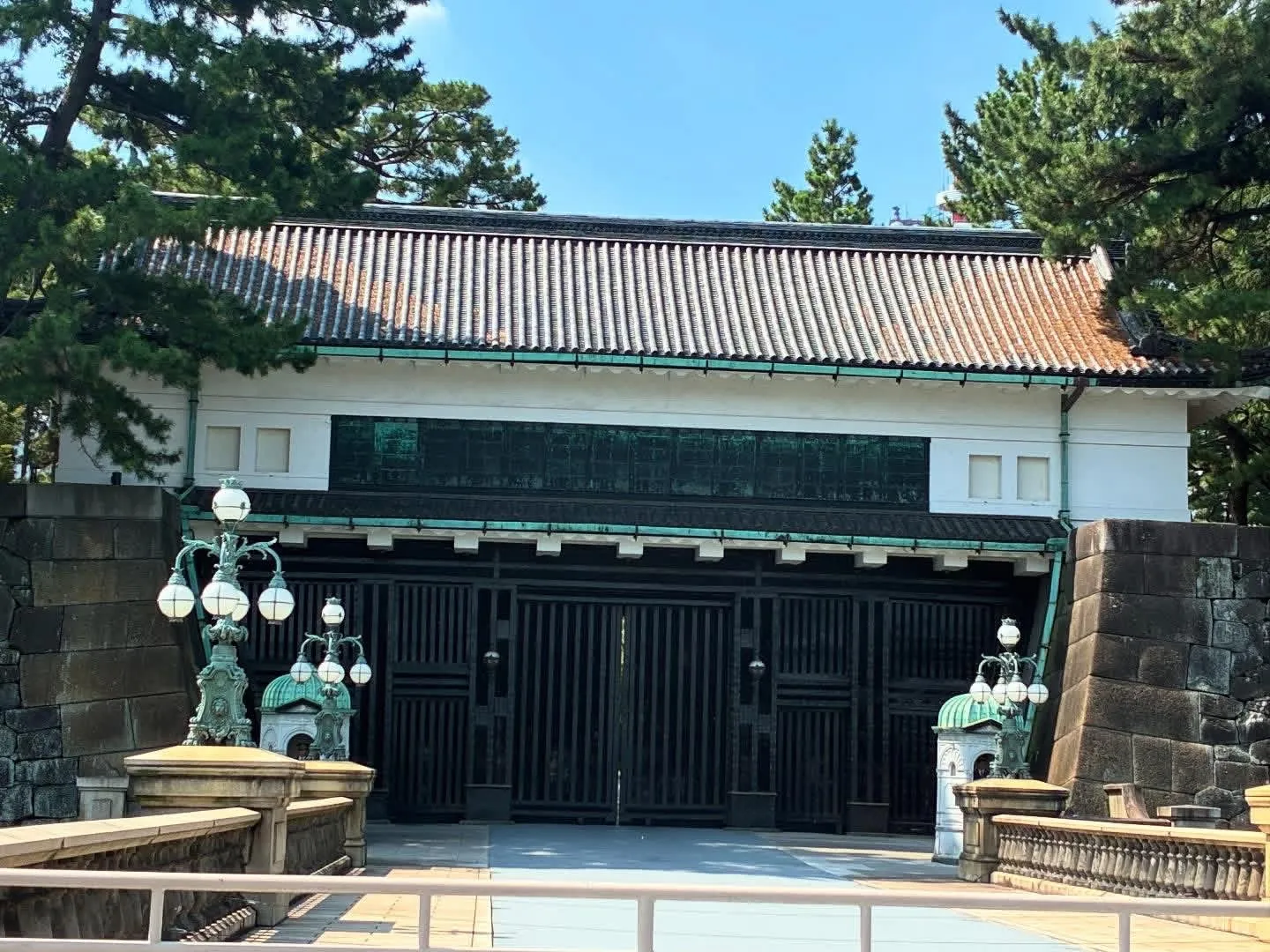
Nijubashi was built in 1614, when it was a wooden bridge. It was renovated in 1888 and again in 1964, with its shape changing over time. The bridge seen today is part of the Imperial Palace approach and is commonly viewed from the plaza outside the inner grounds.
The name refers to the earlier bridge’s layered construction. Meganebashi and Nijubashi are often seen together, but the names refer to separate bridges: the stone arch in front and the bridge behind it. From the plaza, you can take in both as well as the moat and the palace-side structures.
Viewing the bridges from Kokyo Gaien
The inner palace grounds are not generally open for a casual visit, so the plaza is the practical place to see Nijubashi. Walk around Kokyo Gaien to find different angles across the water. The wider area also gives you room to take in the bridge alongside the stone walls and surrounding greenery.
Spring cherry blossoms add seasonal color to the view, and autumn brings foliage. Early morning and late afternoon are useful times for photography. The area is not well lit in the evening, so daylight is preferable if you want to make out the bridge and its surroundings clearly.
Häufige Fragen
Can you cross Nijubashi Bridge?
The bridge is usually closed to the public. You can view it from Kokyo Gaien outside the inner palace grounds.
Where is the best place to view Nijubashi Bridge?
Kokyo Gaien, the plaza in front of the Imperial Palace, gives you a view of the two bridges over the moat.
What is the difference between Nijubashi and Meganebashi?
They are two separate bridges at the palace entrance. Meganebashi is the stone arch in front; Nijubashi is the bridge behind it.
When is a good time to visit Nijubashi Bridge?
Early morning and late afternoon suit photography. Cherry blossom season and autumn add seasonal color.