
Shitennō-ji is a Buddhist temple in Osaka’s Tennoji Ward, founded by Prince Shōtoku in 593. Its broad grounds include red-and-white buildings, a five-story pagoda, a pond where turtles gather and the carefully kept Gokuraku-jōdo Garden. The temple’s ordered layout and quiet walking paths feel removed from the surrounding city. You can explore the outer grounds, then visit the inner precinct for more of the complex’s religious spaces and statues. Allow time to walk slowly and take in the different areas.
A temple founded by Prince Shōtoku
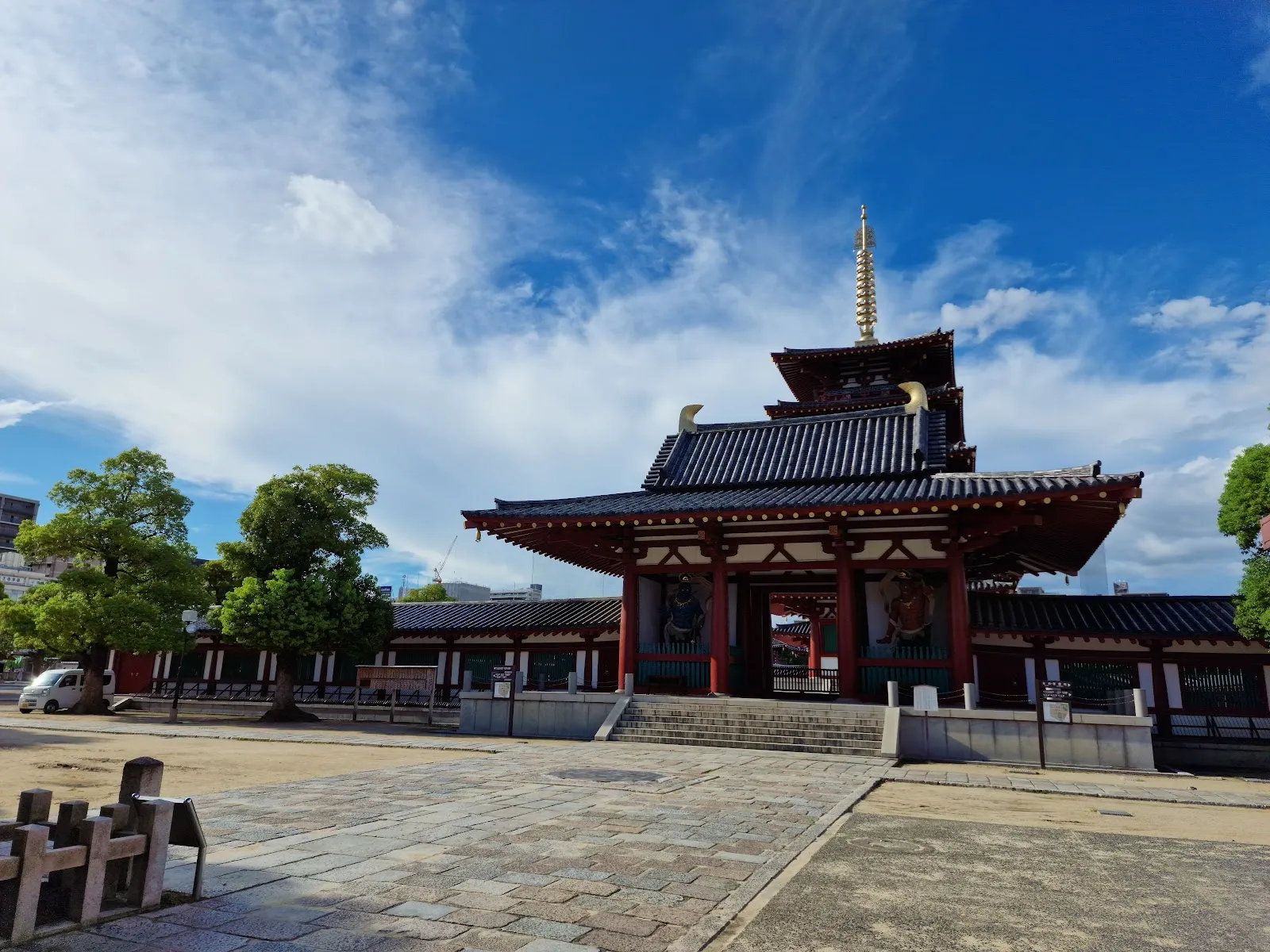
Shitennō-ji was established in 593 by Prince Shōtoku, who supported the introduction of Buddhism to Japan. It is described as Japan’s oldest officially established Buddhist temple and as the country’s first state-built Buddhist temple. Its long history includes repeated fires and other damage, followed by rebuilding over the centuries.
The present complex reflects the temple’s earlier design, though its buildings have been reconstructed. Accounts of the site note that much of the complex was rebuilt in modern times. The grounds therefore bring together a long religious history and buildings that have been renewed more recently.
The pagoda, halls and inner precinct
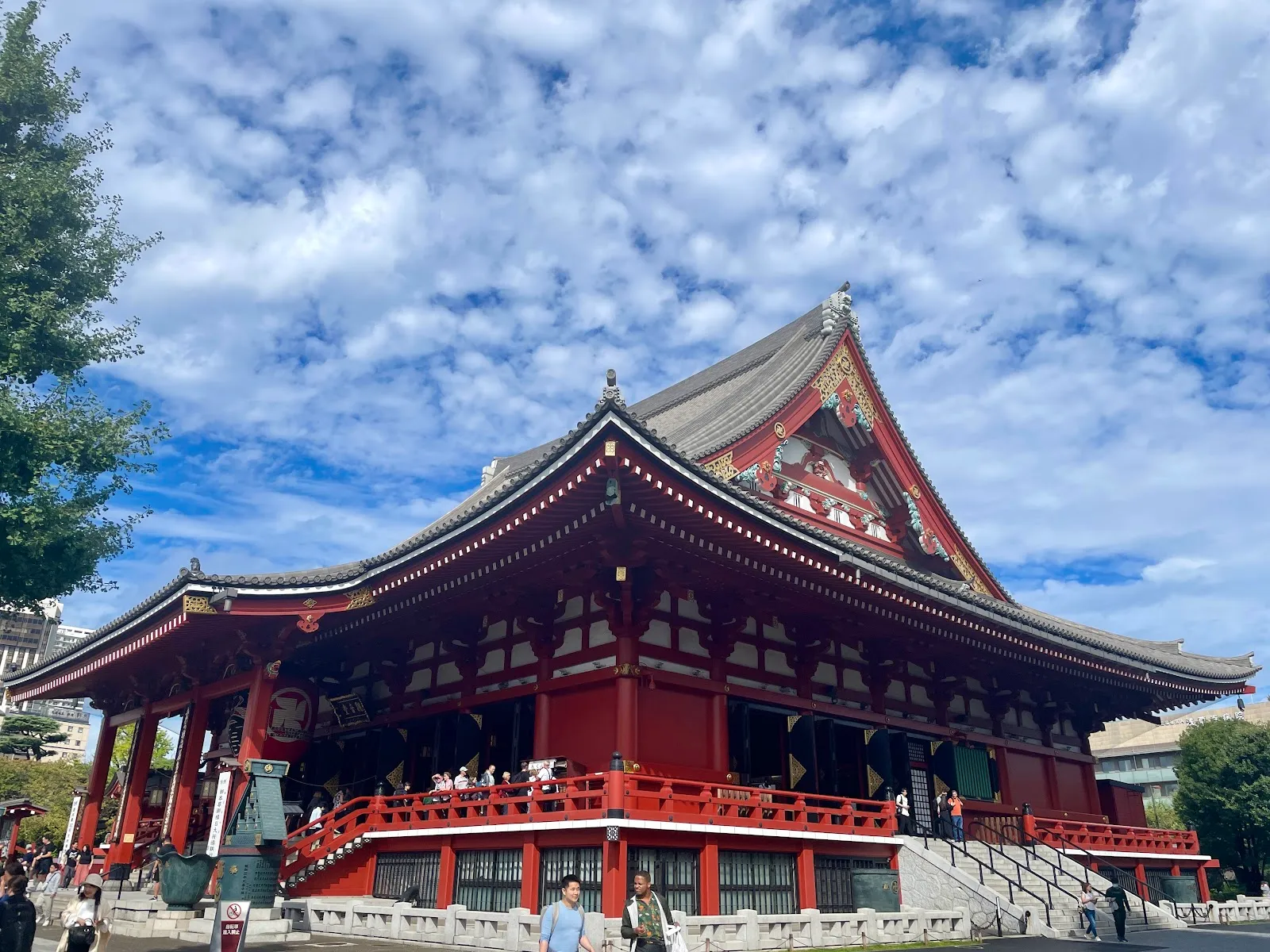
The five-story pagoda is a prominent landmark within the complex. The temple’s layout places its main buildings along a central axis, with open courtyards and paths between them. Vermilion and white details stand out against the open sky, while the spacious grounds give you room to move between buildings at your own pace.
The inner precinct gives access to more of the temple’s main spaces. Visitors have noted detailed statues inside, including a large Buddha image. Some areas have separate admission, and photography is not permitted inside certain structures. Check the current access arrangements before your visit, as parts of the complex have also been closed at times for repairs.
Garden, pond and market days
The Gokuraku-jōdo Garden is a quieter section of the grounds, with traditional landscaping and paths for a slow walk. Nearby, the pond reflects the surrounding structures and is home to turtles. These areas offer a change of pace from looking at the temple buildings, so leave time to explore them rather than making the pagoda your only stop.
A monthly flea market is held on the temple grounds. When it is running, stalls add a local market element to the visit; weather can affect how active the stalls are. Vendors may also be found near the temple, with items connected to its heritage.
Häufige Fragen
How long should you spend at Shitennō-ji?
Allow about 2 to 3 hours to explore the grounds, pagoda, garden and pond. The visit can take longer if you spend extra time in the different areas.
Is Shitennō-ji free to enter?
The outer grounds are free to explore. Some inner areas require separate admission; check the temple’s official website for current ticket details.
What is there to see at Shitennō-ji?
The complex includes a five-story pagoda, temple halls, an inner precinct, the Gokuraku-jōdo Garden and a pond where turtles gather.
When is a quieter time to visit?
Early morning is a good choice for a quieter visit. Late afternoon can also have thinner crowds.
Are there markets at Shitennō-ji?
A monthly flea market is held on the temple grounds. Weather can affect how many stalls are open.


