
Tenryu-ji is a Rinzai Zen Buddhist temple in Arashiyama, western Kyoto, founded in 1339 in memory of Emperor Go-Daigo. Its main draw is Sogenchi Garden, designed by Zen master Musō Soseki: a pond, rocks and trees set against the Arashiyama mountains, using the borrowed-scenery technique. The grounds sit beside the Arashiyama Bamboo Grove, so you can combine both on one walk. Visit for the garden and its changing seasonal colors; entry to the buildings is separate from the garden, so choose based on what you want to see.
A temple founded in 1339
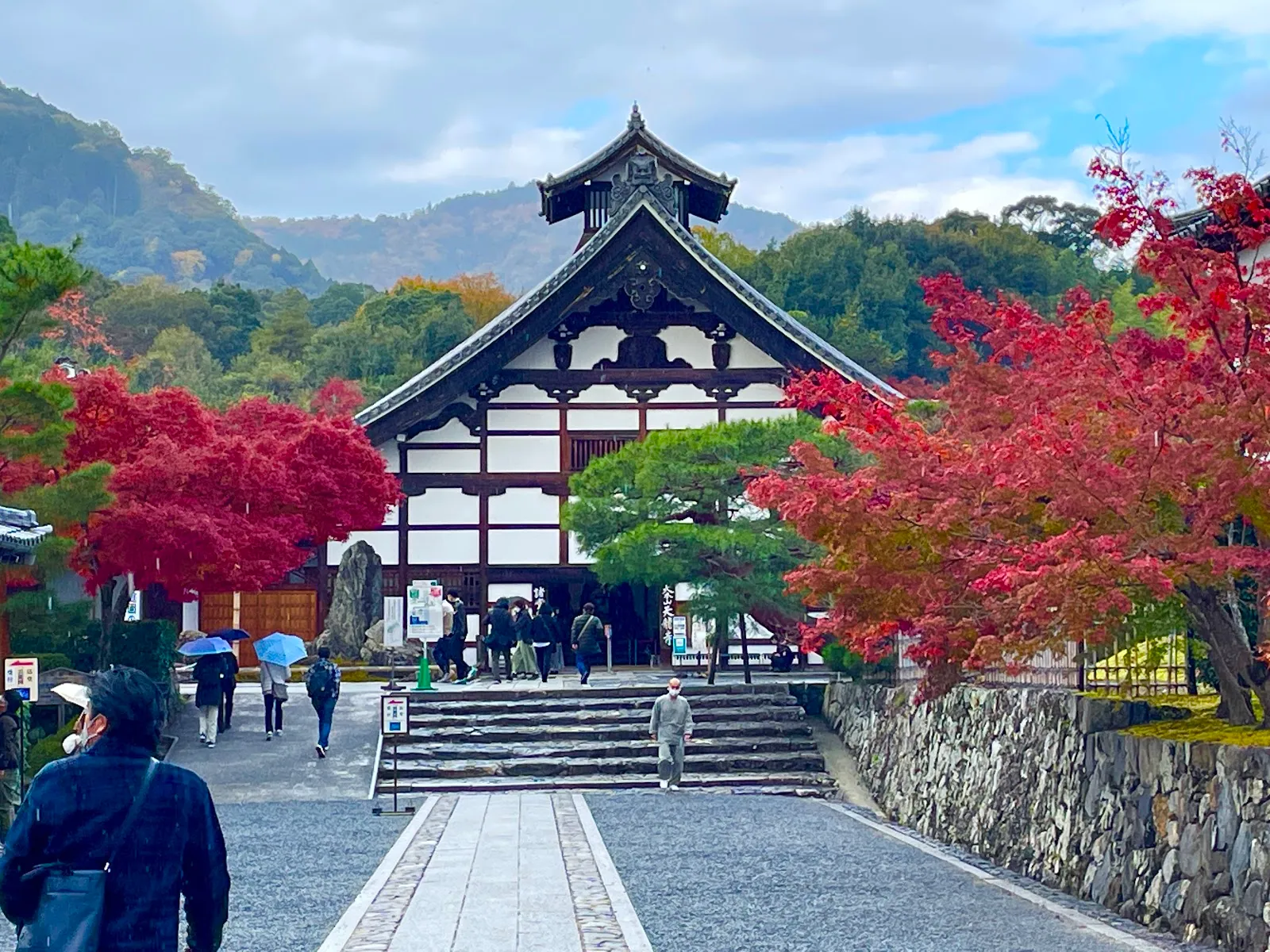
Tenryu-ji was established in 1339 by shogun Ashikaga Takauji in memory of Emperor Go-Daigo. It is a major temple of the Rinzai school of Zen Buddhism and holds the highest rank among Kyoto’s five great Zen temples. The grounds occupy the site of a former imperial villa.
The temple is a UNESCO World Heritage Site. Its buildings have been lost to fires and rebuilt over the centuries, and many of the halls standing today date from the Meiji period, between 1868 and 1912. The site’s long history is therefore visible in both its religious importance and its changing architecture.
Sogenchi Garden and the borrowed landscape
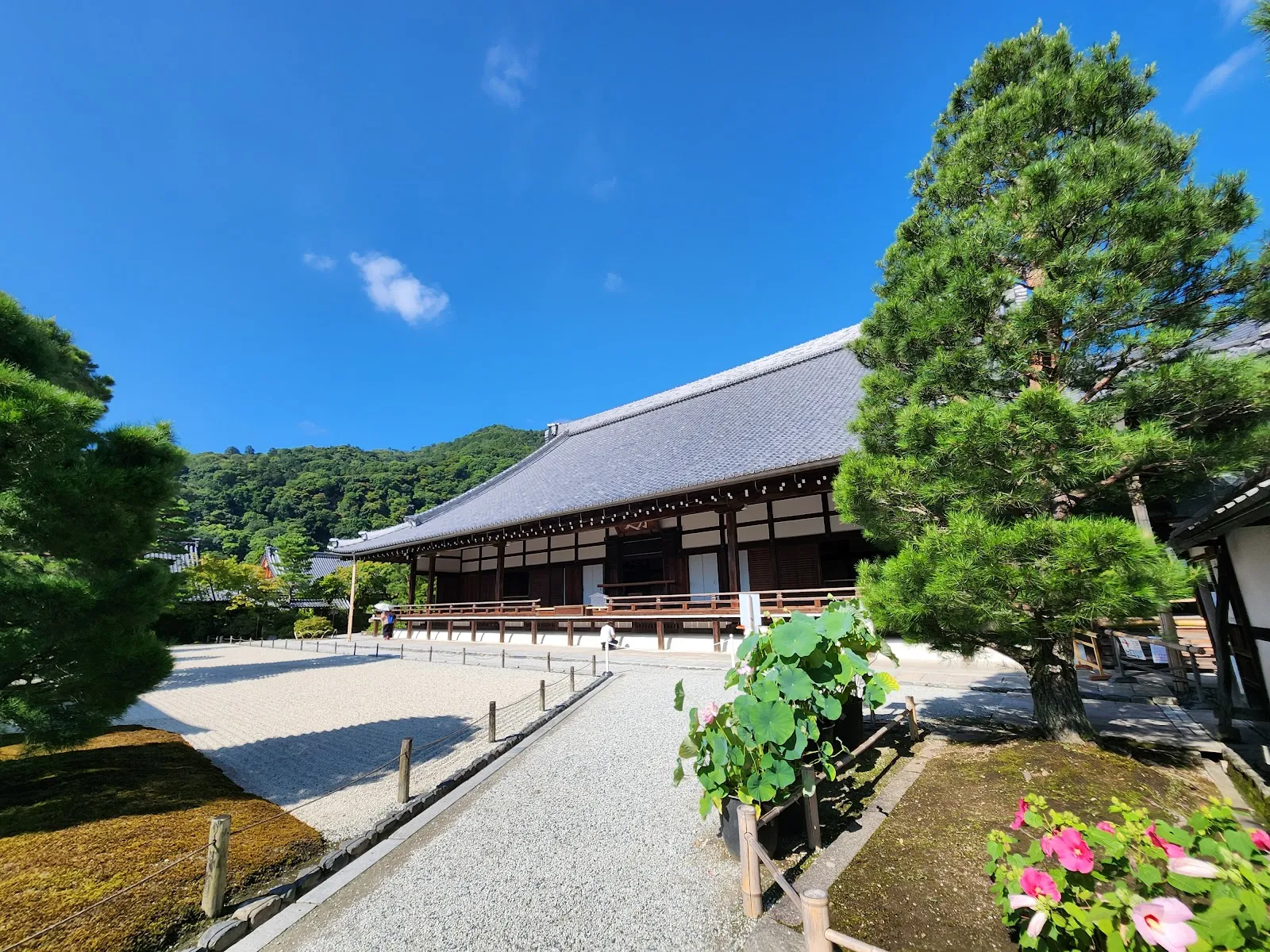
The garden is the main reason to make time for Tenryu-ji. Zen master Musō Soseki designed Sogenchi Garden around a large pond, with rocks, pines and other trees arranged along the water’s edge. The Arashiyama mountains rise behind it, forming part of the view rather than a separate backdrop. This use of the surrounding landscape is known as shakkei, or borrowed scenery.
The garden’s design dates to the 14th century and has remained largely unchanged. Its relationship with the mountains and pond shifts with the seasons: spring brings cherry blossoms, while autumn brings color to the maples and their reflections. Paths wind through the grounds, with different views opening up as you walk. Take time to pause by the water and look across the garden toward the hills.
Choosing what to see
Garden access and entry to the temple buildings are ticketed separately. A combined ticket is available for visitors who want both. If the landscape is your priority, the garden can be visited on its own; if you want to see the interiors, check the separate building admission before deciding.
Tenryu-ji sits beside the Arashiyama Bamboo Grove, and a rear exit from the garden leads directly toward it. That makes the temple an easy stop to pair with a walk through the bamboo. The area is popular, particularly during spring blossoms and autumn foliage, so an early visit gives you a better chance to enjoy the garden at a calmer pace.
Häufige Fragen
What is Tenryu-ji known for?
The temple is best known for Sogenchi Garden, a 14th-century landscape garden designed by Musō Soseki. Its pond and planted grounds frame the Arashiyama mountains using borrowed scenery.
Where is Tenryu-ji?
It is in Kyoto’s Arashiyama district, beside the Arashiyama Bamboo Grove. You can continue to the grove from the garden’s rear exit.
Do you need a separate ticket for the temple buildings?
Yes. Entry to the buildings costs extra beyond garden admission, and a combined ticket is available for both.


