
Higashi Hongan-ji is a major Jodo Shinshu Buddhist temple in Kyoto’s Shimogyo Ward, a short walk from Kyoto Station. Its broad grounds and enormous wooden halls make it an easy stop near the station, with free entry to explore the complex. Inside, the Goei-do houses an image of Shinran Shonin, the founder of the tradition, while the Amida-do holds an image of Amida Buddha. Take time to notice the timber construction and the displays, including a rope made partly from devotees’ hair.
A temple near Kyoto Station
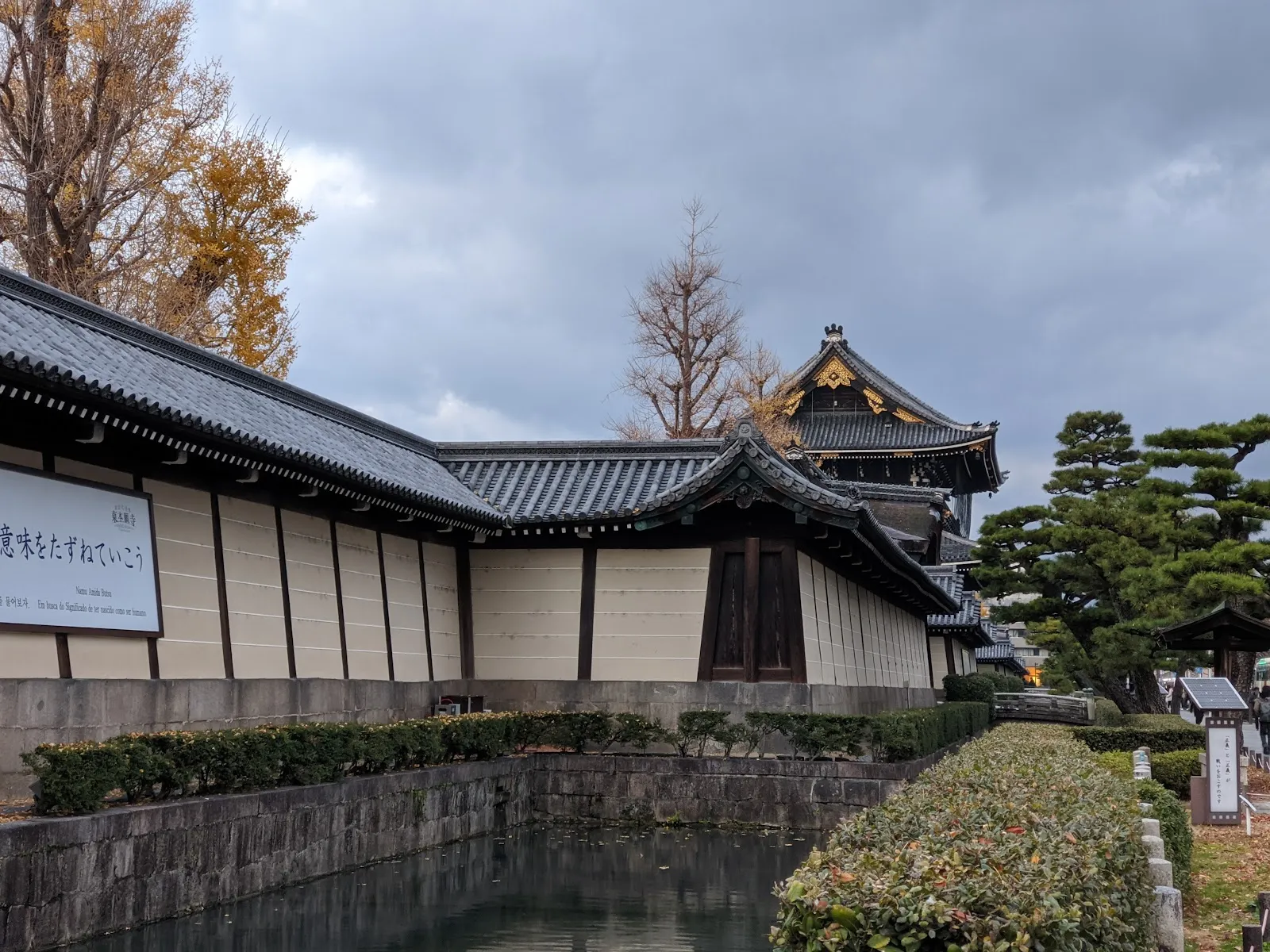
Higashi Hongan-ji is the head temple of the Shinshu Otani branch of Jodo Shinshu Buddhism, also known as Shin Buddhism. Its location makes it convenient to visit soon after arriving in Kyoto or before leaving the city. The complex is close to Kyoto Station, yet its expansive courtyard gives the halls room to command attention.
The temple was established in 1602. Its buildings were destroyed by fire four times during the Edo period. The present halls were rebuilt in the Meiji era with support from followers across Japan. Restoration work was also carried out in 2011, marking 750 years since Shinran Shonin’s death.
The Goei-do and Amida-do
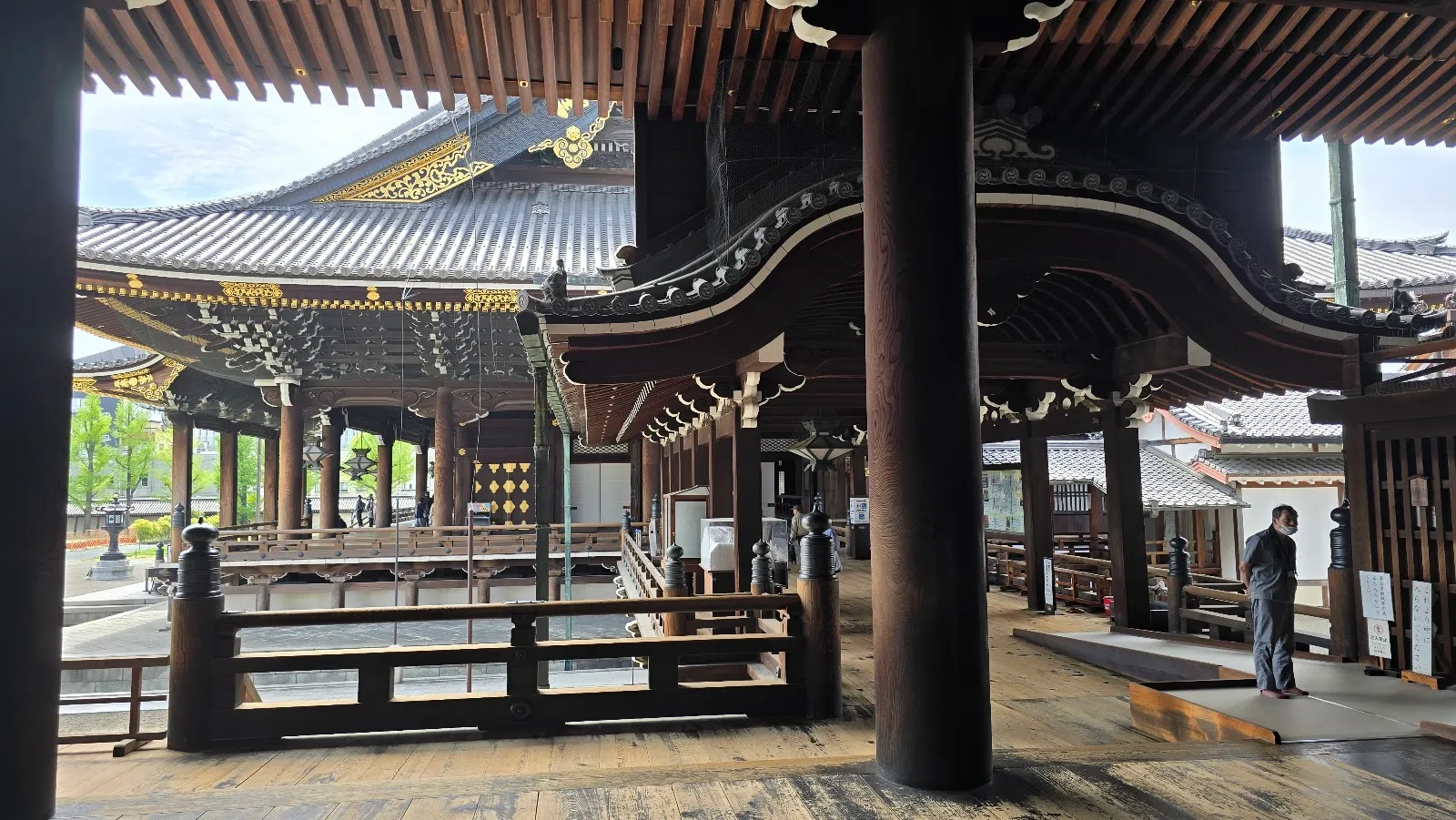
The Goei-do, or Founder’s Hall, is dedicated to Shinran Shonin. It is one of the largest wooden structures in Japan. Inside, the open worship space has golden chandeliers and a richly carved ceiling. The hall’s scale is apparent from the courtyard, but the interior also rewards a slower look at its timber and decorative details.
The Amida-do is dedicated to Amida Buddha, the principal image of the temple. Together, the two halls form the focus of the complex. Visitors can enter the halls after removing their shoes; bags are provided for carrying footwear. The interiors are places of worship, so move quietly and follow any signs about photography. If a service is under way, give it space and keep noise to a minimum.
A rope with an unusual history
Look for the large rope made from donated human hair and hemp. It was used to haul heavy timbers during the halls’ reconstruction. The hair helped strengthen the rope and reduce the chance of it snapping under strain. It is a striking reminder of the practical work and community contributions behind the buildings.
Displays around the grounds provide further information, including material about Buddhism and the temple. There are also stamps to collect at different points on the property. If you keep a travel stamp book, bring it along, or use a loose sheet of paper. The temple shop has souvenirs, and markets nearby sell handmade items.
Häufige Fragen
Is admission to Higashi Hongan-ji free?
Yes. Entry to the temple is free.
How do I visit the halls?
Remove your shoes before entering and carry them in a bag. Follow signs about photography and remain quiet inside.
What is the hair rope at Higashi Hongan-ji?
It is a rope made from donated hair and hemp, used to pull heavy timbers during reconstruction.
Who is commemorated in the Goei-do?
The Goei-do houses an image of Shinran Shonin, the founder of the Jodo Shinshu tradition.


