On Campo dei Santi Giovanni e Paolo in Venice, the Scuola Grande di San Marco pairs a richly carved Renaissance façade with a small Museum of the History of Medicine inside the former confraternity building, now part of the city hospital. Look for the marble reliefs and statues outside, then head upstairs to see old medical books, manuscripts, instruments and artworks in rooms with finely decorated ceilings. It suits visitors interested in Venetian architecture or medical history, and the square makes a worthwhile stop even if you only admire the exterior.
A confraternity’s new home
The Scuola Grande di San Marco began in 1260 as a Venetian confraternity, initially known as the Scuola dei Battuti. By 1437 it had grown influential enough to take the name of the city’s patron saint. The Dominicans of the nearby church of Saints John and Paul granted the confraternity land beside their complex for a new headquarters.
The first building on the site was destroyed by fire in 1485. A later, larger structure took shape under the direction of Mauro Codussi and was built by 1505. In 1523, the palace was extended towards the Rio dei Mendicanti canal, with work associated with Jacopo Sansovino. The building became a hospital in the early 19th century and is now part of Venice’s civil hospital.
Read the façade in the campo
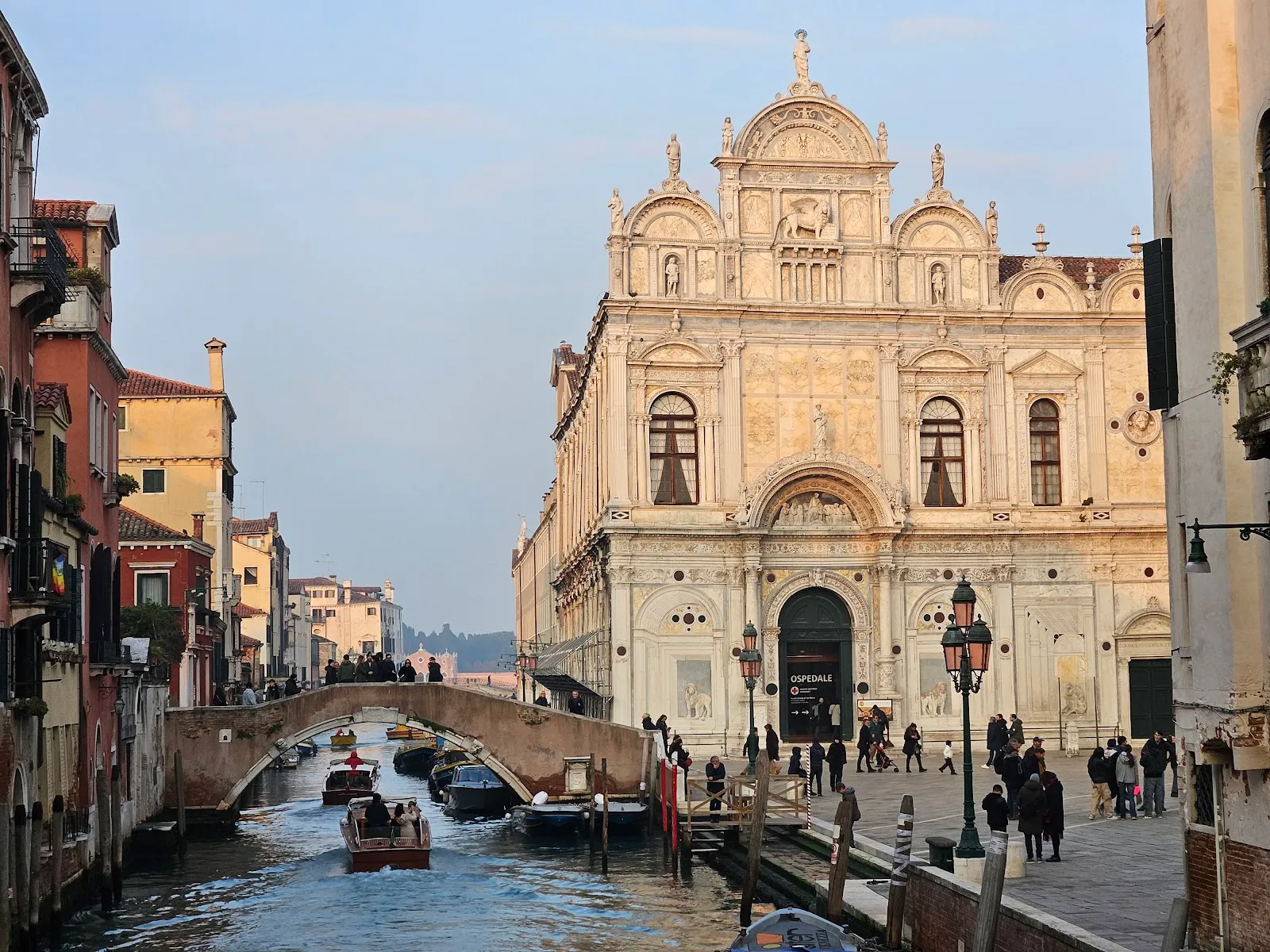
The building faces Campo dei Santi Giovanni e Paolo, beside the church of the same name. Its marble front is divided into sections that reflect the rooms behind it, including a large hall and a reception area. Reliefs, statues and carved details make the exterior worth a close look before you enter.
The façade belongs to the Renaissance rebuilding of the confraternity’s headquarters. Its decoration brings together architectural details from different periods, and the entrance includes an Annunciation scene. Take time to look across the whole frontage, then notice the smaller carvings and figures around the portal.
Medical history upstairs
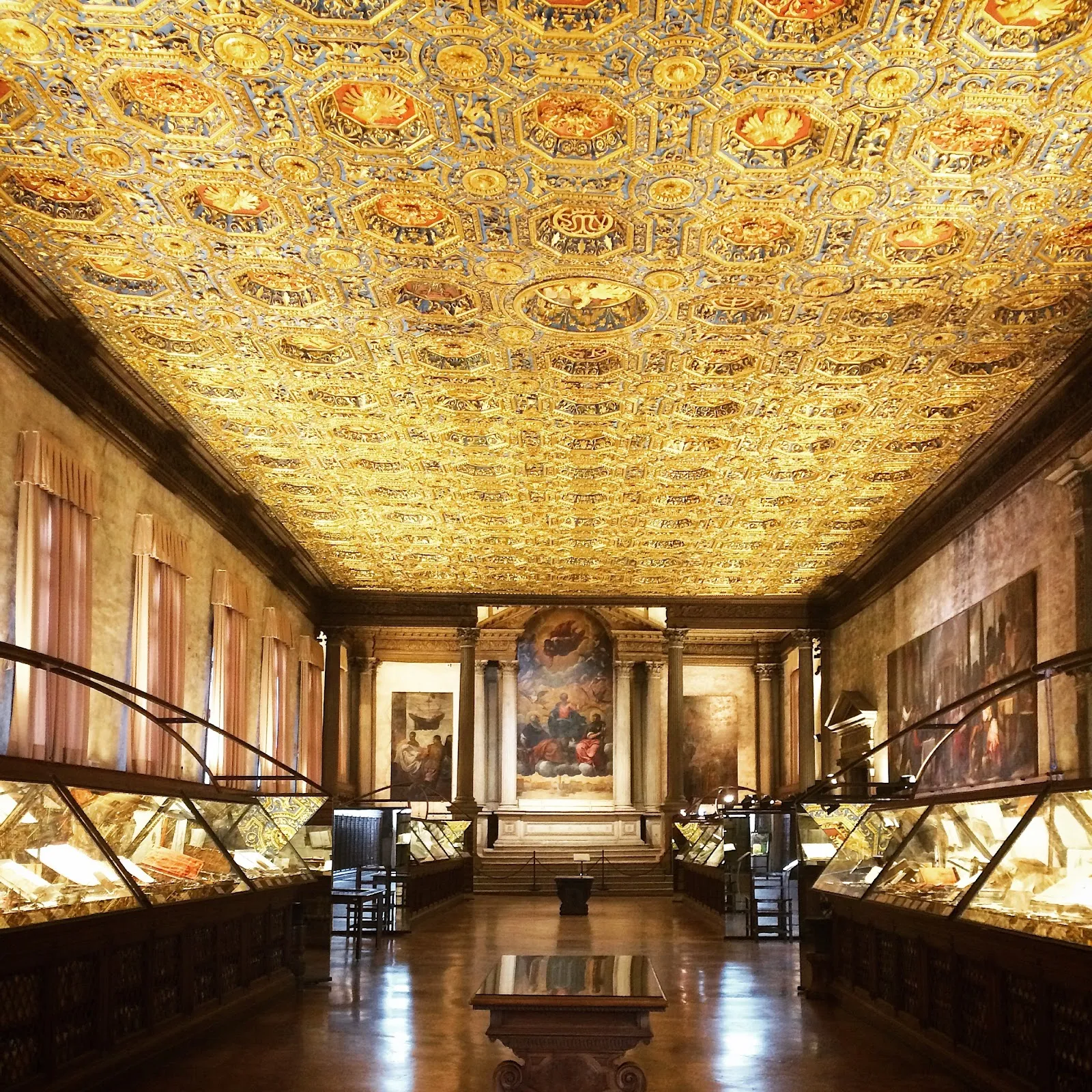
The Museum of the History of Medicine occupies rooms on an upper floor. Its collection brings together old medical books, manuscript copies, early anatomical texts and antique instruments. The holdings include thousands of medical volumes, with works by ancient physicians such as Hippocrates and Galen. Display cases also contain surgical equipment from the 19th and 20th centuries.
The rooms themselves are part of the visit. Look for the carved ceiling painted in gold and blue, along with Renaissance marble altars and artworks by Venetian painters, including Tintoretto. The museum is compact, with a main room and an adjoining library, so allow time to take in both the objects and their setting. Many labels are in Italian; a photo for later translation can help, but avoid flash photography.
Häufige Fragen
Where is the Scuola Grande di San Marco?
It is on Campo dei Santi Giovanni e Paolo in Venice, beside the church of the same name. The building is now part of the city hospital.
What can you see inside the Scuola Grande di San Marco?
The upper-floor Museum of the History of Medicine displays old books, manuscript copies and medical instruments. The rooms also have decorated ceilings and artworks by Venetian painters.
How long do you need at the Scuola Grande di San Marco?
Allow about 1 to 2 hours for the museum and the building’s architectural details.
Is there an entry fee for the museum?
One listed admission price is €5, with €3 for students. Check current ticket details before your visit.