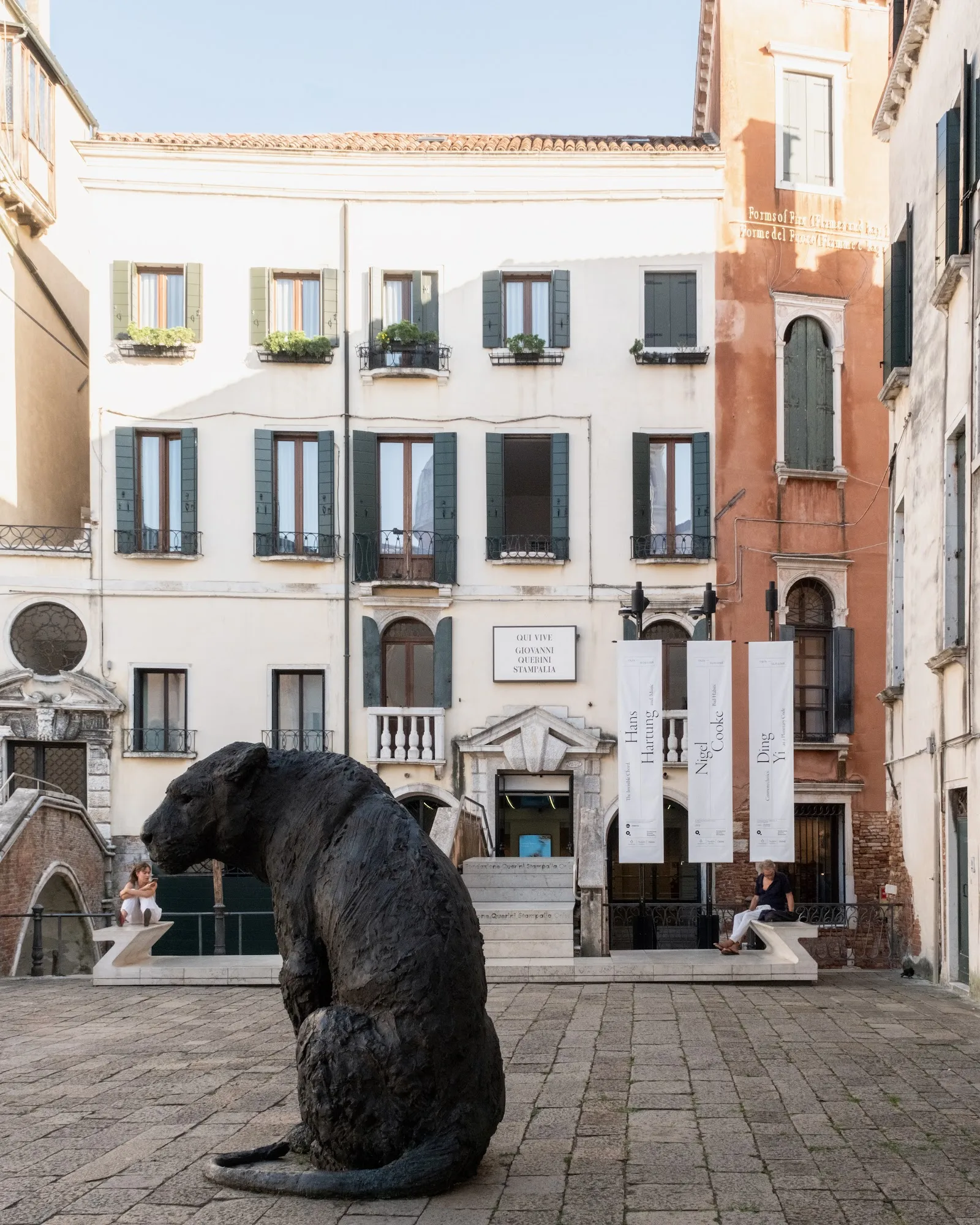
Fondazione Querini Stampalia combines a house museum, art collection, library and contemporary exhibition space in a 16th-century palazzo near Piazza San Marco. Its rooms preserve the furnishings and personal objects of a Venetian noble family, including porcelain, textiles and paintings by Giovanni Bellini and Giambattista Tiepolo. Carlo Scarpa’s work on the ground floor and garden brings a modern architectural layer, with water, stone and glass shaping the space. Temporary exhibitions add a reason to look beyond the historic rooms, and the on-site café has seating in the garden.
A Venetian family home preserved as a museum
The palazzo was the residence of the Querini Stampalia family. Count Giovanni Querini, the family’s last descendant, opened the collection to the public in 1869. The house museum gives a view of aristocratic domestic life through reception rooms and living quarters, with original furnishings, stucco and decorative details still in place.
The collection spans several centuries and includes more than 400 paintings, as well as furniture, fabrics, porcelain, sculptures, musical instruments, coins and medals. Portraits, chandeliers and personal objects sit among the rooms’ historic interiors. Look for Giovanni Bellini’s Presentation at the Temple and works associated with artists including Palma il Vecchio, Pietro Longhi and Giambattista Tiepolo.
Carlo Scarpa’s ground floor and garden
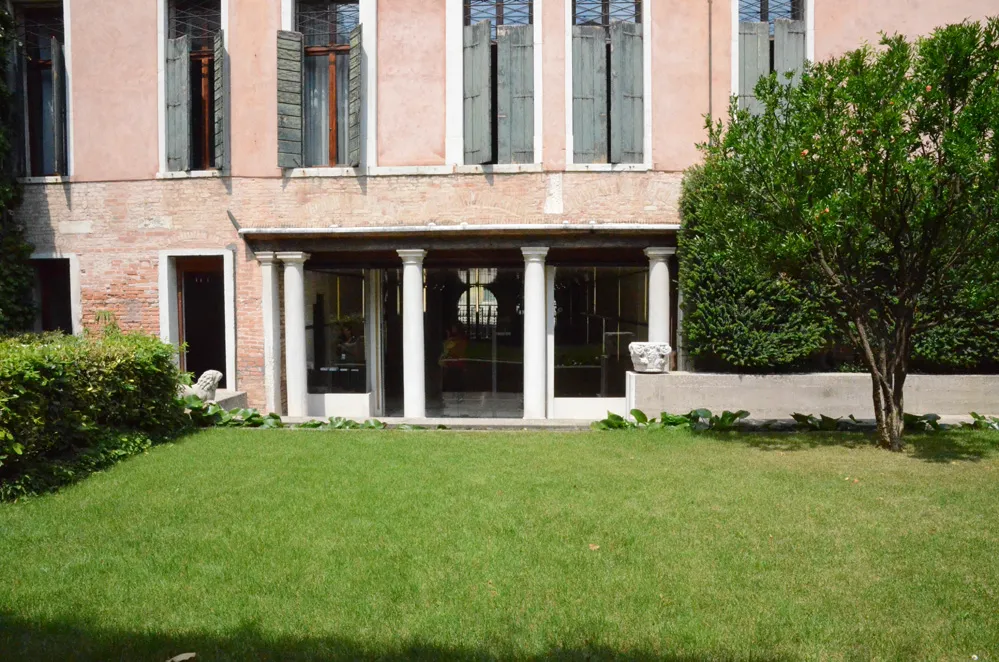
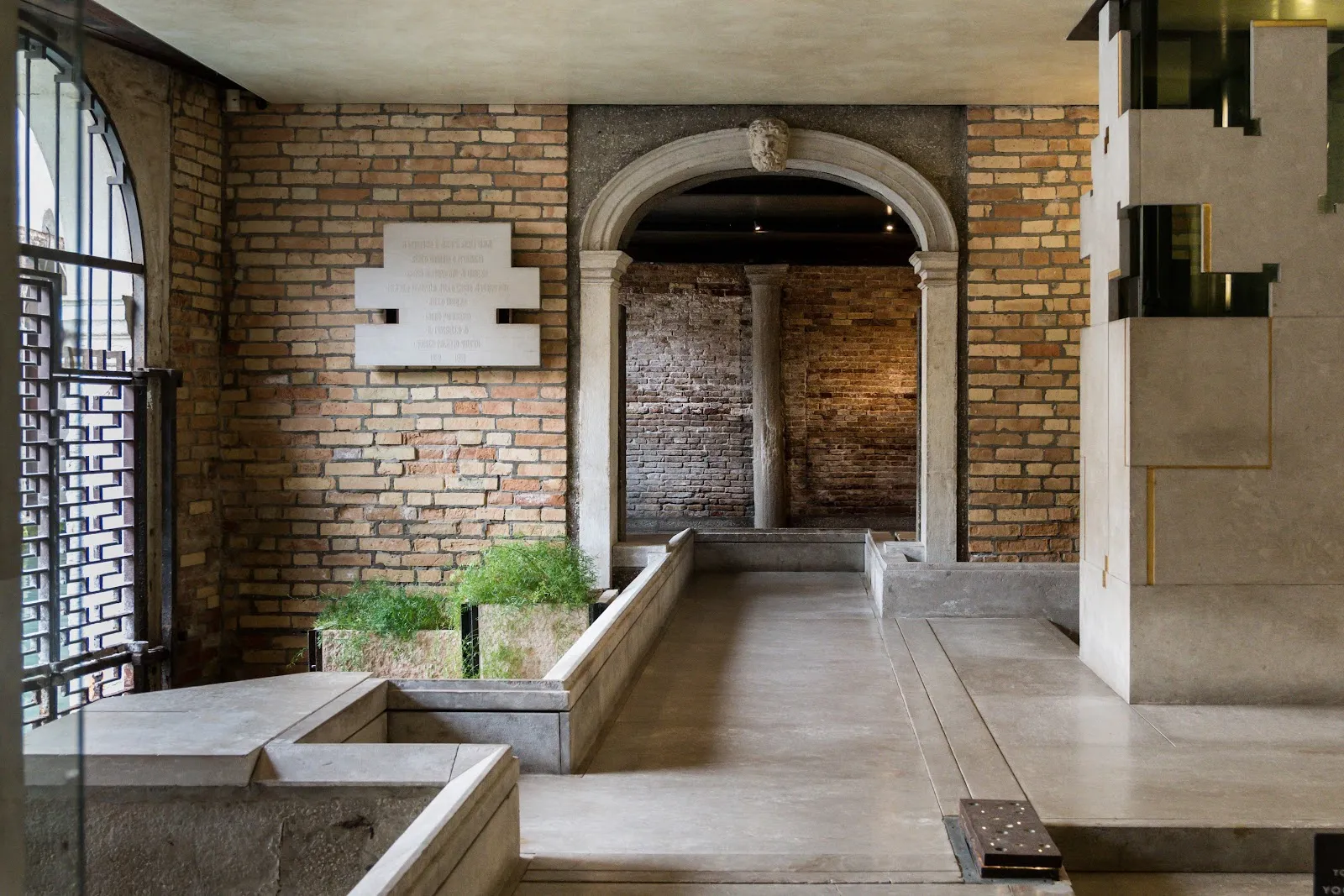
Carlo Scarpa redesigned parts of the palazzo, including the ground floor and garden. Water is central to the design: pools and channels meet stone, glass and concrete, while geometric forms set the garden apart from the historic rooms above. The garden also has a lawn and Japanese-style planting.
The staircase and the transitions between the building’s older fabric and Scarpa’s modern work reward a slower look. The Scarpa area can be closed even when other museum sections are open, so check its availability before making the visit a priority.
Temporary exhibitions and the library
Alongside the permanent collection, the upper floors host temporary exhibitions. Their subjects change, so check the current programme if a particular show would shape your visit. The contrast between contemporary displays and the palazzo’s historic rooms is part of the experience.
The foundation also has a research library. Some areas are not open to everyone; a free library card is needed for access to those spaces. The site includes a café with garden seating and a gift shop with books on Carlo Scarpa.
Häufige Fragen
How long should I allow for Fondazione Querini Stampalia?
Allow at least half a day to explore the museum floors and temporary exhibitions.
Is Carlo Scarpa’s area always open?
No. Check before visiting, as the Scarpa section can be closed while other parts of the museum remain open.
Can visitors use the library?
A free library card is needed to access areas not usually open to all visitors.
What can I see in the permanent collection?
The collection includes more than 400 paintings, historic furnishings, porcelain, textiles, sculptures and musical instruments. Look for Giovanni Bellini’s Presentation at the Temple.