Lipari Castle occupies a high rocky promontory above Lipari’s town and port in Sicily’s Aeolian Islands. Its grounds bring together remains from several periods, including Greek and Roman structures and finds from the island’s ancient necropolis. The archaeological park and Museo Archeologico Eoliano give the site historical depth, while the Cathedral of St Bartholomew and an open-air theatre add other stops. From the plateau, you can look across the harbour, town and nearby islands. Wear sturdy shoes for the steep uphill approach.
A site shaped by successive settlements
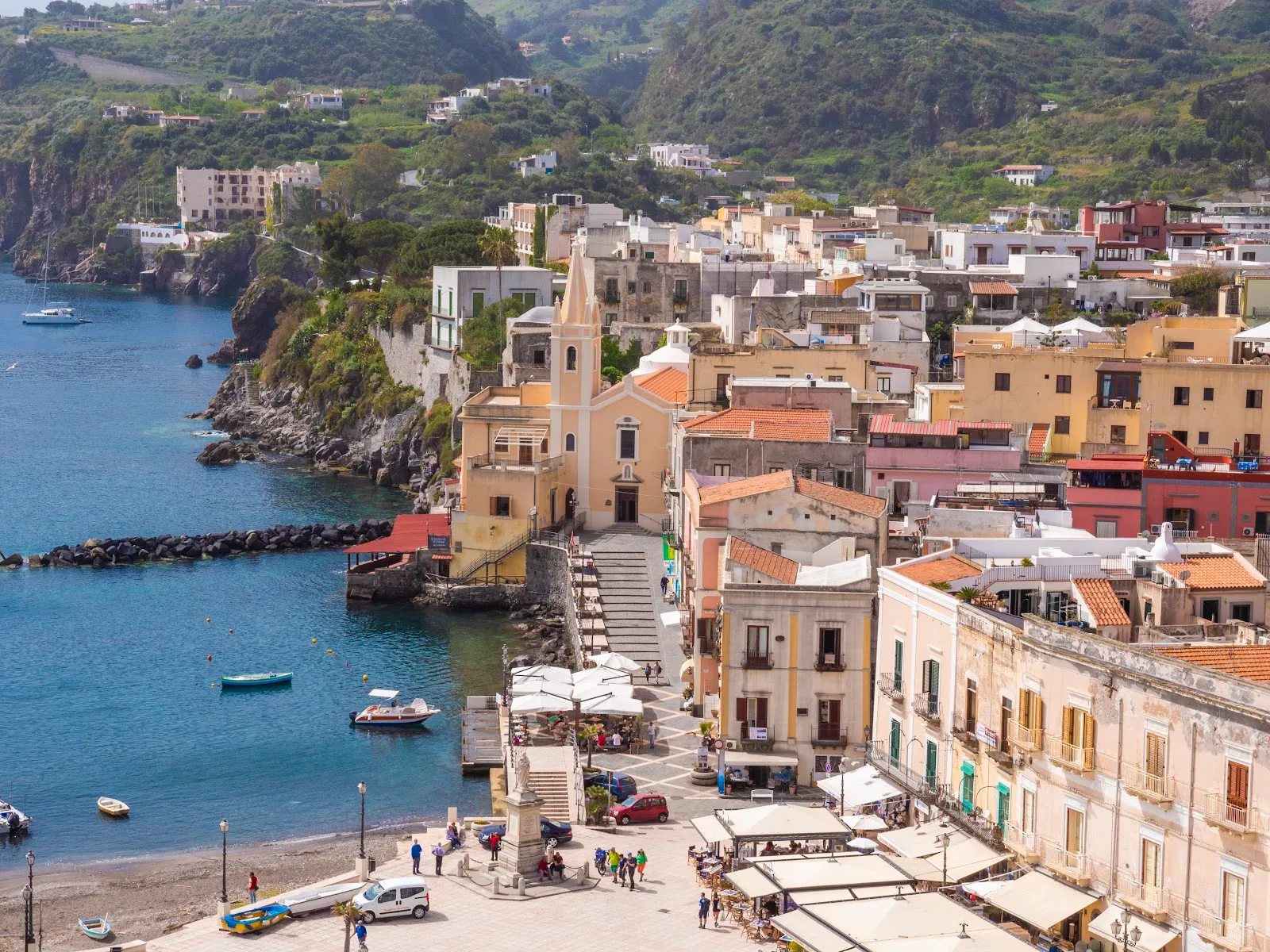
Lipari Castle stands on a high promontory above the town. The complex has been inhabited since Neolithic times, and generations of settlement left traces on the plateau. Volcanic dust and ash covered successive layers, preserving parts of the site until archaeologists began systematic excavations in the 1950s.
The visible remains include Bronze Age huts arranged across four levels, structures from Greek and Roman periods, and an urban layout dating to the second century BC. The archaeological park presents finds in the place where they were uncovered, helping visitors connect the objects and structures to the site itself. Among the remains are burial features from Lipari’s ancient necropolis, including stone sarcophagi and tombs.
The archaeological museum and the grounds
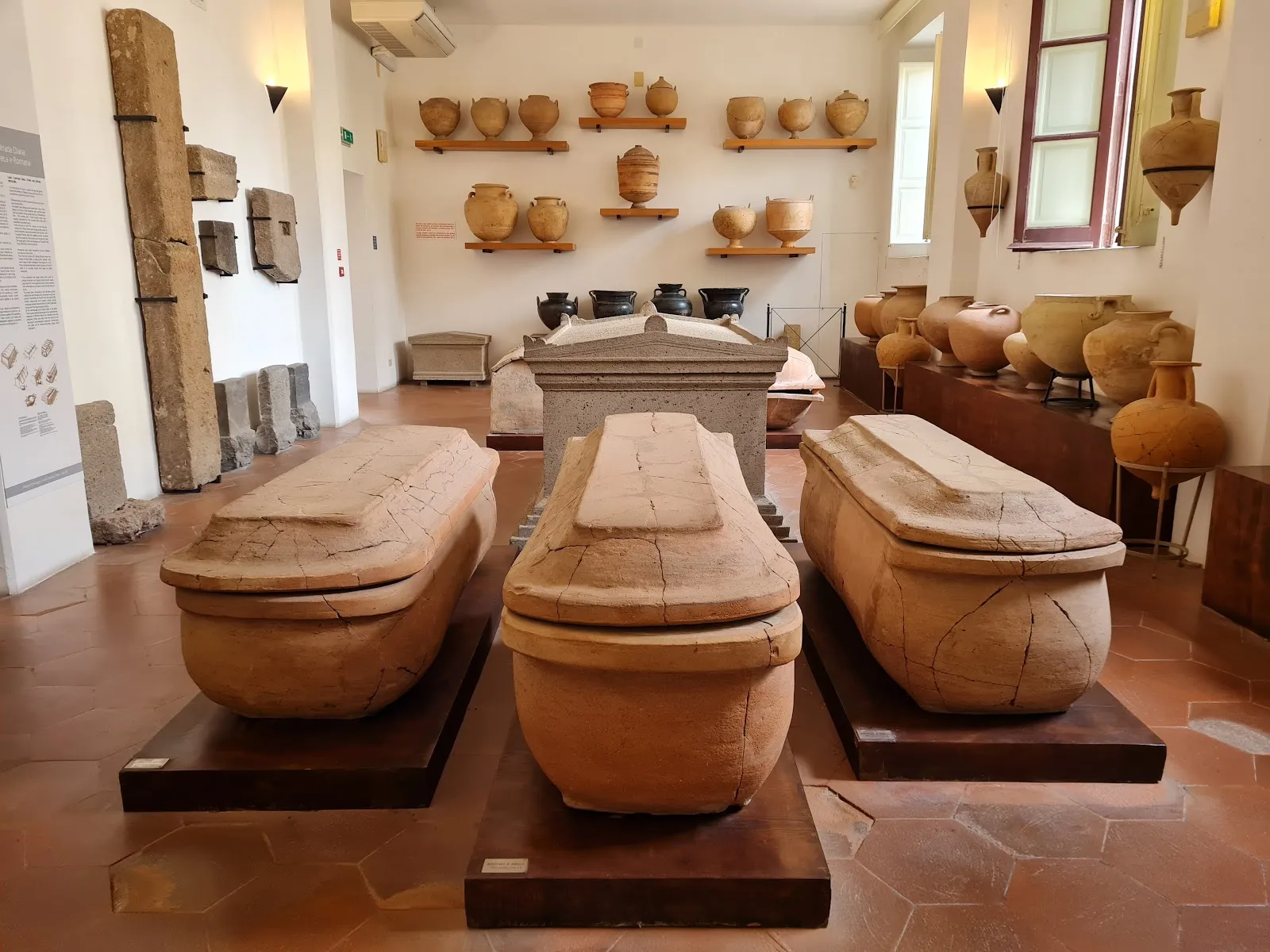
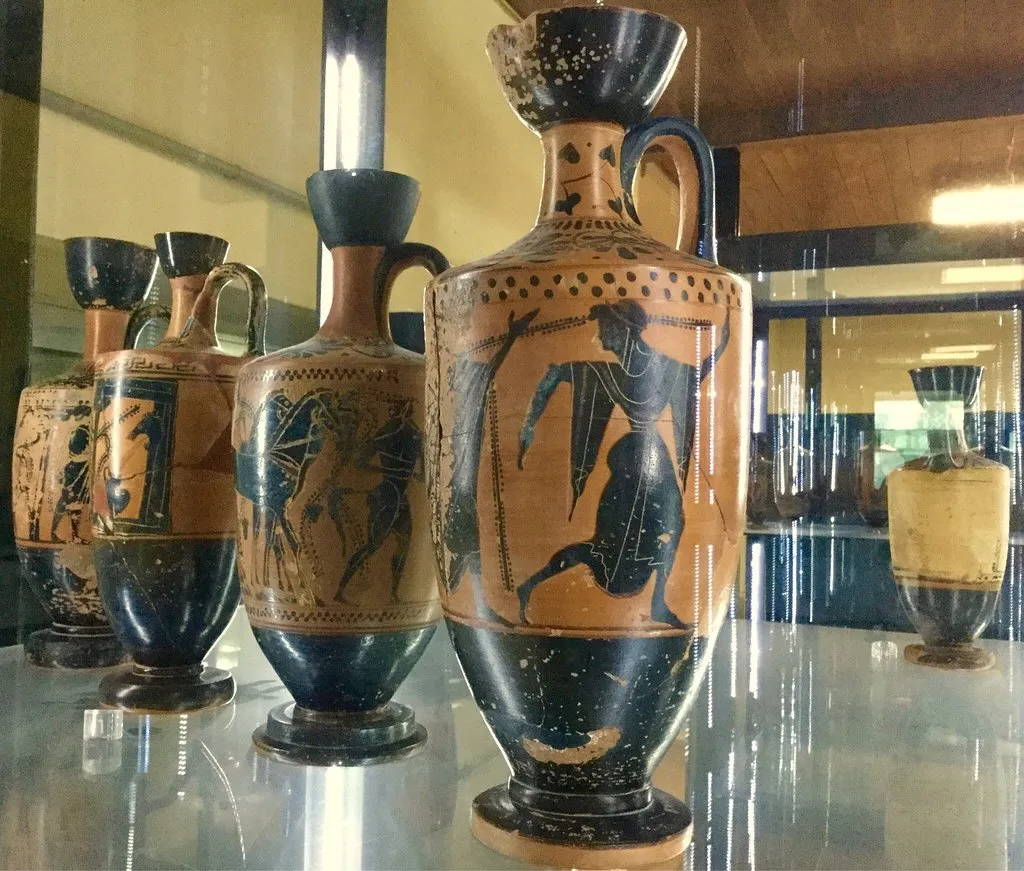
The Museo Archeologico Eoliano is within the castle complex. Its collections include archaeological objects found on the site, with exhibits that explain Lipari’s long sequence of settlement. English explanations are available in the museum. Set aside enough time to explore both the museum and the open-air remains; the grounds alone do not cover the full archaeological story.
Parts of the site were uncovered through excavation, while other traces had remained buried under layers of volcanic material. Some artefacts were removed from the island during the nineteenth century, before systematic work began. The excavations that started in the following century made it possible to present many finds in their archaeological context at Lipari.
The cathedral, theatre and later history
The Cathedral of St Bartholomew is dedicated to the patron saint of the Aeolian archipelago. It has an older section with Norman-era elements, and the church holds a relic associated with the saint: a fragment of his thumb, kept in a silver reliquary shaped like a blessing arm. The relic is displayed during celebrations in his honour.
A small open-air theatre sits near the top of the site and hosts summer performances overlooking the sea. The castle also served as a prison during the Fascist period. Information about this use is available through QR codes on site, which link to further historical material.
Häufige Fragen
Is Lipari Castle free to visit?
Walking around the castle grounds is free. The archaeological museum and some areas of the church may require separate admission.
How long should I spend at Lipari Castle?
Allow about one to two hours for the grounds and museum. The museum and archaeological park together need more time than a quick walk around the walls.
Is the climb to Lipari Castle steep?
Yes. The paved approach uphill is steep, so wear sturdy footwear.
When is a good time to visit Lipari Castle?
Late spring or early autumn is suggested for pleasant weather and fewer crowds.