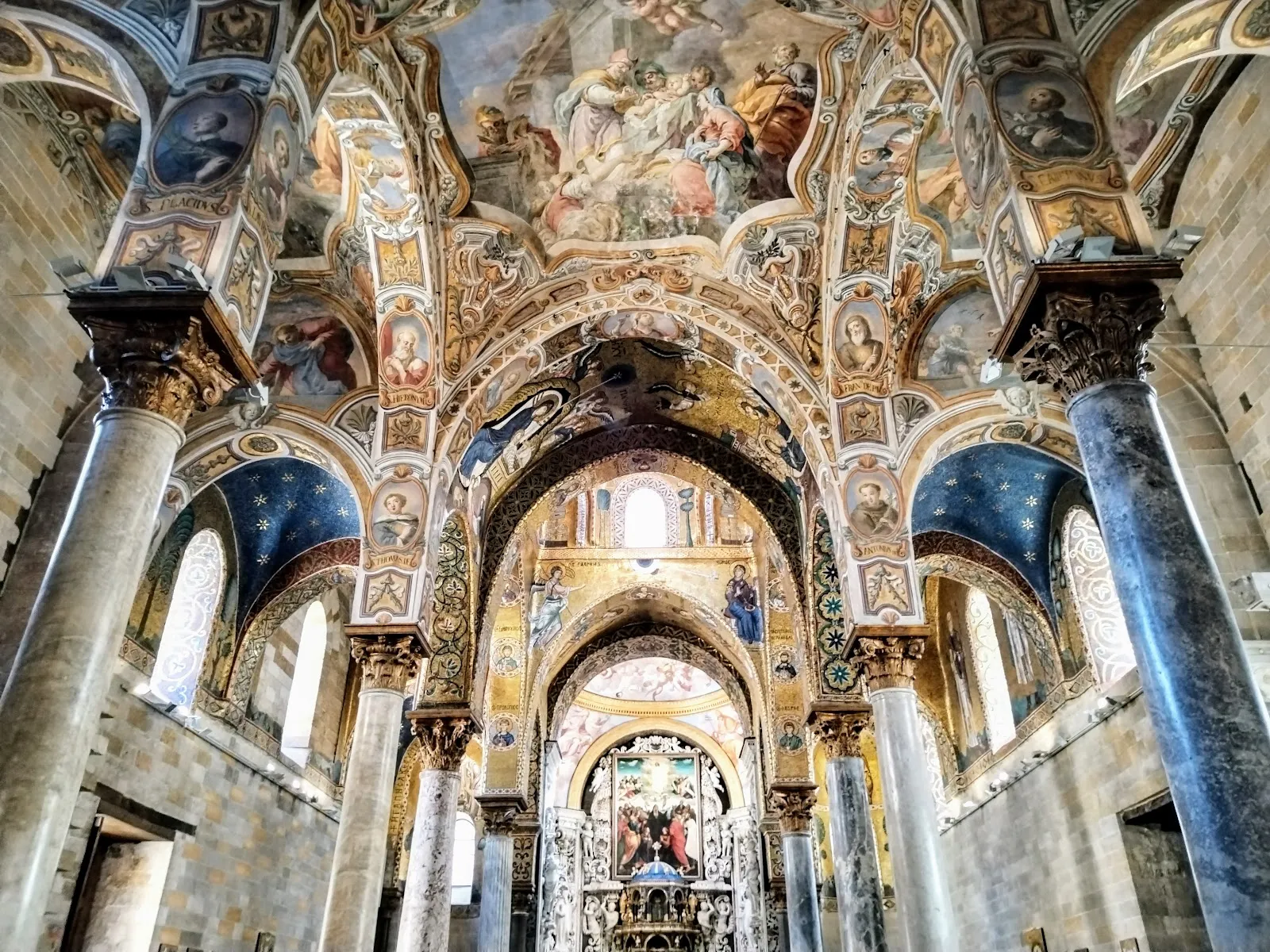
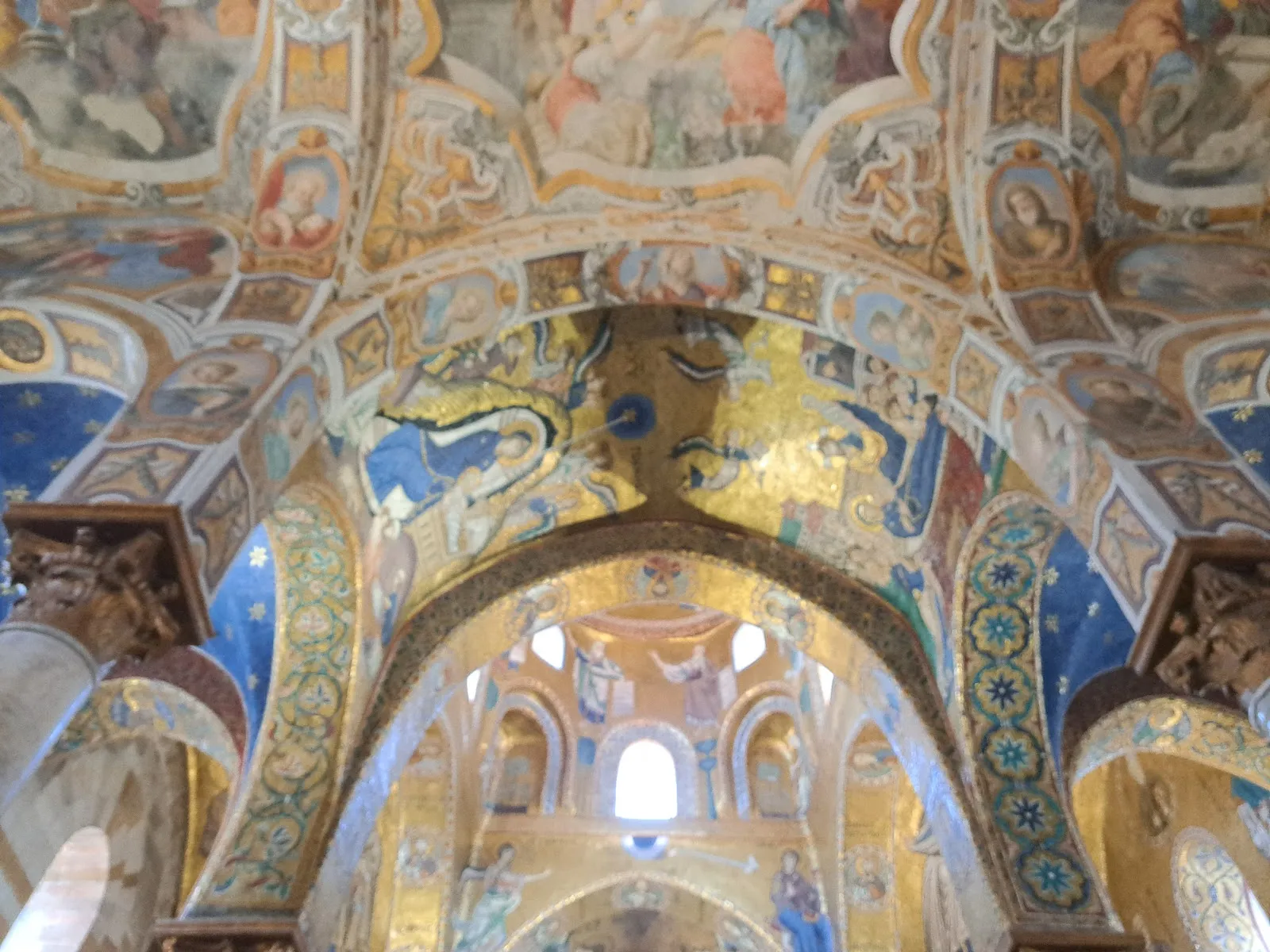
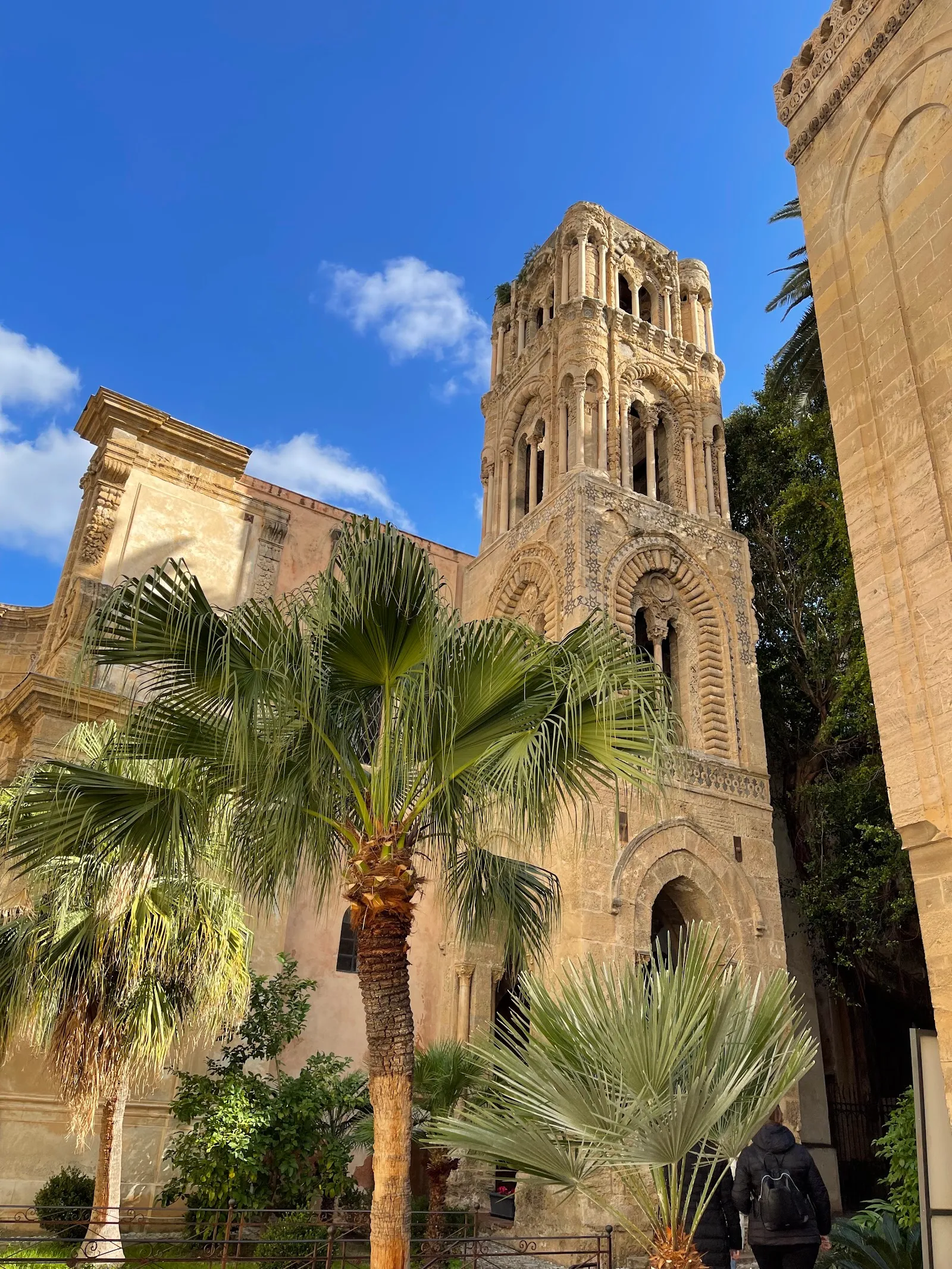
The Church of Saint Mary of the Admiral, better known as La Martorana, stands on Piazza Bellini in Palermo. Its plain exterior gives little hint of the Byzantine mosaics inside, where gold backgrounds and detailed images reward a slow look. The church brings together Norman, Byzantine and Arab influences, with later Baroque additions and frescoes. It began as a domed church with a Greek-cross plan and changed shape over the centuries. Allow time to take in the mosaics and ceiling details rather than treating this as a quick stop.
A church shaped over centuries
The Church of Saint Mary of the Admiral is also known as La Martorana. It stands on Piazza Bellini and dates to the 12th century. George of Antioch, a great admiral, founded the original church with a Greek-cross plan. The building was designed as a domed church, but its form changed as additions accumulated over time.
Around 1193, a community of Benedictine nuns led by Eloisa Martorana took over the church and joined it to their neighbouring property. The name Martorana is associated with this convent. Later alterations gave the church a more rectangular shape, and parts of the interior were changed in the 17th century.
Mosaics and later decoration
The Byzantine mosaics are the church’s central draw. Their gold grounds and densely worked images call for a closer look than a glance from the entrance. The interior also contains 17th-century frescoes and Baroque elements, added alongside the older decoration. These layers make it possible to see how the church’s appearance developed rather than belonging to a single period.
The contrast between the relatively plain exterior and the decorated interior is striking. Once inside, give your eyes time to adjust to the many details. Look across the mosaics, then up to the ceiling frescoes and the later ornament. The church is compact, so a measured visit can take in its main features without rushing.
How to fit it into a Palermo walk
La Martorana is close to San Cataldo, another Norman church on Piazza Bellini. Both are often included on walking routes through central Palermo, alongside Quattro Canti, Piazza Pretoria and the cathedral. Their proximity makes it easy to see La Martorana as part of a short sightseeing stop or a longer walk through the historic centre.
Early visits and weekdays can offer a quieter setting for looking closely at the decoration. An entry price of €2 is cited in the available information, though ticket details can change. Keep the ticket if you intend to visit other churches in Palermo, as it may be useful for a discount.
Häufige Fragen
Where is La Martorana?
The church is on Piazza Bellini in Palermo, beside San Cataldo.
What is La Martorana known for?
It is known for its Byzantine mosaics, 17th-century frescoes and a blend of Norman, Byzantine and Arab influences.
How long should I plan for a visit?
Allow about 30 to 60 minutes to see the interior and its decoration.
Is there an entry fee?
An entry price of €2 is cited in the available information. Check current ticket details before visiting.