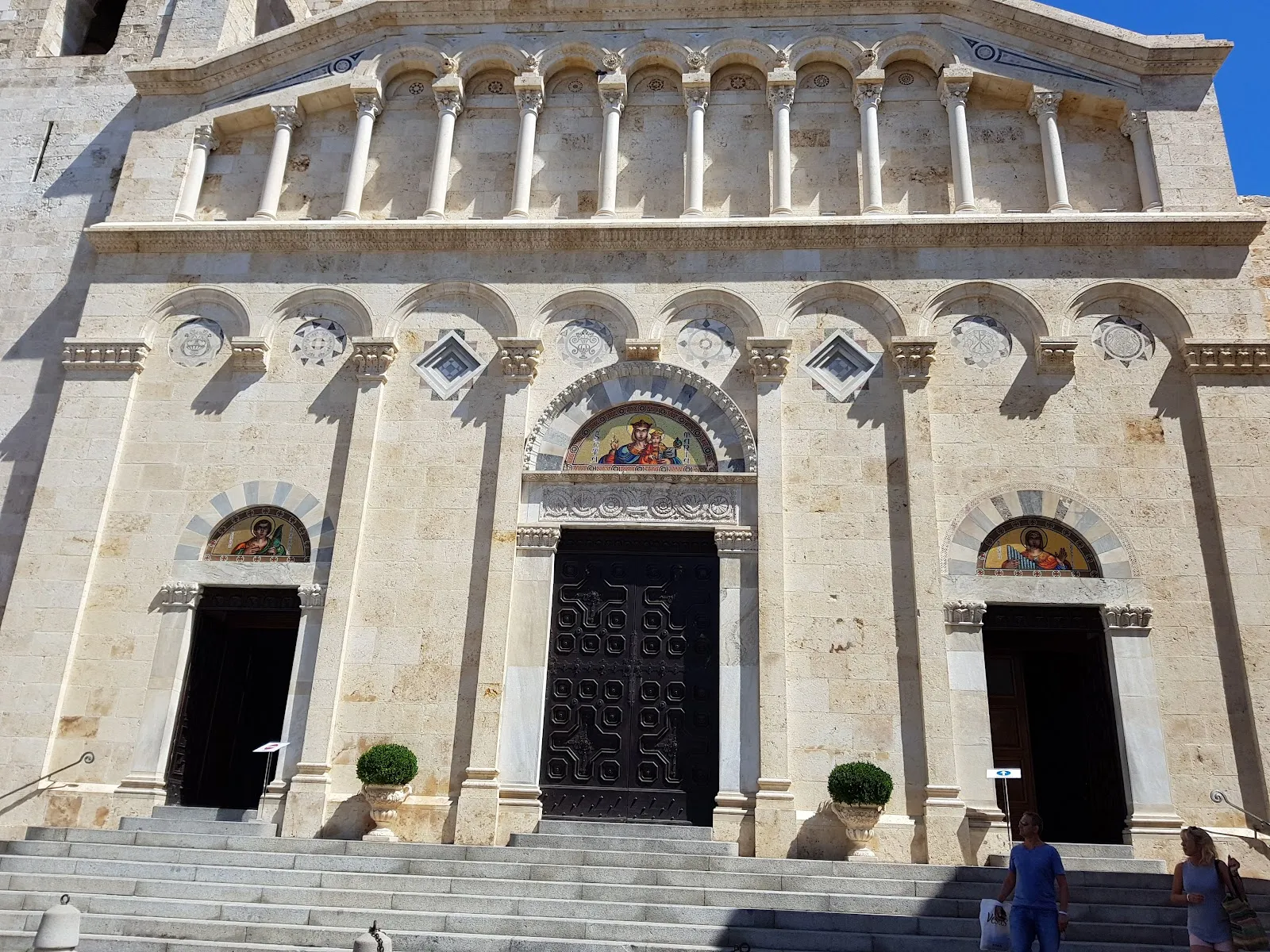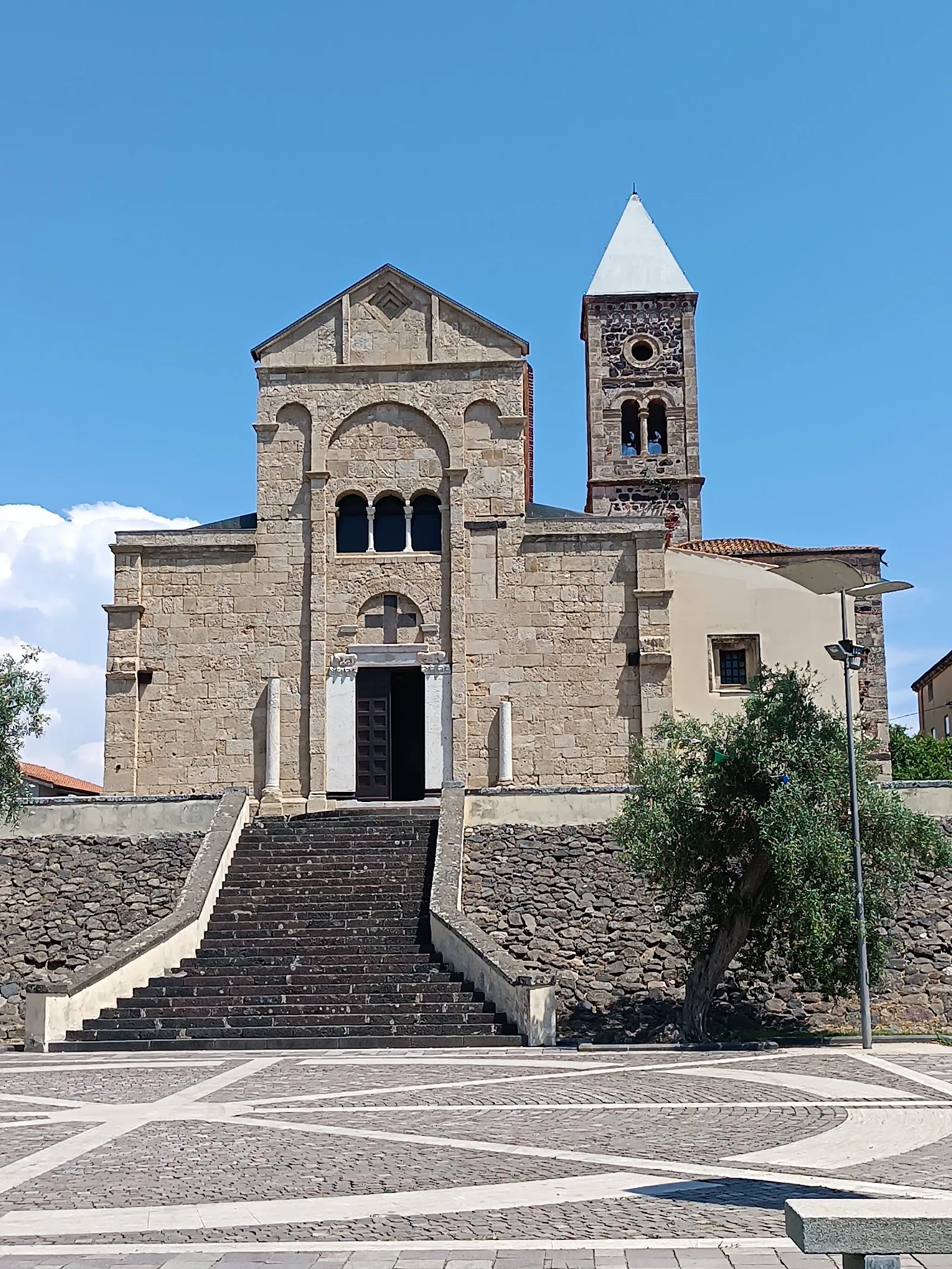
The Church of Saint Giusta is a Romanesque basilica in Santa Giusta, Sardinia, dating to the first half of the 12th century. Its sandstone exterior has blind arcades and a Tuscan-style portal; inside, marble and granite columns divide the church into three naves. Look beneath the presbytery for the vaulted crypt, which holds relics of Saint Giusta. The church is a worthwhile stop for its architecture and connection to the town’s patron saint.
A Romanesque church in sandstone
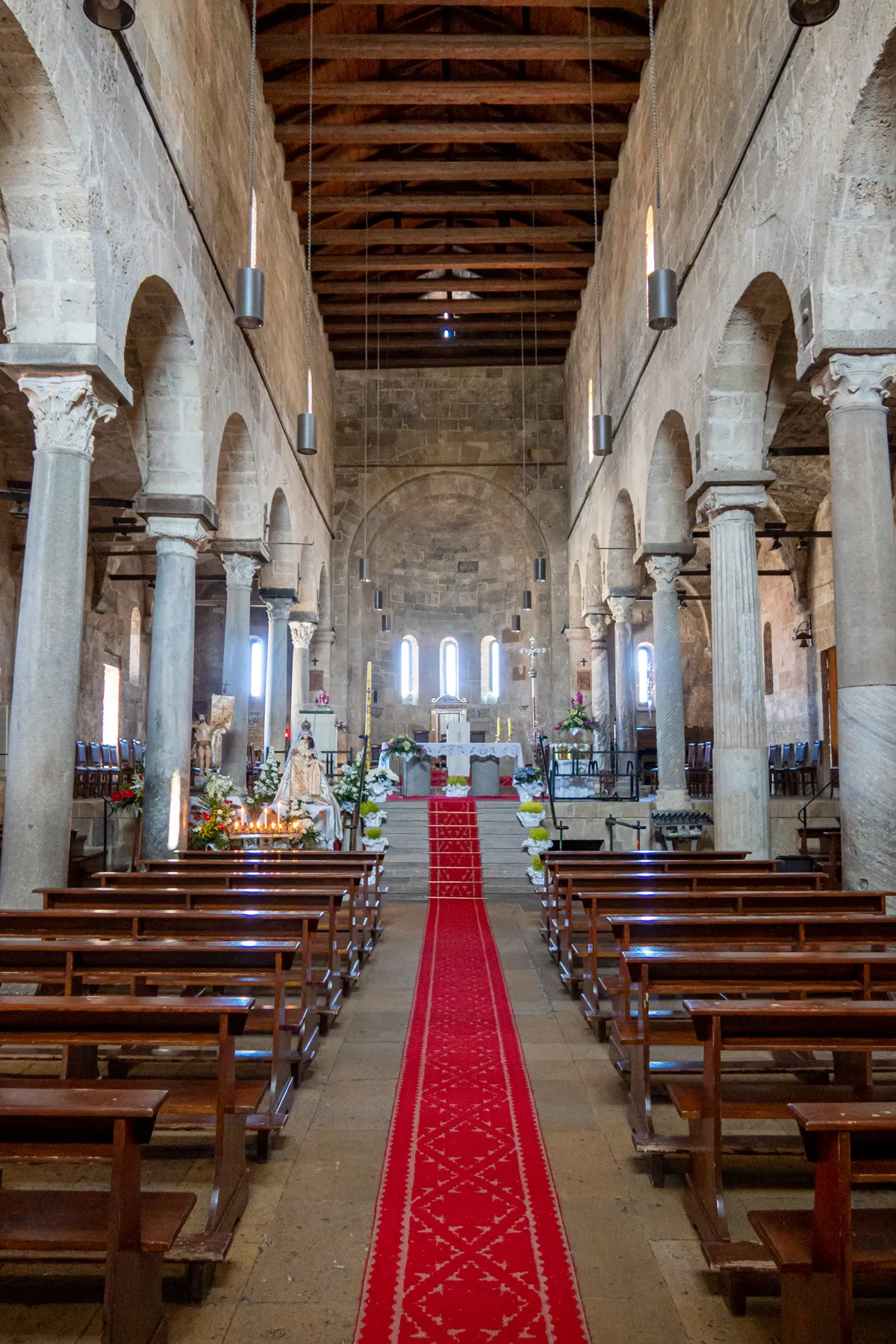
The basilica was probably built in the first half of the 12th century. No surviving documents confirm the precise construction period, but its architecture places it among Sardinia’s Romanesque churches.
Sandstone blocks form the church’s exterior. Blind arcades run across the stonework, and the entrance has a Tuscan-style portal. These details give the outside a restrained character, with the carved and repeated architectural forms providing the main points to notice.
Columns and the crypt
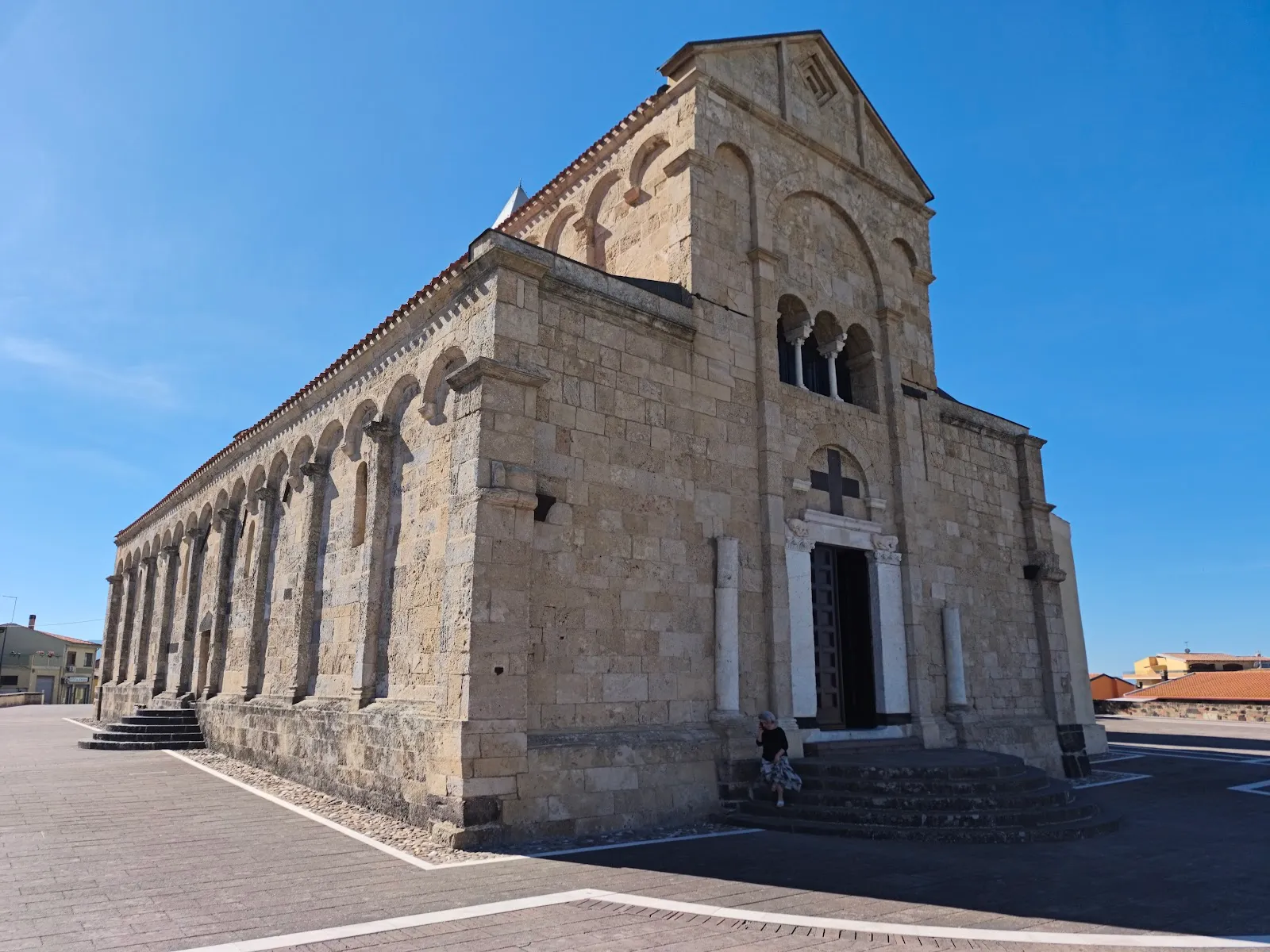
Inside, rows of marble and granite columns separate the space into three naves. Some columns may have come from the ancient city of Tharros, on the Sinis Peninsula. Their different materials and forms give the interior its distinctive detail.
Beneath the presbytery is a vaulted crypt containing relics of Saint Giusta, a second-century martyr. Tradition holds that she was executed at this site during the reign of Diocletian. The crypt connects the church’s Romanesque architecture with the saint to whom it is dedicated.
Häufige Fragen
When was the Church of Saint Giusta built?
It was probably built in the first half of the 12th century, though no surviving documents establish the exact date.
What can you see inside the church?
The interior has three naves divided by marble and granite columns. Beneath the presbytery, a vaulted crypt contains relics of Saint Giusta.
Is there a dress code for visiting?
Clothing is listed as a visitor consideration for the church. The available information does not specify particular clothing requirements.