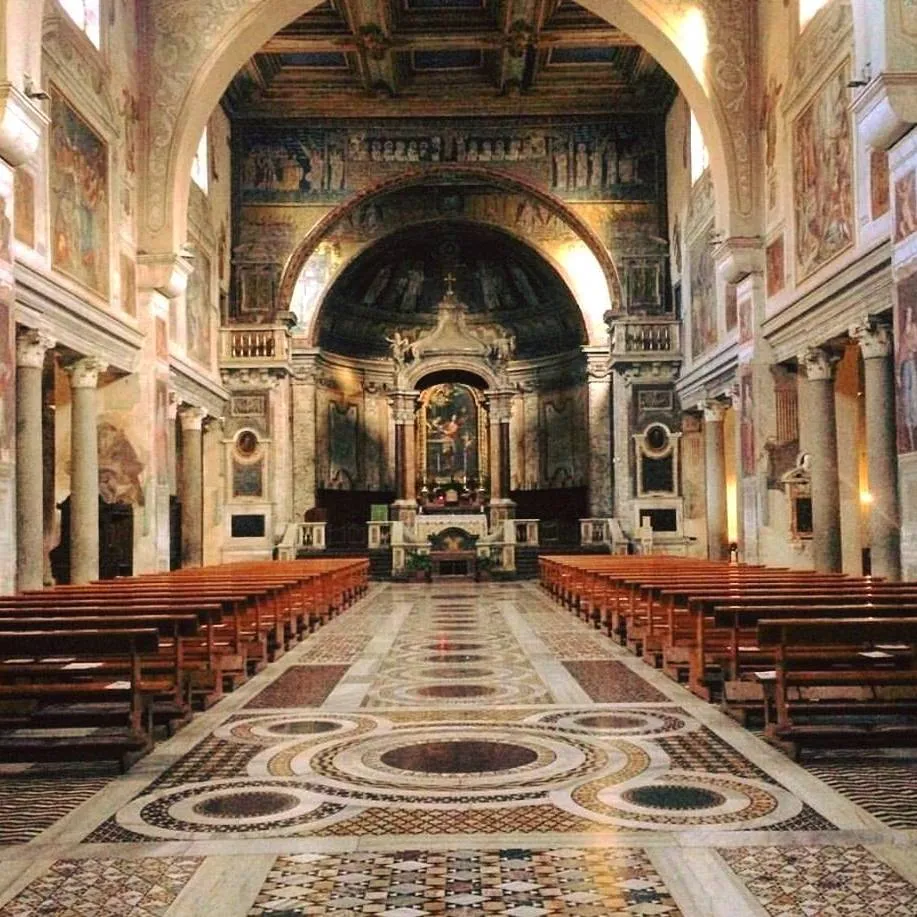
Santa Prassede is a basilica in Rome’s Monti district, a short walk from Santa Maria Maggiore. Its plain orange exterior gives little hint of the Byzantine mosaics inside: look for their gold backgrounds and detailed Christian scenes, especially in the Chapel of St. Zeno. The basilica is also associated with a fragment of a column believed to be from Christ’s flagellation. It makes a quieter stop for exploring early Christian art and devotion near one of Rome’s better-known churches.
The mosaics and the Chapel of St. Zeno
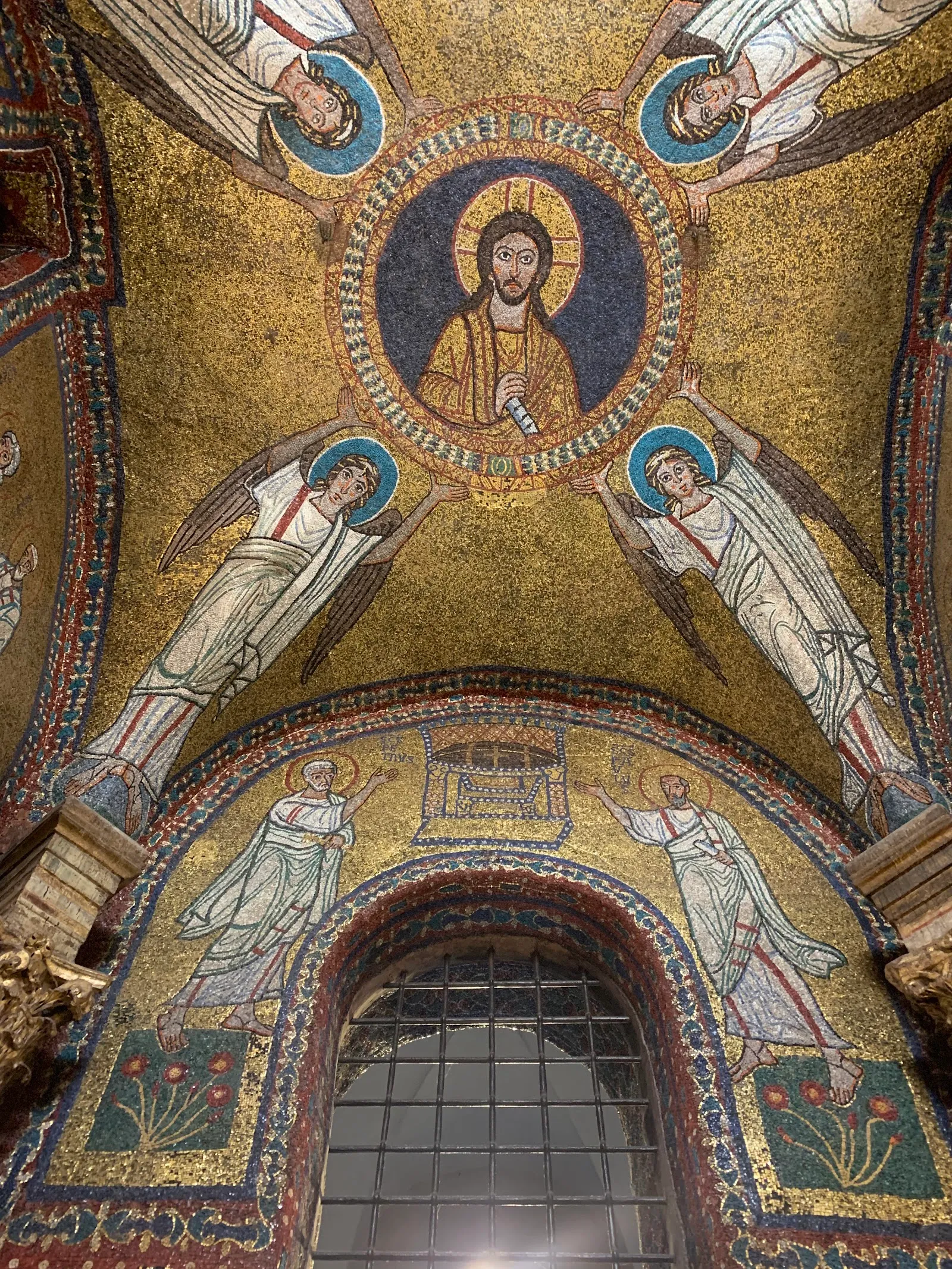
Santa Prassede is known for Byzantine mosaics that date to the 9th century. They cover walls inside the basilica, with Christian figures and symbolic scenes set against vivid gold. Look for the symmetry in their compositions as well as the strong colors, including red and deep blue.
The Chapel of St. Zeno is a particular focus. Pope Paschal I had it built and decorated with mosaics for his mother. The chapel is small, but its extensive mosaic work makes it a place to pause and look closely rather than hurry through.
A church linked to early Christian Rome
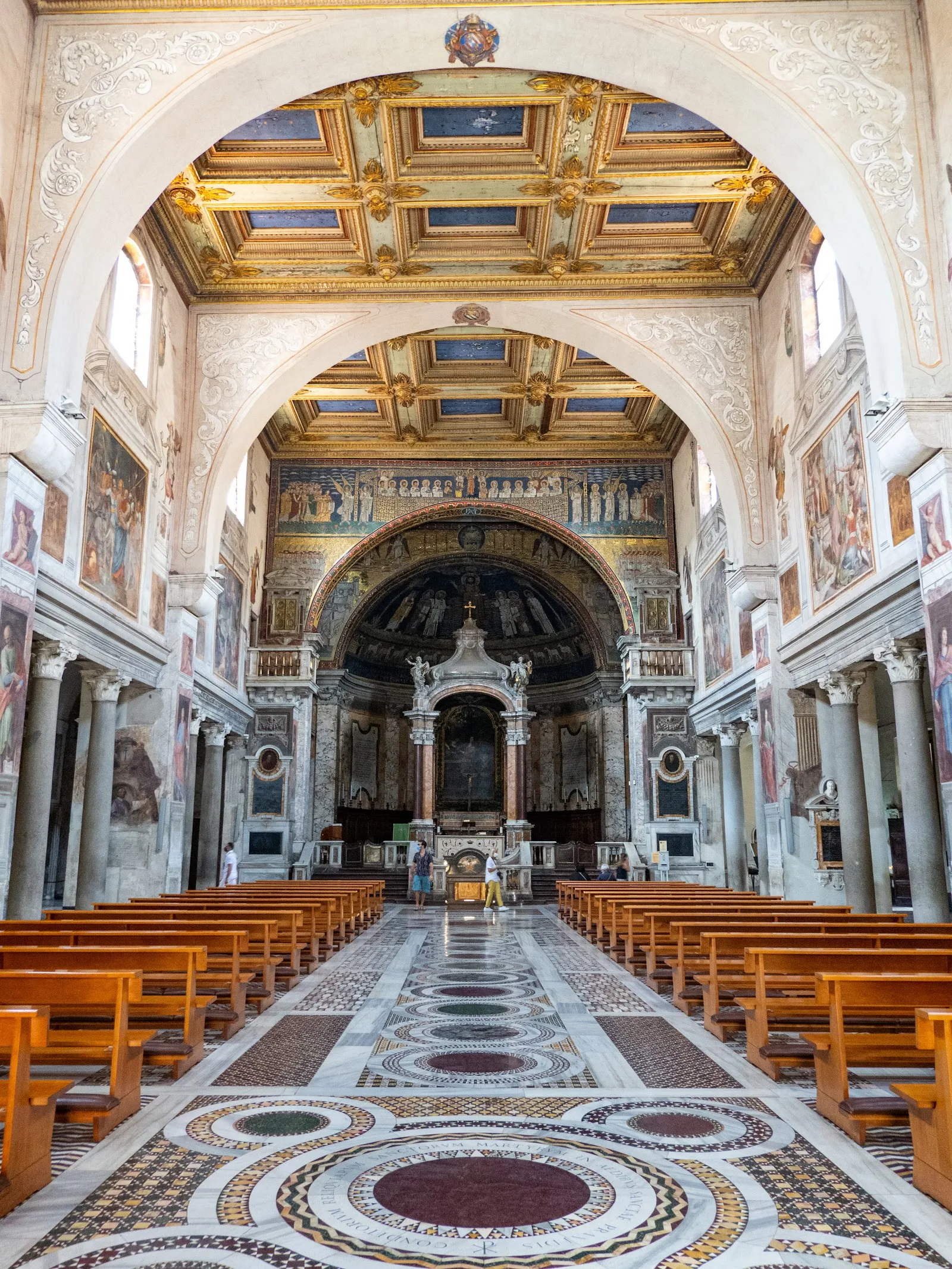
The basilica is dedicated to Saint Prassede, also known as Praxedes. Christian tradition connects her and her sister Pudentiana with an early Roman family that embraced Christianity and helped persecuted Christians. A story associated with the church says that Prassede buried those she could not protect in a well in the nave.
Inside the basilica is a fragment of a pillar believed by many Catholics to be from the column to which Christ was tied during the flagellation. Its association with the Chapel of St. Zeno gives the church significance for pilgrims as well as for visitors interested in its art.
Häufige Fragen
Where is Santa Prassede in Rome?
The basilica is on Via di Santa Prassede in the Monti district, a short walk from Santa Maria Maggiore.
What is Santa Prassede known for?
It is known for its 9th-century Byzantine mosaics, including those in the Chapel of St. Zeno.
Can you see a relic at Santa Prassede?
The basilica has a fragment of a pillar believed by many Catholics to be from the column associated with Christ’s flagellation.
How can I see the mosaics more clearly?
Some areas can be lit by inserting coins, which helps bring out the details of the artwork.


