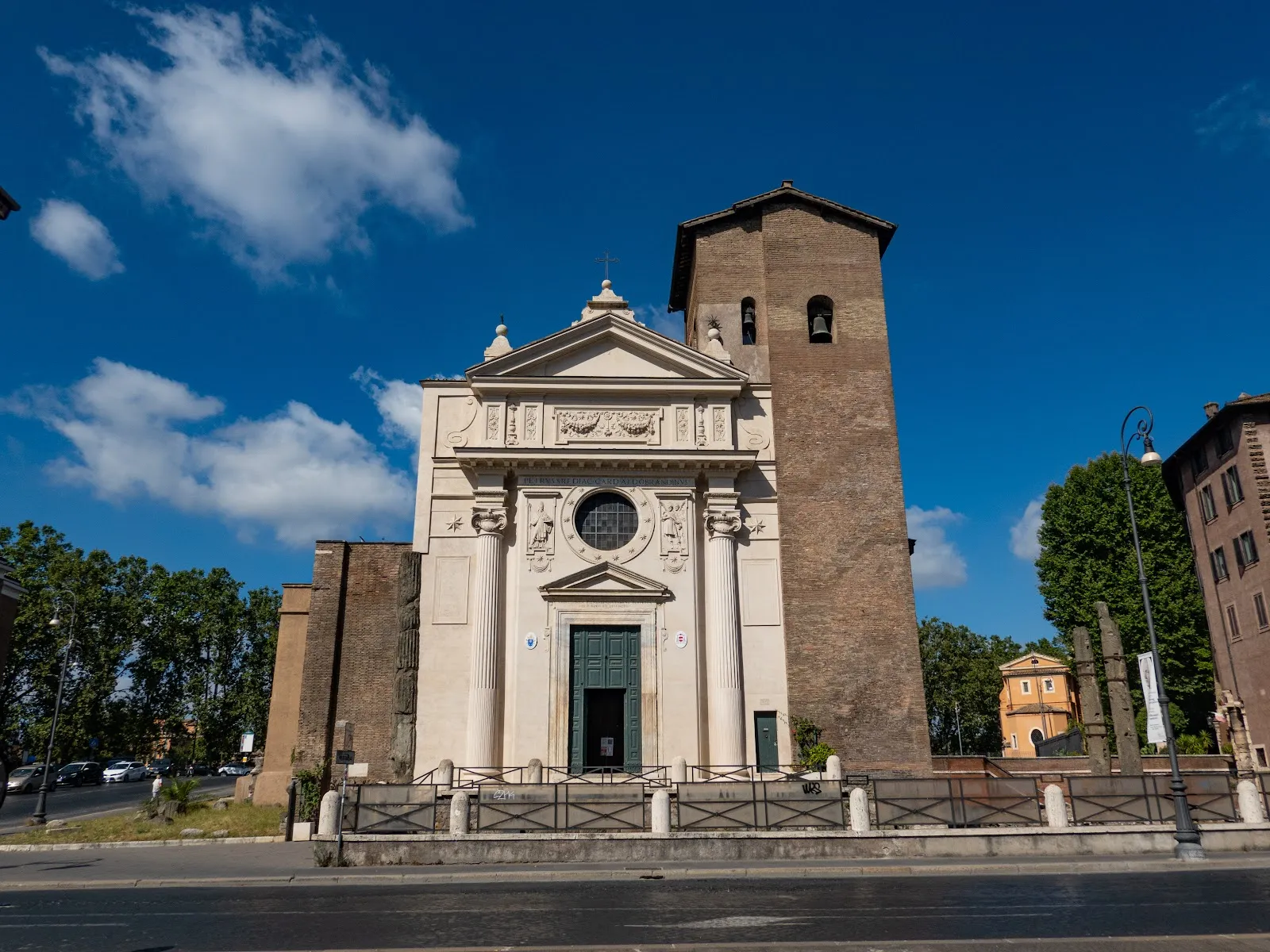
San Nicola in Carcere is a church on Via del Teatro di Marcello, near the Theater of Marcellus and the Mouth of Truth. Its walls reuse parts of three Roman temples once set in the Forum Holitorium, the city’s vegetable market. Look for ancient columns worked into the exterior, then see the blue-and-gold interior and the late-sixteenth-century façade designed by Giacomo della Porta. A paid underground visit leads to temple foundations and traces of the old market. Check that both the church and underground area are accessible before you go.
A church built over Roman temples
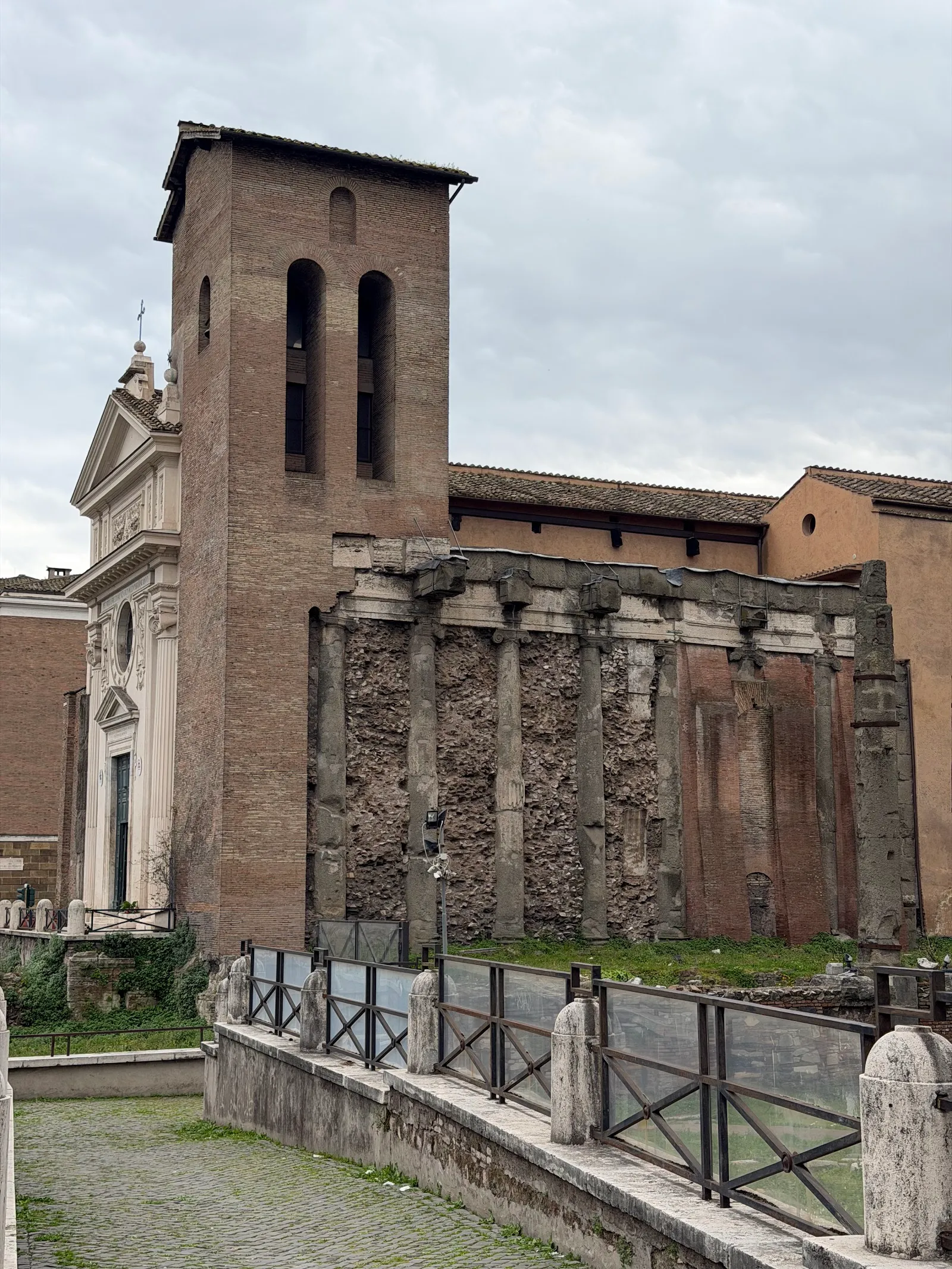
San Nicola in Carcere stands on the site of three temples dedicated to Janus, Spes and Juno Sospita. Their remains were part of the Forum Holitorium, an ancient market for vegetables and legumes. The church’s structure incorporates elements of those earlier buildings, so Roman stonework is visible in the exterior rather than separated from the church as a nearby ruin.
Look along the south wall for six columns associated with the Temple of Spes. Columns from the Temple of Juno Sospita are also visible in the façade. The old temple platforms and walls helped shape the church built above them. Its layout follows the line of the former shrines, bringing the ancient site into the plan of the later place of worship.
The name “in Carcere” means “in prison.” The temples were used as a prison in the Middle Ages, though accounts of the site’s early prison history vary. The church is dedicated to San Nicola, or Saint Nicholas of Myra.
The façade and interior
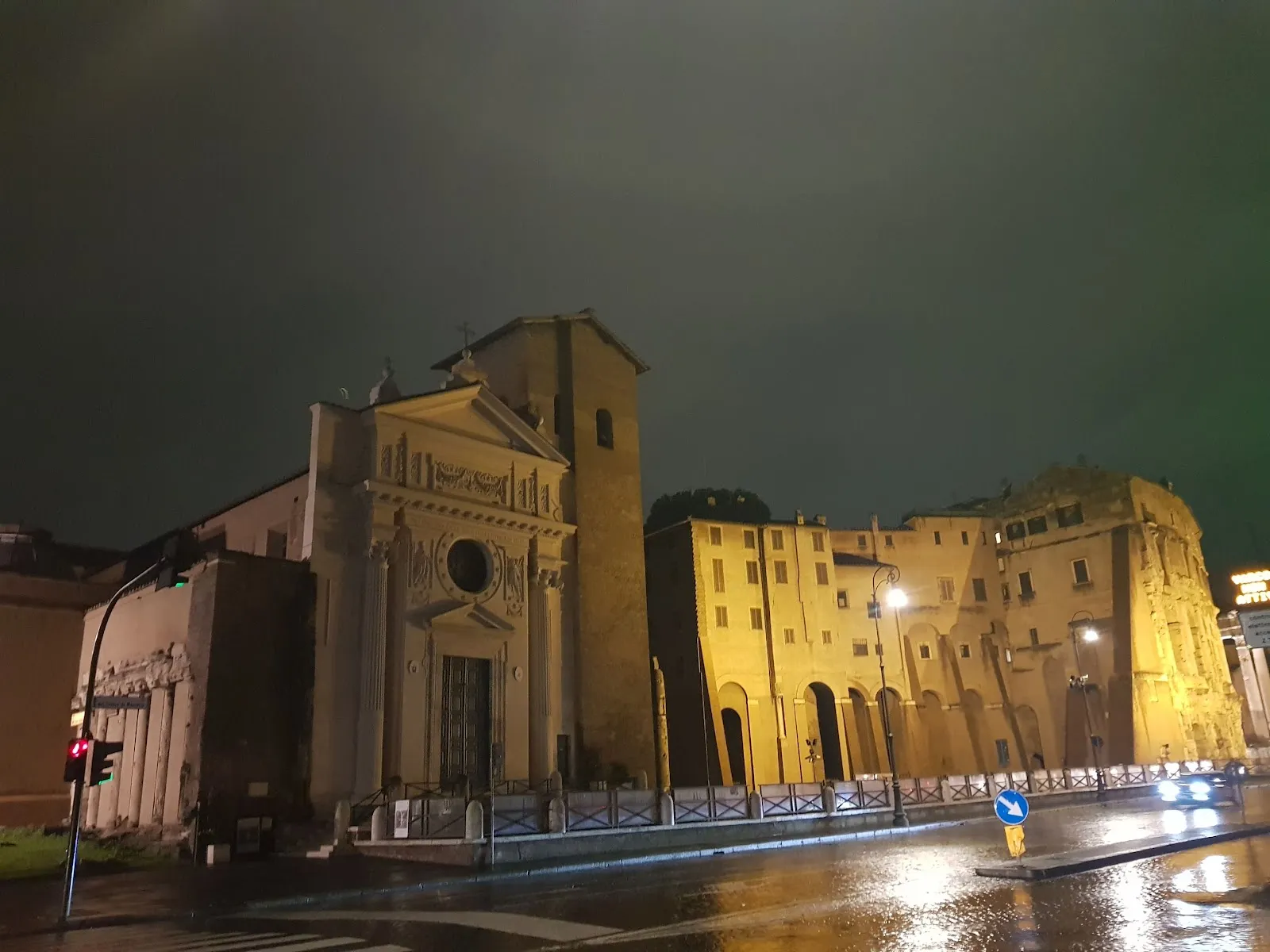
The church was rebuilt in 1599, and its façade was designed by Giacomo della Porta. Ancient columns are set into this later frontage, making the reuse of Roman materials easy to see from outside. The building also went through restorations in 1865 and 1932.
Inside, the ceiling is flat, with decoration in blue and gold added in the late 1860s. Heraldic details and coats of arms relate to Pope Pius IX, who commissioned that restoration. The contrast between the decorated interior and the older stonework outside makes it worth looking around the church before heading below ground.
Among the church’s furnishings is an embroidered umbraculum, a canopy associated with papal authority and given to basilicas. Its embroidery includes a small image of the umbraculum itself, with a still tinier version worked into that image.
What the underground visit reveals
A paid visit below the church gives a closer look at the structures beneath it. The entrance is by the altar. Downstairs, dim chambers contain battered tuff walls, column bases and foundations from the three temples. Remains of market stalls also connect the underground spaces to the Forum Holitorium’s former role as a place to sell produce.
Some niches contain bones and burials. These are part of the underground site, so take care as you move through the chambers. Access can depend on whether the area is open; construction or closures have prevented some people from entering. Ask at the church about the current arrangements and fee before setting out, especially if the underground visit is the main reason for your stop.
Häufige Fragen
Where is San Nicola in Carcere?
It is on Via del Teatro di Marcello in Rome, near the Theater of Marcellus and the Mouth of Truth.
What can you see underground?
The paid underground visit includes temple foundations, tuff walls, column bases and traces of market stalls. Some niches contain bones and burials.
Is there an entry fee for the underground area?
A €4 fee has been reported, but the current price may differ. Ask at the church before entering.
Can you visit the underground area every day?
Access can be affected by closures or construction. Check in advance that the underground area is open.


